The air in the hospital room was still, heavy with the weight of impending goodbye. Monitors beeped in a slow rhythm, the fluorescent lights humming above, casting a sterile glow over the quiet scene. Officer Mark Jensen lay in the hospital bed, pale and motionless, a ventilator breathing for him.
It had been two weeks since the accident—a late-night collision during a high-speed chase. Mark had suffered a traumatic brain injury. The doctors said there was minimal brain activity. They told his wife, Sarah, that it was time to consider removing life support.
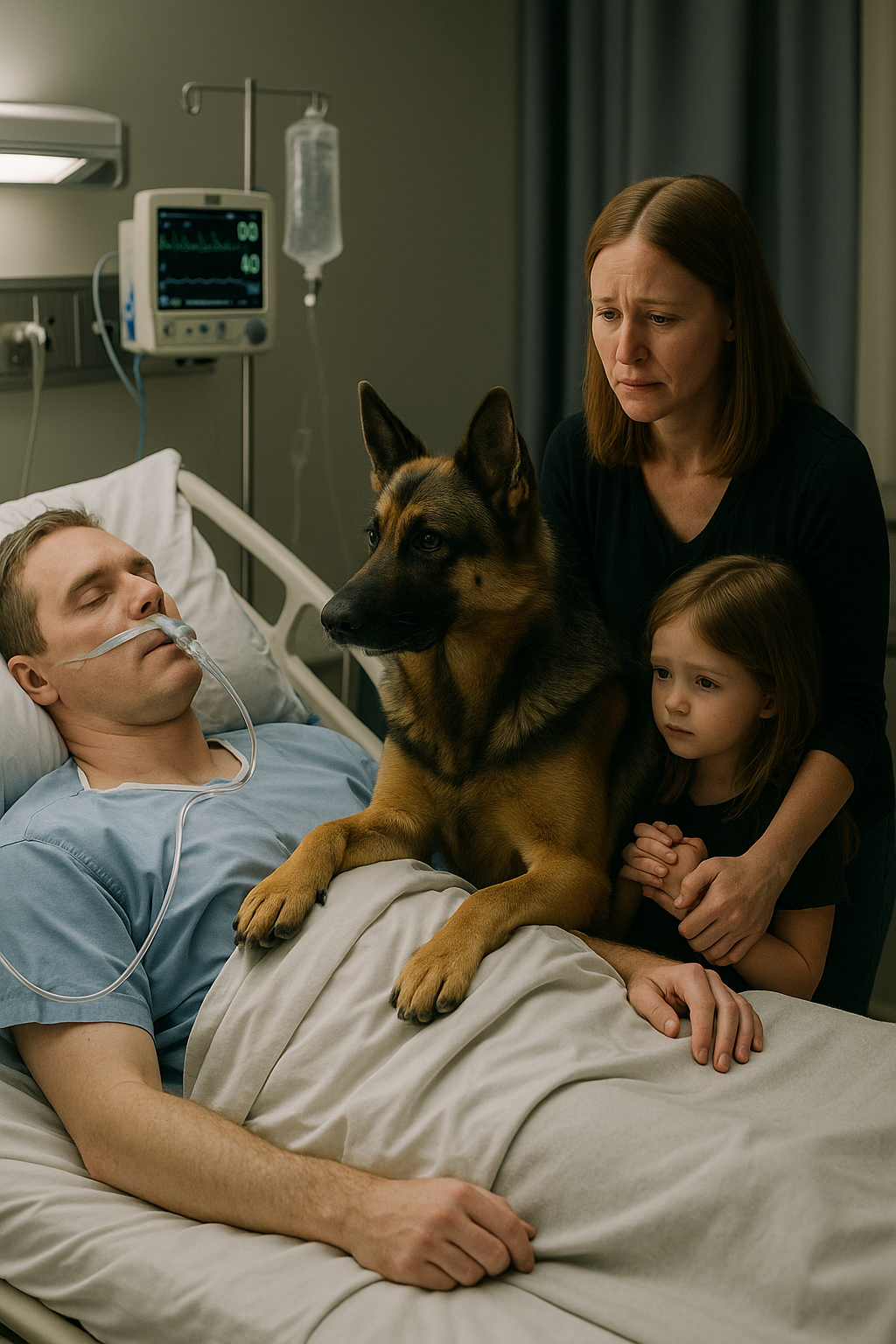
Sarah stood by the bed, her hands trembling as she held Mark’s limp fingers. Their daughter, Emma, just six years old, clung to her leg silently. But someone else was missing. Someone who had been Mark’s shadow for the past seven years.
“Can I bring him?” Sarah had asked hesitantly. “Can I bring Cooper to say goodbye?”
The doctors, surprisingly, had said yes.
Cooper was a retired K9, a German Shepherd with wise eyes and a heart forever loyal to his partner. He had served alongside Mark through countless operations, arrests, and community events. Since Mark’s injury, Cooper had been restless at home—pacing, whining at the front door, and sleeping on Mark’s side of the bed.
Now, as Sarah opened the door to the hospital room, Cooper entered with cautious steps. His ears perked forward, his tail lowered, his eyes searching.
At first, he approached the bed slowly, sniffing the air. Then something changed.
Cooper let out a low whine, his body trembling. His paws scraped against the tile floor as he inched closer, then—without warning—he leapt.
“Cooper!” Sarah gasped, rushing to stop him.
But the nurses held her back. “Wait,” one said, eyes wide. “Look.”
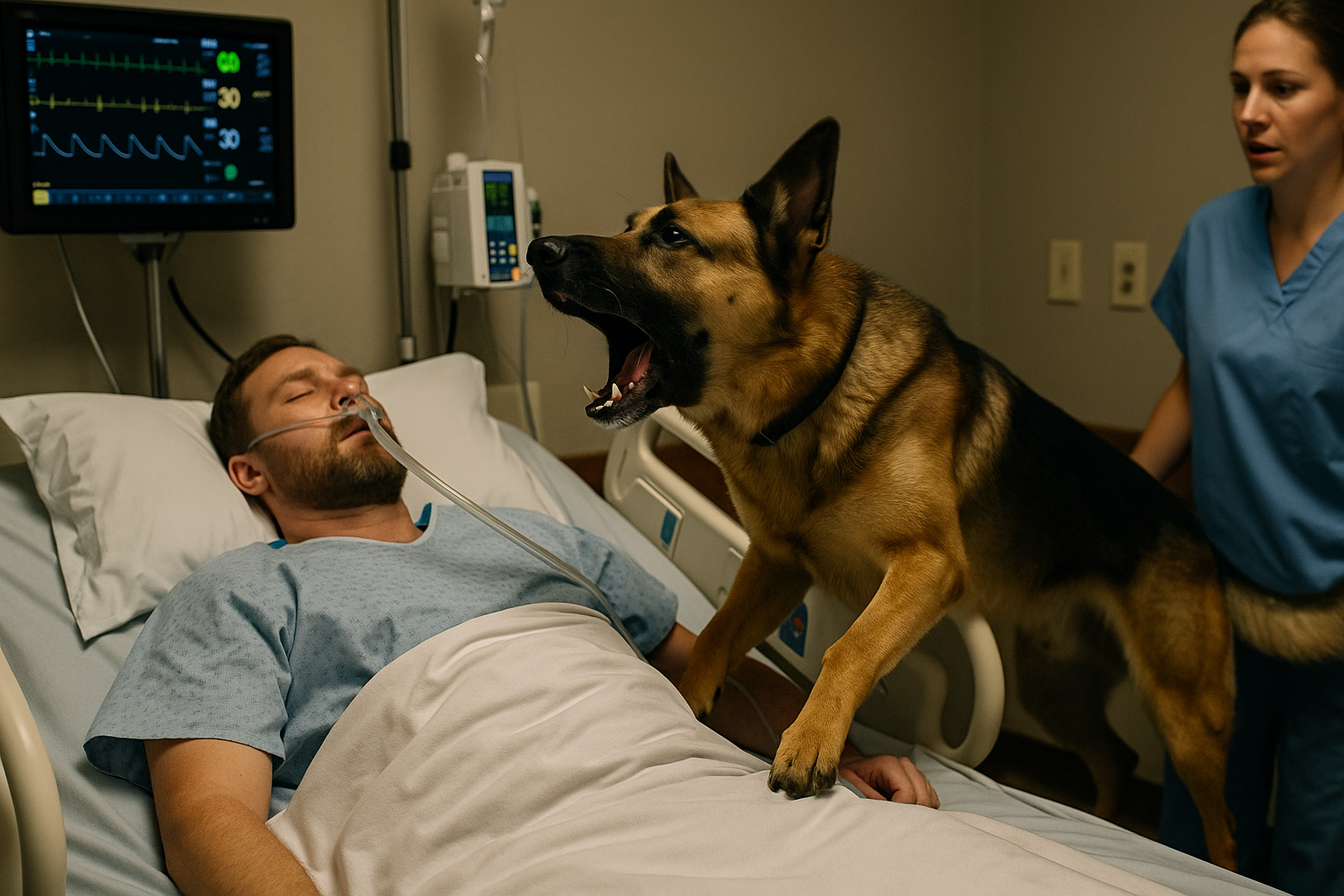
The dog had landed gently on Mark’s chest, careful not to disturb the wires. He barked once, then again—loud, sharp, urgent. His tail stiffened, his head tilted. He was trying to say something.
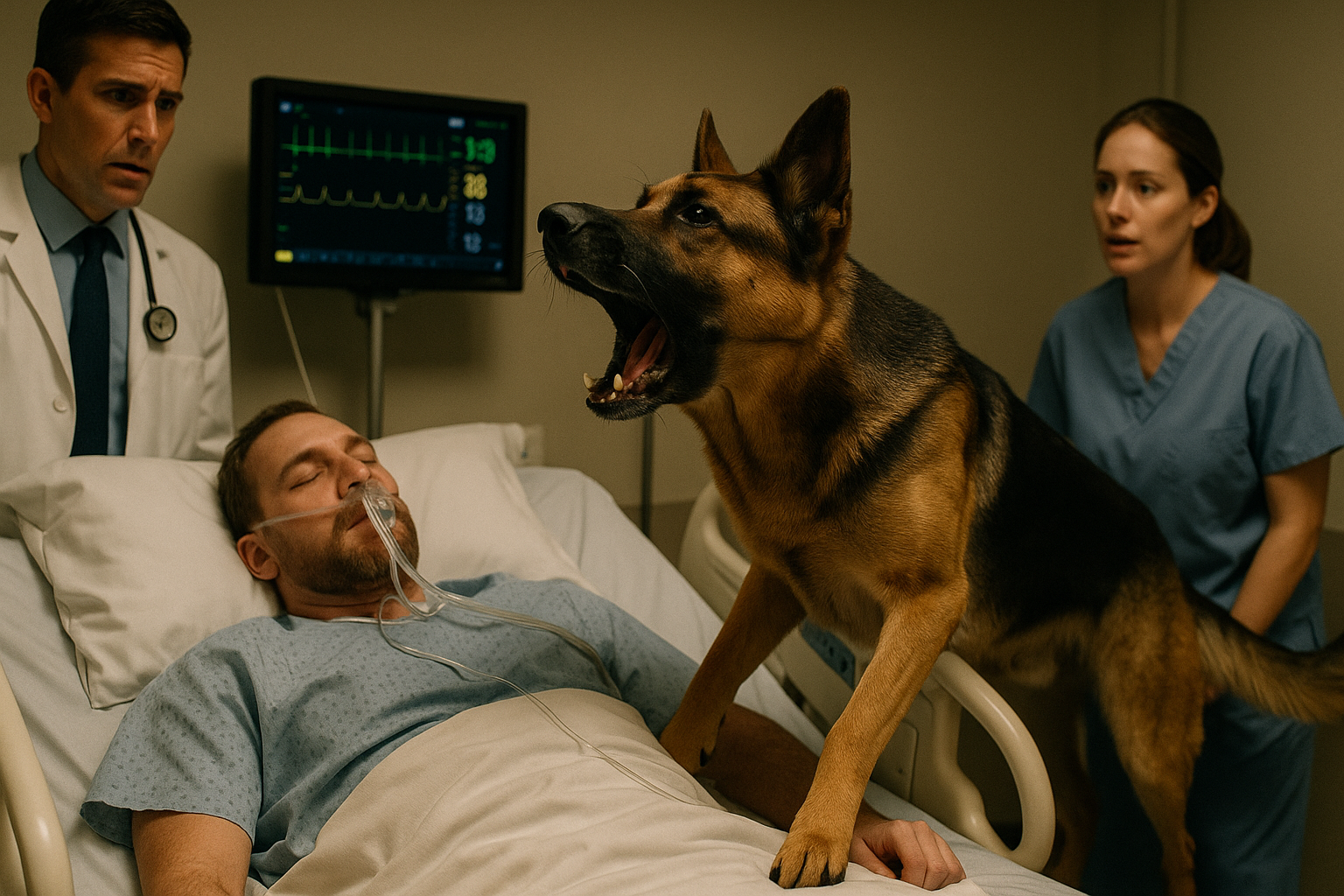
Then, a miracle happened.
Mark’s finger twitched.
At first, Sarah thought she imagined it. But then it happened again—a small movement, like a signal through fog.
“His hand!” she cried. “He moved!”
The nurse ran out to call the doctor, while Sarah dropped to her knees, tears flooding her face. Emma’s eyes widened as she clutched her mother’s arm.
Cooper barked again, nudging Mark’s hand with his nose. A moment later, Mark’s lips twitched. His eyes—sealed shut for so long—fluttered ever so slightly.
When the doctor arrived, he ran through tests. “This… this wasn’t happening before,” he said in astonishment. “He was completely unresponsive.”
“It’s Cooper,” Sarah whispered. “He knew.”
That night, Mark’s status was updated from “critical with no hope” to “minimally conscious.” It wasn’t a full recovery. Not yet. But it was enough to restore hope.
Word spread through the hospital like wildfire.
A nurse posted a photo online of Cooper lying across Mark’s chest, with the caption: “This dog saved his partner’s life. Literally.” It went viral within hours.
People from around the world left comments:
“Dogs really are angels in disguise.”
“I’m crying. What a loyal friend.”
“This gave me chills. Never underestimate a dog’s heart.”
Over the next several weeks, Mark’s condition steadily improved. He began to blink in response to questions. He squeezed Sarah’s hand on command. He even mouthed Emma’s name, bringing the little girl to tears.
And Cooper? He came every day.
Though hospital policy normally forbade animals outside of therapy dogs, Cooper was given special permission. The staff even created a little bed for him beside Mark’s. But he rarely used it. Instead, he stayed curled beside Mark’s feet, alert and watchful, as if guarding his partner from the shadows of unconsciousness.
One afternoon, Mark opened his eyes fully for the first time.
The room erupted with joy.
Cooper stood immediately, placing his paws gently on the bed. Mark blinked slowly… and then, with effort, turned his head toward him.
“Hey, buddy,” Mark croaked.
Cooper whimpered, licking Mark’s hand furiously, tail wagging uncontrollably. Nurses cried openly in the hallway. Sarah sobbed into her hands, whispering, “Thank you… thank you, Cooper.”
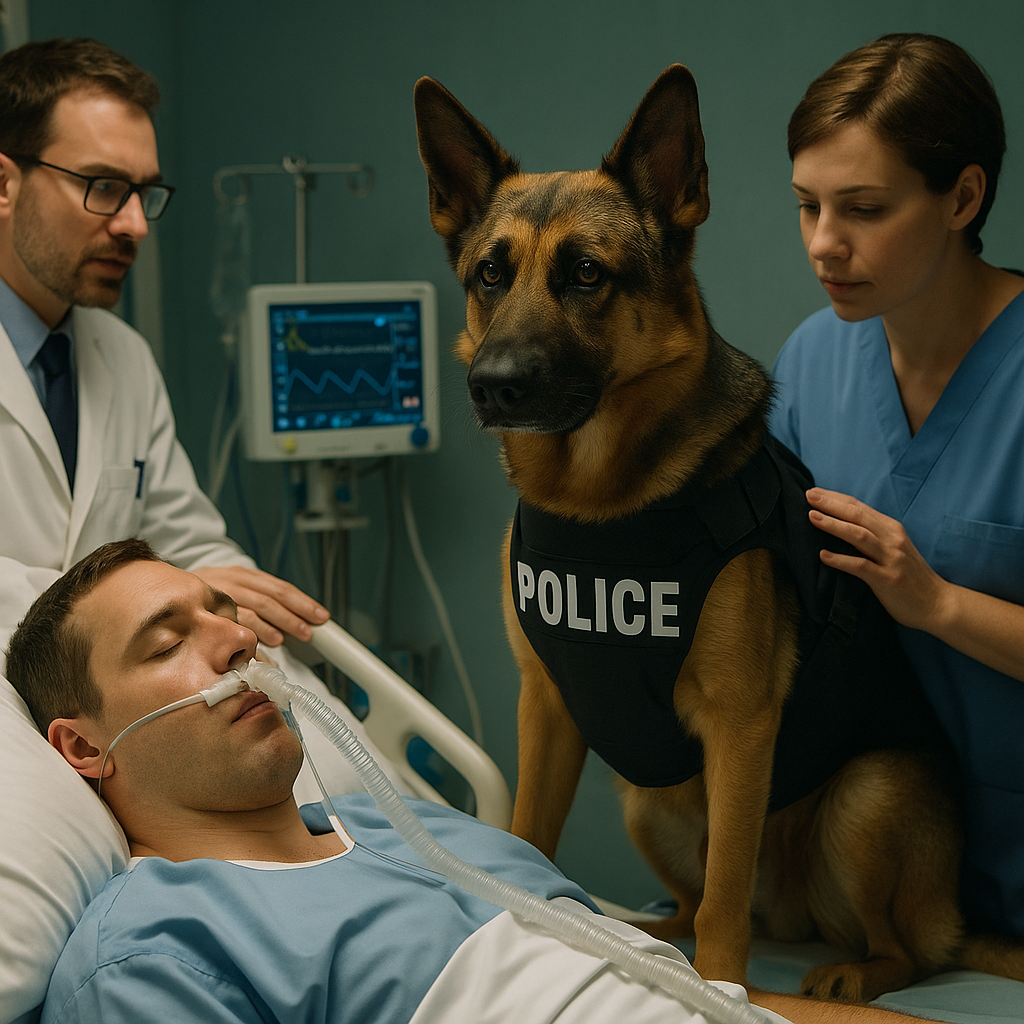
By month three, Mark was transferred to the rehabilitation wing. His speech was slow, his movements uncoordinated, but he was alive—and healing.
Every step of the way, Cooper was there.
During speech therapy, Cooper would nudge flashcards toward Mark. During physical therapy, he’d walk beside the wheelchair, occasionally barking to encourage progress.
One day, Mark asked the therapist to bring a tennis ball.
“I want to throw it,” he said. His voice was raspy, but determined.
“You sure?” the therapist asked gently.
Mark nodded. “Cooper needs a real thank you.”
It took five attempts, but eventually, the ball flew across the room—wobbly and low, but enough.
Cooper didn’t hesitate. He dashed across the room, caught the ball mid-bounce, and returned it with the pride of a soldier.
Everyone applauded.
It became part of their daily routine.
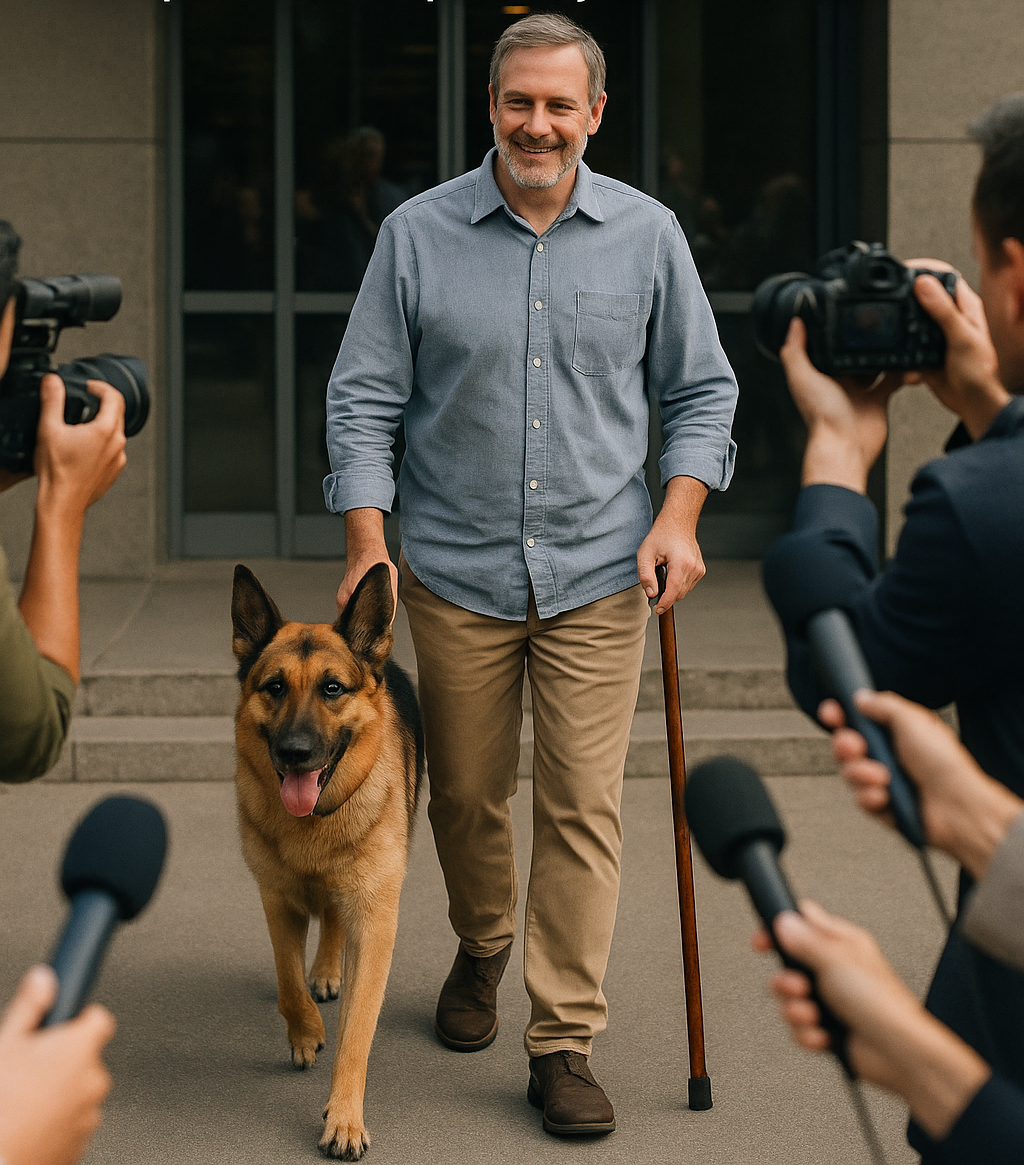
Six months after the accident, Mark walked out of the hospital on his own two feet, leaning slightly on a cane. Cooper trotted proudly beside him.
News crews were waiting outside. Reporters asked questions, cameras flashed, and microphones crowded in.
“How did it feel to wake up?”
“What do you remember?”
“Do you think your dog saved your life?”
Mark smiled, his hand resting on Cooper’s head.
“I don’t think,” he said. “I know. When everyone else had given up on me, he didn’t. Cooper reminded me I still had something to fight for.”
Back home, things were different, but filled with gratitude.
The town organized a celebration parade for Mark and Cooper. Kids held signs that read: “Thank You, Hero Dog!” and “Officer Jensen—Welcome Home!”
Cooper wore a new vest, custom-made by the police department. On it were embroidered the words: “K9 Hero – Never Off Duty.”
Even after retirement, Cooper remained by Mark’s side. They visited schools to talk about resilience and the bond between officer and K9. They attended charity events. They even launched a nonprofit that helped provide retired service dogs with proper care and loving homes.
And every year on the anniversary of the accident, the family visited the hospital.
They brought donuts for the staff, and Cooper would trot through the halls like a celebrity—recognized and adored.
But there was one nurse, Olivia, who always greeted them with teary eyes.
“I was on shift that day,” she’d say. “I saw the moment he barked and your husband moved. I’ll never forget it.”
Cooper would wag his tail politely, then nuzzle her leg gently, as if to say, “I remember too.”
Years passed. Cooper grew older. His muzzle turned gray, his steps slower. But his heart never changed.
On his final day, Mark lay beside him on the living room rug, hand on his best friend’s chest.
“You saved me, Cooper,” he whispered. “I hope you know that.”
The family gathered quietly. Emma, now a teenager, kissed Cooper’s forehead. Sarah knelt beside them, tears streaming down her cheeks.
Cooper looked at them all one last time—those eyes still full of wisdom—and let out a soft, contented sigh.
He passed peacefully, surrounded by love.
A few days later, the city held a memorial for him. Flags were lowered to half-staff at the police department. A statue was commissioned in the town square: Cooper, alert and proud, seated next to a pair of boots.
The plaque read:
“Cooper – K9 Hero, Loyal Partner, Miracle Worker.
He didn’t just protect and serve. He gave life back to one of our own.”
And every year, on the anniversary of that miraculous bark, the town gathers to remember the dog who knew something no doctor did:
That sometimes, the greatest miracles come on four paws—with a bark, a leap, and a heart full of love.
