A Simple Chant That Sparked a Heated Debate
In September 2017, Vista Del Lago High School in Folsom, California, found itself at the center of a national conversation—all over three little letters: “USA.” What had long been a symbol of pride and unity suddenly became a flashpoint for debate, after school officials advised students to be more mindful when chanting “USA” at school events.
Was the school banning patriotism? Was it an overreaction? Or was it simply a call for empathy in an increasingly diverse school community? The answer isn’t as black and white as it seems.
The Message That Started It All
During a student leadership class, faculty raised concerns about the potential misuse of the “USA” chant. While most students used it to show school spirit or national pride, examples from other schools across the country revealed a different, darker use: shouting “USA” as a way to mock or marginalize students from different backgrounds.
To prevent that kind of misunderstanding or offense, Vista Del Lago’s staff asked students to be thoughtful. The guidance was simple—use the chant in appropriate, respectful moments, such as after the National Anthem or the Pledge of Allegiance. The goal wasn’t to silence patriotism, but to promote awareness.
Video : School Warns Students Not To Chant ‘USA,’ What Kids Do Instead Has Officials Regretting It
“It’s Not a Ban”—Clearing the Air
Principal Peter Lum spoke out to clarify the situation: the chant wasn’t banned, and students were absolutely welcome to express pride in their country. But, like any form of expression, context matters.
The school wanted students to ask themselves: “Are we building people up, or leaving someone out?”
That message didn’t sit well with everyone.
The Pushback Begins: “We’re All American”
Students and parents quickly responded—and many were not happy.
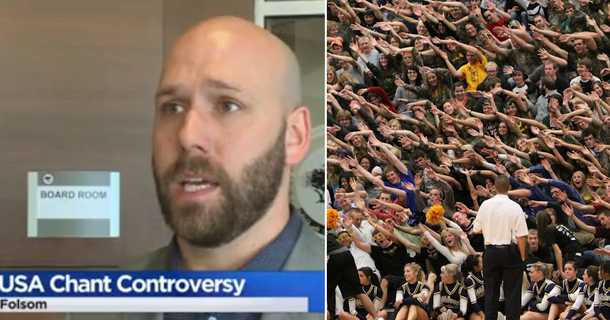
One student, Ryan Bernal, voiced what a lot of others were thinking:
“We’re all American. Chanting ‘USA’ brings people together—it’s not meant to divide.”
Plenty of community members echoed that sentiment, arguing that encouraging students to second-guess their patriotism sent the wrong message. They felt that being proud of one’s country shouldn’t come with caveats.
To them, the chant was a unifying symbol, not a weapon.
Where Intention Meets Interpretation
But here’s where things get tricky. Intent and impact aren’t always the same. While most students likely chanted “USA” with positive energy, there are real-life examples where it’s been used to taunt or isolate others. That’s what the school was trying to avoid.
This wasn’t a ban. It was a teachable moment—a call to think before we speak, especially in spaces meant for every student to feel safe and included.
The Real Message Behind the Reminder
The school district later reiterated that there was no restriction, just a gentle push to practice empathy alongside patriotism. It wasn’t about limiting voices—it was about amplifying understanding.
In today’s world, even well-meaning actions can be misinterpreted. That’s why Vista Del Lago’s approach was less about rules and more about awareness. They weren’t saying “don’t be proud of your country.” They were saying, “Be proud—and kind.”
When Patriotism and Progress Can Coexist
What happened at Vista Del Lago is more than a local story. It’s a snapshot of a larger cultural moment. Can we be both patriotic and inclusive? Can we wave the flag proudly without ignoring the diverse voices around us?

The answer is yes—but only if we’re willing to listen.
When students are encouraged to think critically, they grow. When schools create space for open conversation, communities get stronger. And when patriotism includes everyone, it becomes even more powerful.
Conclusion
The “USA” chant controversy at Vista Del Lago wasn’t really about the chant itself—it was about how we use our voices, and who we include when we speak up.
In a divided world, unity isn’t just about flags and chants. It’s about understanding the people standing next to you—and making sure they feel seen too. That’s the kind of patriotism worth chanting for.
