If you’ve ever looked closely at your kitchen scissors, you might have noticed a small jagged section between the handles—those ridged teeth tucked right behind where your fingers rest. At first glance, it might seem like a random design detail, maybe even something purely decorative or leftover from the manufacturing process. And if you’ve never used it, you’re not alone.
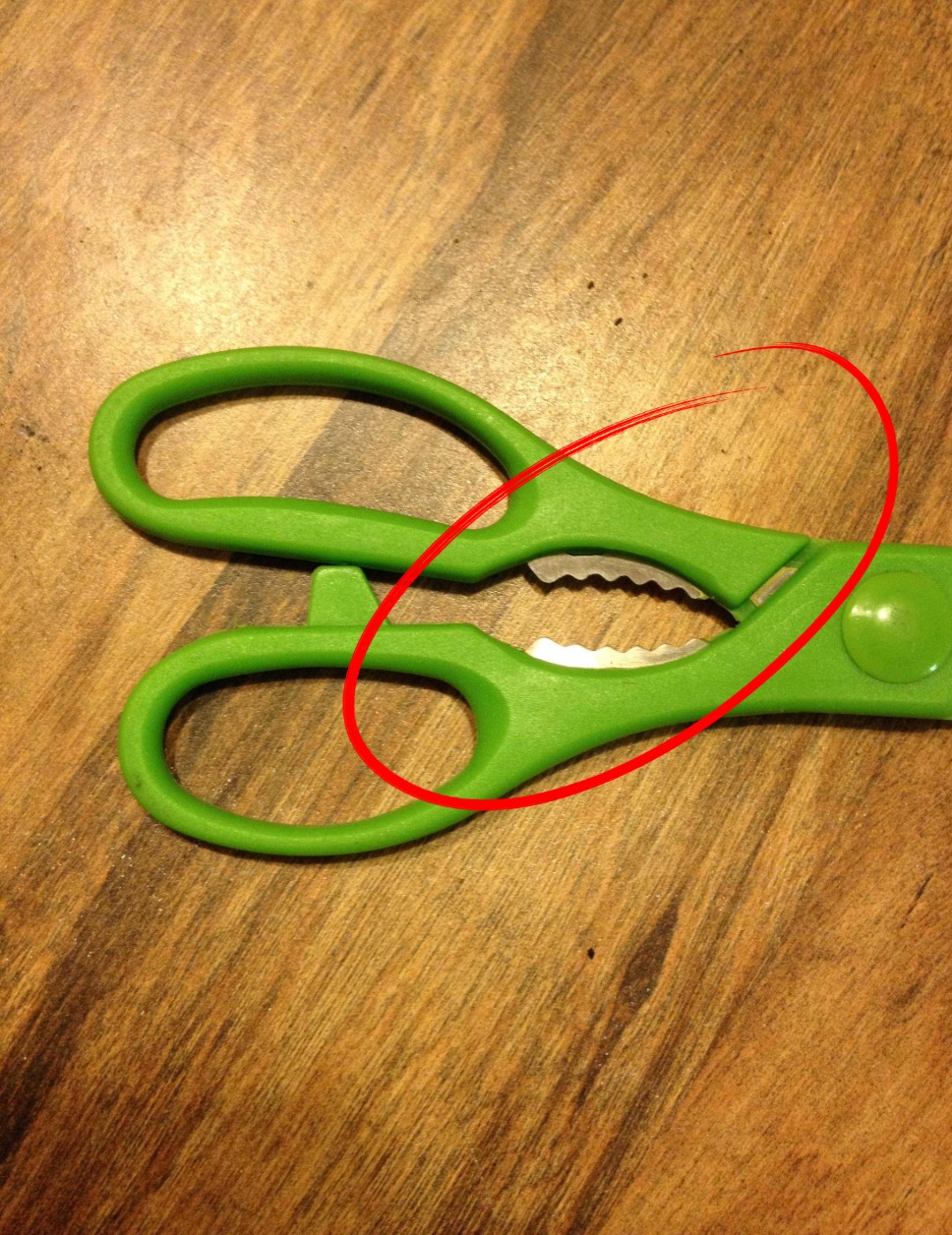
Many people don’t realize this part is functional, let alone how useful it can be. In reality, that little toothed section is a built-in gripping tool designed to help you with tasks that go beyond cutting. Often called a jar opener, nutcracker, or even a bone cracker depending on the brand, it’s essentially a traction-enhancing device that gives you more control when you need it. You’ll usually find it where the handles start curving inward, made of either sturdy metal or reinforced plastic, always rugged enough to grip securely. Close the scissors slowly, and you’ll see how the ridges align perfectly, forming a surface that’s ready to hold something tightly instead of just sitting idle in your drawer.
One of its most practical uses is opening stubborn jars and bottles without straining your wrists. We’ve all been there—fighting with a vacuum-sealed jam jar that won’t budge no matter how much you twist or tap it. Instead of wrestling with a dish towel or banging it on the counter, you can use the built-in gripper. Just close the scissors until the teeth meet, slide the jar lid snugly into the ridged section, hold the scissors with one hand and twist the jar with the other. The grooves give you the traction you need while the shape applies even pressure, making the job far easier. This trick also works for smaller bottle caps like soda, tonic water, or sauce bottles, and it’s especially helpful for anyone with arthritis or reduced grip strength.
Another handy use is cracking nuts when you don’t have a dedicated nutcracker. For walnuts, pecans, or hazelnuts, place the nut gently in the toothed section, squeeze slowly until you hear the shell crack, then rotate and repeat until the shell is loose enough to peel away. The key is to go slow—you’re not trying to crush the nut entirely, just break the shell enough to open it. If you own heavy-duty kitchen shears, particularly poultry or bone shears, that ridged area can also help you snap through small poultry bones, like those in chicken wings or thighs, when breaking down a bird. Grip the bone in the ridged section, apply steady and controlled pressure, and it will help prevent the shears from slipping while making the cut cleaner.
Just be sure not to attempt this with cheap or lightweight scissors, as you could damage them or risk injury. Beyond jars, nuts, and poultry, the toothed section has several other creative uses. You can use it to grip slippery plastic caps on juice jugs, crack crab legs or lobster shells, twist out soft synthetic corks, or even hold stubborn twist-ties and sealed plastic so you can cut them cleanly. Basically, whenever your hands are slipping and you’re getting frustrated, that little feature might be the fix you need. Manufacturers include this part because it adds versatility without taking up extra space, making it a great option for those in smaller kitchens who value multi-use tools.
Instead of buying a separate jar opener, nutcracker, and poultry shears, one good pair of multi-purpose kitchen scissors with a built-in gripper can cover all those tasks. Not every pair of kitchen scissors has it, but it’s most often found on heavy-duty models, poultry or bone shears, and utility scissors labeled as multipurpose. To check, look between the handles for a notched or ridged section that lines up when the scissors are closed. If it’s there, you’ve got a built-in helper ready to go. A few safety tips are worth remembering. Don’t force the feature on something too hard, like an uncrackable nut or thick bone your scissors aren’t built to handle. Keep your fingers away from the teeth when applying pressure, and clean the area thoroughly after use—especially if it’s come into contact with raw meat or sticky residue—since grooves can trap debris.
Also, avoid using it for non-food tasks like opening paint cans or twisting wires, as that can damage the scissors. At first glance, the toothed section might look like an odd, useless notch, but it’s actually a small powerhouse that adds multi-tool capability to your shears. It lets you twist, crack, grip, and open with minimal effort, turning a simple cutting tool into a problem-solving kitchen essential. The next time you reach for your kitchen scissors, remember you’re holding more than just a pair of blades—you’ve also got a jar gripper, a nutcracker, a mini bone press, and a general-purpose grip tool right in your hand. The trick is to actually put it to use
