Even though Second Lady Usha Vance is known for maintaining a low public profile and rarely granting interviews, she surprised many by speaking openly with USA Today in December 2025. As the wife of Vice President JD Vance, she typically avoids public commentary about her personal life, but this time she did not completely sidestep questions surrounding her marriage. While she stopped short of offering clear confirmations or denials, the way she addressed recent rumors spoke volumes and left room for interpretation.
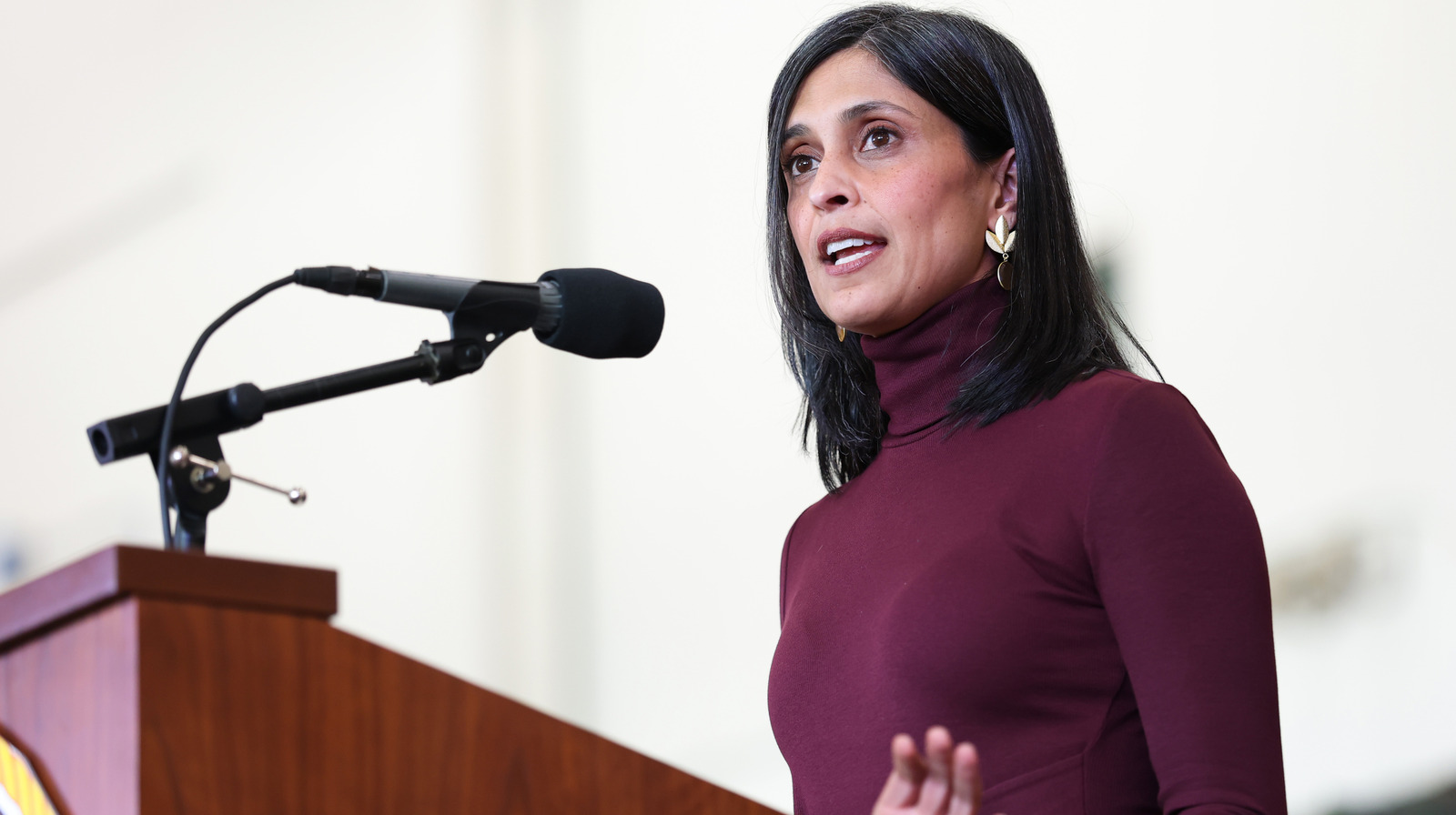
Speculation about the state of the Vances’ marriage has circulated for months, particularly after Usha was seen in public without her wedding band. For many observers, the missing ring immediately raised questions about whether the couple might be facing serious trouble behind the scenes. Rather than offering a detailed explanation, Usha responded with a tone that appeared calm, detached, and even amused. She suggested that the absence of the ring was not a meaningful signal at all, explaining that sometimes she simply is not wearing it, especially after going to the gym or showering. According to her, it was a mundane detail that did not warrant the attention it had received.
Usha also made it clear that she does not devote much emotional energy to public speculation about her relationship. She said she largely laughs off the chatter and does not take it seriously. This response, though measured, struck many as unusually indifferent given the level of attention surrounding her marriage. Rather than pushing back firmly against the rumors or affirming her commitment to her husband, she chose to downplay the entire conversation, positioning it as background noise rather than something worthy of concern.
However, her comments did not end there. Elsewhere in the interview, Usha appeared to subtly address rumors involving JD Vance and Erika Kirk, which gained traction after the two shared a notably friendly hug at a Turning Point USA event. Images and videos of the moment spread quickly online, prompting speculation about a possible affair. Though Usha did not reference Erika Kirk or the rumors directly, her remarks seemed deliberately broad, as if encompassing all forms of public conjecture about her personal life.

She described modern political life as one in which people are constantly “reading the tea leaves,” suggesting that there is an entire industry devoted to building narratives out of imagination rather than fact. Her words implied that even the smallest interactions or visual cues are often exaggerated and transformed into scandal. By framing the situation this way, Usha appeared to dismiss the affair rumors as yet another example of baseless storytelling fueled by public curiosity rather than reality.
Still, the tone she adopted raised questions of its own. While some interpreted her indifference as a sign of confidence and emotional security, others saw it as unsettling. For critics, her refusal to address the rumors directly felt less like calm assurance and more like emotional distance. The absence of a firm denial or a clear statement of unity left room for doubt, particularly in an environment where silence often invites speculation rather than extinguishes it.
Usha’s reaction may indeed suggest that she feels deeply secure in her marriage and therefore sees no reason to dignify rumors with a response. From this perspective, ignoring speculation is an act of strength rather than avoidance. She may believe that engaging with gossip only amplifies it and that her relationship does not require public validation. For those who view it this way, her calm detachment reflects trust and confidence rather than indifference.
On the other hand, there is an alternative interpretation that is harder to ignore. Her lack of concern could also indicate emotional exhaustion or detachment from the relationship itself. Being seen without her wedding band, coupled with her unwillingness to firmly address the affair rumors, may suggest that she no longer feels compelled to protect the public image of her marriage. In this reading, indifference is not a sign of strength but rather of disengagement.

What complicates matters further is that by remaining vague, Usha may unintentionally be fueling the very rumors she seems to dismiss. Clear and direct communication often shuts down speculation, while ambiguity tends to keep it alive. Her reference to people “reading the tea leaves” acknowledges the existence of rumor culture, but it does not counteract it. In fact, it leaves observers searching even harder for clues, gestures, and inconsistencies to interpret.
Public perception of the Vances’ marriage has already been shaped by earlier comments and appearances. In August 2025, JD Vance himself admitted on The Katie Miller Podcast that he and Usha were essentially “forcing” themselves to spend quality time together through an informal couples’ book club. While the comment may have been intended as lighthearted or honest, it struck many listeners as revealing underlying strain. Rather than sounding like a couple naturally drawn to one another, it suggested effort where ease might be expected.
Additionally, observers have frequently noted that the couple’s chemistry during public appearances feels subdued. At events, their interactions have often appeared formal rather than affectionate, lacking the warmth typically associated with a happily married pair. While public demeanor is not always a reliable indicator of private reality, such details inevitably shape how audiences interpret later developments, including rumors of infidelity or emotional distance.
In this context, Usha’s restrained response to questions about her marriage does little to reverse the narrative. Whether intentionally or not, her refusal to address specific rumors leaves them suspended in the public imagination. Her words neither confirm nor deny the speculation, allowing multiple interpretations to coexist without resolution.

Ultimately, Usha Vance’s interview reflects the delicate balance public figures must navigate when their private lives become subjects of intense scrutiny. Her approach suggests a preference for privacy and emotional distance from gossip, but it also highlights the cost of ambiguity in the public eye. Without clear statements, observers are left to interpret silence, tone, and body language as substitutes for facts.
For now, there are no definitive answers about the true state of Usha and JD Vance’s marriage. All that remains is continued observation of their public appearances, comments, and interactions. In the absence of clarity, speculation is likely to persist, driven by the same “tea leaves” Usha herself referenced. Until either of them chooses to speak more directly, the questions surrounding their relationship will remain unresolved, lingering in the space between public indifference and private reality.
