History is often written in moments of noise—thunderous applause, the roar of a crowd, or the sudden crack of a breaking storm. But in the case of Australia’s most defining modern turning point, the story began in silence.
It started in the southern island state of Tasmania, a place known for its rugged wilderness and quiet, isolated communities. It was here, far removed from the bustle of the mainland, that a narrative began to take shape that would eventually force an entire country to look in the mirror.
Martin John Bryant was born on May 7, 1967. His arrival into the world was noted for its calm. The labor was short, the delivery uncomplicated. His father, Maurice, was present and attentive, a devoted figure who would spend the rest of his life trying to understand the son he had brought into the world.
His mother, Carleen, would later describe those early days with a sense of nostalgia that seems heartbreaking in hindsight. She recalled a pregnancy that was “all baby and no fluid,” a smooth journey that gave no indication of the turbulent waters ahead. The birth announcement was standard, a simple few lines in the local paper thanking the hospital staff.
It was a beginning defined by normalcy. And yet, normalcy would prove to be the one thing that would forever elude Martin Bryant.
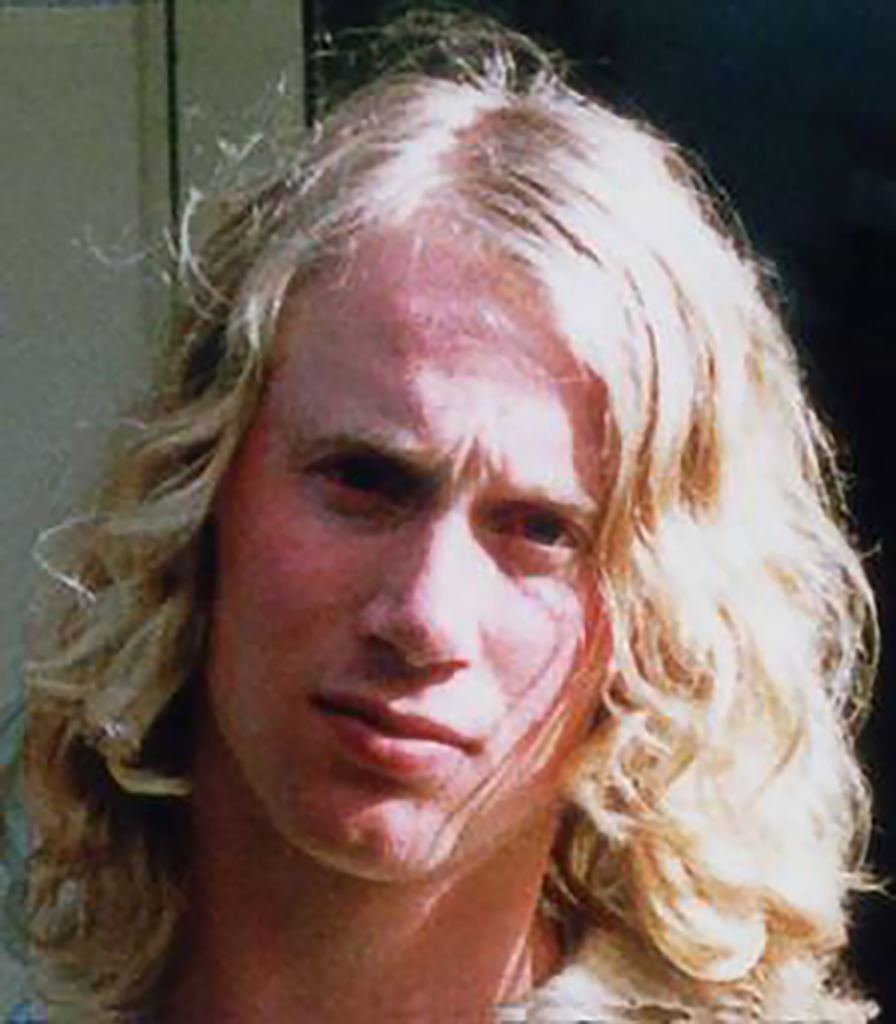
A Child Out of Step with the World
As Martin grew, the silence of his infancy gave way to a frenetic, uncontainable energy. By the time he was a toddler, his parents realized that their son was marching to a rhythm that no one else could hear.
He was distant. While other children sought comfort and connection, Martin seemed to exist behind a glass wall. He resisted affection and struggled to understand the basic social cues that bind people together.
In a 2011 interview, his mother reflected on these early years, admitting that he was an “annoying” and “different” child. He didn’t play with toys in the traditional sense; he dismantled them. He seemed driven by a curiosity that lacked empathy, a trait that would later become a focal point for psychologists trying to unravel his mind.
The school years were a profound struggle. Martin found it nearly impossible to connect with his peers. He was isolated, often the target of bullying, and unable to keep up academically. He was eventually evaluated by a specialist who delivered a difficult prognosis: Martin would likely never be able to hold a traditional job or manage his own affairs without significant support.
“Cannot read or write. Does a bit of gardening and watches TV,” a psychiatrist noted in an evaluation for a disability pension. “Only his parents’ efforts prevent further deterioration.”
It is a poignant image: a young man adrift, anchored only by the dedication of a mother and father who were desperately trying to keep him afloat.
The Heiress Who Offered a Different Life
In his late teens, Martin’s life took a turn that resembled the plot of a stranger-than-fiction novel. While looking for lawn-mowing work—one of the few tasks he could manage independently—he met Helen Mary Elizabeth Harvey.
Helen was 54, wealthy, and eccentric. She lived in a decaying mansion filled with dogs and cats, living a life that was as socially isolated as Martin’s. In her, Martin found something he had never experienced before: total acceptance.
He became her constant companion. He helped her with the animals, tended to her property, and in return, she invited him into her world. He described her as his “only friend.” For a few years, they lived in a bubble of their own making, eventually moving to a large farm in the town of Copping.
To the outside world, the arrangement was unusual. Neighbors in Copping noticed Martin’s odd behavior—he was often seen wandering the perimeter of the property with an air rifle, engaging in concerning behavior toward the local wildlife and passing tourists. The locals learned to keep their distance, sensing an unpredictability that made them uneasy.
But inside the farmhouse, Martin was safe. He had a home, a friend, and a purpose.
The Collapse of the Support System
That safety was shattered on October 20, 1992.
A car accident on a rural road claimed the life of Helen Harvey. Martin, who was in the passenger seat, survived the crash but was left with severe injuries that required months of hospitalization.
The accident was investigated, with police noting Martin’s history of erratic behavior in vehicles, including a tendency to grab the steering wheel. However, it was ultimately recorded as a tragic event.
In the wake of Helen’s passing, Martin’s life changed dramatically. He was named the sole beneficiary of her estate, inheriting millions of dollars. Suddenly, the young man who had been written off by the school system was wealthy beyond his dreams.
He tried to use this wealth to buy what he really wanted: connection. He traveled the world, flying first-class to London, Los Angeles, and Bangkok. But money could not bridge the gap between him and the rest of humanity.
“I wanted to meet up with normal people,” he later said, confessing that “it didn’t work.”
His isolation only deepened when tragedy struck again. In 1993, his father, Maurice—the man who had stood by him since birth—passed away on the family farm. The loss of his father removed the final guardrail from Martin’s life.
He was now alone in a large house, flush with cash, and drifting further into a darkness that no one could reach.
The Day the Country Stood Still
By 1996, Martin’s behavior had become increasingly erratic. Without the stabilizing influence of his father or Helen, he began to spiral. He drank heavily and began purchasing high-powered firearms, legally acquiring a collection that would soon be used to devastating effect.
On April 28, 1996, Martin drove his yellow Volvo to the Port Arthur Historic Site.
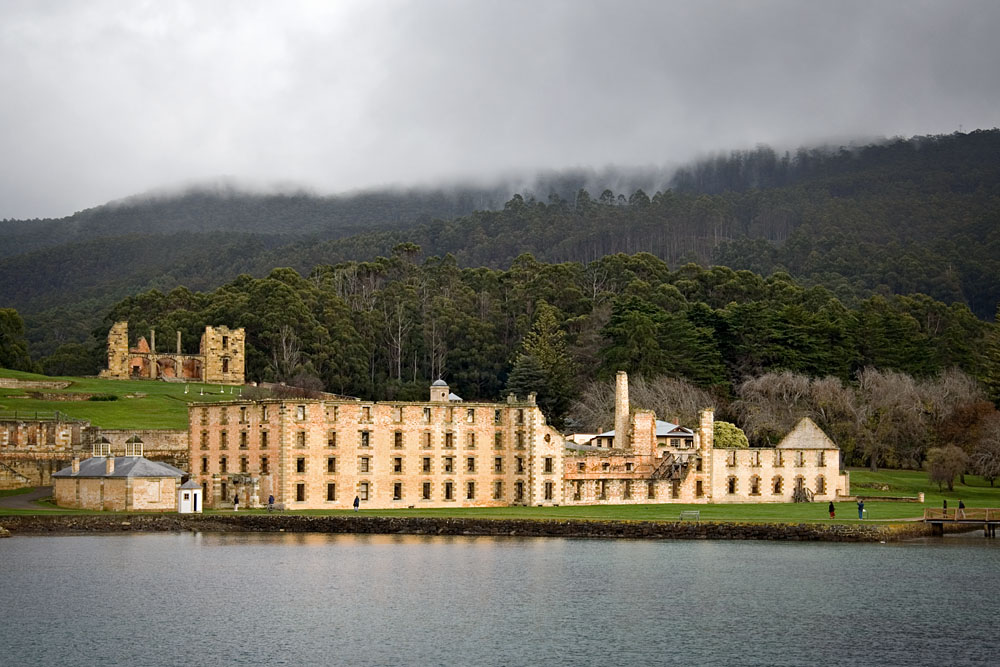
Port Arthur is a place of deep significance in Australia. It is a former penal colony, a site where the harsh history of the convict era is preserved. It is a place of memory. On that Sunday, it became the site of a national tragedy.
The events of that day are etched into the collective memory of the nation. A series of violent acts unfolded that resulted in the loss of 35 lives. It was a catastrophe of such scale that it seemed impossible to comprehend.
Security guard Ian Kingston, who was present at the site, later described the helplessness of the situation. “You don’t get a second chance with a gun like that,” he said, referring to the military-style weaponry that was used.
The tragedy ended only after a tense, 18-hour standoff at a nearby guesthouse, which ultimately burned to the ground. Martin was taken into custody, leaving a nation to mourn and a government to act.
A Legacy of Legislation
The aftermath of Port Arthur was defined not by the violence itself, but by the swift and decisive response of the Australian government.
At the time, gun laws in Australia were a patchwork of state-based regulations. There was no unified national standard. But the scale of the tragedy at Port Arthur galvanized the political leadership.
Prime Minister John Howard, a conservative leader who had only recently been elected, made a choice that would define his legacy. He pushed for a National Firearms Agreement.
“It will take a massacre in Tasmania before we get gun reform in Australia,” a politician had predicted nearly a decade earlier. That prediction had come true.
The reforms were sweeping. Automatic and semi-automatic long-arms were banned. Strict licensing requirements were introduced, requiring a genuine reason for owning a firearm—and self-defense was not included as a valid reason.
Perhaps most significantly, the government launched a massive buyback scheme. Funded by a temporary tax increase, the government purchased and destroyed more than 650,000 firearms.
The impact was immediate and profound. Firearm-related deaths plummeted. The rate of firearm suicides dropped by 74%, saving thousands of lives in the decades that followed.
Former Deputy Prime Minister Tim Fischer later reflected on the courage it took to pass those laws, noting the difference between Australia’s approach and other nations: “Port Arthur was our Sandy Hook. Port Arthur we acted on.”
The Enduring Lesson
Martin Bryant remains in Risdon Prison, serving 35 life sentences without parole. His name is rarely spoken, a deliberate choice by a society that refuses to give him the notoriety he once reportedly craved. “I’ll do something that will make everyone remember me,” he had once told a neighbor.
Instead, Australia chooses to remember the victims and the unity that emerged from the darkness.
The story of Martin Bryant is a tragedy of missed signs, mental health struggles, and the catastrophic availability of lethal means. But the story of Australia is one of resilience—a nation that stared into the abyss and decided to build a safer future.
As the years pass, the lessons of 1996 serve as a guide. They remind us that safety is not a permanent state, but a constant effort. It requires vigilance, compassion, and the courage to act when the well-being of the community is at stake.
If this story resonated with you, let us know your thoughts in the comments on Facebook. If you believe in the importance of remembering our history to build a safer future, please share this article with your friends and family.


