The aneurysm was a delicate, ballooning weakness in the anterior communicating artery, a ticking time bomb nestled deep within the brain of a forty-year-old math teacher. My world, as it had been for the last two decades, was reduced to the magnified field of the surgical microscope. I lived in the space between heartbeats, in the silence of the sterile field where the only sounds were the rhythmic whoosh of the ventilator and the hum of the suction.
I was Dr. Eliza Reynolds. Here, inside the cranial cavity, I didn’t have to think about the silence of my home or the dust settling in the bedroom I hadn’t opened in seventeen years.
“Dr. Reynolds.”
The voice came from outside my bubble. It was Sarah, my circulating nurse, her voice pitched in that specific tone that indicates an apology for the interruption.
“Not now, Sarah,” I murmured, my eyes never leaving the vessel. My hands were steady, instruments extended like extensions of my own nervous system.
“I’m sorry, Doctor, but it’s Westridge Academy. The principal is on the line. She says it’s an emergency regarding your grandson.”
My hand froze. It was a microscopic hesitation, imperceptible to anyone watching the monitors, but to me, it felt like an earthquake. I slowly withdrew the dissector, placing it on the sterile tray with a deliberate clatter.
“I don’t have a grandson,” I said, my voice cold, muffled slightly by the mask. “Tell them they have the wrong number.”
“She was extremely specific, Doctor. She asked for Dr. Eliza Reynolds, Chief of Neurosurgery. She said, ‘Tell her Jaime Parker is in my office, he’s been expelled, and she needs to come now before I call Child Services.’”
Parker.
The name struck me with the force of a physical blow, penetrating the armor of sterile gowns and professional detachment. Parker was Rachel’s last name. Rachel, the girl with the chestnut hair and the shy smile. The girl my son, William, had loved with the fierce, all-consuming intensity of a seventeen-year-old. The girl who had vanished into the ether three weeks after William’s funeral, leaving no trace, no forwarding address, and a hole in the universe where my son’s future should have been.
I stepped back from the table, stripping off my latex gloves with a snap. “Dr. Evans,” I said to my senior resident, who looked terrified by my sudden departure from protocol. “You have the approach. Clip the neck. Do not rush. I have to take this.”
I walked out of the O.R., the automatic doors hissing shut behind me, sealing off the one place where I made sense, and stepped into a world that had just tilted on its axis.
The Boy in the Blazer
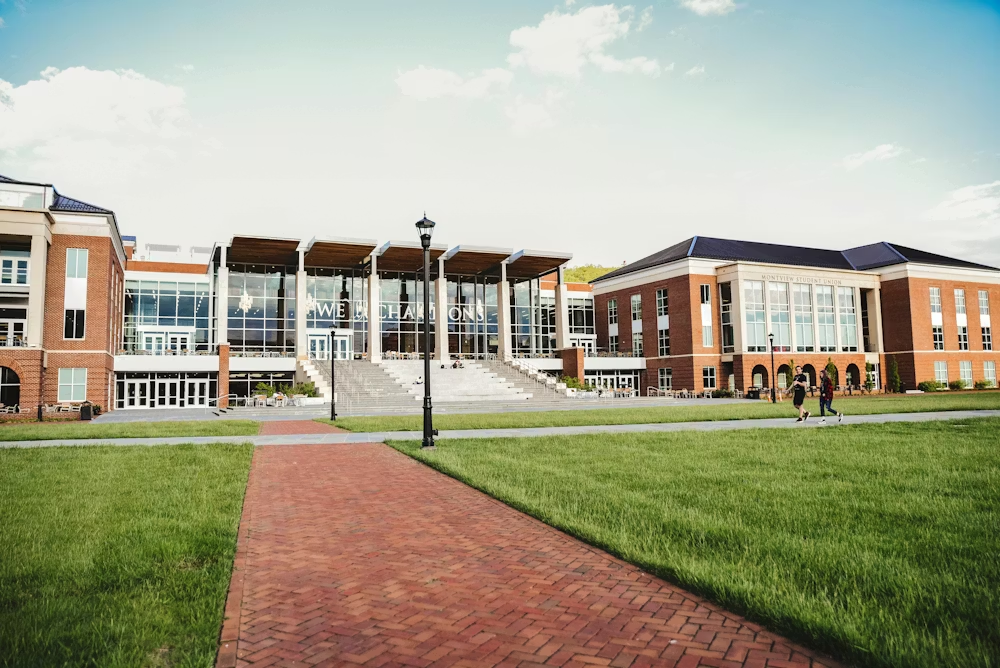
The drive to Westridge Academy was a blur of highway concrete and manicured suburban streets. My hands gripped the leather steering wheel of my Mercedes so tightly my knuckles turned white. Westridge. It was William’s alma mater. I hadn’t set foot on the campus since the memorial service held in the school gymnasium seventeen years ago.
The brick buildings stood stoic and unchanged, draped in ivy that had thickened over the decades. I parked in the visitor lot, my heart hammering a rhythm that had nothing to do with cardio and everything to do with dread.
The administrative office smelled of floor wax and old paper. The secretary, a young woman who looked like she hadn’t been born when William attended here, looked up from her computer.
“I’m Dr. Reynolds,” I announced, my voice clipped. “I’m here to see Principal Norwood.”
“Oh. Yes.” Her eyes widened, darting toward the heavy oak door of the inner office. “She’s expecting you. Go right in.”
Catherine Norwood was a formidable woman, tall with steel-gray hair cut in a severe bob. She stood as I entered, her expression a mix of professional sternness and something softer—pity, perhaps. I hated it instantly.
“Dr. Reynolds. Thank you for coming so quickly.”
“There has been a mistake,” I said, refusing the chair she offered. I stood with my back to the door, ready to bolt. “My son died seventeen years ago. I have no other children. Therefore, I have no grandson.”
Norwood didn’t argue. She simply sighed, a sound of heavy resignation, and walked to a side door connecting to a small conference room.
“I think it’s best if you see him,” she said.
She opened the door.
Sitting at a long mahogany table, looking small in a school blazer that was slightly too large for his shoulders, was a boy. He was slumped forward, picking at a loose thread on his sleeve, his dark, unruly hair falling over his forehead.
At the sound of the door, he looked up.
I stopped breathing. The air left the room, sucked out by the sheer impossibility of what I was seeing.
It wasn’t just a resemblance. It was a resurrection. The sharp jawline, the specific arch of the eyebrows, the way his hair swirled at the crown—it was William. But it was the eyes that shattered me. They were Reynolds eyes. Cobalt blue, startlingly bright, framed by dark lashes. My father had them. I had them. William had them.
And this boy had them.
He stood up, his movements awkward, carrying the lanky grace of a teenager who hasn’t quite grown into his limbs. He looked at me, terrified and defiant all at once.
“You’re her,” he said. His voice was cracking, hovering between soprano and baritone. “The brain surgeon.”
I couldn’t speak. I reached out a hand, trembling, and gripped the back of a chair to keep from falling. “Who are you?”
“Jaime,” he said. “Jaime William Parker.”
William.
“Your mother,” I rasped. “Is she Rachel?”
“Yeah.” He shifted his weight, defensive now. “Rachel Parker.”
I turned to Principal Norwood, my professional composure disintegrating. “How long? How long have you known?”
“We didn’t know until today,” Norwood said gently. “Jaime is a scholarship student. He’s been with us for two years. His file lists his father as deceased. We had no idea of the connection to your family until… the incident.”
“The incident?” I looked back at the boy.
Jaime’s chin went up. “I punched Derek Sanders. I broke his nose.”
“Why?” I asked.
“Because he said my mom was a tramp who probably ran off with a trucker.” Jaime’s hands balled into fists at his sides. “He didn’t know what he was talking about. She wouldn’t leave me. Not on purpose.”
The defiance cracked, and suddenly he was just a scared thirteen-year-old kid. “She’s been gone three days. Drew—her boyfriend—he said she walked out. But her phone is still at the apartment. She never goes anywhere without her phone.”
The reality of the situation began to settle over me like a cold fog. A grandson. A missing mother. A violent stepfather figure.
“Drew?” I asked, the name tasting like ash.
“He’s… he’s not good,” Jaime said, looking down at his shoes. “He drinks. He gets mean. When Mom didn’t come home Tuesday, he told me she was sick of us and left. But she wouldn’t. She’s not like that.”
He looked up at me again, those blue eyes searing into mine. “I found your name in her special box. The metal one she keeps under the bed. There was a picture of you and… and my dad. She said if anything ever happened, really bad stuff, you were the only person in the world who could fix things.”
He paused, swallowing hard. “She said you fix broken heads. I thought maybe you could fix this.”
The Stranger in My Car
Half an hour later, I was walking out of the school with a boy I hadn’t known existed that morning. Principal Norwood had granted temporary emergency custody given the circumstances—a missing mother and a potentially abusive boyfriend. The paperwork felt heavy in my hand, but not as heavy as the silence in the car.
Jaime sat in the passenger seat, his backpack clutched to his chest like a shield. He stared out the window as we drove away from the school.
“I have a condo downtown,” I said, breaking the silence. My voice sounded foreign to my own ears—too formal, too clinical. “It’s near the hospital. You can stay there until we find your mother.”
“Is it big?” he asked.
“It’s… sufficient,” I said. It was a sprawling penthouse I had bought to fill a void, filled with expensive furniture I rarely sat on.
“Rich people say ‘sufficient’ when they mean huge,” Jaime muttered.
I glanced at him. “Did your mother tell you I was rich?”
“She said you were important,” he corrected. “She said you were busy. That’s why we never met. She said you had important work to do saving lives and we shouldn’t bother you.”
The guilt was a sharp, sudden pain in my chest. “Is that really what she said?”
“Yeah. Mostly.” He traced a pattern on the window condensation. “Sometimes she’d cry when she looked at the picture of Dad. She’d say, ‘He would have fixed this.’ Then she’d put the box away.”
My phone rang through the car’s Bluetooth system, startling us both. The screen on the dashboard flashed: MEMORIAL TRAUMA CENTER.
I tapped the button on the steering wheel. “Dr. Reynolds.”
“Eliza, it’s Samantha Winters in ER.” Her voice was tight, stripped of pleasantries. “I know you’re off the schedule, but you’re listed as the emergency contact for a Jane Doe we just identified. Police ran her prints from a prior background check for a hospital admin job.”
My blood turned to ice. “Who is it?”
“Rachel Parker,” Samantha said. “She was brought in twenty minutes ago. Found unconscious in a warehouse district. Severe TBI. We need a neuro consult immediately, and… Eliza, she’s in bad shape.”
I slammed on the brakes, the car screeching to a halt at a red light. Jaime was looking at me, his eyes wide with terror. He had heard the name.
“Is it Mom?” he whispered.
I looked at him—this boy who was the only legacy William had left behind. I couldn’t lie to him.
“Yes,” I said into the phone, and to Jaime. “We’re five minutes away. Prep OR 3. I’m coming.”
“You can’t operate on family, Eliza,” Samantha warned.
“I know,” I snapped. “Get Lavine. But I’m going to be in that room.”
The sterile smell of Fear
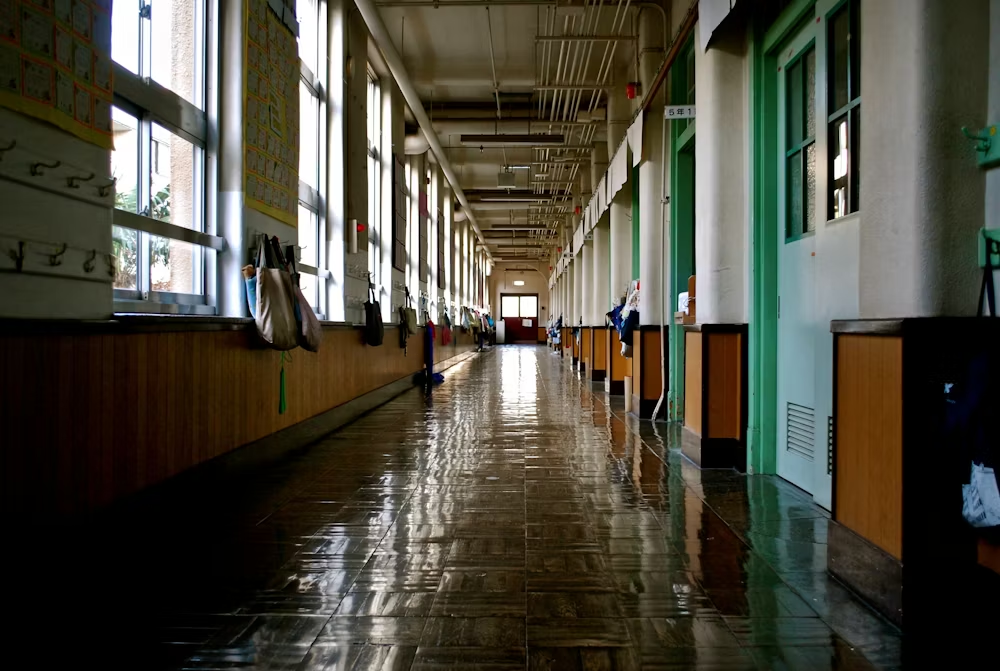
The Emergency Room was a cacophony of controlled chaos, but the trauma bay was eerily silent. That was never a good sign. Silence meant focus; silence meant life and death were balancing on a razor’s edge.
I badged through the doors, Jaime trailing close behind me, gripping the back of my blazer.
“Stay here,” I ordered him at the nurses’ station. “Do not move.”
“But—”
“Jaime, listen to me. You cannot see this. I need to go be a doctor now so I can help her. Can you be brave for me?”
He nodded, his lower lip trembling. I saw the terrified child beneath the teenage bravado.
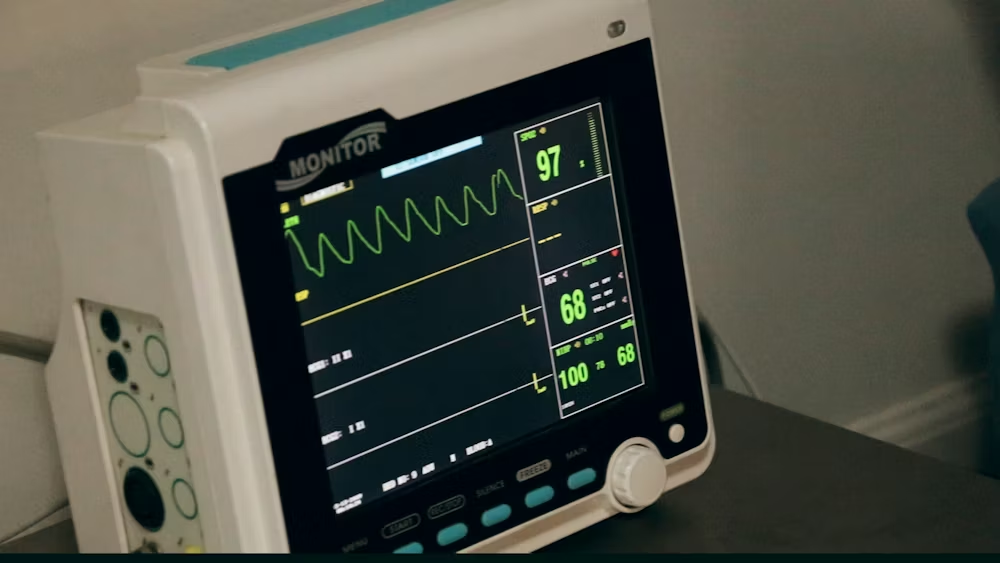
I walked into the trauma bay. Rachel was unrecognizable. Her face was a map of violence—purple and black bruising, one eye swollen shut, a laceration across her cheek. She was intubated, the machine breathing for her. But it was the monitor that drew my eye. Her intracranial pressure was skyrocketing.
Dr. Lavine, my colleague and the only other surgeon I would trust with my own brain, looked up.
“Subdural hematoma,” he said, his eyes meeting mine over his mask. “Midline shift. We need to decompress now.”
“Go,” I said. “I’ll scrub and observe.”
The next four hours were an agony I had never experienced. I had performed this surgery a thousand times. I knew every step, every risk, every potential complication. But watching it happen to Rachel—to the mother of my grandson, to the woman William had loved—was torture.
I stood in the corner of the OR, watching Lavine work. I saw the damage the beatings had caused. This wasn’t an accident. This was rage.
When Lavine finally placed the last staple and the pressure monitor began to stabilize, I slumped against the tiled wall.
“She’s stable,” Lavine said, stripping off his gloves. “But Eliza… the swelling is significant. We won’t know the extent of the cognitive deficit until she wakes up. If she wakes up.”
“She has to,” I said, my voice hollow. “She has a son waiting in the hallway.”
The Metal Box
It was midnight before we got to my condo. Rachel was in the ICU, stable but critical, in a medically induced coma to let her brain rest. Jaime had refused to leave the hospital until the nurses physically ushered us out.
My apartment was cold and dark. I flipped the switch, illuminating the expansive white living room, the floor-to-ceiling windows overlooking the city skyline. It looked like a museum exhibit, not a home.
Jaime stood in the foyer, clutching his backpack.
“You can take the guest room,” I said, pointing down the hall. “It has a bathroom.”
He didn’t move. “Is she going to die?”
“No,” I said, praying I wasn’t lying. “She is very strong. Dr. Lavine did an excellent job.”
Jaime walked into the living room and sat on the edge of the white leather sofa, looking afraid to touch anything. He unzipped his backpack.
“I brought the box,” he said. “The police let me go back to the apartment with them to get clothes while you were in surgery. I grabbed this first.”
He pulled out a dented gray metal lockbox. He produced a small key from around his neck and opened it.
The contents were a time capsule of grief and love. There were photos of William I had never seen—him laughing at a carnival, him playing a guitar I didn’t know he owned, him holding Rachel’s hand.
“Look,” Jaime said, handing me a bundle of letters tied with a blue ribbon.
I recognized the handwriting immediately. It was William’s messy, looping scrawl.
I sat down next to Jaime, the leather creaking. I unfolded the top letter. It was dated two days before he died.
Rachel, My mom is going to freak out when I tell her I’m not going to Pre-Med. But I don’t care. I want to build things, not fix them. And I want to build a life with you. I bought a ring. It’s cheap, but it’s a promise. As soon as I graduate, we’re out of here. We’ll go to the coast. Just you and me.
Tears, hot and stinging, pricked my eyes. I had fought with him that night. I had told him he was throwing his life away for a high school crush. I had told him he was too young to know what love was.
“He loved her a lot,” Jaime said softly.
“Yes,” I whispered. “He did.”
Jaime dug deeper into the box and pulled out a sealed envelope. It was yellowed with age. On the front, in neat cursive, was written: Dr. Eliza Reynolds.
My breath hitched. “What is that?”
“Mom wrote it,” Jaime said. “After the funeral. She said she mailed a copy, but you never wrote back. She kept this one just in case.”
I took the envelope. My hands were shaking so badly I could barely tear the flap.
Dear Dr. Reynolds, I know you blame me for the accident. I blame myself too. If he hadn’t been driving to see me… I’m writing because I have something of William’s left. I’m pregnant. I know this is a shock. My parents have kicked me out. I’m going to stay with a cousin in the city. I just wanted you to know that a part of him is still here. If you ever want to know your grandchild, please call me. I tried to call your office, but your secretary said you weren’t accepting personal calls.
I lowered the letter. Sandra. My old executive assistant. After William died, I had gone into a fugue state of grief. I had told Sandra to handle everything, to shield me from the world. “No condolences, no interruptions,” I had said. She had thought she was protecting me. Instead, she had robbed me of seventeen years.
“I never got it,” I said, looking at Jaime. The tears finally spilled over, ruining my makeup, dripping onto my silk blouse. “Jaime, I swear to you. I never got the letter. If I had known… if I had known you existed…”
Jaime looked at me, studying my face with those Reynolds eyes. He seemed to be weighing my soul.
“Mom said you were probably just sad,” he said. “She said sad people do things they don’t mean.”
He reached out and, tentatively, awkwardly, patted my hand. “It’s okay. You know now.”
The Long Wait
The next two weeks were a strange limbo. I took a leave of absence from the hospital—unheard of for me. I couldn’t operate. My hands, usually rock steady, had developed a tremor that only disappeared when I was sitting next to Rachel’s bed or cooking dinner for Jaime.
We developed a routine. In the mornings, I drove Jaime to Westridge. The expulsion had been overturned after I had a very direct conversation with the school board about the circumstances of his fight.
In the afternoons, I sat with Rachel. I read to her. I read medical journals, I read the news, I read the letters William had written her.
The police detective, a sharp woman named Mercer, came to the hospital on the third day.
“We found him,” she told me in the hallway. “Drew Sanders. He was at a motel off the interstate. He still had Rachel’s credit cards.”
“Will he be charged?” I asked, my voice hard.
“Attempted murder, kidnapping, assault,” Mercer listed them off with grim satisfaction. “Jaime’s statement about the prior abuse, combined with the forensic evidence from the warehouse… he’s going away for a long time, Doctor.”
“Good.”
Inside the room, the monitors beeped rhythmically.
One evening, Jaime brought his guitar to the hospital. It was an old acoustic that had belonged to William—Rachel had kept it all these years.
“Can I play?” he asked.
“Please,” I said.
He began to play a simple melody. It wasn’t perfect, but he had an ear. As the notes floated through the sterile air of the ICU, I saw Rachel’s hand twitch.
I jumped up, leaning over the rail. “Rachel?”
Her eyelids fluttered. The struggle was visible—the immense effort of pulling consciousness from the depths of the dark water she had been drowning in.
Her eyes opened. They were hazy, unfocused.
“Mom?” Jaime dropped the guitar and rushed to the other side of the bed.
“Jaime,” she whispered. The word was a slur, barely audible, but it was there.
She looked around the room, panic rising in her eyes until they landed on me. She stared at me for a long time.
“Dr… Reynolds?”
“It’s Eliza,” I said softly. “Please, call me Eliza.”
“Am I… dead?”
“No,” I smiled, wiping a tear from my cheek. “You’re safe. Drew is in jail. Jaime is safe. You’re at Memorial Hospital.”
She closed her eyes, letting out a long, ragged sigh. “You found us.”
“Jaime found me,” I corrected. “And I’m not letting you go again.”
The reconstruction of a Home
Recovery was not a movie montage. It was grueling. Rachel had to relearn how to hold a spoon, how to walk without dragging her left leg, how to find words that seemed to hide in the corners of her mind.
I moved them into the condo permanently. It wasn’t a discussion.
“I can’t accept this,” Rachel argued three weeks later, sitting in a wheelchair in my living room. “It’s too much.”
“Rachel,” I said, pouring tea. “I missed seventeen years. I missed his first steps. I missed his first word. I missed teaching him how to drive. You are not depriving me of one more second. Besides…” I gestured around the vast, empty space. “It’s too big for one person. It echoes.”
We transformed the condo. The sterile white walls were covered with Jaime’s astronomy posters and Rachel’s watercolors—she was an artist, I learned, who had put down her brush to work double shifts at a hospital billing department to feed my grandson.
I learned to be a grandmother. It was harder than brain surgery. Brain surgery had protocols; teenagers did not. I learned that Jaime was messy, loud, and brilliant. He had William’s mind for math but Rachel’s heart for people.
One night, six months later, I came home late from a board meeting. The condo smelled of garlic and roasting tomatoes. Jaime and Rachel were in the kitchen. Rachel was walking with a cane now, but she was moving.
“Grandma!” Jaime yelled. “We made lasagna. It’s probably burned.”
“It is crispy,” Rachel corrected, laughing.
I stood in the doorway, watching them. The ghosts of the past—William, my grief, the silence—were receding, replaced by the chaotic, messy, beautiful noise of the living.
Five Years Later
The auditorium was sweltering, filled with the buzzing energy of five hundred families fanning themselves with programs.
I sat in the second row, Rachel beside me. She didn’t need the cane anymore, though she still had a slight limp when she was tired. She looked radiant in a blue dress.
“He’s next,” she whispered, squeezing my hand.
“James William Parker-Reynolds,” the dean announced.
Jaime walked across the stage. He had grown into his height, filling out the gown. He shook the dean’s hand, accepted his diploma, and then scanned the crowd.
When he found us, he broke protocol. He raised the diploma high in the air and pointed right at us.
“That’s my boy,” Rachel sobbed.
“Our boy,” I whispered, my heart swelling so much I thought it might burst.
Later, at the reception, Jaime found us. He was surrounded by friends, looking every inch the young man William never got to be.
“Grandma,” he said, pulling me into a hug. “I have news.”
“Oh?”
“I got the letter today. From Johns Hopkins.”
I froze. It was my alma mater. It was where I had done my residency. Where William had refused to go.
“And?”
“I got in,” he grinned. “Pre-Med. Neurosurgery track.”
I looked at him—this miracle who had walked into a principal’s office and saved my life.
“Are you sure?” I asked. “It’s a hard life, Jaime. It demands everything.”
He looked over at his mother, laughing with a group of parents, and then back at me.
“I know,” he said. “But someone has to fix the broken things, right?”
I reached into my purse and pulled out a small velvet box. I had been saving it for this day.
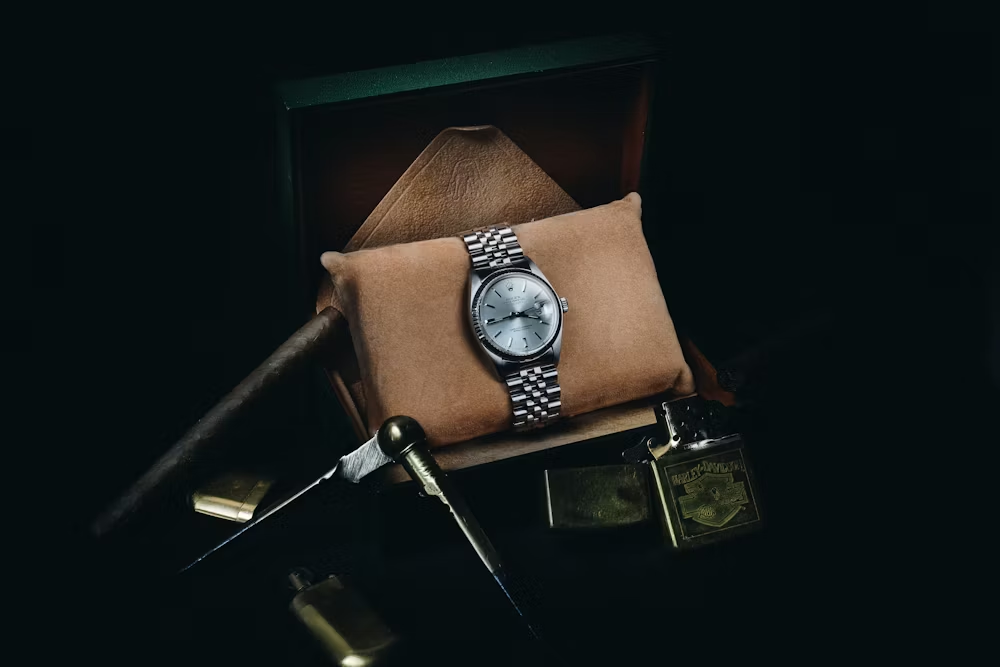
“This was your father’s,” I said, handing it to him.
He opened it. It was the vintage Rolex William had worn every day. I had found it in the wreckage of the car, repaired it, and kept it in a safe for twenty-two years.
“It still works,” I said.
Jaime slipped it onto his wrist. It fit perfectly.
“Thanks, Grandma.”
“Go,” I said, pushing him gently toward his friends. “Go live your life.”
I watched him walk away, the watch glinting in the sun. I took Rachel’s arm.
“Ready to go home?” she asked.
“Yes,” I said. “I am.”
And for the first time in a very long time, I knew exactly where that was.
We’d love to hear your thoughts on this story! Do you think Dr. Reynolds made up for the lost time? Let us know in the comments on the Facebook video, and if this story touched your heart, please share it with your friends and family!
