The fluorescent lights of the Pediatric ICU don’t buzz; they hum. It’s a frequency you stop hearing after your first year, but your body never stops feeling it. It’s a vibration that settles in your teeth and behind your eyes.
I had just finished a stretch of shifts that felt less like nursing and more like trench warfare. Three twelve-hour days back-to-back, culminating in a Code Blue on a six-year-old that we managed to reverse, but just barely. My hands were still carrying the phantom sensation of chest compressions—the terrifying, necessary violence of saving a life—when I boarded the plane in Phoenix.
I was heading home to New Jersey. My seat was 12C. I was wearing leggings that had seen better days and a hoodie that smelled faintly of hospital antiseptic and stale coffee. I wasn’t Nurse Whitman, the critical care specialist. I was just Maya, a woman who wanted to close her eyes and pretend the world didn’t exist for four hours and thirty minutes.
But the curse of the profession is that the “off” switch is broken. You don’t stop seeing pathology just because you punched out. You scan grocery stores for stroke victims. You check the respiratory rate of the person sleeping on the park bench.

And on Flight 281, you watch the boy in row nine.
He was sitting in 9A, three rows ahead and to the left. I noticed him during boarding because he looked like a raw nerve ending. He was lanky, elbows and knees everywhere, dressed in a grey hoodie that was pulled up over a mop of messy dark hair. He was unaccompanied—I saw the gate agent hand him his boarding pass with that overly bright, condescending smile adults use on teenagers.
He didn’t look back at her. He just gripped his backpack straps like they were keeping him tethered to the earth.
As we reached cruising altitude, the cabin settled into that collective, drug-like stupor of air travel. The hum of the engines drowned out conversations. Shades were pulled down. The beverage cart began its slow, rattling pilgrimage down the aisle.
I tried to read my book, but my eyes kept drifting to 9A.
The boy—Ian, I would learn later—wasn’t settling. He was vibrating. He tapped his foot. He shifted. He rubbed the back of his neck.
To the untrained eye, he was an anxious flyer. Maybe it was his first time alone. Maybe he was claustrophobic.
But then, the stillness hit.
It happened fast. One minute he was fidgeting, the next, his head dropped against the plastic window casing with a heavy, dull thud. It wasn’t the slow drift of sleep. It was the collapse of a puppet whose strings had been cut.
His phone slipped from his hand, sliding across the floor mat. He didn’t reach for it.
The woman next to him, seat 9B, was deep in the sensory deprivation of noise-canceling headphones and a velvet eye mask. She didn’t flinch.
I watched him. My internal clock started ticking.
Ten seconds. No movement. Twenty seconds. His posture was wrong. Too slack. Thirty seconds.
I saw the shine on his neck.
From three rows back, in the dim cabin light, his skin was glistening. It wasn’t warm in the plane; the air conditioning was blasting a frigid Arctic stream. Yet, the collar of his hoodie was turning dark with moisture.
Diaphoresis. Cold sweat. The body’s alarm bell.
The hair on my arms stood up. It’s a sensation every ER nurse knows—the shift in the air when death enters the room.
I unbuckled my seatbelt. The metal click sounded like a gunshot in the quiet cabin.
“Ma’am, the seatbelt sign is on,” a voice clipped from the front of the aisle.
I looked up. Standing at the bulkhead, arranging napkins on her cart with geometric precision, was the flight attendant. Her name tag read Caroline.
Caroline was a study in rigid control. Her uniform was tailored to within an inch of its life. Her hair was a helmet of hairspray, immovable and severe. She looked like she missed the days when flying was glamorous and passengers knew their place.
“I’m a nurse,” I said, keeping my voice low. I didn’t want to panic the cabin yet. “I need to check on that passenger in 9A.”
Caroline looked at me. She scanned my attire—the leggings, the messy bun, the dark circles under my eyes. She didn’t see a medical professional. She saw a disruption.
“He’s sleeping,” she said, her voice dripping with dismissive authority. “Please sit down. We are expecting turbulence over the Midwest.”
“He’s not sleeping,” I said, stepping into the aisle. “He’s crashing.”
The Escalation at 30,000 Feet
I ignored her. I walked the ten feet to row nine.
I leaned over the woman in 9B. “Excuse me,” I whispered.
I reached out and touched the boy’s arm.
It was like touching marble—cold, hard, and lifeless. But beneath the cold, there was a tremor. A fine, buzzing vibration that rattled his bones.
“Hey,” I said, tapping his cheek. Hard. A sternal rub for the face. “Can you hear me? Open your eyes.”
A sound escaped his throat. It was a guttural, wet moan. A sound of a brain misfiring.
“Sweetheart, are you diabetic?” I asked, my voice sharp and loud now.
He couldn’t answer. His head lolled toward me. His eyes were open slits, rolled back, showing only the whites. He was staring at a world I couldn’t see.
I looked at the floor. His backpack was shoved under the seat in front of him.
“I need to get into his bag,” I announced.
“You need to step back immediately!”
Caroline was there. She had moved with surprising speed for someone pushing a cart. She blocked the aisle, her body a physical barrier between me and the boy.
“You are disturbing the passengers,” she snapped, her face inches from mine. “Return to your seat.”
“He is hypoglycemic,” I said, locking eyes with her. “Look at him. Look at the sweat. Look at the confusion. He is in insulin shock. I need sugar, and I need his glucometer. Now.”
Caroline glanced at Ian. She saw a messy teenager in a hoodie who had passed out.
“He looks fine,” she declared, turning back to me. “He’s probably just airsick. Kids get dramatic when they fly alone. Now, sit down, or I will have the captain write you up for interference.”
“Interference?” I repeated, the word tasting like ash. “He is unresponsive!”
“He is tired!” she hissed. “Stop making a scene.”
The woman in 9B pulled off her headphones, blinking in the sudden confrontation. She looked at Ian, then at me.
“He… he was shaking earlier,” she whispered, her voice trembling. “He dropped his soda. I thought he was just cold.”
“See?” I pointed at Ian. “He’s crashing. His brain is starving for glucose. If we don’t treat him, he will seize. Then he will die.”
Caroline crossed her arms. “I am not serving beverages during turbulence. And you are not authorized to touch him. You are not on the manifest as a medical volunteer.”
That was the moment the switch flipped.
In the ER, there is no hierarchy when a patient is coding. There is only the problem and the solution.
“I am a licensed critical care nurse,” I said, my voice booming through the silent cabin. It wasn’t a request anymore. It was a command. “This child is in a medical emergency. If you do not assist me, you will be liable for his death. Move.”
I didn’t wait. I shoved past her. I felt her shoulder check me, but I used my momentum to drop to my knees in the aisle.
“That is a federal offense!” Caroline shrieked, her voice cracking. “You are assaulting a crew member! I am calling the cockpit!”
“Call them!” I yelled back, grabbing the backpack straps. “Tell them to land the damn plane!”
The Rescue in the Aisle
I yanked the bag out. The zipper stuck. My hands were shaking—not from fear, but from adrenaline. I ripped it open.
Books. Headphones. A bag of chips.
And there, at the bottom, a black nylon pouch with a red medical cross on the zipper.
I grabbed it. I unzipped it. The smell of insulin hit me—that distinct, medicinal scent of phenol.
Meter. Strips. A Glucagon emergency kit in its bright red case.
I didn’t have time to check his number. If he was this symptomatic—unresponsive, posturing—he was likely in the 30s.
“Does anyone have juice?” I shouted to the cabin, not looking back. “Soda? Candy? Gel?”
A man across the aisle—a guy in a baseball cap with kind eyes and a terrified expression—jumped up. He thrust a half-empty bottle of Coke at me.
“It’s regular!” he shouted. “Not diet!”
“Perfect.”
I turned back to Ian.
“Ian,” I said, my voice right in his ear. “I need you to drink. Can you hear me?”
I tilted his head back. I trickled a small amount of soda into his mouth.
He choked. He coughed weakly, the liquid sputtering out and running down his chin onto his grey hoodie.
He couldn’t swallow. His gag reflex was compromised. If I poured more, I’d drown him. Aspiration pneumonia was a risk, but brain death was a certainty.
I dropped the bottle.
“I have to inject him,” I said to no one in particular.
I grabbed the Glucagon kit. I popped the seal.
Caroline was on the interphone now, her back to us, her voice shrill and echoing over the PA system.
“Captain, we have a passenger in the cabin assaulting crew and creating a disturbance in row nine. Requesting law enforcement upon arrival. The passenger is unstable and violent.”
She wasn’t calling for paramedics. She was calling for the police. For me.
The cabin erupted.
“Are you crazy?” the man with the Coke yelled at Caroline’s back. “The kid is dying!”
“Look at him!” another woman screamed from row ten. “He’s blue! He’s turning blue!”
I looked up. A sea of phones. Ten, maybe twenty of them. Little black rectangles held high, recording the chaos. Recording Caroline’s back. Recording Ian’s grey face. Recording my desperate hands.
I ignored them. I focused on the kit.
Uncap the syringe. Inject the saline into the powder vial. Swirl, don’t shake. Draw it back up.
My hands were steady now. The muscle memory of a thousand shifts took over.
I found the vastus lateralis muscle in his thigh, right through his denim jeans.
“Sorry, buddy,” I whispered. “This is going to hurt.”
I drove the needle in. Deep.
I pushed the plunger.
And then, the longest three minutes of my life began.
Caroline turned around. She saw the needle in my hand. Her eyes went wide.
“You just injected a minor without parental consent,” she said, her voice trembling with a mix of rage and triumph. “Do you know what you’ve done? You’ve practiced medicine across state lines without authorization. You’ve ended your career.”
I checked Ian’s pulse. It was thready, fast, rabbit-like.
“If I didn’t inject him,” I said, keeping my fingers on his wrist, “he wouldn’t have a life for me to worry about.”
One minute. The cabin was deadly silent. The only sound was the hum of the engines and Caroline’s heavy breathing.
He stopped shaking. The tremor faded.
Two minutes. He took a deep, gasping breath, like a diver surfacing.
Three minutes.
Ian’s eyes snapped open.
They weren’t rolled back anymore. They were focused, wide, and filled with wild panic.
He tried to sit up. He gagged—a violent heave. Glucagon makes you nauseous.
“Easy,” I said, grabbing his shoulders to steady him. “You’re okay. You’re on the plane. You had a low. We fixed it.”
He looked at me, his eyes filling with tears. He looked at the wet stain on his shirt. He looked at the passengers staring at him.
“I… I missed lunch,” he mumbled, his speech thick and slurrying like a drunk. “I felt sick… I didn’t want to bother anyone.”
My heart shattered. It broke into a million pieces right there in the aisle.
“You’re never a bother, Ian,” I said, my voice cracking. “Never.”
I looked up at Caroline.
She was staring at the boy. The boy who was now awake. The boy who was talking. The boy who was clearly, undeniably diabetic.
Her face drained of color. The rigid mask of authority slipped. In that second, she realized she had bet her career on the wrong horse. She had gambled a child’s life on her own annoyance, and she had lost.
But instead of apologizing, she doubled down. Ego is a powerful drug.
“He’s awake,” she scoffed, smoothing her skirt. “See? He was fine. You created a panic for nothing. You assaulted me for a fainting spell.”
The man with the Coke stood up. He was a big guy, broad-shouldered.
“Lady,” he said, pointing a finger at Caroline. “Sit down and shut up.”
A cheer rippled through the back of the plane. It was primal.
The Welcome Committee
The rest of the flight was a tense, hostile standoff.
Caroline retreated to the front galley and pulled the curtain shut. Another flight attendant—younger, looking horrified, with “Amy” on her tag—came back. She brought orange juice, crackers, and a wet cloth.
“I’m so sorry,” Amy whispered to me as she handed me the juice. Her hands were shaking. “I was in the back. I didn’t know.”
“It’s okay,” I said. “Just help me watch him.”
Ian stabilized. The sugar hit his system. The color returned to his cheeks. I sat on the armrest of the aisle seat for the remaining forty minutes, holding his hand, monitoring his pulse.
“Is she really going to arrest you?” Ian asked quietly, looking at the closed curtain.
“She can try,” I said, trying to sound braver than I felt. My stomach was in knots. I knew how airlines worked. They protected their own.
When the wheels touched down in Newark, the pilot came over the intercom.
“Ladies and gentlemen, please remain seated. Port Authority Police are boarding the aircraft to handle a security incident.”
Ian squeezed my hand so hard his knuckles turned white. “I’m sorry. This is my fault.”
“Don’t you dare say that,” I told him. “This is not your fault.”
The door opened. Two police officers boarded. Caroline was waiting for them. She pointed down the aisle at me like I was a witch in Salem.
“That’s her,” she said, her voice loud and vindictive. “Row nine. Assault. Interference. Practicing medicine without a license. She was violent.”
The officers walked down the aisle. The cabin was dead silent.
“Ma’am,” the older officer said, stopping at my row. “Grab your bag. You need to come with us.”
I stood up. My legs felt weak.
Then, the man in the baseball cap stood up.
“If you take her, take me too,” he said. “I helped. I gave her the weapon.” He held up the empty Coke bottle.
Then the woman with the headphones stood up. “Me too. I witnessed everything. She saved him.”
Then Ian stood up, his legs still wobbly. “She saved my life.”
The officer paused. He looked at the sea of passengers standing in solidarity. He looked at the phones recording him. He looked at Caroline, who was trembling with indignation.
“Let’s sort this out on the jet bridge,” the officer muttered. “I’m not cuffing anyone in here.”
The Interrogation Room
They didn’t arrest me, but they detained me.
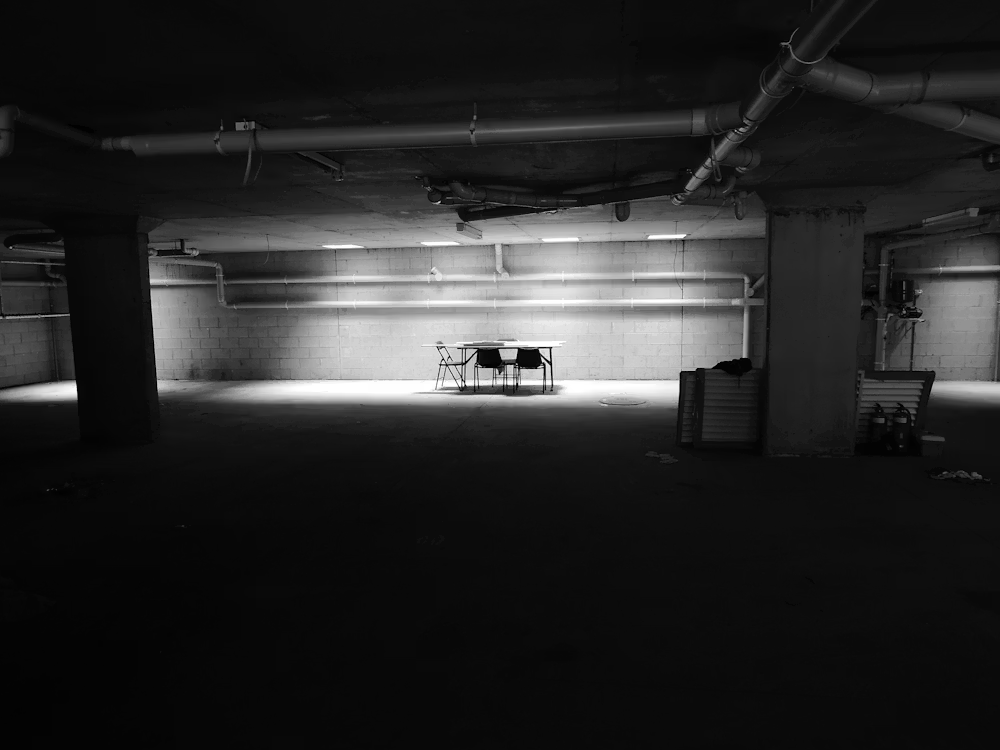
They took me to a small, windowless room in the terminal. It smelled of floor wax and stress. A suit-clad airline representative named Mr. Henderson was waiting there, along with a woman from their legal team.
Henderson looked tired. The lawyer looked hungry.
“Ms. Whitman,” Henderson said, sitting across from me at a metal table. “We take allegations of crew interference very seriously.”
“I take negligent homicide seriously,” I shot back. My adrenaline was fading, replaced by a cold, sharp anger. “Your flight attendant tried to prevent me from administering life-saving aid to a diabetic minor.”
“Ms. Brennan’s report states the passenger was conscious and stable,” the lawyer said, tapping a tablet. “She states you were aggressive, that you shoved her, and that you created a panic to justify your interference.”
“Ms. Brennan is a liar,” I said.
“We are notifying the FAA,” the lawyer continued, ignoring me. “And we are filing a complaint with your nursing board pending an investigation into your conduct. You injected a minor without consent. That is battery.”
“It’s Good Samaritan law,” I argued.
“Not at 30,000 feet, it isn’t,” she smiled thinly. “Maritime law is complicated, Ms. Whitman. You are banned from this airline effective immediately.”
They handed me a letter. A cease and desist. A ban notice.
I walked out of that airport at 1:00 AM. I was shaking. I was exhausted. I was banned.
I sat in my car in the parking garage and cried. Not the polite crying of a movie heroine. Ugly, heaving sobs. I had saved a kid, and they were going to take my license. They were going to destroy me to save a flight attendant’s ego.
The Viral Tsunami
I drove home in a daze. I unplugged my phone. I slept for three hours, waking up with that heavy, dread-filled feeling in my chest.
I turned my phone on at 10:00 AM.
It buzzed for five minutes straight.
Texts. Voicemails. DM notifications.
The first text was from my sister: “You’re trending on TikTok. Holy sh*t.”
I opened the app.
There it was. The video. The angle was from row ten. It was shaky and vertical, but the audio was crystal clear.
- “He is hypoglycemic! Look at the diaphoresis!” *
- “That is a federal offense!” *
- “Call them! Tell them to land the plane!” *
The caption read: “Airline Karen tries to let kid die, Nurse goes full hero mode. #FlightFromHell”
It had 12 million views.
I scrolled the comments. They were a tidal wave of validation.
- “I’m an endocrinologist. That nurse is 100% right. That kid was posturing. He was minutes from a seizure.”
- “The way the flight attendant said ‘federal offense’ makes my blood boil. She cared more about her authority than his life.”
- “I was on this flight! The nurse is a hero. The airline tried to arrest her!”
- “Name and shame the airline!”
By noon, the airline had turned off comments on their Instagram page. By 2:00 PM, Good Morning America was in my DMs. By 4:00 PM, a lawyer named Sarah Koenig called me.
“I specialize in medical rights and aviation litigation,” she said. Her voice was sharp, fast, and confident. “I saw the video. I want to represent you. Pro bono.”
“I don’t need a lawyer,” I said, rubbing my temples. “I did the right thing.”
“You need a lawyer,” she said, “because that airline is currently drafting a press release to destroy your character to save their stock price. They are going to say you were drunk. They are going to say you were hysterical. We need to hit them first.”
The Discovery
We sued.
Not for money, initially. We sued for defamation. We sued for a retraction of the ban. We sued for an apology.
Ian’s parents joined the suit. They were furious. Ian’s mother, a quiet, fierce woman named Elena, flew to New Jersey to meet me. We met in a diner. She hugged me and wouldn’t let go for a full minute.
“He didn’t want to eat his snack because he was embarrassed,” she told me, wiping her eyes. “He’s fourteen. He just wanted to be normal. He thought if he opened his bag and tested his blood, people would stare.”
“I know,” I said. “It’s hard to be different.”
“Thank you,” she whispered. “Thank you for seeing him.”
The legal battle was brutal. The airline fought back with the weight of a billion-dollar corporation. They dug into my employment history. They tried to find dirt. They deposed my co-workers.
But Sarah Koenig was a shark.
During the discovery phase—where both sides have to share evidence—we struck gold.
We requested Caroline Brennan’s personnel file. The airline refused. The judge ordered it.
It wasn’t just me.
There were six prior complaints. Six. One for refusing water to an elderly woman. One for threatening to kick a mother off a plane because her autistic child was crying. One for calling a passenger a “liar” about a nut allergy.
Caroline Brennan wasn’t just having a bad day. She was a bully with a badge. The airline knew it. They had moved her routes, slapped her on the wrist, and kept her flying because she had seniority and the union protected her.
The Deposition of Caroline Brennan
Six months later, we were in a deposition room in a high-rise in Manhattan. The table was mahogany. The air was air-conditioned to freezing.
Caroline Brennan sat across from me. She looked smaller without her uniform. She looked older. But her eyes were still hard, filled with a resentful pride.
Sarah placed a transcript on the table.
“Ms. Brennan,” Sarah said. “You stated in your incident report that the passenger was ‘sleeping peacefully’ when Ms. Whitman approached.”
“He was,” Caroline insisted. “His eyes were closed.”
Sarah played a new video on a large monitor. One we hadn’t released to the public yet. It was from the angle of the woman with the headphones—the woman in 9B.
It showed Ian before I stood up.
He wasn’t sleeping. He was convulsing. A subtle, rhythmic jerking of his left shoulder. His head was banging against the plastic window casing. Thud. Thud. Thud.
“Is that sleeping?” Sarah asked.
Caroline went pale. She stared at the screen.
“I… I couldn’t see that from my angle,” she stammered.
“You didn’t look,” Sarah corrected. “You assumed. And when a medical professional told you otherwise, you threatened her with prison.”
Sarah leaned forward. “Do you know what the blood sugar reading was when the paramedics arrived?”
Caroline stayed silent.
“It was 34,” Sarah said. “Do you know what happens at 34, Ms. Brennan?”
“No,” Caroline whispered.
“Death,” Sarah said. “Permanent brain damage. Coma. That is what you were protecting the cabin from avoiding. You were protecting the passengers from the inconvenience of saving a child’s life.”
Caroline looked at her hands. For the first time, the facade cracked. She realized she wasn’t the hero of the story. She was the villain who almost killed a child because she didn’t like a passenger’s tone.
The Settlement and The Shift
The airline settled three days later. They wanted it to go away. They wanted the videos off the news.
The terms were confidential regarding the money, but the non-monetary terms were public—at my insistence.
- Caroline Brennan was terminated. Not retired. Not reassigned. Fired for cause.
- The airline had to overhaul its medical training. “The Ian Protocol” was established, requiring crew to defer to licensed medical professionals during emergencies.
- A formal, public apology was issued to me and Ian.
But the real victory wasn’t the check or the press release.
It happened four years later.
I was working a night shift in the ICU. It was quiet, the monitors humming their steady rhythm.
A group of third-year medical students walked in for their rotation rounds. They were young, terrified, and eager, looking like deer in headlights.
One of them lingered at the back. He was taller now. He had filled out. He wasn’t wearing a grey hoodie; he was wearing a short white coat.
He looked at me. I looked at him.
“Nurse Whitman?” he asked. His voice was deeper, but I knew it.
I dropped my chart. “Ian?”
He smiled. It was the same shy smile I saw when he woke up on the floor of a Boeing 737.
“I’m a med student,” he said. “I’m doing my rotation here.”
I walked over and hugged him. It was unprofessional. I didn’t care. I hugged him tight.
“You’re a doctor,” I whispered.
“Almost,” he said. “I decided after… well, after that flight. I wanted to be the person who knows what to do.”
He pulled a stethoscope out of his pocket. It had a small tag on it. A red tag with a medical cross.
“I keep this on here,” he said. “To remember.”
“Remember what?” I asked.
“That authority isn’t always right,” he said. “And that sometimes, you have to break the rules to save a life. I promised myself I would never be the doctor who doesn’t listen.”
The Cabin Care Project
The money from the settlement didn’t go into a sports car. It went into a foundation.
I started The Cabin Care Project. We provide free medical ID bracelets for traveling children. We fund training modules for flight crews on recognizing “silent” emergencies like hypoglycemia, anaphylaxis, and silent seizures.
We also have a legal defense fund for medical professionals who intervene in public emergencies. Because nobody should have to choose between their license and a stranger’s life.
Every year, on the anniversary of the flight, Ian and I meet for lunch. We drink Coke. Regular, not diet.
He tells me about his patients. I tell him about the nurses he’s going to annoy one day.
And we talk about Caroline. Not with anger anymore, but with a strange sort of pity.
She lives in Florida now. I heard she tried to sue the airline for wrongful termination, but the video evidence was too damning. She works in retail now.
I hope she’s happy. I hope she’s healthy.
But mostly, I hope that if she ever sees someone shaking, sweating, and crashing… she finally listens.
Because in the end, the title on your badge doesn’t make you a leader. Your actions do. And on Flight 281, the only authority that mattered was the one that said, “Not today. Not on my watch.”
Let us know what you think about this story on the Facebook video! If you like this story, share it with friends and family to remind them that standing up for what’s right is always worth the risk, no matter who tells you to sit down.
