This summer, the night sky has a lot in store. Additionally, this week’s quadruple meteor shower is possible because to the simultaneous peaks of the Alpha Capricornids and Southern Delta Aquariids. Although scientists suggest you might get a better glimpse of the much-anticipated shower this month, the legendary Perseids will peak in mid-August.
Here’s everything you need to know about the celestial events lighting up the sky.
Southern Delta Aquariid and Alpha Capricornid meteor showers
Both the Alpha Capricornid and Southern Delta Aquariid meteor showers will peak on the evening of July 29 and early July 30. Viewers in the United States may be able to catch a peek of both showers, however they are best viewed from the Southern Hemisphere.
Around 25 miles per second is the top pace at which the Southern Delta Aquariids can travel. According to EarthSky, between 5 and 10 percent of these meteors leave behind luminous persistent trains that remain in the atmosphere for a brief period of time after the meteor burns through.
The shooting stars in the shower seem to be coming from the southwest region of the Aquarius constellation. Even though the exact cause of the Southern Delta Aquariids is still unknown, astronomers believe it to be the comet 96P/Machholz. The Southern Delta Aquariids could generate as many as 15 or 20 shooting stars each hour in ideal circumstances.
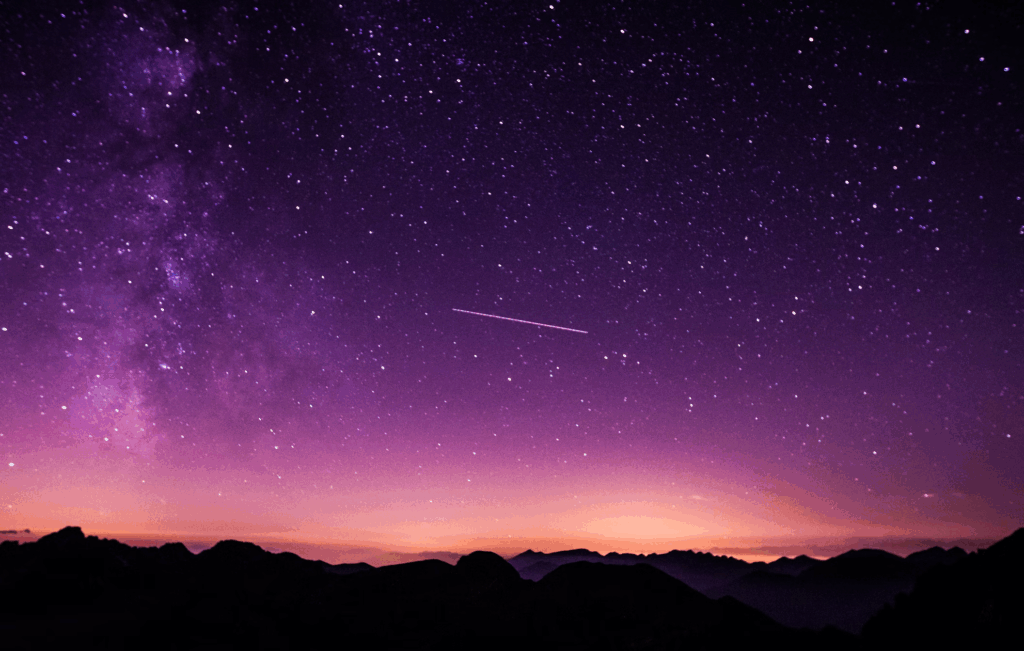
They still have a lot to offer, however the Alpha Capricornids are a small shower with slower-moving meteors. Nick Moskovitz, an associate astronomer at the Lowell Observatory near Flagstaff, Arizona, told Christina Larson of the Associated Press that these meteors might have tails that persist a little longer than those of the Aquariids.
Although they don’t have frequent meteors, totaling about five per hour, “when they do show up, they are these sort of slow fireballs across the sky. So if you are looking for that one spectacular event to happen during a watch session, an Alpha Capricornid may be the one that gets you the most excited,” he adds to Nell Greenfieldboyce at NPR.
The comet 169P/NEAT’s debris track is the source of alpha Capricornid meteors. They seem to come from the Capricornus constellation.
Each of these showers generates a moderate amount of meteors on its own. However, as Thaddeus LaCoursiere, coordinator of the Bell Museum’s planetarium program in St. Paul, tells the AP, when combined, these shooting stars “do add up.”
Perseid meteor shower
This year may already be the finest time to see the Perseids, even though they won’t peak for a few more weeks. This is because, in mid-August, the moon will be too bright to see the meteor shower clearly. The moon is just approximately 25% full at the moment.
The moon may cut that total by at least 75 percent in 2025, according to the American Meteor Society, even though the Perseids might produce between 50 and 100 meteors per hour at their peak.
“The glare of the moon is really a killer,” Moskovitz explains to NPR, “and that is just going to make the Perseids not all that compelling this year.”
Tips for sky-watching
In an area with minimal artificial light pollution, the optimum time to observe the meteor showers is usually after midnight but before morning. Avoid screens, especially your phone, so your eyes can get used to the darkness. In this instance, as this week’s rains favour the Southern Hemisphere, make sure your viewing location provides an excellent view of the southern sky.
The American Meteor Society’s astronomers advise delaying seeing the Alpha Capricornids until later in the evening, after the moon has set and the radiant, the point in the sky from which meteors seem to originate, has risen in altitude.
“This time of the summer is really peppered with meteor showers,” says Hunter Miller, an astronomy educator at Chicago’s Adler Planetarium, to NPR. “Really, my biggest recommendation is to get to dark skies.” He adds that the Perseids will still be worth catching despite the moon’s brightness, since they’re known to produce bright shooting stars.
Tonight, July 28, it’s also worthwhile to observe the moon itself: According to Jamie Carter of Live Science, approximately 45 minutes after sunset, a beautiful waxing crescent moon will emerge beside Mars. No matter when you choose to search this summer, you’re certain to find something eye-opening even if you don’t find that pairing.
Please SHARE this story with Family and Friends and let us know what you think in comments!
