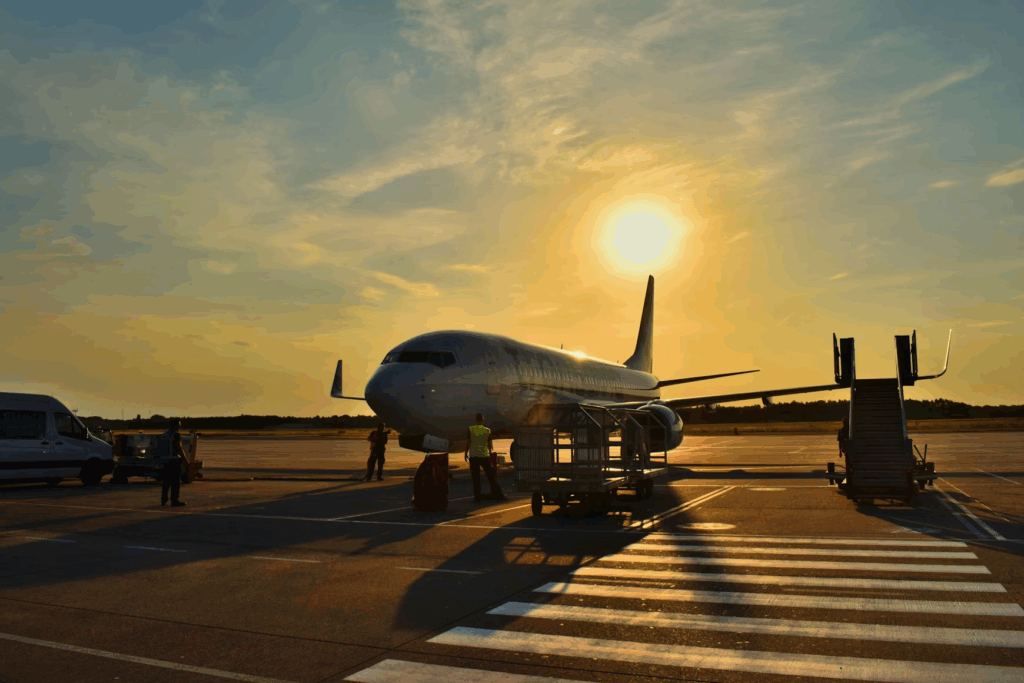
Flight 847 pulled back from gate B7 at Denver International Airport precisely at 11:47 p.m., its Boeing 777 engines spinning to life with a low, resonant rumble that vibrated through the cabin walls and into the marrow of the passengers’ bones. Outside the terminal window, snow had begun falling in thick, heavy flakes—wet cement falling from the sky—that clung to the aircraft’s wings before being swept away by the chemical wash of the de-icing crews.
Winter storms in Colorado were unpredictable beasts, but tonight’s weather reports had suggested clear skies ahead once they climbed above the mountain peaks. It was a lie the radar would soon expose.
Diana West pressed her face against the small, cold window in seat 10C, watching the ground crew disconnect the final power cables and remove the wheel chocks. The orange wands of the marshals blurred in the snow. Her reflection stared back from the glass: a woman in her early thirties with tired eyes that held too many ghosts, and shoulder-length brown hair that needed cutting.
She wore a faded military-surplus jacket over a plain gray sweater—both items showing the kind of wear that came from years of use rather than fashion choices. Her jeans had a small tear near the left knee, carefully mended with thread that didn’t quite match the original denim. To the casual observer, she looked destitute. To a trained eye, she looked like someone who kept her kit ready for a rapid deployment that never came.
To the other passengers settling into their seats around her, Diana appeared unremarkable—just another traveler heading home after the holidays, probably someone who’d saved up for months to afford the upgrade to premium economy. Her small black duffel bag was tucked under the seat in front of her. It contained the minimal possessions of someone who’d learned to travel light: a change of clothes, basic toiletries, a paperback novel with dog-eared pages, and—buried beneath everything else in a heavy ceramic urn—the ashes of her father.
The urn was the reason for the trip. Commander Thomas West, USN (Ret.), had died six months ago. His final wish was to be scattered in the Pacific, off the coast of Washington where he had learned to fly. Diana had driven her rattling Honda Civic from Colorado Springs to Denver because she couldn’t afford the direct flight from her local airport. She was on a mission, the final mission of a daughter who had followed her father’s footsteps into the sky, only to fall back to earth harder than he ever had.
The Judgment of Row 10
The businessman in 10A adjusted his Italian leather briefcase and glanced sideways at Diana’s scuffed hiking boots. Marcus Wellington had paid $3,000 for his first-class ticket, and he expected a certain caliber of fellow travelers. His navy suit was tailored; his silver watch was Swiss and cost more than Diana’s car; and his carry-on luggage bore the discreet, interlocking logos of expensive brands.
When he’d seen Diana boarding with her worn jacket and that patched duffel bag, he’d assumed she was in the wrong section. He had sighed, audibly, shifting his body away from her as if poverty were contagious.
“Excuse me,” Marcus said to flight attendant Andre Brown as he passed down the aisle, checking seat belts. “I think there might be some confusion about seating assignments. That woman doesn’t appear to have a first-class boarding pass.”
Andre glanced at Diana, who was staring out the window, ignoring the slight. He checked his passenger manifest. “Ms. West is confirmed in 10C, sir. Is there a problem with your seat?”
Marcus waved dismissively, flashing a smile that didn’t reach his eyes. “No, no problem. Just seemed… unusual. One likes to know one is secure.”
Three rows ahead, Dr. Katherine Reed finished organizing her medical journals in the overhead compartment. She’d been attending a cardiac surgery conference in Denver and was eager to return to her practice in Seattle. Katherine had noticed Diana during boarding—had seen the way other passengers’ eyes lingered on the worn clothing and modest luggage with disdain.
As a surgeon who’d worked in military hospitals early in her career, Katherine recognized something familiar in Diana’s posture: the way she moved through the aisle with economic precision; the way her eyes automatically scanned exits and safety equipment; the particular stillness she maintained while other passengers fidgeted with electronics and magazines. It was the stillness of a hunter, or perhaps the hunted.
“That woman has military bearing,” Katherine murmured to herself, settling into seat 7B, but she kept the observation private, focusing instead on the surgical case notes she planned to review during the flight.
Near the front of the cabin, eight-year-old Lily Chen clutched a stuffed penguin as flight attendant Paige Scott helped her fasten her seat belt. Lily was traveling alone to visit her grandmother in Seattle—her first unaccompanied-minor flight. She’d been nervous during boarding, but Paige’s gentle manner had helped calm her fears.
“Remember, if you need anything during the flight, just press this button,” Paige explained, showing Lily the call light. “I’ll be checking on you every few minutes, okay?”
Lily nodded, her dark eyes wide. She glanced back toward the premium economy section where Diana sat. Lily didn’t see a poor woman. She saw someone who wasn’t afraid of the dark outside the window.
Behind them in row 15, Sophia Morales adjusted her sleeping infant daughter against her shoulder while struggling with an overflowing diaper bag. Sophia was a single mother returning from a job interview in Denver. The flight represented a gamble; she had spent her last savings on this trip, hoping the interview would lead to a life where she didn’t have to count every penny at the grocery store.
“Ma’am, would you like me to help you get settled?” Andre asked.
“Thank you. That’s very kind,” Sophia replied, grateful for the assistance.
As Andre helped organize her seat area, Sophia noticed how he moved with the confident efficiency of someone accustomed to handling emergencies. What she didn’t know was that Andre’s calm demeanor came from eight years as an Army medic before joining the airline industry—a background that would soon become critical.
The Cockpit and the Ghost in the Machine
Captain Mark Phillips completed his pre-flight checklist in the cockpit, his experienced hands moving automatically through procedures he’d performed thousands of times. At forty-eight, Phillips was a monolith of the airline—reliable, steady, the kind of pilot who made boring announcements that put people to sleep.
“Weather looks good once we get above the mountains,” Phillips said to First Officer Tara Johnson as she programmed their flight plan into the navigation computer. “Denver Approach is reporting light snow, but Seattle’s showing clear skies with light winds.”
Tara nodded, though something in the updated weather reports concerned her. At twenty-six, she was still relatively new to commercial aviation. She was sharp, top of her class, but she lacked the bone-deep intuition that came from decades in the chair.
“Captain, I’m seeing some reports of rapidly developing weather systems over the Rockies,” Tara mentioned, pointing to her weather display. “The thermal gradients are shifting. The storm cells weren’t there during our briefing—but they’re showing significant development in the past hour. It looks like a convergence.”
Phillips leaned over to study her screen, squinting slightly. “Mountain weather can be unpredictable this time of year. We’ll keep an eye on it, but our route should keep us well north of any significant activity. Let’s get this bird in the air.”
What neither pilot knew was that a collision between Arctic air masses and unusually warm Pacific moisture was creating atmospheric conditions that would generate a “bomb cyclone”—a storm of explosive intensity rarely seen inland. The weather service’s computer models hadn’t predicted the rapid intensification.
Back in row 10, Diana settled deeper into her seat. Her left hand rested on the armrest, fingers occasionally trembling in a rhythmic, involuntary spasm. She covered the hand with her other one, squeezing tight until the shaking stopped.
Physical therapy had helped, but the nerve damage from her final combat mission remained permanent. The Air Force Medical Board had been clear: pilots with neurological impairments—even minor ones—represented unacceptable risks. They had grounded her. Clipped her wings.
Diana closed her eyes as the aircraft began its taxi. But sleep didn’t come immediately. Instead, memories surfaced unbidden: the weight of an F-16’s control stick; the roar of afterburners; the smell of jet fuel and fear. She’d been “Spectre”—a ghost in the machine, capable of putting a JDAM through a window from 15,000 feet.
But that was before the IED in Afghanistan. Before the capture. Before the recovery that took two years of her life and left her officially listed as “KIA” for six months to protect her unit’s operational security. She had come back from the dead only to find that her life didn’t fit anymore.
Now she was just Diana West, the woman who worked the desk at a small regional airport and couldn’t afford a direct flight.
“Ladies and gentlemen, this is Captain Phillips speaking. We’ve been cleared for takeoff on runway 34L.”
Diana opened her eyes as the engines spooled up. She felt the thrust press her into the seat. She monitored the sound—N1 rotation speed, the vibration of the fan blades. It was a symphony she knew better than her own heartbeat.
As Flight 847 climbed through 10,000 feet and the lights of Denver fell away, Diana finally allowed herself to relax. She pulled her jacket tighter and closed her eyes.
None of them knew that 200 miles ahead, the sky was turning into a blender.
The Medical Emergency
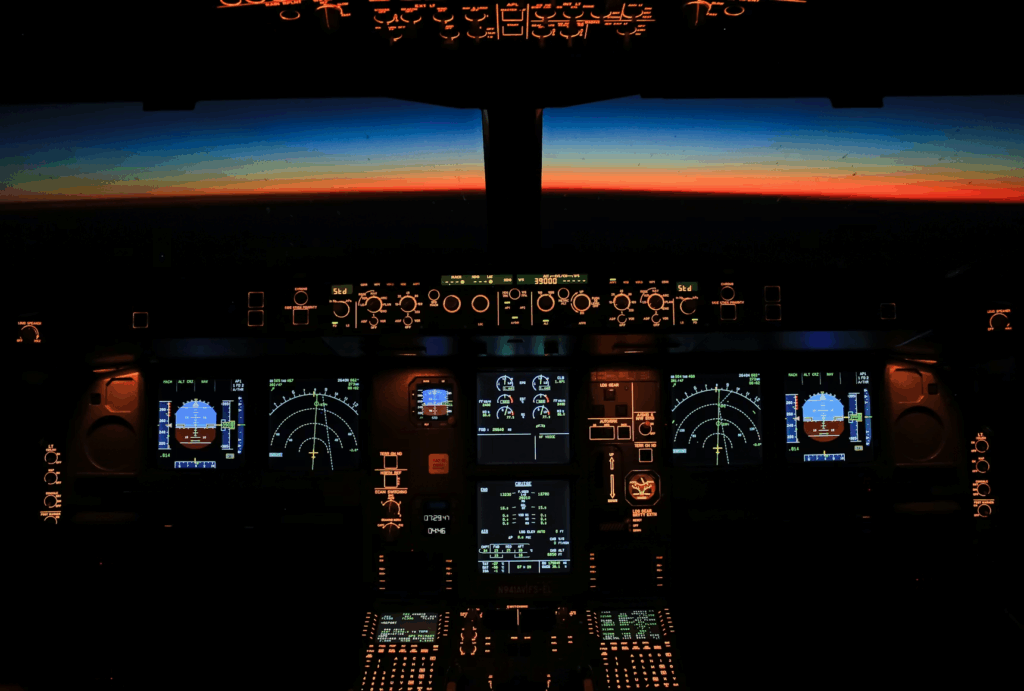
Forty-three minutes into the flight, Captain Mark Phillips felt the first wave of dizziness wash over him like cold water. It wasn’t a headache; it was a void opening up in the center of his skull.
He gripped the control yoke tighter, blinking hard to clear his vision as the cockpit instruments seemed to shimmer at the edges.
“Everything okay, Captain?” First Officer Tara Johnson asked, glancing over.
“Just tired,” Phillips replied, though the metallic taste in his mouth suggested something more serious. “Long day.”
Tara returned to her instruments, but she’d caught the slight slur in Phillips’s speech.
In the cabin, the turbulence began. It started as a low vibration, then escalated to a rhythmic bumping, like a car driving over railroad ties.
The “Fasten Seatbelt” sign pinged on.
In the cockpit, the situation deteriorated rapidly. The dizziness returned, accompanied by a crushing sensation in Phillips’ chest, as if a heavy stone had been placed on his sternum.
“Tara,” he said quietly, trying to keep the strain out of his voice. “I need you to take the controls.”
“I have the aircraft,” Tara replied instantly, her hands locking onto the yoke.
She looked over at him. Phillips was pale, sweat beading on his forehead. His left hand was clutching his chest.
“Captain?”
“I think…” Phillips gasped, “I think I’m having a heart attack.”
The words hit Tara like a physical blow.
“Captain, I’m declaring a medical emergency,” Tara announced, reaching for the radio. “Seattle Center, Flight 847 declaring medical emergency. Pilot incapacitation.”
As she spoke, Phillips slumped forward, unconscious. His weight hit the yoke, sending the plane into a shallow dive before Tara could pull him back and secure him against the seatback.
“Andre, get to the cockpit!” Tara yelled into the intercom.
The plane lurched violently. They had hit the outer wall of the storm.
The Chaos in the Cabin
In the cabin, the dive was terrifying. Passengers screamed. Carts rattled.
Diana West woke up instantly. Her eyes snapped open, her brain transitioning from sleep to combat readiness in a microsecond. She felt the negative G-force of the dive, then the correction.
That wasn’t turbulence, she thought. That was a control input. A bad one.
Andre Brown sprinted up the aisle, his face grim. He disappeared into the cockpit.
Minutes passed. The turbulence grew worse. It wasn’t just bumps now; it was violent shifts in altitude. The plane would drop two hundred feet, then slam upward. Overhead bins popped open, spilling luggage. Oxygen masks dangled like dead vines.
“Ladies and gentlemen,” Tara’s voice came over the intercom. She sounded breathless, terrified. “We are… we are dealing with a medical emergency in the cockpit. And we are encountering severe weather. Please stay seated.”
Diana unbuckled her belt. She stood up. The floor tilted beneath her feet, but she compensated automatically, her knees bent, her center of gravity low.
Marcus Wellington, clutching his armrests until his knuckles were white, looked at her. “Sit down! Are you crazy? We’re going to crash!”
Diana ignored him. She ignored the flight attendant telling her to return to her seat. She walked to the galley where Paige Scott, the junior flight attendant, was looking pale, clutching the wall.
“I need to speak to the senior flight attendant,” Diana said calmly.
“He’s in the cockpit. You have to sit down.”
“Miss,” Diana said, her voice steel. “The plane is hunting. The pilot is struggling to maintain altitude and heading. I can hear the engines surging. I am a pilot. Tell them I can help.”
Just then, the cockpit door opened. Andre stepped out, looking frantic.
“Is there a doctor on board?” he shouted.
Dr. Katherine Reed stood up immediately. “I’m a surgeon.”
“Come with me,” Andre said.
As Reed rushed forward, Diana stepped into Andre’s path.
“I’m a pilot,” she said. “F-16s. Combat rated.”
Andre looked at her. He saw the worn clothes. He saw the tremor in her left hand. He saw a woman who looked like she needed help, not someone who could give it.
“We have a pilot,” Andre said dismissively. “We need a doctor.”
“You have one pilot,” Diana corrected. “And judging by the way this bird is flying, she’s overwhelmed. This weather is a Category 5 event. She needs a second set of eyes. Or do you want to bet 183 lives on a rookie flying solo in a blizzard?”
Marcus Wellington shouted from his seat. “Sit down! You look like a homeless person! You aren’t flying this plane!”
Diana turned on him. The look she gave him was colder than the ice accumulating on the wings. “Sir, if you don’t shut up, I will duct tape you to that seat myself. I flew sorties over Kandahar while you were picking out ties.”
She turned back to Andre. “Tell the First Officer my call sign is Spectre. Tell her I have 500 combat hours and I know how to fly through hell. If she says no, I’ll sit down.”
Andre hesitated. The plane dropped again, a sickening, stomach-churning fall. Screams filled the cabin.
“Wait here,” Andre said.
He went back inside. Seconds later, he opened the door.
“She says get in here. Now.”
Into the Storm
The cockpit was a scene of controlled chaos. Captain Phillips had been pulled out of his seat and was lying on the floor behind the pedestal. Dr. Reed was already working on him, cutting open his shirt, attaching AED pads.
Tara Johnson was wrestling the yoke. The windshield was a wall of white and grey fury. Lightning flashed constantly, illuminating the terror on her face.
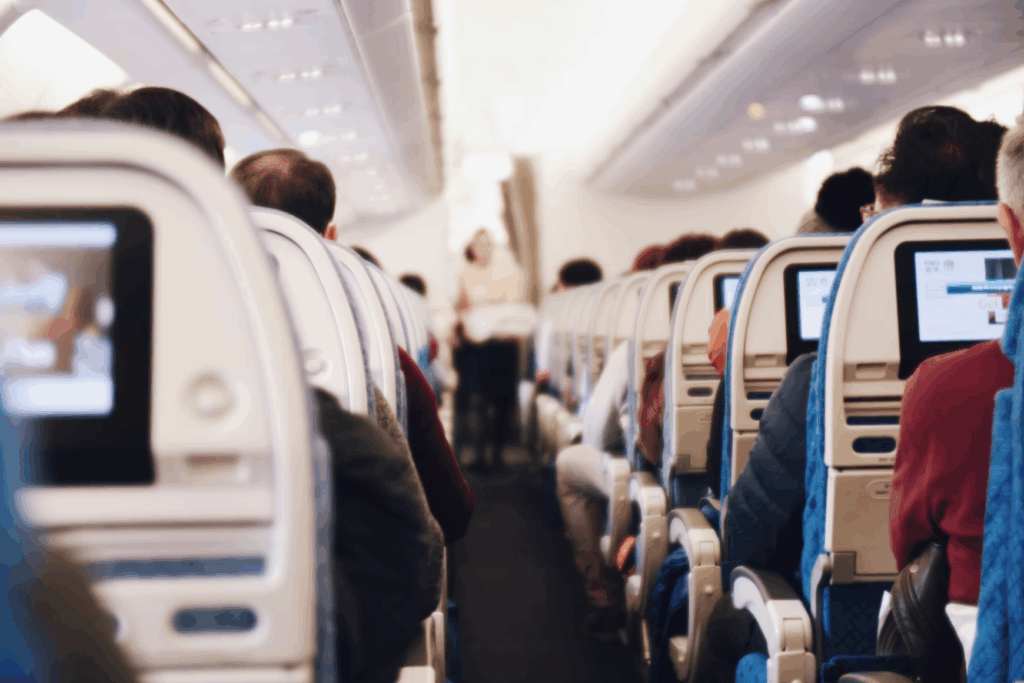
Diana slipped into the Captain’s seat. It felt familiar and foreign all at once. The glass cockpit of the 777 was different from an F-16, but the physics of flight were universal.
“Who are you?” Tara yelled over the roar of the wind.
“Diana West. Former Air Force. What’s our status?”
“Captain’s down. Cardiac arrest. We’re in a severe squall line. Radar is white-washed. I can’t see a path through.”
Diana scanned the instruments. Airspeed was fluctuating wildly. Altitude was unstable. The autopilot had disconnected.
“You’re fighting the yoke too hard,” Diana said calmly. “You’re over-correcting. Loosen your grip.”
She put her hand on the controls. Her left hand trembled.
Tara saw it. “Your hand…”
“My hand shakes,” Diana said. “My brain doesn’t. Give me the aircraft.”
Tara hesitated for a split second, then relinquished control. “You have the aircraft.”
Diana took the yoke. She felt the vibration of the storm. She didn’t fight it. She rode it. She made micro-adjustments, anticipating the gusts rather than reacting to them.
The ride smoothed out instantly. Not perfect, but controlled.
“Seattle Center, Flight 847,” Diana keyed the mic. “Pilot incapacitation. Requesting vector to nearest military airfield with precision approach radar.”
“Flight 847, who is this? Identify.”
“Captain Diana West, USAF Retired. I am assuming command of the aircraft under emergency protocols.”
There was a long pause. Static hissed. Then a new voice came on the line. A voice Diana hadn’t heard in three years.
“Spectre? Is that you?”
Diana froze. Her heart slammed against her ribs. “Bolt?”
Colonel Dan “Bolt” Richardson. Her old squadron commander. The man who had written the letter of recommendation for her medical discharge.
“I thought you were dead, Diana,” Richardson’s voice crackled. “The official report said…”
“Reports vary, sir. Not dead yet. But I will be if I don’t get a hole in this sky. Where can I put this thing down?”
“Cheyenne Mountain is your best bet. It’s 200 miles southeast. But Diana… the weather there is minimums. 200 foot ceiling. Heavy snow. And they’re reporting severe wind shear.”
“I can make it.”
“Your medical status…”
“Is irrelevant if we crash, Bolt. Clear the airspace.”
The Engine Failure
They turned the heavy jet toward Cheyenne Mountain. But the storm wasn’t done with them.
A massive bolt of lightning struck the nose of the aircraft. The sound was like a cannon shot. The smell of ozone filled the cockpit.
Alarms screamed. The master caution light flashed red.
FIRE ENGINE 2. FIRE ENGINE 2.
“We lost the right engine!” Tara shouted. “Fire warning!”
“Extinguishers!” Diana ordered. “Pull the handle! Cut fuel to Number Two!”
Tara’s hands flew across the overhead panel. “Bottle one discharged. Fire light still on. Bottle two discharged.”
The light went out. But the engine was dead. The tachometer dropped to zero.
Now they were flying a heavy, fuel-laden jet on one engine, in a blizzard, over the Rocky Mountains.
The aircraft yawed violently to the right. Diana slammed on the left rudder, counteracting the drag of the dead engine. Her leg muscles burned.
“Trim it out,” Diana said through gritted teeth. “We’re losing altitude. We need to drift down. Don’t stall it.”
Back in the cabin, the passengers saw the flash. They felt the loss of power. The lights flickered and died, replaced by emergency lighting.
Panic was setting in.
Andre Brown grabbed the intercom. “Ladies and gentlemen, please assume the brace position! Heads down! Stay down!”
Sophia Morales curled over her baby, sobbing. Lily Chen hugged her penguin, tears streaming down her face, but she didn’t make a sound.
In the cockpit, Diana was fighting a war.
“We’re too heavy,” she said. “We can’t hold altitude on one engine in this turbulence. We’re going down.”
“We’re going to crash?” Tara asked, her voice small.
“No,” Diana said. “We’re going to glide. Look at the terrain map. There’s a valley. We follow the valley floor to Cheyenne.”
“That’s suicide. We’ll be below radar coverage. We’ll be flying blind in a box canyon.”
“It’s the only way. If we stay high, the ice will bring us down. If we go low, we might find smoother air.”
She pushed the nose down. The 777 descended into the dark clouds.
The Valley of the Shadow
For twenty minutes, they flew through a gray void. They were skimming mountain peaks by less than a thousand feet. The Ground Proximity Warning System (GPWS) was screaming “PULL UP! PULL UP!” continuously.
Diana pulled the circuit breaker to silence it. “I know where the ground is,” she muttered.
Her left hand was cramping violently. The tremors were traveling up her arm. She had to use her right hand to steady her left on the throttle quadrant.
“Captain West,” Tara said softly. “If we don’t make it… I just want you to know. You’re the best pilot I’ve ever seen.”
“We make it,” Diana snapped. “Focus on the airspeed. Keep us above 140 knots. If we stall, we die. Bolt? Are you there?”
“I’m here, Spectre. I’m tracking your transponder. You’re in the chute. You have the peaks on your left and right. Maintain heading 145.”
“Copy. 145.”
She flew by instinct. She flew by the seat of her pants, feeling the air currents. She visualized the mountains around them, using the mental map she had memorized years ago during training exercises in this very range.
Suddenly, the clouds broke.
Below them, the lights of Colorado Springs twinkled through the snow.
“Runway!” Tara shouted. “Twelve o’clock! I see the strobes!”
They were lined up perfectly.
“Gear down,” Diana ordered. “Flaps 30.”
“We’re coming in hot,” Tara warned. “Single engine approach speed is high. We’re heavy.”
“We have a long runway. We’ll use every inch.”
The ground rushed up to meet them. The snow swirled in the landing lights, hypnotic and deadly.
Diana flared the massive jet. The wheels touched down.
Screech.
She slammed on the brakes and threw the single working engine into reverse thrust. The plane shuddered, skidding on the icy tarmac. It slid sideways. Diana corrected with the rudder, fighting the slide.
They slowed. And slowed.
And stopped.
The nose gear was ten feet from the end of the runway.
Silence filled the cockpit.
“Good landing,” Diana whispered, her hands falling from the yoke. She was shaking all over now. The adrenaline crash was hitting her like a tsunami.
From the back, Dr. Reed shouted, “He’s got a pulse! We have a pulse! Get the paramedics!”
The Interrogation
Emergency vehicles surrounded the plane. Passengers evacuated down the slides into the snow.
Diana stayed in the cockpit until everyone was off. She put on her worn jacket. She picked up her duffel bag with her father’s ashes.
When she stepped out of the plane, she wasn’t greeted with cheers. She was greeted by Military Police.
“Captain West?” an MP asked.
“It’s Ms. West now,” she said.
“Please come with us, ma’am.”
They took her to a secure room in the base operations building. Colonel Richardson was there, along with two men in dark suits who looked like CIA.
Richardson looked older, greyer. He stood up when she entered.
“Diana,” he said.
“Bolt.”
“You realize you just violated about fifty FAA regulations, three Air Force directives, and exposed a classified status.”
“I realized I saved 183 people,” Diana said, sitting down. “Including myself.”
The man in the suit spoke up. “Ms. West, you are listed as KIA. Your file is sealed. Your re-emergence presents… complications.”
“I’m not a spy,” Diana said tiredly. “I was a pilot who got hurt. You guys erased me to protect the mission. The mission is over. I just want to go home.”
“It’s not that simple,” Richardson said. “You demonstrated capabilities tonight that defy your medical discharge. You flew a crippled airliner through a Category 5 storm. With one hand.”
“I got lucky.”
“That wasn’t luck,” Richardson said. “That was skill. We need that skill.”
They spent three hours debriefing her. They offered her a job. Not flying combat, but teaching. Training the next generation of pilots how to handle the impossible.
“Think about it,” Richardson said. “We can reinstate you. Limited duty. Instructor status.”
Diana looked at her shaking hand. “I’ll think about it.”
The Reconciliation
When she finally walked out of the terminal, it was morning. The storm had passed.
The passengers from Flight 847 were in the lobby, waiting for buses to take them to hotels.
When Diana walked in, the room went silent.
Marcus Wellington stood up. He looked disheveled. His tie was gone. He walked over to her.
“I treated you like garbage,” he announced to the room. “I judged your shoes. I judged your jacket. I thought I was better than you.”
He knelt down. He actually knelt.
“You saved my life. You saved all of us.”
Diana touched his shoulder. “Stand up, Mr. Wellington. We’re all just people trying to get home.”
He stood. “I have a foundation,” he said. “We help veterans. I want to endow a new wing. For pilots with medical discharges. I want to help people like you get the care they need. And I want you to run it.”
Diana smiled. “I might be busy. The Air Force made me an offer.”
Dr. Katherine Reed walked up. “I checked on Captain Phillips. He’s in surgery, but he’s going to make it. He wants to see you when he wakes up.”
Lily Chen ran over and hugged Diana’s legs. “Auntie Di! You flew like a superhero!”
Diana picked her up, wincing at the weight but holding on tight. “Thanks, bug.”
Sophia Morales stood nearby, holding her baby. She didn’t say anything. She just nodded, a look of profound gratitude in her eyes.
Two Years Later
Diana stood in a hangar at Nellis Air Force Base. She was wearing a flight suit. The oak leaves of a Lieutenant Colonel gleamed on her shoulders.
Her left hand still shook sometimes. But nobody cared.
She was briefing a class of young fighter pilots. They looked at her with awe. They knew the story. They knew about the “Ghost of Flight 847.”
“Today,” she said, “we are going to talk about what happens when the computer fails. When the engine burns. When you are alone in the dark.”
She looked at the eager faces.
“You don’t fly with your hands,” she said, tapping her chest. “You fly with this. Dismissed.”
As the students filed out, a young girl ran into the hangar. She was ten years old now.
“Auntie Di!” Lily Chen yelled.
She ran over and hugged Diana. Sophia Morales followed, smiling. Sophia was working for the base now, in administration. Diana had helped her get the job.
“We brought cookies,” Lily said. “For the pilots.”
“Thanks, bug,” Diana said.
Marcus Wellington walked in behind them. He and Diana were good friends now. His foundation had helped hundreds of veterans. He had learned that net worth wasn’t the measure of a man.
“Ready for dinner?” he asked.
“Yeah,” Diana said.
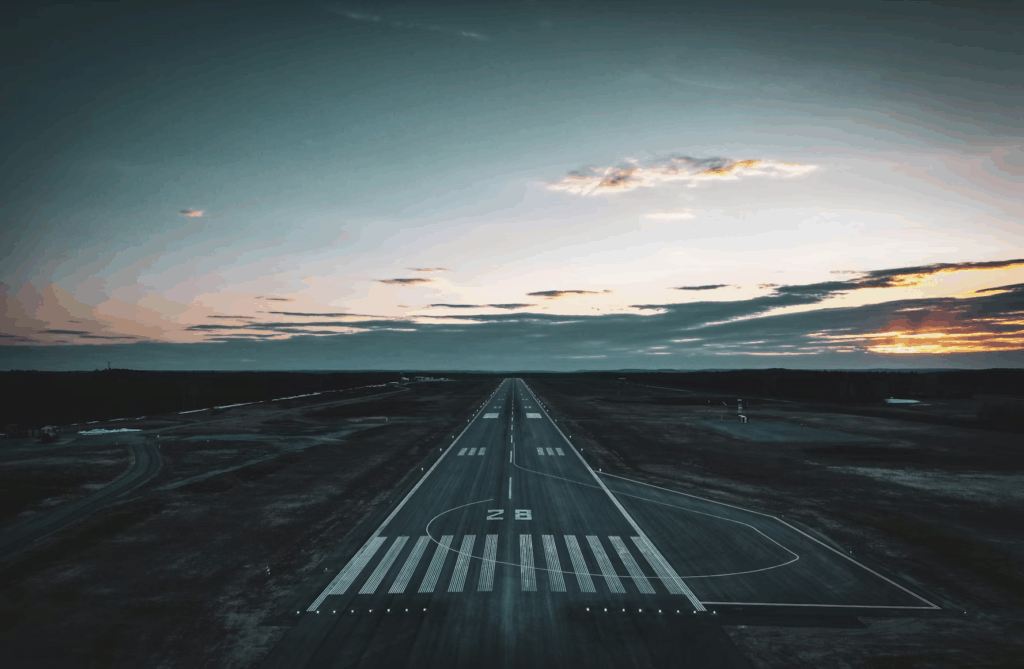
She looked out at the runway, where the jets were taking off into the sunset, burning holes in the sky.
She had scattered her father’s ashes the week after the crash. He was part of the ocean now. But she was part of the sky.
She wasn’t Spectre anymore. She was Diana. And she was finally home.
Let us know what you think about this story on the Facebook video! If you like this story share it with friends and family.
Please let us know your thoughts and SHARE this story with your Friends and Family!
