Three months ago, the world as I knew it ceased to exist. It didn’t end with a whimper; it ended with the roar of flames and the shattering of glass.
I woke up that night not to the sound of an alarm, but to the terrifying sensation of heat crackling against my skin. It was a physical weight, pressing down on me, heavy and suffocating. The air tasted like ash, burnt plastic, and the acrid, metallic tang of fear. I remember coughing, my lungs rejecting the thick gray smoke that had invaded my sanctuary.
I crawled to my bedroom door, keeping low as the firefighters always taught in those school assemblies you never think you’ll actually need. I pressed my hand against the wood. It was warm—terrifyingly warm—vibrating with the energy of the beast consuming our home on the other side.
Over the roaring cacophony of the fire, a sound cut through that shattered my heart: the high, panicked voices of my six-year-old twin brothers, Caleb and Liam.
“Sissy! Help! Sissy!”
They were screaming. Not just crying, but screaming with a primal terror that no child should ever know.
I had to save them. The thought wasn’t a decision; it was an instinct, woven into the very DNA of who I was as their big sister. I remember ripping the shirt off my back, wrapping it around the scorching brass doorknob, and wrenching the door open.
After that, the memory fragments. It becomes a blur of searing heat, blinding orange light, and the sensation of carrying dead weight. My brain blanked out the horror to protect me. The next cohesive memory I have is of the freezing night air hitting my face, shivering violently—not from the cold, but from the shock—while standing on the dew-soaked lawn across the street.
Caleb and Liam were clinging to my legs, their small bodies shaking against mine, soot streaked across their tear-stained faces. We watched in silence as the roof collapsed inward, a fountain of sparks shooting up into the uncaring night sky, taking our parents with it.
Our lives changed forever in that singular, devastating moment. We were no longer a family of five. We were a trio of survivors, adrift in a sea of grief.
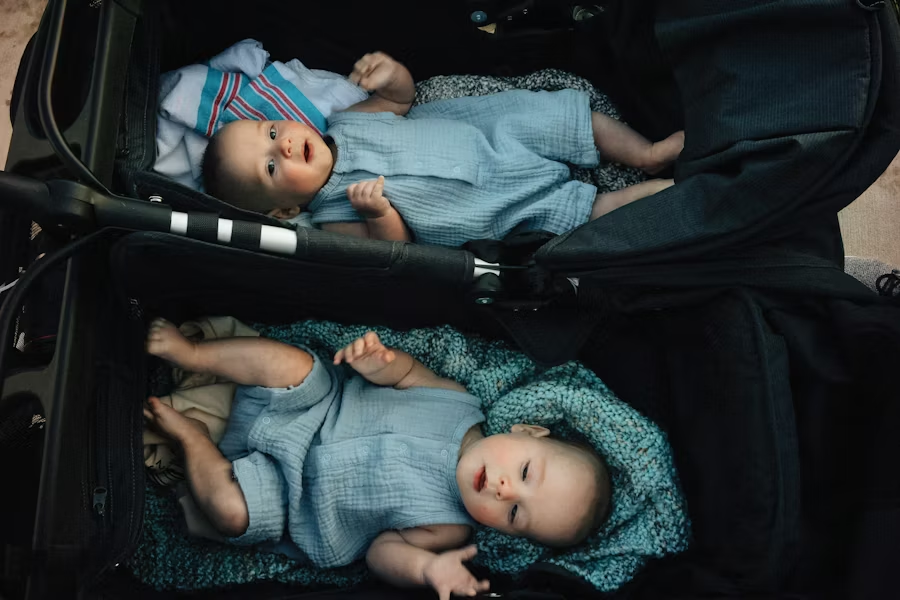
Looking after my brothers became my only purpose. I don’t know how I would’ve coped if it weren’t for my fiancé, Mark. Mark was the lighthouse in our storm. He didn’t just stand by me; he stepped up. He went to grief counseling with us, sitting in those uncomfortable beige chairs week after week, holding my hand while I cried until I was empty. He learned how to make the dinosaur-shaped nuggets the boys liked. He learned their bedtime routines.
He repeatedly told me, with a conviction that kept me grounded, “We’re going to be okay. We’d adopt them the moment the court allows it. They aren’t just your brothers anymore, love. They’re ours.”
The boys loved him, too. They called him “Mork” because, amidst the chaos of the funeral and the move, they couldn’t say Mark correctly. The nickname stuck, a small beacon of lightness in our dark world.
We were slowly building a new kind of family from the ashes. However, there was one person who watched our reconstruction not with pride, but with a cold, calculating malice.
The Venom in the Family Tree
Mark’s mother, Joyce, hated my brothers.
It wasn’t a dislike. It wasn’t an annoyance. It was a deep, festering hatred that I didn’t think an adult woman could harbor toward two orphaned six-year-olds.
Joyce had always been a difficult woman. She was the kind of person who smiled with her mouth but never her eyes. Before the fire, she had tolerated me. She thought I was “ambitious” in a way she didn’t like, often making snide comments about my career as a graphic designer. She had always acted like I was using Mark, despite the fact that I made my own money and paid my own bills.
But after the fire? Her tolerance evaporated.
She accused me of “using her son’s money” to support “my baggage.” She insisted, in hushed, venomous tones when Mark was out of the room, that he should “save his resources for his REAL children.”
She saw the twins not as victims of a tragedy, but as parasites I’d conveniently attached to her son’s life.
I remember the first dinner party we hosted after the funeral. We were trying to establish a sense of normalcy. I had spent all day cooking, trying to make the house smell like food instead of grief.
Joyce swirled her Chardonnay, the liquid catching the light, and looked at me with a gaze that could peel paint.
“You’re lucky Mark is so generous,” she commented, loud enough for the room to hear but quiet enough to claim it was a compliment. “Most men wouldn’t take on someone with that much baggage. It takes a saint to raise another man’s problem.”
Baggage. Problem.
She called two traumatized six-year-olds who had lost their entire world baggage.
I gripped my fork until my knuckles turned white. Mark, bless him, tried to deflect. “Mom, they’re family. It’s not a burden. It’s what we do.”
But Joyce wasn’t deterred. Another time, the cruelty was sharper, more direct. We were alone in the kitchen while Mark was outside playing catch with the boys.
“You should focus on giving Mark real children,” she lectured, leaning against the counter with her arms crossed. “You’re wasting his prime years on… charity cases. He deserves his own bloodline, not the leftovers of yours.”
I told myself she was just an awful, lonely woman, and her words had no power. But they did. They seeped into my insecurities. Was I burdening Mark? Was I ruining his life?
She’d act like the boys weren’t even there during family dinners. She would bring gifts for Mark’s sister’s children—expensive toys, clothes, candy—and give nothing to Caleb and Liam. She would hug the other grandkids and walk right past my brothers as if they were invisible.
The Sheet Cake Incident
The hostility moved from passive to active at Mark’s nephew’s birthday party.
It was a hot afternoon in July. The backyard was filled with screaming children, a bounce house, and a table laden with gifts. Caleb and Liam were shy, sticking close to Mark’s legs, overwhelmed by the noise and the crowd. Mark had coaxed them out, promising them cake.
When it was time for dessert, Joyce positioned herself behind the table to hand out the sheet cake. It was a massive cake, easily enough for thirty people. There were maybe twelve kids there.
I watched from a distance as the children lined up. Joyce handed a plate to her granddaughter, then her grandson, then the neighbors’ kids. She smiled, chatted, and pinched cheeks.
Then Caleb and Liam stepped up, holding out their small paper plates with hopeful eyes.
Joyce looked at them. Then she looked at the cake, which still had plenty of pieces left. Then she looked back at them with a flat, cold expression.
“Oops! Not enough slices,” she said breezily, not even making eye contact. “Run along now.”
My brothers, fortunately, didn’t understand the malice. They just looked confused. They looked at the cake, then at their empty plates, then at each other. They didn’t cry; they just accepted the disappointment because, in their short lives, the world had been cruel enough that this seemed normal.
But I was spitting mad. The rage that filled me was white-hot. There was no way—no way—I was going to let Joyce get away with bullying orphans over baked goods.
I marched over, grabbed my own slice of cake that I hadn’t touched, and knelt in front of them.
“Here, baby, I’m not hungry,” I whispered to Liam, handing him my plate.
Mark was already there. He had seen it too. His face was a mask of thunder. He silently handed his slice to Caleb.
“Go sit down, guys,” Mark said gently.
Mark and I looked at each other over the heads of the children. In that moment, a silent understanding passed between us. This wasn’t just Joyce being difficult. This wasn’t just a mother-in-law conflict. This was active cruelty. She was targeting them.
The Blood Feud
A few weeks later, we were at a Sunday lunch at a nice restaurant. The boys were coloring quietly on their placemats. The tension at the table was palpable.
Joyce leaned over the table, smiled that saccharine, fake smile, and launched her next attack.
“You know, when you have babies of your own with Mark, things will get easier,” she said, buttering a roll as if discussing the weather. “You won’t have to… stretch yourselves so thin. You can put the boys in a nice boarding school or find a relative who actually has the time for them.”
I dropped my fork. It clattered loudly against the china.
“We’re adopting my brothers, Joyce,” I replied, my voice shaking with suppressed anger. “They’re our kids. They aren’t going anywhere.”
She waved her hand in the air like she was shooing a fly. “Oh, pish-posh. Legal papers don’t change blood. You’ll see. When you have a real child, you’ll understand the difference.”
Mark slammed his hand on the table. The water glasses jumped.
“Mom, that’s enough,” he said, his voice low and dangerous. “You need to stop disrespecting the boys. They are children, not obstacles to my happiness. Stop talking about ‘blood’ like it matters more than love. If you can’t accept them, you can’t accept me.”
The table went silent. People at other tables looked over.
Joyce, as always, pulled out the victim card. Her eyes welled with instant, practiced tears.
“Everyone attacks me! I’m only speaking the truth!” she wailed, dabbing at dry eyes with a napkin. “I just want what’s best for my son! Why is that a crime?”
She then threw her napkin down, grabbed her purse, and left dramatically, making sure her heels clicked loudly all the way to the exit.
We finished our meal in silence, but the air felt lighter without her there. I thought maybe that was the climax. I thought maybe Mark standing up to her would make her back off.
I was wrong. A person like that doesn’t stop until she feels she’s won.
The Suitcases
I had to travel for work. It was a graphic design conference in Seattle, only two nights away. It was the first time I’d left the boys since the fire. I was terrified, but Mark assured me he had it handled.
“Go,” he said, kissing my forehead. “We’ll build a fort. We’ll order pizza. It’ll be a guys’ weekend.”
We talked every few hours. Everything seemed fine.
Until I walked back through the front door two days later.
The moment I unlocked the door, the air in the house felt heavy, charged with distress. Before I could even set my bag down, the twins ran to me from the living room.
They were sobbing. Not the whining cry of a child who scraped a knee, but the deep, gasping sobs of pure terror. They slammed into my legs, nearly knocking me over.
I dropped my carry-on luggage right there on the welcome mat.
“Caleb, what happened? Liam, what’s wrong? Are you hurt?”
They kept talking over each other, panicked, crying, their words a jumble of terror and confusion.
“We don’t wanna go!”
“Please don’t make us leave!”
“We’ll be good, Sissy, we promise!”
I had to physically hold their faces, my hands trembling, and force them to look at me. “Breathe. Take a huge breath. Tell me what happened.”
Through hiccupping sobs, the story came out.
Grandma Joyce had come over while Mark was in the backyard grilling burgers for dinner. She had brought “gifts” for the boys.
She had called them into the living room while Mark was outside. She gave them suitcases: a bright blue one for Liam, and a green one for Caleb. Cheap, plastic suitcases from a discount store.
“Open them!” she’d urged them, standing over them like a looming shadow.
The boys opened them. The suitcases were filled with folded clothes—their clothes, which she must have taken from their drawers—toothbrushes, and small toys.
It looked like she had pre-packed their lives for them.
And then she told my brothers a vile, wicked lie. A lie designed to shatter the fragile sense of security we had spent three months building.
“These are for when you move to your new family,” she’d said, smiling down at them. “You won’t be staying here much longer. Mark and your sister are tired. They need their space. So start thinking about what else you want to pack.”
She leaned in close, whispering to ensure Mark didn’t hear through the screen door. “Your sister only takes care of you because she feels guilty. My son deserves his own real family. Not you. You’re going away soon.”
Then, when she heard the back door sliding open as Mark came in with the food, she patted their heads and left. She told two six-year-olds they were being sent away, destroyed their world, and then walked out the front door.
“Please don’t send us away,” Caleb sobbed, clutching my shirt so hard he tore a button. “We want to stay with you and Mork.”
My heart broke into a thousand pieces. Then, those pieces hardened into something sharp and deadly.
I reassured the boys that they weren’t going anywhere. I unpacked the suitcases in front of them, throwing the cheap plastic bags into the trash. I sat with them for two hours until they finally fell asleep from exhaustion.
I walked into the kitchen where Mark was sitting, his head in his hands. He looked up, his eyes red. He knew.
“She told them they were leaving,” I said, my voice eerily calm.
Mark looked like he was going to be sick. “I didn’t know. I was outside for ten minutes. Just ten minutes.”
He picked up his phone and called Joyce immediately. He put it on speaker.
“What did you say to them?” Mark demanded.
She denied everything at first. “I just gave them luggage! For trips! You’re being dramatic.”
“They are hysterical, Mom!” Mark yelled. “They said you told them they were being rehomed!”
There was a silence on the line. Then, finally, the truth slipped out, arrogant and unapologetic.
“I was preparing them for the inevitable,” she said coldly. “They don’t belong there, Mark. You know it. I’m just the only one brave enough to say it. I was helping you.”
That was it. That was the moment.
I looked at Mark. He looked at me. The sadness in his eyes vanished, replaced by a steely resolve I had never seen before.
We decided then and there that Joyce would never traumatize my brothers again. Going no-contact wasn’t enough. Blocking her number wasn’t enough. She needed a lesson she would feel in her bones. She needed to understand the magnitude of what she had lost.
Mark was all in.
The Trap
Mark’s birthday was coming up in three days. We knew Joyce would never miss a chance to be the center of attention at any family gathering. She loved playing the doting matriarch. It was the perfect opening.
We called her the next day. Mark kept his voice neutral, masking the fury burning inside him.
“Mom,” he said. “We need to talk. We have some life-changing news. We want you to come over for a special birthday dinner.”
“Oh?” Her voice perked up instantly. “Life-changing? Is it… good news?”
“We think it’s for the best,” Mark said ambiguously.
She accepted immediately, completely oblivious to the fact that she was walking into a trap. She probably thought we were pregnant, or that we were finally taking her advice about the boys.
We set the table meticulously that evening. We used the good china. We lit candles. We wanted the setting to be intimate, serious.
We gave the boys a movie and a huge bowl of popcorn in their room—the master bedroom, far away from the dining room—and told them to stay put with their headphones on. “This is grown-up talking time,” we told them. “You’re safe here.”
Joyce arrived right on time, wearing a floral dress and carrying a bottle of wine. She looked triumphant. She thought she had won.
“Happy birthday, darling!” She kissed Mark’s cheek and took a seat at the head of the table, as if it were her throne. “What’s the big announcement? Are you finally making the RIGHT decision about… the situation?”
She side-eyed the hallway where the boys’ room was, a clear, silent demand for their removal.
I bit the inside of my cheek so hard I tasted copper. Mark squeezed my hand under the table, a signal: I’m here. We got this. Hold the line.
We ate dinner. Joyce chattered on about her garden club, about the neighbors, about how tired I looked. We nodded. We waited.
After we finished dinner, Mark refreshed our drinks. The air in the room grew heavy. We both stood up to make a toast.
This was the moment.
“Joyce, we wanted to tell you something really important,” I said. I let my voice tremble just a little to sell the performance. I looked down at my hands.
She leaned forward, her eyes wide and hungry. She looked like a predator sensing a wounded animal.
“We’ve decided to give the boys up,” I said softly. “To let them live with another family. Somewhere they’ll be… taken care of better than we can.”
The reaction was instantaneous. Joyce’s eyes absolutely LIT UP. It was terrifying to watch. It was like her soul—which must have been a miserable, shriveled thing—had finally unclenched in triumph.
She didn’t ask if we were sad. She didn’t ask where they were going. She didn’t offer sympathy.
She actually whispered the word. “FINALLY.”
There was no sadness or hesitation, no concern for the boys’ emotions or well-being, just pure, venomous triumph.
“I told you,” she said, beaming, reaching out to tap Mark’s arm with a patronizing air. “I knew you’d come to your senses. You’re doing the right thing. Those boys are not your responsibility, Mark. You deserve your own happiness. You deserve a clean slate.”
My stomach twisted violently. This is why we’re doing this, I told myself. Look at the monster you’re dealing with.
She took a sip of her wine, looking more relaxed than I had ever seen her. “When are they leaving? Tomorrow? We can turn the spare room into a nursery immediately.”
Then Mark stood up straighter. He pushed his chair back. The sound scraped against the floor, loud and harsh.
“Mom,” he said calmly. “There’s just ONE SMALL DETAIL you misunderstood.”
Joyce’s smile froze. Her glass hovered halfway to her mouth. “Oh? What… detail?”
Mark looked at me, a brief moment of connection, eyes locking with mine. Then he looked back at his mother. And then, with the calm certainty of a man who knows he is doing the right thing, he broke her world.
“The detail,” Mark said, “is that the boys aren’t going anywhere.”
Joyce blinked. “What? I don’t understand… You just said—”
“What you heard tonight,” he said, cutting her off, “is what you WANTED to hear — not what’s real. You twisted everything you heard to fit your own sick narrative. We wanted to see your reaction. And God, Mom, it was horrific.”
Her jaw tightened, and the color began to drain from her face. She looked from Mark to me, realizing the dynamic had shifted.
I stepped forward, taking my cue.
“You wanted us to give them up so badly that you didn’t question it for a second,” I said, my voice rising. “You didn’t even ask if the boys were okay. You didn’t ask if we were heartbroken. You just took your win. You celebrated the abandonment of two orphans.”
Mark then delivered the final blow. “And because of that, Mom, tonight is our LAST dinner with you.”
Joyce’s face went utterly, completely white. It was the pallor of a ghost.
“You… you’re not serious…” she stammered, shaking her head, her hands fluttering nervously. “Mark, stop it. You’re scaring me.”
“Oh, I am,” Mark said, his voice like cold steel. “You terrorized two grieving six-year-olds. You told them they were being shipped to foster care, scaring them so badly they didn’t sleep for two nights. You crossed a line we can never uncross. You made them fear for their safety in the only home they have left.”
She sputtered, frantic now, realizing the trap had snapped shut. “I was just trying to— I was trying to help! You’ll thank me one day!”
“To what?” I cut her off. “To destroy their sense of safety? To make them believe they were burdens? You don’t get to hurt them, Joyce. Not ever again.”
Mark’s face was stone cold, completely unyielding as he reached under the table.
When his hand came back up, he was holding the blue and green suitcases she’d presented to the boys. The cheap plastic handles rattled.
When Joyce saw what he was holding, her frozen smile vanished completely. She dropped her fork with a clatter.
“Mark… no… You wouldn’t,” she whispered, disbelief and a flicker of fear finally entering her eyes.
He stood the cases on the table, right next to the fine china and the candles. A clear symbol of her cruelty sitting amidst the facade of a happy family dinner.
“In fact, Mom, we’ve already packed the bags for the person leaving this family today.”
He pulled an envelope from his pocket, thick and official, and dropped it right next to her wine glass.
“In there,” he said, never breaking eye contact, “is a letter stating you are no longer welcome near the boys, and a notice that you’ve been removed from all our emergency contact lists. It outlines that if you approach our property or the boys’ school, we will involve the police.”
He let the words hang in the air, heavy and final.
“Until you get therapy,” Mark finished sternly, “and genuinely apologize to the boys — not us, the boys — you are NOT part of our family and we want nothing to do with you.”
Joyce shook her head violently. Tears finally came, hot and fast, but they were tears of pure self-pity, not remorse. She realized she was losing control, losing her son, losing her image.
“You can’t do this! I’m your MOTHER!” she screamed. “I gave birth to you!”
Mark didn’t even flinch. He leaned over the table, towering over her.
“And I’m THEIR FATHER now,” he announced, his voice ringing with the truth.
“Those kids are MY family, and I will do whatever I must to protect them. YOU chose to be cruel to them, and now I’m choosing to ensure you can never hurt them again. Being a grandmother is a privilege, Mom. Not a right. And you lost it.”
The sound she made next was a strangled mixture of rage, disbelief, and betrayal. She looked at me with pure hatred, then at Mark with desperation. But she didn’t get sympathy. Not anymore. She’d used up every single ounce of it.
She grabbed her coat, knocking over her wine glass. Red wine spilled across the white tablecloth like a wound.
She hissed, “You’ll regret this, Mark. You’ll come crawling back when she ruins your life,” and stormed out the front door.
The slam was deafening, final. It echoed through the house like a gunshot.
The Aftermath
Silence rushed back into the room, but this time, it wasn’t heavy. It was clean.
Caleb and Liam peeked from the hallway, scared by the noise. They were wearing their matching pajamas, holding their stuffed animals.
Mark instantly dropped his hard posture. His shoulders slumped, the anger draining away to reveal just love. He kneeled, his arms wide open.
The twins ran straight into him, burying their faces in his neck and chest.
“You’re never going anywhere,” he whispered into their hair, rocking them back and forth. “We love you. Grandma Joyce is gone now, and she’ll never get a chance to hurt you boys again. You’re safe here. I promise. I promise.”
I burst into tears. I sat on the floor and joined the hug.
Mark looked at me over their little heads, his eyes shining with tears, a silent acknowledgment that we had done the right thing. It hurt to cut off his mother, I knew that. But he had chosen us. He had chosen to be a father.
We both just held them for what felt like forever, rocking them on the floor of the dining room while the candles burned down.
The next morning, Joyce tried to show up, predictably. She banged on the door, shouting apologies that sounded more like demands.
We didn’t open the door. We filed for a formal restraining order that afternoon, using the text messages and the testimony of the suitcase incident as evidence of emotional abuse. We blocked her on everything. Phone, email, social media.
Mark started calling the boys “our sons” exclusively. He also bought them new, non-traumatic suitcases—cool ones with superheroes on them—and filled them with swim trunks and sunscreen for a fun trip to the coast the following month. He wanted to overwrite the memory of packing with a memory of adventure.
In one week, the adoption papers will be filed. We have a court date next month.
We’re not just recovering from a tragedy; we’re building a family where everyone feels loved, and everyone is safe. We are healing the burns, both physical and emotional.
And every night when I tuck the boys in, their small, sweet voices always ask the same question, a remnant of the fear Joyce planted: “Are we staying forever?”
And every single night, my answer is a promise, sealed with a kiss on their foreheads: “Forever and ever.”
That is the only truth that matters.
We want to hear from you! What do you think about Mark’s decision to cut off his mother to protect the boys? Did they go too far with the fake announcement, or was it necessary to see her true colors? Let us know your thoughts in the comments on the Facebook video. And if you liked this story, share it with your friends and family!
