Few figures in American history continue to captivate the public imagination quite like Jacqueline Kennedy Onassis.
Even decades after her time in the White House, her elegance, intellect, and quiet resolve continue to define an era remembered fondly by many as “Camelot.”
Born Jacqueline Lee Bouvier in 1929, she navigated a life that would become emblematic of grace under pressure, transforming the role of First Lady and leaving an enduring imprint on American culture.
Her marriage to John F. Kennedy in 1953 placed her at the center of public attention, but it was her poise, vision, and commitment to both tradition and innovation that would elevate her influence far beyond the ceremonial duties of the White House.
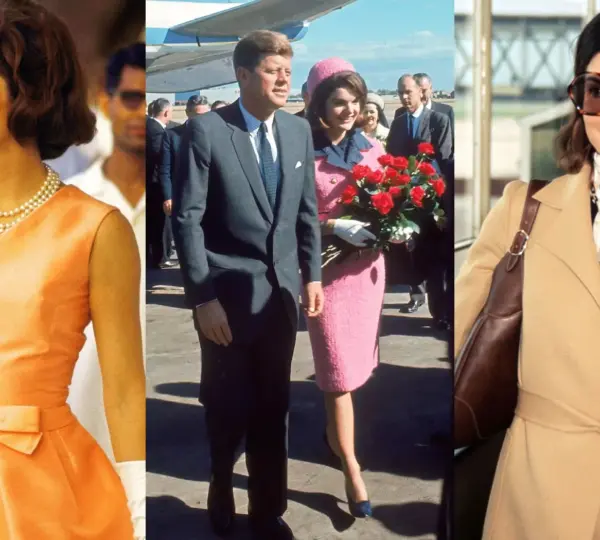
As First Lady, Jacqueline Kennedy Onassis brought a sense of refinement and sophistication that captivated both the American public and international audiences.
She spearheaded an extensive restoration of the White House, emphasizing historical accuracy and cultural preservation.
Under her guidance, the Executive Mansion became not only a residence but a living museum, reflecting the nation’s history and serving as a symbol of American identity.
She also championed the arts, bringing artists, writers, and musicians into the White House and demonstrating that cultural engagement was not merely an accessory to political life, but an essential component of it.
Her televised tours of the restored White House captivated viewers across the country, showcasing not only the beauty of the renovation but also the intelligence, elegance, and charm with which she presented it.
These efforts were not simply aesthetic; they reflected her belief that history, culture, and civic pride were inseparable, and that the First Lady could be a steward of both heritage and public imagination.
Jacqueline’s impact extended beyond the arts and architecture.
Her fashion sense—marked by tailored suits, elegant gloves, and iconic pillbox hats—became emblematic of an era, influencing generations of women around the world.
But while style was a visible aspect of her public persona, it was her intellect and ability to navigate complex social and political dynamics that truly distinguished her.
Fluent in French and well-versed in history, literature, and international affairs, she embodied a modern ideal of sophistication that blended cultural literacy with approachability.
At the same time, Jacqueline faced profound personal tragedies that tested her resilience.
The assassination of President Kennedy in 1963 thrust her into the global spotlight under circumstances no one could have anticipated, requiring her to manage grief with extraordinary composure while supporting her children and fulfilling the nation’s expectation of ceremonial dignity.
Her televised and public appearances following the tragedy, including the state funeral, were widely recognized as emblematic of grace under pressure, cementing her legacy as a figure of courage and elegance.
Following her tenure in the White House, Jacqueline Kennedy Onassis rebuilt her life with dignity and purpose.
She dedicated herself to raising her children, Caroline and John Jr., while forging a career in publishing, working as an editor at Viking Press and later at Doubleday.
In this role, she engaged with literature, history, and intellectual discourse, demonstrating that her influence was not confined to ceremonial or social spheres.
She also remained a public figure whose actions, statements, and appearances continued to inspire admiration worldwide.
Despite enduring further personal loss, including the death of her second husband, Aristotle Onassis, she consistently managed to maintain privacy, focus, and intentionality in her life choices, illustrating the enduring strength of character for which she was celebrated.
The influence of Jacqueline Kennedy Onassis did not end with her generation.
Today, attention has turned to her granddaughter, Rose Kennedy Schlossberg, the daughter of Caroline Kennedy, who carries echoes of her grandmother’s poise and intellect while clearly forging her own distinct identity.
Rose, born in 1988, grew up in a family environment steeped in political, cultural, and intellectual engagement, yet her life and career have charted a path that balances respect for her heritage with modern creativity and individual expression.
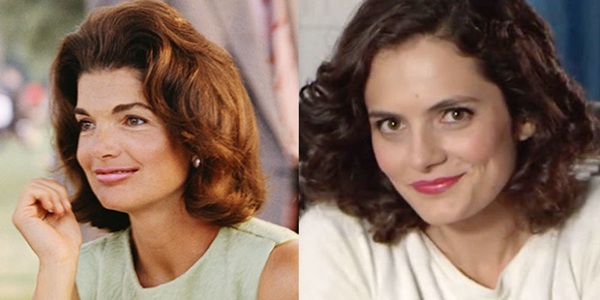
Notably, she possesses the family’s classic features and composed presence, drawing public attention for her resemblance to Jacqueline, but her achievements and pursuits underscore a focus on intellect, creativity, and thoughtful engagement with contemporary culture rather than celebrity alone.
Rose Kennedy Schlossberg’s educational path further reflects the family’s commitment to learning and intellectual rigor.
She attended elite private schools and went on to graduate from Harvard University with a degree in English.
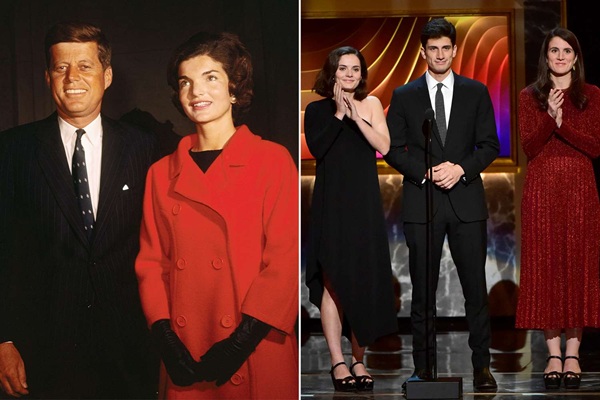
During her time at Harvard, she demonstrated not only academic dedication but also an interest in cultural commentary, storytelling, and social engagement, following a family tradition that values the power of communication, narrative, and informed public discourse.
Her academic training, combined with a natural creative sensibility, provided a foundation for the endeavors she would later pursue in the arts and media.
Rather than following a direct path into politics, Rose chose a creative route, blending humor, social commentary, and media engagement.
She co-created and starred in the satirical comedy series End Times Girls Club, a show that examines contemporary anxieties, preparedness culture, and female resilience through wit and narrative cleverness.
The series demonstrates Rose’s ability to balance commentary with entertainment, addressing real-world fears while infusing the work with humor and insight.
Her creative output highlights a key aspect of her public identity: she is an individual capable of carving a unique path while maintaining ties to her family’s values of education, civic engagement, and thoughtful dialogue.
Though Rose has engaged with civic and political causes as a volunteer, she has largely focused on storytelling and creative work rather than pursuing elected office or formal political roles.
In doing so, she reflects a modern interpretation of her grandmother’s legacy—embracing influence not through position or title alone, but through the cultivation of ideas, culture, and media presence that informs and engages public consciousness.
Friends and colleagues have noted that Rose possesses a quiet confidence, an awareness of history, and a willingness to explore contemporary issues thoughtfully and critically.
Her approach demonstrates that leadership and impact can take multiple forms, and that influence is not solely measured by visibility or power.
The connection between Jacqueline Kennedy Onassis and her granddaughter extends beyond physical resemblance or public perception.
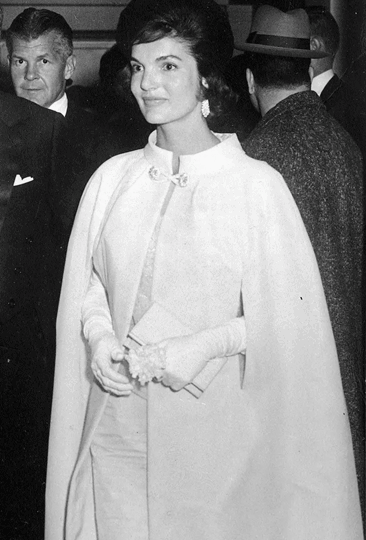
Those close to Rose have described a sense of inspiration derived from her grandmother’s life—particularly Jacqueline’s combination of intelligence, resilience, and discretion.
While Rose never knew her grandmother personally in any significant way, the values Jacqueline embodied—commitment to family, cultural literacy, grace under pressure, and the pursuit of meaningful engagement—have been cited as guiding principles in Rose’s own life.
Through education, creative output, and selective public engagement, Rose demonstrates how influence can evolve across generations, honoring a legacy without being constrained by it.
Rose Kennedy Schlossberg’s story illustrates a broader principle about the transmission of values and inspiration through family and cultural context.
While Jacqueline’s public life involved unprecedented visibility and historical significance, her granddaughter exemplifies how contemporary influence can be expressed in ways that are both personal and cultural rather than political alone.
Through humor, critical thinking, creative storytelling, and thoughtful social commentary, Rose is shaping a distinctive public presence that resonates with younger audiences while remaining rooted in intellectual rigor and cultural literacy.
She embodies the potential for legacy to serve as motivation rather than limitation, demonstrating that historical influence can be adapted to modern contexts without diminishing its core principles.
In addition, Rose’s work reflects a conscious awareness of societal and cultural dynamics, balancing entertainment, critique, and social reflection.
End Times Girls Club, for instance, tackles modern anxieties such as social instability, preparedness culture, and the often-overlooked perspective of women navigating uncertain times.
Through this lens, Rose channels creativity, intellect, and wit to explore complex themes, echoing the analytical and culturally informed approach of her grandmother while introducing humor and contemporary narrative strategies that resonate with today’s audiences.

This duality—honoring historical influence while innovating in form and content—serves as a testament to the enduring adaptability of legacy.
Through her educational achievements, creative endeavors, and thoughtful public presence, Rose Kennedy Schlossberg honors her grandmother’s impact without becoming constrained by it.
She demonstrates that influence can be multifaceted: it can be expressed through culture, education, art, and social engagement, rather than solely through formal positions of authority.
Her life underscores that legacy is not a static inheritance, but a dynamic force that can inform choices, inspire creativity, and shape public discourse in evolving ways.
In essence, Rose embodies a modern continuation of Jacqueline Kennedy Onassis’ principles, translating historical elegance, intelligence, and resilience into contemporary forms.
She reflects a synthesis of past and present: a connection to family history, an appreciation for cultural and intellectual rigor, and the ability to engage with the world creatively and thoughtfully.
Through her work and personal example, Rose illustrates that influence is not limited to ceremonial or high-profile political roles; it is realized through intentional action, creativity, and the cultivation of ideas and perspectives that resonate beyond immediate circles.
Ultimately, the story of Jacqueline Kennedy Onassis and Rose Kennedy Schlossberg demonstrates the enduring power of values, intellect, and creativity across generations. Jacqueline’s life as First Lady, cultural steward, and resilient individual provided a foundation of inspiration that continues to shape her family’s approach to public life.
Rose’s life and work exemplify how that legacy can evolve, translating historical influence into modern expression while remaining grounded in principles of education, reflection, and thoughtful engagement.
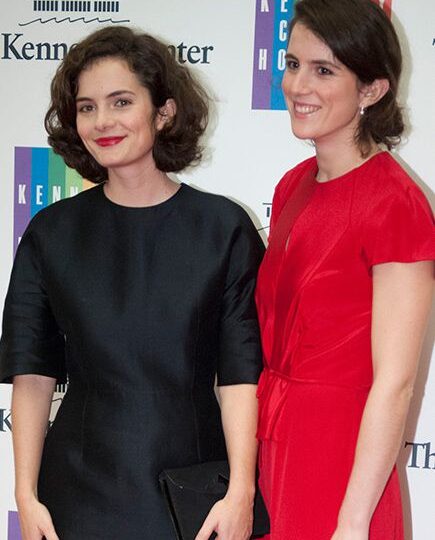
The connection between grandmother and granddaughter offers a vivid illustration of how character, intellect, and cultural awareness can transcend eras, guiding new generations in ways that honor the past while embracing the possibilities of the present.
Through her education, creativity, and composed public presence, Rose Kennedy Schlossberg ensures that the spirit of Jacqueline Kennedy Onassis remains alive—not merely in memory, but in active purpose, curiosity, and quiet confidence.
