The carpet at Denver International Airport was a chaotic swirl of blues and grays, a pattern designed to hide stains, but to my eight-year-old eyes, it looked like a storm ocean. I was drowning in it. My legs, dangling off the edge of the vinyl terminal seat, swung back and forth, counting seconds.
One. Two. Three.
The gate agent, a woman with kind eyes and a scarf tied expertly around her neck, offered me a small, pitying smile as she checked the monitor. She didn’t know the truth yet. No one did. To the casual observer, I was just a child waiting for her parents to return from the coffee stand. I was clutching a purple backpack that contained my entire universe: a change of underwear, a coloring book, and Mr. Hopps, a stuffed bunny with one ear stitched on slightly crooked.
In my hand, I held the boarding pass. “Honolulu,” it read. The letters seemed to shimmer. This was the promise. The truce. After months of yelling, slamming doors, and the cold silence that filled our house since Calvin moved in, this trip was supposed to be the reset button. I had imagined building sandcastles with Calvin’s kids, Kylie and Noah. I imagined my mother, Annette, finally smiling at me the way she smiled at them.
But the seat to my right was empty. The seat to my left was empty.
My mother had told me to wait here. “Just grabbing a latte,” she’d said, smoothing my hair in a way that felt more like she was wiping something off her hand. “Calvin took the kids to the restroom. Don’t move, Leah.”
That was thirty minutes ago. The overhead monitor blinked. “Boarding Group A.”
A cold prickle of unease started at the base of my neck. I checked the digital clock on the wall. Then I checked the oversized analog watch on my wrist, a gift from a grandmother I hadn’t seen in years.
Panic is a strange thing. It doesn’t always hit like a crash; sometimes, it creeps in like fog. I reached into the front pocket of my backpack and pulled out the emergency cell phone my mom let me keep for “safety.” My hands were trembling so hard I dropped it twice before I could dial.
One ring. Two rings. Three.
The line picked up. The background noise was loud—island music, the clink of glass, the distinct sound of laughter.
“Mom?” I squeaked, my voice sounding incredibly small against the roar of the terminal. “Where are you? They’re calling Group A. The plane is going to leave.”
There was a pause on the other end. It wasn’t a pause of confusion. It was the pause of someone gathering the courage to sever a limb.
“Leah,” her voice came through, stripped of all warmth. It sounded metallic, sharp, like ice sliding down a steel tray. “Listen to me carefully. You aren’t coming.”
The world tilted on its axis. “What? But… I have my ticket. I’m right here.”
“You’re staying,” she said, her tone flattening into something bureaucratic and cruel. “Calvin and I talked. We think it’s better if this trip is just for the new family. You need to learn to be less… dependent. You can figure it out.”
My stomach dissolved. “Mom… I’m eight.”
Before she could answer, I heard Calvin’s voice booming in the background. It was a sound I had grown to fear—a loud, brash baritone that took up all the oxygen in a room. “She’s still on the phone? Tell the brat she needs to learn independence the hard way. Sink or swim, right?”
Then came the giggles. Kylie and Noah. “Finally,” I heard Kylie say, clear as day. “A real vacation. No more baggage.”
Baggage. That’s what I was. Not a daughter. Just a heavy suitcase they didn’t want to pay the fees for.
My mother came back on the line, her voice dropping to a venomous whisper. “Stop crying, Leah. It’s pathetic. Don’t make a scene. Find your own way home. You’re smart enough.”
The line went dead.
I sat there, staring at the black screen of the phone. The sounds of the airport—the rolling luggage, the announcements, the chatter—rushed back in at max volume. A tear leaked out, hot and fast, followed by another. I didn’t scream. I didn’t run. I just sat there, frozen, as the gate agent closed the door to Honolulu.

The Intervention of Mrs. VGA and the Call to the Past
It took twenty minutes for the gate agent to realize I wasn’t getting on the plane. She approached me slowly, crouching down to my eye level.
“Sweetie?” she asked. “Did your parents board already?”
I shook my head, unable to speak. The sob was stuck in my throat like a stone.
“Are you lost?”
“I’m not lost,” I managed to whisper, wiping my nose on my sleeve. “I was left.”
The transition from the gate to the airport police, and then to the family services office, was a blur of neon vests and squawking radios. They didn’t believe me at first. It was inconceivable. Parents lose kids in crowds; they don’t abandon them at gates with boarding passes in their hands.
I ended up in a small, brightly lit room that smelled of industrial carpet cleaner and spearmint gum. There were plastic chairs and a bin of well-worn toys. A woman introduced herself as Mrs. VGA. She was soft-spoken, with reading glasses perched on the end of her nose.
“Leah,” she said gently, kneeling before me. “We’re trying to contact your mother, but her phone is off. Is there anyone else? Grandparents? An aunt?”
I stared at the floor. Mom had burned every bridge. She told me constantly that my father, Gordon, was a monster. That he chose his business over us. That he didn’t care if we lived or died. The restraining order she had filed meant he couldn’t come near us.
But fear has a way of clarifying memory. Deep in the recesses of my mind, I remembered a night three years ago. My dad hugging me goodbye, whispering a string of numbers into my ear. “If you ever need me,” he had said. “Memorize it. Like a secret code.”
I looked at Mrs. VGA. “I know a number.”
She handed me the office phone. My fingers shook as I punched in the area code.
Ring. Ring. Click.
“Gordon Calvinson speaking.”
The voice was deeper than I remembered, professional and crisp.
“Daddy?” The word cracked in the middle.
There was a silence on the other end so profound I thought the line had cut. Then, a sharp intake of breath. The professionalism vanished.
“Leah? … Leah, is that you? Oh my god.”
“Yes,” I cried, the dam finally breaking. “Mom left me. She got on the plane with Calvin. I’m at the airport. I don’t know what to do.”
“Which airport, baby? Tell me exactly where you are.”
“Denver. The lady said I’m in the family room.”
“Listen to me,” his voice was fierce, intense, but incredibly steady. “You are going to be okay. I am coming to get you. I am walking out the door right now. Do not leave that room with anyone who isn’t a police officer. Do you understand?”
“Okay.”
Mrs. VGA took the phone from me. Her skeptical expression melted into one of shock and respect as she listened to my father.
“Yes, sir. I understand… A private charter? Yes, we can coordinate with security… We will keep her safe until you arrive.”
She hung up the phone and looked at me, her eyes glistening. “Your father is coming, Leah. He says he’ll be here in three hours.”
The Flight to a New Life in Seattle
He arrived in two hours and forty-five minutes.
When Gordon Calvinson walked into that room, he looked like a man who had run through a wall. He was wearing a dark business suit, but his tie was undone, and his eyes were red-rimmed. He scanned the room, and when his eyes landed on me, he dropped to his knees.
I didn’t hesitate. I ran.
He caught me, burying his face in my hair, shaking. “I’ve got you,” he whispered, his voice thick with emotion. “I’ve got you, baby girl. I’m so, so sorry.”
The trip to Seattle wasn’t on a normal plane. It was a sleek, quiet jet with leather seats that smelled like new cars. For the first time in years, the knot in my stomach loosened.
We didn’t talk about the airport. We talked about us.
“I tried to find you,” he told me, holding my hand across the aisle. “Your mother… she moved you around. Changed numbers. She told the courts I was dangerous to keep me away. I’ve had investigators looking for you for two years.”
He pulled out his phone and showed me a picture. It was a bedroom. Pink walls, white furniture, shelves lined with books.
“I kept a room for you,” he said softly. “I updated it every birthday. I bought the books I thought you’d be reading. I hoped… I just knew you’d come home.”
When we landed in Seattle, it was raining. But it wasn’t the gloomy rain I was used to. It felt like a cleansing rain. His house was a sanctuary of glass and wood, tucked into the trees. It was quiet. Peaceful. No walking on eggshells.
That first night, he made pancakes for dinner at 9 PM. We watched an old black-and-white movie. He asked me what I thought about the plot. He listened to my answer. It was such a small thing, being listened to, but it felt like water to a dying plant.
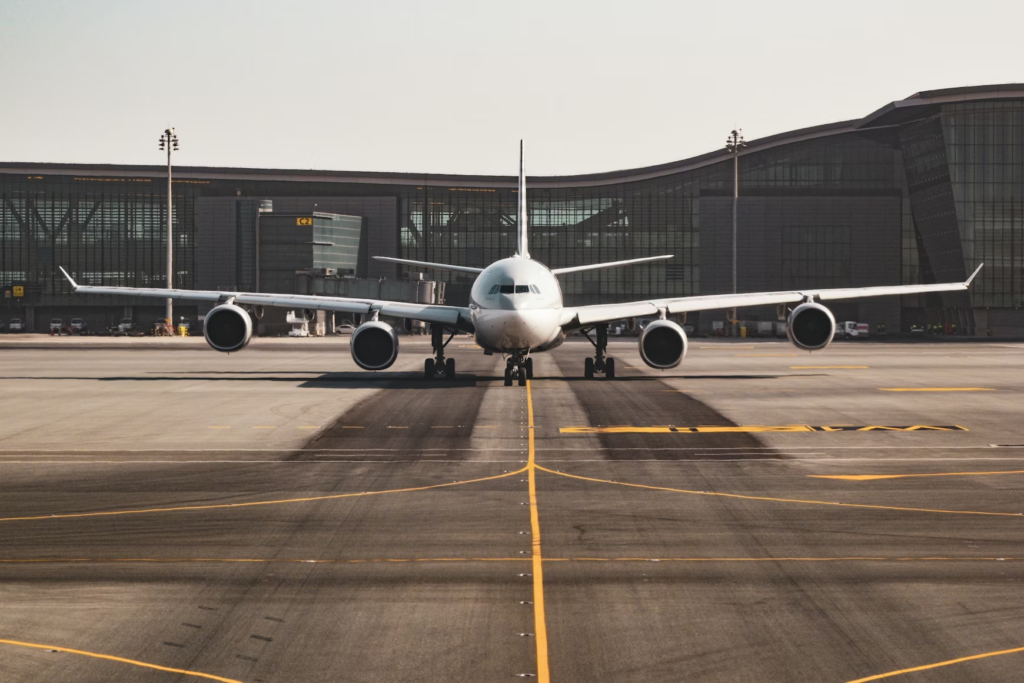
The Legal Surgeons and the Cold Reality
The next week was a blur of appointments. My father didn’t just have a lawyer; he had a battalion. They were sharp, focused, and angry on my behalf. They were building a fortress around me.
They sat me down with a woman named Detective Isla Mareno. she wore a black turtleneck and had eyes that saw everything. She recorded my statement. We played the recording of the phone call I had made to my mother.
I watched the faces of the adults in the room as they listened to Annette’s voice telling me to “figure it out.” Their jaws tightened. My father looked away, a vein pulsing in his temple.
“This is abandonment,” the lawyer said, his pen scratching furiously on a notepad. “Child endangerment. Emotional abuse. And with the financial records we’ve pulled… fraud.”
Detective Mareno had been digging into Calvin, too. She introduced us to a woman named Claudia via video call. Claudia looked tired, holding a tea mug with both hands.
“He does this,” Claudia told me gently through the screen. “He isolates you. He makes the mother feel like the kids are the problem. I gave up custody of my boys because he convinced me I was weak if I didn’t choose him. It’s a sickness, Leah. You were just the one who got away.”
It turned out, the money my father had been sending for years—child support that was supposed to buy my clothes and food—had been funding Calvin’s lifestyle. It paid for Kylie’s dance lessons and Noah’s dirt bikes.
The legal team filed for immediate, full emergency custody.
The Call That Ended an Era
When my mother and Calvin returned from Hawaii, tanned and relaxed, they returned to an empty house. My things were gone. And served to them at the airport were legal papers thick enough to be a novel.
She called my father that night.
Dad put it on speakerphone, looking at me for permission. I nodded. I was safe here. The rain against the window felt like a shield.
“Gordon!” Her voice was shrill. “What the hell do you think you’re doing? You kidnapped my daughter!”
“No, Annette,” my father said, his voice terrifyingly calm. “I rescued her. You left an eight-year-old at a departure gate. We have the airport security footage. We have the phone recording where you told her she was ‘baggage’. The authorities have all of it.”
Silence. Heavy and suffocating.
“That… that was a misunderstanding,” she stammered, her confidence fracturing. “We were just trying to teach her a lesson in self-reliance.”
“You’re facing felony charges,” Dad said. “Do you want to explain ‘self-reliance’ to a judge?”
“I want her back,” she demanded, though her voice wavered. “Right now.”
I reached for the phone. My hand was steady.
“Mom.”
“Leah! Baby, tell him. Tell him to bring you home. We miss you.”
“No, you don’t,” I said. The truth was simple and clear. “You left me. You said I was pathetic. You laughed with Kylie and Noah about having a vacation without baggage.”
“I was stressed! I didn’t mean it!”
“Yes, you did,” I said. “And I’m not baggage. I’m a person. And I’m home now. My real home.”
I handed the phone back to my dad. He ended the call. And with that button press, I severed the tie to the life that had been drowning me.
Healing the Invisible Wounds with Dr. Chen
Winning in court was one thing. Winning back my own mind was another.
My father hired Dr. Amanda Chen, a therapist with an office full of koi fish paintings and soft pillows. She didn’t force me to talk. She just waited until I was ready.
“I feel like it was my fault,” I admitted one rainy Tuesday. “If I hadn’t been so… needy. Maybe they would have taken me.”
“Leah,” Dr. Chen said, leaning forward. “You were walking on eggshells. You were trying to survive in a war zone where the enemy was supposed to be your protector. That is not being needy. That is being a victim of emotional cruelty.”
We worked through the memories. Calvin throwing away my science fair project because it was “clutter.” Mom blaming me when Noah broke a vase. The way they looked at me like I was a stain on their perfect new life.
“You are not broken,” Dr. Chen told me. “You are just bruised. And bruises heal.”

Grandma Eleanore and the Box of Lost Time
A month later, my grandmother, Eleanore Calvinson, flew in from New York. She was a force of nature—silver hair, red lipstick, and the owner of a real estate empire.
She marched into the house and hugged me so hard my ribs creaked. “I never believed her lies,” she declared. “Not for a second.”
She led me to the guest room and opened the closet. Inside were stacked boxes, twenty of them.
“For every birthday,” she said, her voice softening. “For every Christmas. For every Easter. We bought them. We wrapped them. We waited.”
We spent the afternoon opening years of missed moments. There were dolls I was too old for now, books that would have been perfect at age nine, a dress for a ten-year-old. It wasn’t about the stuff. It was about the evidence.
Every piece of tape, every bow, was proof that I hadn’t been forgotten. I had been mourned. And I had been loved, even from a distance.
The Years of Rebuilding: Sophia and the Sisters
My teenage years were a reconstruction project.
I reconnected with Sophia, my best friend from before the divorce. My dad handed me her contact info one day, saying, “I think she’s missed you.”
Sophia and I picked up right where we left off, but with a difference. “You’re different,” she told me during a summer visit to California. “You used to apologize for everything. Even for breathing too loud.”
“I don’t apologize for existing anymore,” I said.
My father eventually remarried a woman named Monica. I was twelve, and terrifyingly wary. But Monica wasn’t Annette. She didn’t try to be my mother. She tried to be my friend.
She brought with her two daughters, Taran and Grace. I prepared myself for the “Cinderella” dynamic—the evil stepsisters. But Taran and Grace were just… normal. They were messy, loud, and kind. They fought over the bathroom, but they also saved me the last slice of pizza. They defended me on the playground.
We built a family not out of blood obligation, but out of shared taco nights and movie marathons.
By the time I graduated high school, I was valedictorian. In my speech, I looked out at the sea of faces—my dad, beaming with pride; Monica, crying into a tissue; Grandma Eleanore, looking regal; and Taran and Grace cheering.
“Family,” I said into the microphone, “isn’t always the people who share your last name. Sometimes, it’s the people who rescue you from the gate when everyone else has boarded the plane.”
The Echoes of the Past
The past has a way of knocking on the door when you least expect it.
When Kylie turned eighteen, she found me on social media. Her message was a wall of text, frantic and misspelled.
“I know you hate me,” it read. “But I need to say sorry. Calvin turned on us too. After you left, I became the scapegoat. I live in a group home now. I just wanted you to know… you were the lucky one.”
I met her for coffee. She looked older than eighteen. Harder. She told me about the screaming matches, the financial ruin, the way Mom had shrunk into a ghost of herself, completely controlled by Calvin.
I didn’t offer her money, and I didn’t offer her friendship. But I offered her a listener.
“You got out,” she said, staring into her latte. “We drowned.”
Noah reached out a year later. He was in rehab, trying to get sober. He told me that watching me succeed from afar was the only thing that made him think escape was possible.
I forgave them. Not for them, but for me. Holding onto the anger was like drinking poison and expecting them to die. I poured the poison out.
The Meeting at Sixteen
My mother tried to come back once. I was sixteen. She had completed court-ordered therapy and parenting classes. She sent a letter asking for coffee.
I went. My dad waited in the car, ready to bolt in if I gave the signal.
Annette looked small. The arrogance was gone, replaced by a nervous tremor in her hands.
“Leah,” she wept. “I live with it every day. The look on your face at the airport. I’m so sorry. I was weak. I let him control my mind.”
I looked at this woman—this stranger who shared my eyes and my nose. I felt a distant sadness, but no connection. The cord had been cut too cleanly.
“I believe you,” I said. “I believe you’re sorry. But you’re not my mom anymore. You’re just a woman I used to know.”
I walked out of the coffee shop and got into my dad’s car.
“You okay?” he asked.
“Yeah,” I said, buckling my seatbelt. “Let’s go home.”
Finding Michael and the Circle of Safety
At Stanford, where I studied business and psychology, I met Michael.
He was from a big, boisterous family that hugged too much and shouted over dinner. He was kind. Steady.
He didn’t shy away from my scars. “I don’t care how you got here,” he told me on the night he proposed, under a canopy of stars in Napa Valley. “I just care that you’re here.”
We married in the spring. My father walked me down the aisle, tears streaming down his face. Taran and Grace were my bridesmaids.
A month before our first son was born, I got one final letter from Annette. She had seen the wedding photos in the paper.
“I am proud of the woman you became,” she wrote. “Even though I had nothing to do with it. I have become a foster parent. I am trying to be the mother to them that I couldn’t be to you.”
I folded the letter and put it in a box. I didn’t write back. Her redemption was her journey, not mine.
The Advocate and the Legacy
I work as a child advocate now. I sit in courtrooms with kids who are clutching stuffed animals, terrified and confused. I tell them my story. I tell them that being left behind isn’t the end. It’s the beginning of a different story.
I testify to legislators about the dangers of parental alienation and the weaponization of custody. My pain became policy. My trauma became a shield for others.
When my son was born, my father held him with the same reverence he had held me that day at the airport.
“He will never wonder if he is wanted,” I whispered to my dad.
“No,” Gordon said, kissing my forehead. “He will never know anything but certainty.”
Sometimes, when I’m at an airport, I look at the kids waiting at the gates. I look for the ones with the purple backpacks and the nervous eyes.
And I remember the girl at Gate B14.
I remember her terror. But mostly, I remember her luck. Because the worst thing that ever happened to me—being left behind—was the best thing that ever happened to me. It forced me to find the people who would never leave.
To anyone reading this who feels like baggage: You are not. You are the treasure. You just haven’t been claimed by the right people yet. Hold on. Your flight is coming.
If this story touched your heart, please let us know in the comments on the Facebook video. And if you believe every child deserves to be wanted, share this story with your friends and family.
