The driveway to my parents’ estate in Mountain Brook was a half-mile of crushed white gravel that sounded like grinding teeth beneath the tires of my Honda. It was a sound I had associated with dread since I was sixteen years old. The oaks lining the path were ancient, their branches interlocking overhead to blot out the Alabama sun, creating a tunnel that felt less like an entrance and more like a throat swallowing you whole.
I checked my reflection in the rearview mirror. My lipstick was a shade of red called “Power,” a small armor against the battalion I was about to face. I wasn’t wearing the designer silk they expected. I was wearing a structured blazer from a mid-range department store, clean lines, professional. It was the uniform of the “boring numbers girl” they believed me to be.
My phone buzzed in the cup holder. A text from Kevin, my brother: “Don’t be late. Dad’s in a mood.”
I wasn’t late. I was precisely on time. In my family, being early was desperate, and being late was insulting. Being on time was the only way to remain invisible, which had been my strategy for thirty years.
I parked around the back, near the detached garage that housed my father’s collection of vintage Jaguars—cars he looked at but never drove. As I walked toward the house, the smell hit me: jasmine and old money. It’s a specific scent, a mix of expensive landscaping and the damp, heavy air of secrets kept behind brick walls.
I took a breath that filled my lungs with the humidity of the South. I patted my purse. The weight of it was comforting. Inside wasn’t a weapon, not in the traditional sense. It was a USB drive, smaller than a stick of gum, containing five gigabytes of PDFs, spreadsheets, and scanned receipts.
I walked into the lion’s den not to fight, but to wait.

The Performance of Dinner
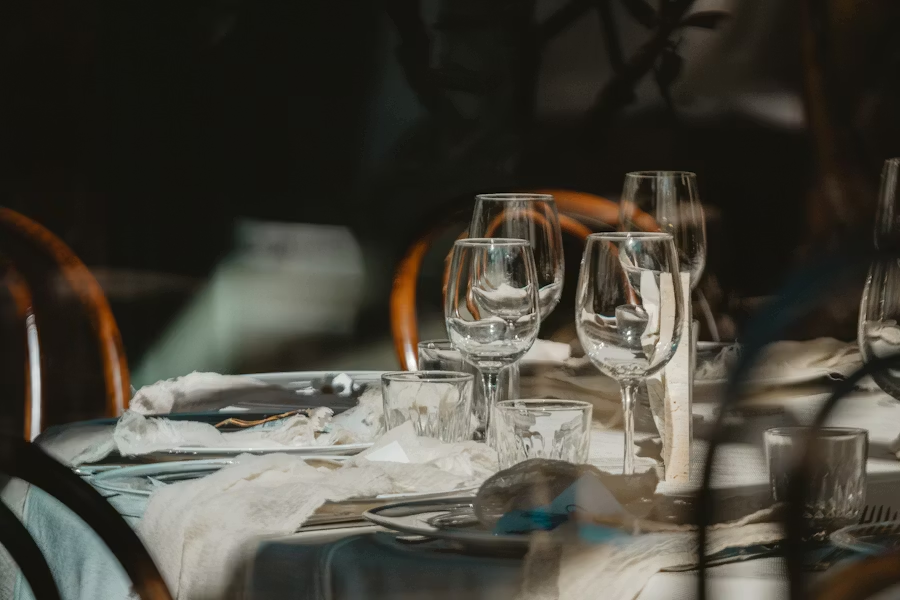
The dining room was a cavern of mahogany and gold leaf. The chandelier, a monstrosity of crystal that cost more than my college education, cast a fractured, trembling light over the table. We were seated according to a hierarchy that hadn’t changed since I was a child. Dad at the head, Mom at the foot, Kevin to Dad’s right, and me… I was seated next to Aunt Lydia, a woman who smelled of mothballs and judgment.
The air conditioning was set to a chill that required layers, a subtle flex of wealth in the sweltering heat. The appetizers were served by staff I didn’t recognize—my parents went through housekeepers like Kleenex.
“So, Elena,” my mother began, her voice a melodic trill that disguised the barbwire underneath. “Still working at that… firm? What is it you do again? It sounds so dreary.”
“I’m an auditor, Mother,” I said, slicing into a fig wrapped in prosciutto. “I look for discrepancies in corporate ledgers.”
“Sounds like you’re a glorified calculator,” Kevin laughed. He was wearing a watch that cost forty thousand dollars, purchased, I knew for a fact, with funds from the “charity” foundation he technically managed.
“Someone has to count the beans, Kevin,” I replied, my voice level. “Otherwise, you never know when they’re missing.”
He smirked, clinking his glass against his wife Paige’s. Paige looked tired. She was wearing diamonds that looked heavy on her thin frame. She offered me a small, apologetic smile, the kind a hostage gives a negotiator.
The conversation swirled around me, a river of gossip and humble-brags. They talked about the yacht club renovations, the new board members at the bank, the summer house in the Hamptons that needed a new roof. I ate mechanically. I watched them. I watched how my father’s hand shook slightly when he reached for his water. I watched how my mother’s eyes darted to him every time he cleared his throat.
They were nervous. The tension was a low hum, a frequency only I seemed to be tuned into. They were hiding something, but they didn’t know that I already knew what it was. They thought they were the predators.
The Sentence
The main course was cleared. The dessert forks were laid out. This was the moment. I could feel the script turning the page.
My father waited until the Bordeaux was poured and the laughter was loud enough to carry. It was a 1982 vintage, dusty and deep red, looking like dried blood in the candlelight. He swirled the glass, watching the legs of the wine run down the side, mesmerizing the table into silence.
Then he stood. He didn’t push his chair back; he simply rose, looming over the table. He leaned one palm on the white linen, his knuckles white.
“I have an announcement,” he said. His voice was a baritone that had commanded boardrooms for forty years. “Your mother and I have been reviewing the estate planning.”
Kevin straightened up, looking like a golden retriever anticipating a treat. I sat perfectly still.
“We’ve decided to make some changes to the trust,” Dad continued, his eyes sliding over everyone before locking onto me. They were cold, hard eyes. “Elena, we’ve decided to cut you out of the inheritance. Entirely.”
The silence was sudden and violent. It sucked the air out of the room.
“You’ve never deserved it,” he added, twisting the knife. “You’ve always been distant. Ungrateful. You treat this family like a burden. Kevin has been loyal. Kevin has been present. You chose your little life over us. So, we’re choosing our legacy over you.”
The chandelier caught everyone’s widened eyes. My mother dabbed a napkin against a smile that didn’t need hiding. It was a triumphant little purse of the lips. Kevin smirked, a look of pure, unadulterated greed. Paige looked down, her shoulders trembling—the kind of laughter you perform when you’d like to look polite about cruelty. Aunts clucked their tongues, a chorus of hens. An uncle raised his glass to loyalty, a sycophantic gesture that made my stomach turn. A cousin clapped, a singular, wet sound.
I looked at them. Really looked at them. I saw the rot beneath the facelifts. I saw the fear behind the arrogance. They thought money was a wall that could keep out consequence.
I picked up my glass. The crystal was cold against my fingertips.
“Congratulations,” I said. My voice didn’t shake. I didn’t let it. I tasted the wine for what it was: costume jewelry in a crystal dress. Tannic, over-aged, and sour. “I hope it was worth it.”
I placed the glass down. I didn’t slam it. I stood up, smoothed the front of my blazer, and picked up my purse.
“Leaving so soon?” Kevin called out, emboldened by his new net worth. “Don’t you want dessert? It’s tart. Like you.”
I didn’t look at him. I walked out of the dining room, my heels clicking a steady rhythm on the marble floors. Tap. Tap. Tap. It was the sound of a countdown.
I handed my ticket to the valet. He brought my Honda around. I tipped him twenty dollars, which was ten dollars more than my father ever tipped.
I drove away. No tears. No speech. No scene.

The Architecture of Betrayal
By the time I reached my one-bedroom apartment in the city and fed Winston, my three-legged rescue beagle, the story had settled into place like a puzzle that had always been there.
The phone call three days earlier from my mother, asking if I was coming to dinner, had sounded like an invitation but felt like a setup. The years of smaller cuts—forgetting my birthday, excluding me from family trips, mocking my career—had all been leading to this public execution. In our family, approval wasn’t love; it was leverage. And since they couldn’t leverage me, they decided to discard me.
They had forgotten what I do for a living.
My father thought I was a boring “numbers girl” at a medium shop. He thought I spent my days filing tax returns for dentists and landscaping companies. He never cared enough to ask what kind of numbers I followed, or whose.
I am a forensic accountant. I specialize in high-net-worth fraud. I am the person the FBI calls when they have the warrant but can’t find the money. I am the person who looks at a shell company in the Cayman Islands and sees the invisible thread connecting it to a bank account in Delaware.
And for the last five years, my hobby hasn’t been knitting. It’s been them.
The folder on my laptop—labeled “Insurance” because “Evidence” was too loud for the life I’d built—held five years of assets bleeding in the same places.
It started innocently enough. Three months ago, my mother had brought me a tax “question” in a cream folder. She had come to my apartment, wrinkling her nose at my neighbors, and handed me a stack of documents.
“Your father is being so difficult about the foundation’s audit,” she had said, sipping tea she clearly hated. “Can you just look at these and tell me if we need to worry about the IRS? Just a quick peek, darling. Free of charge, for family?”
I’d smiled, made more tea, and scanned everything.
Then I did what I do best: I traced patterns until they became people, and people until they became crimes.
The Anatomy of a Crime
Saturday was theater. I spent the day in my pajamas, watching bad reality TV with Winston, letting the anger metabolize into cold, hard resolve. I didn’t cry. I didn’t call my friends to vent. I just let the memory of their laughter at the dinner table play on a loop in my head.
Sunday became architecture. I opened the “Insurance” folder.
Here is what I had found in the “quick peek” my mother gave me, and the subsequent digging I had done using my professional access:
My father’s “charitable foundation,” the one dedicated to preserving historical Southern architecture, was a sieve.
- Inflated Expenses: They were paying a construction company called “Redstone Renovation” millions of dollars for work that never happened.
- Identical Vendor Shells: Redstone Renovation had the same P.O. Box in a strip mall in Bessemer as three other vendors the foundation paid: “Blue Sky Consulting,” “Apex logistics,” and “Southern Heritage preserving.”
- The Signatures: The checks were signed by my father. The checks were deposited by a man named “K. Reynolds.”
Kevin’s middle name is Reynolds.
My brother, the golden boy, was washing family money through a fake construction company to avoid inheritance taxes and hide assets from the shareholders of my father’s actual legitimate business. They were stealing from their own company, stealing from the IRS, and technically, stealing from the donors of the charity.
It wasn’t just tax fraud. It was wire fraud. It was conspiracy. It was a federal lasagna, and they had baked it perfectly.
Except for the paper trail. They were arrogant. They thought because they were rich, they were invisible. They used their own initials. They used dates that corresponded to family vacations.
I sat at my kitchen table, the blue light of the laptop illuminating my face. I organized the files. Exhibit A: The Ledger. Exhibit B: The Shell Companies. Exhibit C: The Photos Kevin posted on Instagram of a boat bought the same week “Redstone Renovation” was paid $200,000 for “roof repairs.”
I compiled it all.
The Messenger
I texted the one reporter in Birmingham who returns calls at midnight and doesn’t print until the math sings.
His name was Elias. He was a disheveled man who drank too much coffee and smoked cigarettes he was trying to quit. We had worked together once before on a case involving a corrupt city councilman. He respected the numbers.
“I have something,” I texted.
“Big?” he replied instantly.
“Biblical.”
We met Tuesday at a diner on the outskirts of town, a place where the waffles were greasy and the booths were taped with duct tape. It was the antithesis of the Summit Club.
I slid a flash drive across the table.
“What’s this?” Elias asked, eyeing it.
“My inheritance,” I said.
He plugged it into his laptop. I watched his eyes scan the documents. I watched his eyebrows climb toward his hairline. I watched him stop breathing for a moment.
“Elena,” he whispered. “This is… this is your father. This is the Thompson estate.”
“It is.”
“If I run this, it burns everything down. You know that? There’s no coming back from this. Thanksgiving is going to be awkward forever.”
“I was disowned on Friday,” I said, dipping a fry into ketchup. “I don’t have a Thanksgiving to go to.”
He looked at me, really looked at me. He saw the “boring numbers girl” stripping the paint off the walls.
“Give me seventy-two hours,” he said. “I need to verify the shell companies. I need to drive to that P.O. Box in Bessemer.”
“Take your time,” I said. “I’m not in a rush.”
The Last Supper
On Wednesday, my boss at the firm, a stern woman named Sarah who terrified everyone but me, called me into her office.
“Your father called,” she said, watching me over her glasses.
My heart skipped a beat. “Oh?”
“He pretended to be a prospective client. Asking for you specifically. Fishing for your role, your current cases, your access levels. He wanted to know if you had access to external banking systems.”
I smiled. He was getting paranoid. He realized, perhaps in the sober light of Monday morning, that he had just declared war on the only person who knew where the bodies were buried.
“What did you tell him?”
“I told him that client confidentiality is paramount and hung up,” Sarah said. “Is there a problem, Elena?”
“No problem,” I said. “Just a family misunderstanding.”
“Fix it,” she said. “I don’t like fishing expeditions.”
On Thursday, my phone rang. It was him.
“Elena,” his voice boomed. No hello. No apology. “Meet me for lunch. The Summit Club. Noon. Don’t be late.”
I went.
The Summit Club sat high above the city, offering a view of the sprawling metropolis that mistook height for power. I walked in, wearing the same blazer. He was sitting at his usual table by the window. He looked tired. The arrogance from Friday was there, but it was brittle.
I sat down. I didn’t put a napkin in my lap.
“What do you want?” I asked.
He swirled his iced tea. “Your mother is upset. She thinks we were… harsh on Friday.”
“You cut me out of the will in front of the entire extended family, Dad. Harsh is a mild word.”
“We were emotional,” he waved a hand, dismissing the trauma he inflicted. “Look, Elena. We want to make sure you’re okay. We want to offer you a stipend. A monthly allowance. To help with your… expenses.”
He slid a check across the table. It was for ten thousand dollars.
It was a bribe. He was trying to buy my silence. He had realized that a forensic accountant with a grudge was a dangerous thing to have running loose.
“I don’t want your money,” I said, ignoring the check.
“Everyone wants money,” he sneered. “Don’t be a martyr. It doesn’t suit you. Take the check. Sign this NDA saying you won’t discuss family business with outsiders—standard practice for the trust—and we can move past this.”
He pushed a piece of paper toward me. An NDA.
I laughed. It was a dry, rusty sound.
“You think I want to talk about you?” I asked. “You think I care enough to gossip?”
“I know you, Elena. You’re vindictive. You’re quiet. It’s the quiet ones who hold grudges.”
He was right about one thing. I was holding a grudge. But I wasn’t holding it; I was weaponizing it.
“I don’t want your money, Dad,” I stood up. “And I don’t want your NDA. You kept your money. I’ll keep my silence. Or… whatever version of it I choose.”
He stood up, his face reddening. “You walk away now, and you get nothing. Ever.”
“I already have nothing, Dad. You made sure of that on Friday.”
I walked out. I left the check on the table.
The Explosion
On Friday at 6:00 a.m., exactly one week after the dinner, the Birmingham Tribune headline hit like a match in a dry field.
“CHARITY BEGINS AT HOME: LOCAL MAGNATE AND SON IMPLICATED IN MULTI-MILLION DOLLAR FRAUD SCHEME.”
It was above the fold. It was online. It was everywhere.
Elias had done beautiful work. He had the photos of the empty strip mall unit. He had the copies of the checks signed by Dad and deposited by “Redstone Renovation.” He had the flight logs of the private jet trips paid for by the charity. He had the math.
And right there, in the third paragraph, was the line that sealed it: “Documents provided by a whistleblower with intimate knowledge of the family’s finances reveal a systematic pattern of tax evasion and embezzlement spanning five years.”
By 8:00 a.m., the FBI was knocking on the door of the estate.
By 9:00 a.m., Kevin’s Instagram account was deleted.
By noon, my phone had 43 missed calls. Mom. Dad. Kevin. Paige. Aunt Lydia. The cousin who clapped.
I didn’t answer a single one.
I sat in my office, drinking coffee from a mug that said “I Love Spreadsheets.” I watched the news on my computer. I saw the footage of my father being led out of his office in handcuffs. He looked older. He looked small. He didn’t look like a titan of industry. He looked like a man who had forgotten to carry the one.
Kevin was crying in the footage. Actually weeping.
My boss, Sarah, knocked on my door. She came in, closed it, and sat on the edge of my desk.
“Did you see the news?” she asked.
“Hard to miss,” I said.
She looked at me. She knew. She didn’t ask, but she knew.
“The whistleblower,” she said carefully. “They must have been very good at their job.”
“The best,” I said.
“Well,” she stood up. “If you need the afternoon off, take it. It seems like a stressful day for the Thompson family.”
“I’m fine,” I said. “I have work to do.”
The Aftermath
I went home at 5:00 p.m. My door had two sets of furious knuckles—my mother’s, judging by the lipstick smear on the peephole. She had come here to scream, to beg, to blame. But she couldn’t get in. My building had security.
I fed Winston. I poured myself a glass of wine—a cheap Pinot Noir that tasted like freedom.
My phone buzzed. A text from my grandmother. She was ninety years old, living in a nursing home in Florida. She was the only one who had never treated me like a spare part, mostly because she hated my father (her son-in-law) with a fiery passion.

I opened the text. It had exactly seven words:
“Always knew you were the smart one.”
I smiled.
The fallout was nuclear. The assets were frozen. The reputation was incinerated. The “friends” who had laughed at the dinner table evaporated like mist. My father was facing ten to fifteen years. Kevin was facing five. My mother was facing a life of social pariahdom and potential poverty, as the government seized the estate to pay back the taxes and the fines.
They had wanted to cut me out. They had wanted to ensure I got nothing.
In the end, they got their wish. I got nothing of theirs. But they got nothing, too.
The inheritance was gone. Not just for me, but for all of them.
I took a sip of my wine. It wasn’t a 1982 Bordeaux. It was better. It was mine.
I looked out the window at the city lights. I thought about the dinner. I thought about the moment my father stood up and banged his imaginary gavel. He had sentenced me to a life without them.
He didn’t realize he was actually sentencing himself.
I turned off my phone. I had numbers to run in the morning.
Do you think Elena did the right thing? Let us know what you think about this story on the Facebook video and if you like this story share it with friends and family!
