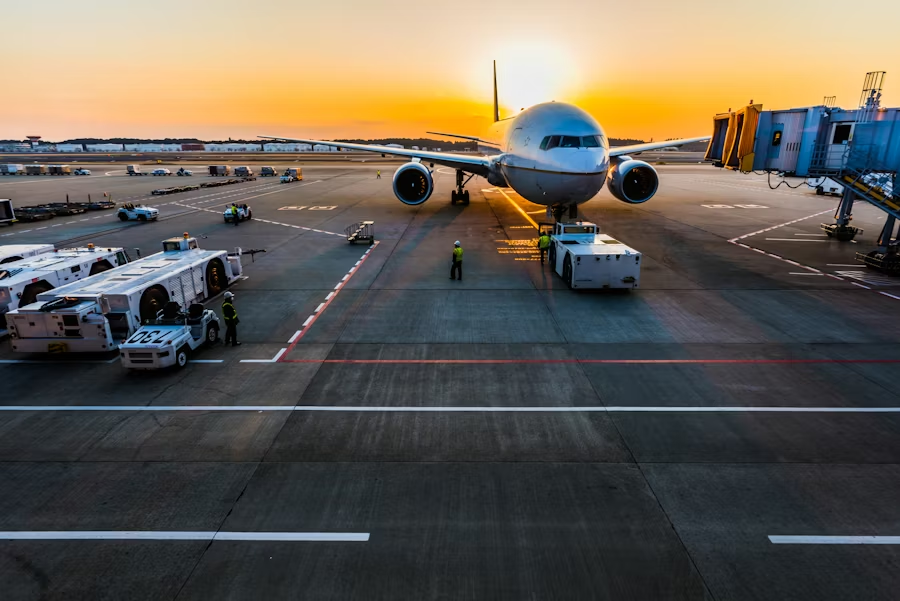
The Illusion of a Perfect Life at Gate K12 The fluorescent lights of Chicago O’Hare International Airport have a specific kind of hum—a low-frequency buzz that seems to vibrate right behind your eyes when you haven’t slept properly in weeks. It was Thursday night, mid-November, and the terminal was a chaotic symphony of rolling suitcases, crying infants, and the garbled announcements of gate changes. Outside the floor-to-ceiling windows, the tarmac was slick with a fresh coat of freezing rain, the ground crew moving like neon ghosts in the mist.
I stood near the entrance to the TSA checkpoint, my feet aching in heels I wore only because Richard liked them. Beside me stood my husband, Richard Oliver. To the casual observer—and perhaps even to our close friends—we were the portrait of the American Dream. Richard was handsome in that manicured, corporate way: a charcoal gray wool coat over a bespoke suit, hair perfectly coiffed, the scent of expensive sandalwood and leather clinging to him. He looked like a man who moved millions of dollars with a phone call.
And I was the accessory. Emily, the supportive wife. The woman who managed the house in the suburbs, the social calendar, and the appearances.
Holding my hand, his grip tight and sweaty, was our six-year-old son, Matthew.
Matthew was small for his age, a quiet boy with messy brown hair and eyes that seemed to take in everything while giving away nothing. He wasn’t like other kids who ran around the terminal or begged for snacks. He was still. Too still. He stood beside me like a statue, his knuckles white where he gripped my fingers.
“This meeting in New York is crucial, honey,” Richard said, checking his Rolex. It was a Submariner, a gift I had bought him for our fifth anniversary using money from my own inheritance—money he had sworn was “safely invested.”
“I know,” I said, forcing the smile that had become my mask. “The merger. You’ve been talking about it for months.”
“Three days at most,” he said, his eyes scanning the crowd rather than looking at me. He seemed agitated, tapping his foot against the linoleum. “I’ll be back Sunday night. You take care of everything here, right? Don’t forget the landscapers are coming tomorrow to wrap the shrubs for winter.”
Take care of everything. That was my job description. Manager of the domestic sphere. Keeper of the peace.
“Of course,” I replied. “We’ll be fine.”
Richard finally looked down. He crouched in front of Matthew, placing both hands on the boy’s shoulders. It was a gesture meant to look paternal, affectionate. But I saw Matthew flinch. Just a micro-movement, a tiny recoil, as if his father’s hands were hot irons.
“And you, champ,” Richard said, flashing his salesman smile. “You take care of Mommy for me. You’re the man of the house until Sunday.”
Matthew didn’t answer. He didn’t smile back. He just stared at his father’s face with an intensity that was unnerving. He was looking at Richard not with love, but with the kind of focused study a scientist gives a venomous insect behind glass. He was memorizing him.
“Cat got your tongue?” Richard laughed, a hollow sound, and patted Matthew’s cheek a little too hard. He stood up and kissed my forehead. His lips were cold. “I love you guys. Keep the phone on.”
“Safe flight,” I said.
He turned, grabbed his leather carry-on, and walked toward the TSA pre-check line without looking back. He moved with the brisk efficiency of a man who had somewhere to be, a man unburdened by the family he was leaving behind.
We watched him go. We watched him put his bag on the belt, walk through the metal detector, and disappear into the sea of travelers.
Only when he was completely gone did I let out a breath I felt I’d been holding for years.
“Come on, son,” I said, my voice heavy with a fatigue that went down to my marrow. “Let’s go home. I’ll make hot cocoa.”
We turned and began the long walk back to the parking garage. The airport was thinning out as the late-night lull set in. Our footsteps echoed on the polished terrazzo floor. Click-clack, click-clack.
Matthew was silent. His hand in mine felt feverishly hot.
We reached the automatic sliding doors that led to the parking garage bridge. The cold air hit us, smelling of jet fuel and exhaust.
Suddenly, Matthew stopped. He planted his feet and refused to move.
“Matthew?” I tugged gently on his arm. “What is it? Did you forget your transformer toy in the car?”
He looked up at me. The ambient light from the streetlamps reflected in his eyes, making them look glassy. His lower lip was trembling.
“Mom,” he whispered.
“What is it, baby?”
He squeezed my hand so hard it hurt. He pulled me down until I was kneeling on the cold concrete, eye-level with him. He looked around the empty walkway, scanning for anyone who might be listening.
“Mom,” he said again, his voice cracking. “We can’t go back home.”
My heart did a strange, stuttering flip in my chest. “What do you mean? Of course we’re going home. It’s past your bedtime.”
“No.” The word was forceful, absolute. “We can’t go back. Not tonight.”
“Matthew, you’re tired. You’re imagining things.”
“I’m not!” he hissed, tears finally spilling over his lashes. “Please, Mom. You never listen. You always say it’s nothing. But please, this time… this time believe me.”
The desperation in his voice stopped me cold. This wasn’t a tantrum. This wasn’t a child trying to stay up late. This was terror.
“Okay,” I said slowly, smoothing his hair back. “Okay, I’m listening. Why can’t we go home?”
He leaned in close, his breath warm against my ear, whispering as if the walls themselves had ears.
“This morning,” he stammered. “I woke up early. Before the sun. I was thirsty.”
I nodded. Matthew was an early riser.
“I went downstairs. Dad was in his office. The door was cracked. He was on the phone.”
My stomach tightened. Richard often made early calls to overseas partners. Or so he said.
“He wasn’t talking like Dad,” Matthew said. “He sounded… scary. He sounded like the bad guys in movies.”
“What did he say, Matthew?”
Matthew swallowed hard, his eyes darting around.
“He said… he said, ‘Tonight is the night.’ He said, ‘I’ll be on the plane. Make sure it’s done before midnight.’ And then he said…” Matthew started to cry harder. “He said, ‘Make sure they don’t wake up. I want to be free.’”
The world tilted on its axis. The noise of the airport faded into a dull roar.
Make sure they don’t wake up.
I want to be free.
My first instinct—the instinct of a wife who had spent eight years building a life, a home, a reputation—was to deny it. To tell him he misunderstood. To tell him Daddy was talking about a business deal, about “killing” a contract or “terminating” a partnership.
But then I looked at my son. I looked at the raw, unfiltered fear in his face. And I remembered the other things.
The life insurance policy Richard had insisted on doubling three months ago. “Just in case, honey. The market is volatile.”
The way he had been pushing me to put the house deed in his name only for “liability purposes.”
The strange car I had seen parked down the street three nights in a row—a dark sedan that idled for hours and then drove away when I turned on the porch light.
The way Richard had stopped touching me. The way he looked at me across the dinner table, not with love, or even with boredom, but with a cold, calculating assessment. Like I was an equation he was trying to solve.
A chill that had nothing to do with the Chicago winter swept through me.
“You’re sure?” I whispered. “You’re sure that’s what he said?”
“Yes,” Matthew sobbed. “He said, ‘Burn it down if you have to. Just get rid of them.’”
I stood up. My legs felt like jelly, but my mind was suddenly sharpening into a point of diamond-hard clarity.
I looked at my car in the distance—the silver sedan Richard had bought for me. He had insisted on the remote start, the GPS tracking. “Safety features,” he had called them.
“Okay,” I said. My voice was different now. It was the voice of a mother wolf. “I believe you.”
Matthew let out a sob of relief and buried his face in my coat.
“We aren’t going home,” I said. “Come on.”
We walked to the car. I buckled him in. I got in the driver’s seat and locked the doors. My hands were shaking so badly I dropped the keys twice before getting them into the ignition.
I didn’t drive toward our suburb. I drove toward the darkness, toward the unknown, with only the word of a six-year-old boy standing between us and an inferno.
The Surveillance in the Shadows I drove aimlessly for twenty minutes, checking my rearview mirror every ten seconds. Paranoia is a strange companion; it makes every pair of headlights look like a threat. Were we being followed? Did Richard have someone watching the airport to make sure we went home?
I needed a plan. But first, I needed proof. Or at least, I needed to know if my son’s nightmare was real.
I drove to our neighborhood, but I didn’t turn down our street, Wisteria Lane. Instead, I turned onto the street behind it, a road that ran parallel to ours and sat on a slight incline. There was a wooded patch—a small community park buffer—that separated the backyards of the two streets.
I pulled the car into a dark spot beneath a massive oak tree, killing the lights and the engine.
“Mom?” Matthew whispered from the back seat. “What are we doing?”
“We’re playing spies,” I said, trying to keep the tremor out of my voice. “We’re just going to watch the house for a minute. To make sure it’s safe.”
We got out of the car. It was freezing. The wind cut through my coat. I held Matthew’s hand and we crept through the line of trees until we could see the back of our house.
It looked peaceful. The kitchen light was on a timer; it had clicked on at 6:00 PM as usual. The security floodlights bathed the yard in a harsh, clinical white glow. It looked like the home I had spent years decorating, the home where we opened Christmas presents and hosted barbecues.
“See?” I whispered, half-hoping I was right and he was wrong. “It’s quiet.”
Matthew didn’t answer. He gripped my hand tighter.
We stood there for ten minutes. Fifteen. My toes were going numb. I was about to turn back, about to tell Matthew that he had just had a bad dream, when a vehicle turned onto our street.
From our vantage point on the hill, we could see over the fence.
It wasn’t a car. It was a dark, battered van. No markings. No license plate on the front.
It moved slowly, prowling down the street. It passed our house, slowed, and then stopped three houses down.
“Mom,” Matthew whimpered.
“Shh.”
The van sat there for five minutes. Then, it reversed. It backed up until it was directly in front of our driveway.
The engine cut. The lights went out.
Two men stepped out. They were dressed in black—hoodies, cargo pants. They didn’t look like burglars casing a joint; they moved with a terrifying purpose. They walked straight up the driveway.
I reached for my phone to call 911, but my fingers froze when I saw what happened next.
The taller man didn’t kick the door. He didn’t break a window. He reached into his pocket and pulled out a set of keys.
My breath hitched.
Only two people had keys to that house. Me. And Richard.
The man unlocked the front door. He disarmed the security system—I saw the green light on the panel turn off through the front window. He knew the code.
Richard’s birthday.
They stepped inside.
I clamped a hand over my mouth to stifle a scream. Matthew buried his face in my leg, refusing to look.
We watched as flashlight beams danced through the downstairs windows. They moved methodically. Living room. Kitchen. Then, they started up the stairs.
They were going to the bedrooms.
They were going to kill us in our sleep.
Minutes ticked by like hours. I imagined them standing over empty beds, knives or guns in hand, realizing their prey was gone. I imagined their anger.
Then, they came back downstairs. I saw movement in the kitchen.
One of the men was carrying a red jerry can.
“No,” I whispered. “No, no, no.”
He began to pour. I couldn’t see the liquid, but I knew the motion. He was dousing the living room. He splashed the curtains. He soaked the rug I had bought in Morocco.
They exited the house through the back door—right into the yard below us. I pulled Matthew down into the bushes, my heart hammering so loud I thought they must hear it.
The shorter man lit a flare. It hissed, sparking red in the dark night.
He tossed it through the open back door.
The whoosh was immediate. It wasn’t a slow build. It was an explosion of light and heat. The chemicals they used must have been volatile. The living room windows blew out within seconds, shattering glass across the patio.

Flames licked up the side of the house, hungry and violent. They devoured the siding. They climbed toward Matthew’s bedroom window.
The men ran to the van, jumped in, and sped off without turning on their headlights.
I stood in the freezing mud, watching my life burn. If I had come home… if I had put Matthew to bed… if I had taken a sleeping pill like I usually did when Richard traveled…
We would be ash.
The sirens started in the distance, a mournful wail growing louder.
My phone buzzed in my pocket. I jumped, nearly dropping it.
It was a text message. From Richard.
“Honey, just landed. Flight was smooth. I hope you and Matthew are sleeping well. Kiss him for me. I love you both. See you Sunday.”
The cruelty was breathtaking. He was establishing his alibi. He was texting his dead wife and son, knowing that by the time the fire was put out, our phones would be melted slag in the rubble.
I vomited. I leaned against a tree and retched until there was nothing left.
“Mom?” Matthew’s voice was tiny. “Is it gone?”
I wiped my mouth. I turned to him. The firelight reflected in his eyes, dancing orange flames in the darkness.
“Yes, baby,” I said. “The house is gone.”
“Are we safe?”
“Not yet,” I said. “Not until we disappear.”
The Architect of Survival We couldn’t stay there. The fire trucks were turning onto the street. Neighbors were pouring out of their houses in pajamas. If we were seen, word would get back to Richard. He would know he failed. And he would try again.
We crept back to the car. I drove slowly, keeping to the back roads, heading away from the smoke that was now billowing into the night sky.
I had no wallet. It was in the house. I had my purse, but my cards were linked to joint accounts. Richard would see any transaction immediately. I had twenty dollars cash and a quarter tank of gas.
I needed help. But who could I trust? Richard had charmed everyone. My friends were his friends. My neighbors thought he was a saint. If I went to the police, would they believe me? Or would they call the “grieving husband” to come pick up his “hysterical wife”?
I needed someone who knew what Richard really was.
And then I remembered.
Two years ago, my father lay dying in a hospice bed. He had been a hard man, a former union negotiator who could smell a rat from a mile away. He had never liked Richard. He tolerated him for my sake, but he watched him with cold, suspicious eyes.
The day before he died, he pulled me close. His grip was weak, but his eyes were sharp.
“Emily,” he wheezed. “That husband of yours. He’s hollow. He’s a suit with nothing inside.”
“Dad, don’t,” I had said.
“Listen to me. If things ever go bad… if you ever find yourself in a corner… you call Jennifer.”
“Who is Jennifer?”
He reached under his pillow and pulled out a business card. It was plain white, heavy cardstock. No logo. Just a name and a number.
Jennifer Hernandez. Attorney at Law.
“She owes me,” Dad said. “She handles the things that the polite lawyers won’t touch. You keep this. Hide it.”
I had tucked it into a secret compartment in my wallet and forgotten about it.
I pulled over under a streetlight and dug through my purse. Please, let it be there. Please.
My fingers brushed the stiff card hidden behind my library card.
I pulled it out.
I dialed the number. It was 11:45 PM.
It rang once. Then a voice answered. Raspy, smoke-cured, and alert.
“Hernandez.”
“My name is Emily Oliver,” I said, my voice shaking. “My father was Robert Oliver. He said… he said you owed him.”
There was a silence on the line.
“Robert’s daughter,” the woman said. Her tone shifted from defensive to intrigued. “I haven’t heard that name in years. Where are you?”
“I’m in a car with my six-year-old son. My house just burned down. My husband hired men to do it. He thinks we’re inside.”
Another pause. Longer this time.
“Are you safe right now?”
“I don’t know.”
“Can you drive?”
“Yes.”
“Come to 402 East Market Street. Back alley entrance. Green door. Knock three times, pause, then twice. Do not stop for anything.”
The Sanctuary of the Wicked The office wasn’t in a glass tower. It was in the old warehouse district, a brick building that looked like it had survived a war or two. I parked the car in the shadows of the alley as instructed.
I picked up sleeping Matthew and carried him to the green door. Knock-knock-knock. Pause. Knock-knock.
The door opened immediately.
A woman stood there. She was short, maybe five-two, but she radiated power. She had steel-gray hair cut in a sharp bob, wearing a silk robe over pajamas, holding a cigarette in one hand and a glass of scotch in the other.
She looked at me, then at Matthew. She stepped aside.
“Get in.”
She led us up a flight of stairs to a loft apartment that served as both office and home. It was cluttered with files, books, and empty coffee cups.
“Put the boy on the couch,” she said, pointing to a leather chesterfield.
I laid Matthew down. He didn’t stir.
Jennifer poured a second glass of scotch and handed it to me. “Drink. You look like you’re about to shatter.”
I drank. It burned, but it grounded me.
“Tell me,” she said.
I told her everything. The airport. The whisper. The stakeout. The fire. The text message.
Jennifer listened without interrupting. She watched me with eyes that had seen every variety of human cruelty.
When I finished, she set her glass down.
“Your father was right,” she said. “Your husband is a amateur. But amateurs are dangerous because they’re unpredictable.”
She walked to a filing cabinet in the corner. She unlocked it with a key from around her neck. She pulled out a thick file.
“Robert hired me three years ago,” she said. “To look into Richard.”
“What?” I gasped.
“He didn’t trust him. He wanted a background check. A deep one. Not the credit report stuff. The real dirt.”
She tossed the file on the coffee table.
“Richard isn’t a successful executive, Emily. He’s a gambler. A degenerate one.”
I opened the file. Photos of Richard entering underground casinos. Bank statements showing massive withdrawals. Loans from names that sounded like shell companies.
“He’s broke,” Jennifer said. “He’s been broke for two years. He’s been shuffling money, robbing Peter to pay Paul. But he ran out of Peters. He owes a syndicate in Chicago about two hundred thousand dollars. And they aren’t the kind of people who send late notices. They send guys with gas cans.”
“The inheritance,” I whispered. “My mother’s money.”
“Gone,” Jennifer said. “He liquidated it six months ago. Forged your signature.”
“And the life insurance?”
“Two million dollars. Double indemnity for accidental death. Fire is an accident. He kills you, he pays the debt, he starts over with a clean slate and a grieving widower story.”
I felt sick. My entire life was a lie. My marriage was a long con.
“So what do we do?” I asked. “Go to the police?”
Jennifer lit another cigarette. “We could. But Richard has an alibi. He’s in New York. He has flight records. Hotel check-ins. If we go to the cops now, it’s your word against his. And without bodies in the fire, he’ll claim you set it yourself. He’ll say you’re mentally unstable. He’ll try to take custody of the boy.”
“No,” I said fiercely. “He will never touch Matthew.”
“Then we have to be smarter,” Jennifer said. “We have to let him think he won. Just for a little while.”
“What do you mean?”
“Tomorrow morning, he’s going to get a call. The fire department will tell him the house is gone. He’ll fly back. He’ll play the part. He’ll cry for the cameras. He’ll wait for them to find your bones.”
She smiled, a shark-like grin.
“But he won’t find bones. He’ll start to panic. And when men like Richard panic, they make mistakes. They reach out to their accomplices. They try to cover tracks that aren’t there.”
“We watch him,” I said, understanding.
“We hunt him,” she corrected. “We need hard evidence. We need the communication between him and the arsonists. We need the money trail.”
“How do we get that?”
“Does he have a safe?”
“Yes. In the office. But the house burned down.”
“Fire safes are rated for two hours at 1700 degrees,” Jennifer said. “If the floor didn’t collapse, the safe is still there. And if he’s arrogant—which he is—he kept his leverage in there. Blackmail material. Ledger books. Burner phones.”
“We have to go back into the house,” I said, the realization chilling me.
“Tonight,” Jennifer said. “Before the fire marshal secures the scene at dawn. The fire is out, but the chaos is our cover.”
The Heist in the Ashes We left Matthew sleeping under the watchful eye of Jennifer’s neighbor, a retired nurse. We took Jennifer’s car—an old Volvo that blended into the darkness.
Returning to Wisteria Lane was surreal. The street was filled with smoke. Fire trucks were packing up, their lights flashing lazily. The house was a smoking skeleton. The roof had caved in on the left side, but the right side—where the office was—still stood, blackened and skeletal.
We parked a block away and approached through the neighbor’s yard, slipping through the hedge.
“The back wall is compromised,” Jennifer whispered, assessing the damage like a structural engineer. “We can climb up the trellis to the balcony. It looks stable.”
We climbed. My hands were black with soot. The smell of wet ash was overpowering.
We stepped into the master bedroom. The bed was a charred frame. The photos on the dresser were melted plastic.
We moved to the hallway. The floor was spongy.
“Stay on the beams,” Jennifer hissed.
We reached the office. The door was gone, burned away.
The safe was in the wall, behind where a painting used to be. The painting was ash. The safe was black, scorched, but intact.
“Do you know the combo?” Jennifer asked.
“His birthday,” I said bitterley. “04-12-80.”
I spun the dial. It was hot to the touch.
The heavy door swung open.
Inside, protected by the insulation, were stacks of cash, a handgun, and a black leather notebook.
“Grab it all,” Jennifer said.
I reached in. I grabbed the cash. I grabbed the gun. I grabbed the notebook.
And then, beneath the notebook, I saw something else. A burner phone.
“Got it,” I said.
We were turning to leave when we heard it.
Voices. Downstairs.
“Boss said check the safe.”
“It’s too hot, man.”
“Just check it. If the ledger survives, we need it.”
The arsonists. They had come back.
“Closet,” Jennifer breathed.
We scrambled into the walk-in closet of the office. It was tiny, smelling of smoke. We crouched behind a file cabinet.
Flashlight beams cut through the darkness of the office.
“Look,” one voice said. “The safe is open.”
“It’s empty.”
“Someone beat us to it.”
“Who? The cops?”
“Cops would have taped it off. This was… someone else.”
“We need to call him.”
I heard a phone dial. Then, on speaker:
“Yeah?” Richard’s voice.
“Boss. Problem. Safe is empty.”
“What? Did the fire destroy it?”
“No. Someone opened it. Combo. It’s cleaned out.”
Silence on the line. Then, a voice filled with a terrifying realization.
“She’s alive,” Richard whispered. “Find her. Find her now.”
“Where?”
“She has the ledger. She has the phone. If she goes to the cops, I’m dead. Find her and finish it.”
The men turned. Their lights swept the room.
“Maybe she’s still here,” one said.
They started moving toward the closet.
Jennifer looked at me. She pulled a small can of pepper spray from her pocket. I gripped the gun I had taken from the safe. It was heavy. I didn’t know if it was loaded.
The footsteps got closer. Heavy boots on charred wood.
Jennifer pointed to the window in the closet. It led to the roof of the porch.
“Go,” she mouthed.
She kicked a stack of books over to create a noise distraction in the corner. The men spun toward the sound.
“Over there!”
We scrambled out the window onto the roof shingles. It was slippery with ice and ash. We slid down, dropping ten feet into the snow-covered bushes below.
We ran. We ran through the backyards, dogs barking, lights turning on. We reached the Volvo and peeled out just as headlights swept the street behind us.
The Turn of the Screw Back at the loft, we examined the haul.
The notebook was a ledger of debts. Gambling losses. Loan shark payments. And the last entry:
“November 21st. The Cleaners. $50,000. Final solution.”
The burner phone contained texts. Confirming the hit. Confirming the flight. Confirming the intent.
“We have him,” Jennifer said, blowing smoke rings at the ceiling. “We have him cold.”
“So we go to the police now?”
“No,” Jennifer said. “Now we set the trap. He thinks you’re running scared. We need to bring him to us. We need him to confess in a way he can’t wriggle out of.”
“How?”
Jennifer picked up the burner phone.
“We text him from this.”
She typed a message.
“I have the book. I know everything. Meet me. Or I go to the FBI.”
She sent it to Richard’s main cell.
His reply was instant.
“Emily? Baby, please. Let me explain. It’s not what you think.”
I took the phone. I typed.
“City Park. Tomorrow. 10:00 AM. Come alone. Or I send the ledger to the Chicago syndicate you owe money to.”
That was the leverage. He wasn’t afraid of the police. He was afraid of the sharks.
“I’ll be there,” he replied.
The Sting The park was full of morning joggers and nannies with strollers. It looked normal.
But it wasn’t.
Detective Miller—the honest cop Jennifer knew—had his team everywhere. Plainclothes officers on benches. A sniper on the library roof. Jennifer and I were in a surveillance van a block away.
I wasn’t going to meet him. I wasn’t stupid.
We sent a decoy. A female officer in a coat like mine, sitting on a bench with her back turned.
Richard arrived at 9:55. He looked disheveled. He was sweating despite the cold. He had a hand in his pocket.
He approached the decoy.
“Emily,” he said, his voice trembling. “Give me the book.”
The decoy didn’t turn.
“I did this for us,” Richard pleaded. “I needed the money to save us. Those men… they would have hurt you.”
“So you burned the house?” the decoy asked, her voice muffled by a scarf.
“I had no choice! I thought… I thought it would be quick. Please, Emily. Give me the book and we can leave. We can go to Mexico.”
“What about Matthew?”
Richard paused. His face hardened. The mask slipped.
“We can have another kid,” he said. “A fresh start.”
I gasped in the van. The cold-bloodedness of it. We can have another kid. Like replacing a goldfish.
“Police! Freeze!”
The park erupted. Officers swarmed from everywhere.
Richard pulled the gun from his pocket—the one he had brought to kill me.
“Back off!” he screamed, grabbing the decoy and putting the gun to her head. “I’ll do it!”
But the decoy was faster. She executed a drop-shoulder throw, slamming Richard onto the pavement. The gun skittered away.
Within seconds, he was cuffed, face pressed into the dirt.
I stepped out of the van. I walked over to where he lay.
He looked up. He saw me. He saw the real me.
“Emily,” he wheezed. “Help me.”
I looked down at him. I thought about the years of lies. I thought about the fire. I thought about Matthew’s face in the airport.
“You’re right, Richard,” I said calmly. “You are finally free.”
The Aftermath The trial was a sensation. The “Airport Mom” who saved her family.
Richard was sentenced to twenty-five years. The arsonists rolled on him for a plea deal.
I didn’t go to the sentencing. I was busy.
I was in law school.
Jennifer had been right. I had a knack for fighting. I used the insurance money from the house (which paid out because I was the victim, not the perpetrator) to pay for tuition.
Matthew and I moved into a small apartment near the university. He went to therapy. He healed. He painted his room blue and filled it with astronaut posters.
Five years later.
I sat on the porch of our new house—a modest bungalow with a big garden. I was drinking coffee, reading a brief for a case I was working on with Jennifer. We were partners now. We specialized in helping women escape domestic abuse.
The screen door opened. Matthew walked out. He was eleven now, tall and lanky, with a skateboard under his arm.
“Mom,” he said. “I’m going to Louisa’s. Back by six.”
“Okay. Be safe.”
He stopped on the stairs. He looked at me.
“Mom?”
“Yeah?”
“Are you happy?”
I put down the brief. I looked at the sun filtering through the trees. I looked at my son, alive and thriving. I felt the weight of the past, heavy but distant, like a stone at the bottom of a river.

“I am,” I said. “I really am.”
“Good,” he smiled. “You deserve it.”
He skated away down the street.
I picked up my coffee. I took a sip.
I thought about the woman I used to be—the accessory, the peacekeeper. She died in the fire.
The woman who survived? She was made of steel and ash. And she was just getting started.
Let us know what you think about this story on the Facebook video! If you like this story share it with friends and family.
