The burns covered my abdomen in angry red welts, a map of pain I didn’t know how to navigate. I could feel the heat radiating through my skin even as shock numbed the worst of the pain. My hands pressed instinctively against where our baby should have been safe, protected, growing. The kitchen floor felt cold beneath me, a stark contrast to the fire spreading across my belly.
My mother-in-law, Patricia, stood above me with the empty pot still in her hand. Her face showed no remorse, only irritation that I had caused such a scene. My father-in-law, Gerald, had already turned away, muttering about dinner being ruined. And my husband, God, my husband, Tyler, just stood in the doorway with his briefcase, looking at me like I was a piece of furniture that had fallen over and caused an inconvenience.
“You need to be more careful,” Tyler said, setting his briefcase down. “Mom’s been cooking all day, and you’ve been sitting around complaining.”
I’d been seven months pregnant and experiencing severe cramping for hours. Sitting around. That’s what he called it.
An ambulance came only because our neighbor, Mrs. Chen, heard my screams through the open window and called 911 without asking anyone’s permission. I remember the paramedics rushing in, the cold efficiency of their movements as they loaded me onto the stretcher. Patricia tried to send them away, insisting I was being hysterical, but they ignored her completely.
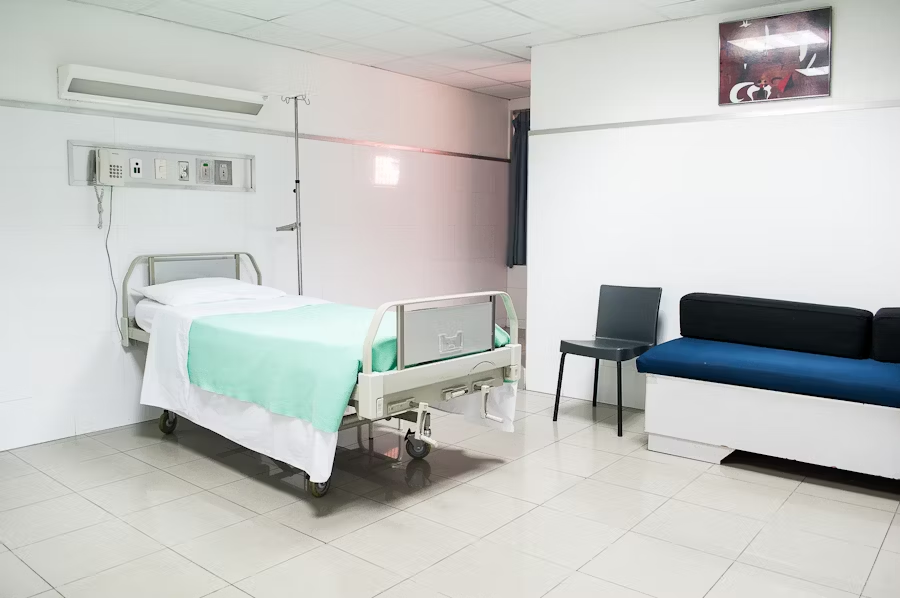
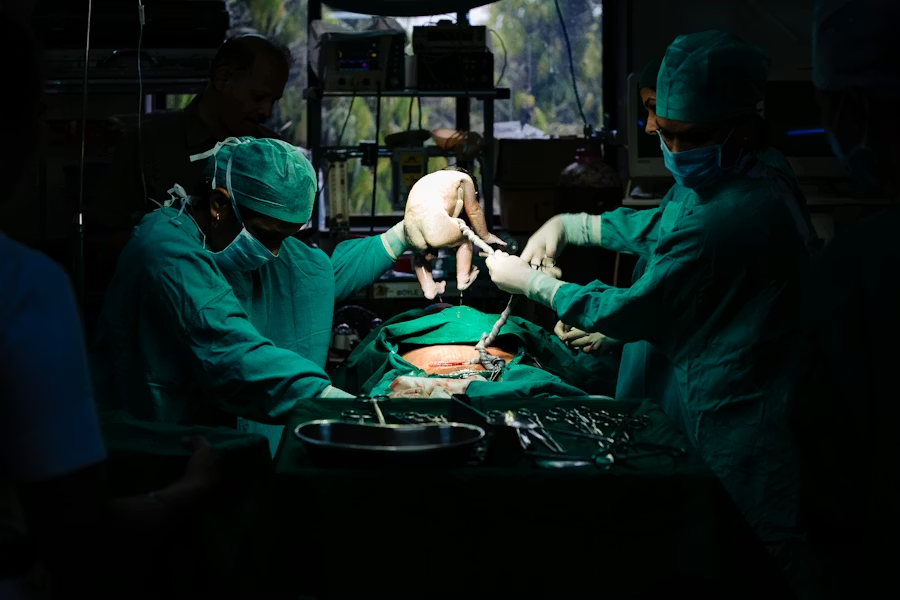
The emergency room became a blur of machines and urgent voices. A doctor with kind eyes told me they needed to perform an emergency C-section. The burns had sent my body into early labor and the baby was in distress. I signed forms with shaking hands while a nurse cut away my soup-stained clothes.
During those first moments in the ER, I kept replaying the scene in my mind. The way Patricia’s face had contorted with rage when I tried to leave. How Gerald had actually laughed when I’d stumbled trying to get to the door. The weight of Tyler’s briefcase hitting the floor echoed louder in my memory than my own screams.

A plastic surgeon was called in to consult on the burns. Dr. Rachel Martinez examined me with careful hands, her expression growing more serious as she assessed the damage.
“These are deep,” she said quietly. “We’ll need to focus on keeping infection away right now, but you’re going to need multiple grafting procedures. I’m so sorry this happened to you.”
Her kindness cracked something open inside me. I started crying and couldn’t stop, even as they wheeled me toward the operating room. A nurse held my hand the entire way, telling me over and over that my baby would be okay, that I was going to be okay, that I was safe now.
Safe.
I hadn’t felt safe in months, maybe longer. Living in that house with Patricia’s constant criticism, Gerald’s dismissive comments, Tyler’s complete unwillingness to defend me. I’d normalized it somehow, convinced myself it was just typical family tension, that things would get better after the baby came.
The anesthesiologist introduced himself as Dr. James Park.
“We’re going to take good care of both of you,” he promised, adjusting the IV in my arm. “Try to relax. We’ve got this.”
I wanted to tell him that relaxing was impossible, that my entire body felt like it was on fire, both literally and metaphorically, that I was terrified my baby wouldn’t survive this. But the medication was already pulling me under, and the last thing I remembered was wondering if Tyler would even bother to come to the hospital.
The Aftermath in the Recovery Room
Tyler arrived at the hospital three hours later, after the surgery was complete. Later, I learned that the hospital had called him within minutes of my arrival, but he’d finished his workday first before bothering to come check on his wife and newborn daughter.
Our daughter had been born at thirty weeks, weighing barely three pounds. She was alive, but fighting in the NICU. The burns on my abdomen required skin grafts and months of treatment. Third-degree burns, the doctor said, looking at Tyler with barely concealed disgust when he finally explained what had happened.
My husband’s first words to me in recovery weren’t about our daughter or my injuries.
“Mom’s really upset that you called the ambulance. She thinks you overreacted.”
Something inside me crystallized in that moment. It wasn’t anger exactly. It was clarity. This man had chosen his mother’s convenience over his wife’s life and his daughter’s survival. He’d watched me collapse in agony and blamed me for it.
“Get out,” I whispered through the pain medication haze.
“What?”
“Get out of my room. Don’t come back.”
He left, and I haven’t spoken to him as his wife since.
The Fight for Emma
My daughter Emma spent two months in the NICU. I lived at that hospital, sleeping in chairs, learning how to care for a premature infant, dealing with my own recovery and the excruciating pain of the burn treatments. Tyler visited twice. His parents never came at all.
Those two months transformed me in ways I couldn’t have anticipated. Every day brought new challenges. Emma’s oxygen levels dropping. My bandages needing to be changed. The soul-crushing exhaustion of worry. But it also brought clarity.
I’d wake up in the uncomfortable recliner next to Emma’s incubator at six in the morning. My entire midsection would be throbbing, the burned skin tight and angry beneath layers of medical gauze. I’d shuffle to the bathroom, catch sight of myself in the mirror, and barely recognize the woman staring back. My face had hollowed out from stress and poor eating. Dark circles shadowed my eyes. But there was something else, too. A hardness that hadn’t been there before.
The NICU nurses worked twelve-hour shifts, rotating between their tiny patients with practiced efficiency. They learned my name within days, learned Emma’s quirks and patterns even faster. Deborah, a grandmother of five, showed me how to do kangaroo care, holding Emma’s impossibly small body against my chest, skin-to-skin, her heartbeat fluttering against mine like a trapped bird.
“This helps preemies more than any medicine,” Deborah told me, adjusting Emma’s position. “Your body regulates her temperature. Your heartbeat calms hers. You’re her best medicine.”
I held my daughter for hours like that, feeling her breathe, watching her tiny fingers curl and uncurl. Patricia had done this once, held Tyler against her chest when he was a baby. She’d fed him, protected him, raised him, and then she’d looked at his pregnant wife and chosen violence.

The Documentation
The psychological evaluation came during week three. A hospital social worker named Moren sat down with me in a private consultation room, away from the beeping monitors and hushed conversations of the NICU.
“I need to ask you some difficult questions,” Moren said gently. She was in her fifties with gray hair pulled back in a practical bun. “About your home environment, about what led to your injuries.”
I told her everything, not just about that day, but about the months leading up to it. How Patricia had insisted Tyler and I move in with them when I got pregnant, claiming they had more space and could help with the baby. How it had seemed like a kind offer at first, a way to save money and give our child a relationship with grandparents.
“She started criticizing everything within the first week,” I explained, picking at a loose thread on my hospital gown. “The way I cleaned, how I organized the kitchen, what I ate. She said I was gaining too much weight, that I was being lazy about doctor’s appointments. Tyler would just shrug it off, tell me she meant well.”
Moren took notes without judgment, her pen moving steadily across her notepad.
“It escalated gradually,” I continued. “She’d make comments about how I’d probably be a terrible mother. Gerald would agree with everything she said. Back her up constantly. I started avoiding being home alone with them, but that became impossible once my pregnancy got further along and I couldn’t work anymore.”
“Did they ever physically hurt you before the incident with the soup?” Moren asked.
I had to think about it.
“Patricia grabbed my wrist once when I tried to leave the house to meet a friend. Squeezed hard enough to leave marks. She said I needed to finish the laundry first, that I was being selfish thinking about socializing. I just… I thought I was being too sensitive. Tyler said I was overreacting when I showed him the bruises.”
Saying it out loud, hearing my own words describe what had been happening, it sounded insane. How had I tolerated any of it? But abuse works like that, doesn’t it? It creeps in slowly, normalizing the abnormal, making you question your own perception of reality.
Tyler’s two visits to the NICU were orchestrated disasters. The first time he showed up on day five, still wearing his work clothes. He looked at Emma through the incubator glass with something like disappointment.
“She’s really small,” he said.
“She was born ten weeks early because your mother threw boiling soup at me,” I replied, my voice flat. “Can we not do this here? I came to support you.”
“Then where were you for the last five days?”
He didn’t have an answer for that. He stayed for twenty minutes, mostly checking his phone before claiming he had to get back to work. As he left, I heard him on the phone in the hallway.
“Yeah, Mom, I saw them. No, she’s still being difficult about everything. I know, I know.”
Still being difficult. Our daughter was fighting for her life, and I was being difficult.
His second visit came three weeks later, and only because the hospital’s billing department had contacted him about insurance information. He brought papers for me to sign, stood awkwardly by Emma’s incubator, and left within fifteen minutes.
“Are they going to arrest Mom?” he asked before leaving.
“I hope so,” I said.
His face hardened.
“She’s family. I don’t understand why you’re trying to destroy our family over an accident.”
“An accident?” I repeated. “She threw boiling soup at my pregnant stomach on purpose, Tyler. I pulled away to leave and she attacked me. That’s not an accident.”
“You don’t know what it’s been like for her dealing with your attitude these past few months.”
“Get out,” I interrupted. “Get out and don’t come back unless you’re ready to acknowledge what actually happened.”
He left, and I haven’t spoken to him as his wife since.
The nurses became my family during those weeks. They brought me food, taught me how to change Emma’s tiny diaper through the incubator ports, celebrated with me when she reached each new milestone. One nurse, Angela, had been through a divorce herself. She gave me the number for a lawyer who specialized in family law.
I called from my hospital room while Emma slept in her warming bed. The attorney, Robert Morrison, came to see me in person. He took one look at the bandages covering my torso, listened to my story, and his jaw tightened.
“I’m going to be very direct with you,” he said. “Your husband and his parents are liable for both criminal assault and civil damages. Your mother-in-law threw boiling liquid at a pregnant woman. Your husband failed to render aid and showed negligence. This isn’t just grounds for divorce. This is grounds for a lawsuit that will financially destroy them.”
“I want full custody,” I said. “I don’t want them anywhere near Emma.”
“That won’t be difficult to arrange given the circumstances. Any judge who sees your medical records will agree.”
Robert worked fast. Within a week, Tyler received divorce papers and a restraining order. The district attorney’s office, after reviewing the police reports and my medical records, filed criminal charges against Patricia and Gerald for assault and reckless endangerment. The civil lawsuit followed shortly after.
Tyler tried to fight the restraining order. He showed up at the hospital during Emma’s NICU stay, claiming he had a right to see his daughter. Hospital security escorted him out while I held Emma against my chest, her tiny body warm and alive despite his family’s best efforts to hurt us.
The Criminal Trial
The criminal trial came first. I sat in that courtroom with Emma in my arms. She was fourteen months old by then, still small but thriving. The prosecutor displayed photos of my burns, medical records detailing the emergency C-section, testimony from the paramedics and doctors. Mrs. Chen testified about what she heard through the window.
The defense attorney tried to claim it was an accident, that Patricia had simply lost her grip on the pot. The prosecutor, a sharp woman named Linda Vasquez, had prepared me extensively for what the trial would entail. We’d met seven times before the court date, going over every detail, every possible question the defense might ask.
“They’re going to try to paint you as difficult,” Linda warned during one of our prep sessions. “They’ll say you were argumentative, that you provoked Patricia somehow. I need you to stay calm no matter what they say. Can you do that?”
I nodded, though I wasn’t sure. How do you stay calm when someone’s trying to justify your assault?
The trial began on a cold Tuesday morning in February. The courthouse was an imposing building downtown, all marble columns and echoing hallways. I’d arranged for a NICU nurse I befriended, Angela, to come with me for support. She sat in the gallery holding Emma while I took the stand.
Patricia and Gerald sat at the defense table, looking like somebody’s harmless grandparents. Patricia wore a conservative blue dress and pearl earrings. Gerald had on a suit that probably cost more than my monthly salary before I’d stopped working. Their lawyer, a slick man in his forties named Derek Harrison, kept glancing at me with barely concealed contempt. Tyler sat behind his parents, avoiding my eyes completely.
Linda called Mrs. Chen to the stand first, establishing the timeline of events. Mrs. Chen was in her seventies, a retired librarian who spoke with quiet authority.
“I heard shouting,” Mrs. Chen testified. “The windows were open because it was a warm evening. I heard a young woman’s voice saying, ‘Please, I think something’s wrong with the baby.’ Then I heard an older woman, very angry, saying, ‘You are not going anywhere until dinner is finished.’”
“What happened next?” Linda asked.
“There was more arguing. Then I heard a crash and the most horrible scream I’ve ever heard. I looked through my window into their kitchen window. They’re very close together, maybe fifteen feet apart, and I saw the young woman on the floor. She was holding her stomach and screaming. There was liquid all over her. Three people were just standing there watching her.”
“Did anyone help her?”
“Not immediately. It took me a moment to process what I was seeing, to find my phone and call 911. By the time I looked back, a man had walked into the kitchen. I later learned it was her husband, but he didn’t help either. He just stood there.”
Derek Harrison cross-examined Mrs. Chen aggressively, trying to suggest her eyesight wasn’t reliable, that she couldn’t have seen clearly from that distance, that she might have misunderstood what was happening.
“Ma’am, you’re seventy-four years old, correct? Do you wear glasses?”
“Yes, I wear reading glasses. My distance vision is perfect.”
“But from fifteen feet away through two windows, you claim to know exactly what happened.”
“I know what I saw,” Mrs. Chen said firmly. “A pregnant woman on the ground, burned and screaming, while her family did nothing to help her.”
The paramedics testified next. James, the senior paramedic who had responded to the call, described the scene they’d encountered.
“The victim was on the floor, conscious but in severe distress. She had obvious burn injuries across her abdomen and chest. Her clothing was soaked through with what appeared to be soup or broth. The skin was already blistering in multiple places.”
“How did the family react when you arrived?” Linda asked.
“The older woman, the defendant, tried to send us away. She kept saying her daughter-in-law was being dramatic, that it wasn’t a real emergency. We ignored her and focused on the patient. The patient was seven months pregnant and begging us to save her baby.”
“Did anyone in the family try to help you treat her?”
“No. They stood back and watched. The husband kept apologizing to his mother, saying his wife had a habit of causing scenes.”
James’s partner, a younger paramedic named Stephanie, testified about the severity of my burns and how they’d had to transport me code three, lights and sirens, because of the risk to both me and the baby.
Dr. Martinez, the plastic surgeon who treated my burns, brought photos. Linda projected them onto a screen for the jury, and I heard several gasps. The images showed my stomach in the immediate aftermath, raw, blistered, the skin literally cooked in places. Later photos documented the grafting procedures, the months of healing, the thick scars that remained.
“These are third-degree burns,” Dr. Martinez explained. “They required multiple surgeries and extensive skin grafting. The patient will have permanent scarring. She also experienced severe psychological trauma from the assault.”
“In your medical opinion, could these injuries have been accidental?”
“No. The pattern of the burns indicates liquid was thrown with force. An accidental spill would have a different distribution. This was clearly an intentional act.”
Then it was my turn to testify. Linda walked me through the events of that day with careful precision. I described waking up that morning with cramping, how it had gotten progressively worse throughout the day, how I tried to rest, but Patricia had yelled at me to stop being lazy. How by late afternoon, the pain had become unbearable.
“I knew something was wrong,” I said, my voice steady despite the emotions churning inside. “This wasn’t normal pregnancy discomfort. This felt like something was seriously wrong with my baby. I told Patricia I needed to go to the hospital.”
“What was her response?”
“She said I was making excuses to get out of cooking dinner. She grabbed my arm hard and told me I wasn’t going anywhere until the meal was finished. I tried to explain, tried to make her understand I was scared for the baby, but she just tightened her grip.”
“Did anyone else intervene?”
“Gerald, my father-in-law, said I was being dramatic. He said, ‘Young women today don’t know how to handle a little discomfort,’ that his wife had worked through both her pregnancies without complaining.”
“What did you do?”
“I pulled my arm away. I knew I needed medical help and no one was listening. I started walking toward the door to leave.”
This was the hardest part. I took a breath, glanced at Emma sleeping peacefully in Angela’s arms in the gallery, and continued.
“Patricia screamed at me to stop. I turned around, and she was holding a pot of soup, the soup she’d been making for dinner. Before I could react, she threw it at me. The boiling liquid hit my stomach, my chest. The pain was… I can’t describe it. I screamed and collapsed. I was on the floor holding my belly, terrified the baby was hurt, and they all just stared at me.”
“No one helped you?”
“No one helped me. Then Tyler walked in. I thought… I actually thought he would call an ambulance, that he would finally do something to protect me and our baby, but he looked at me on the floor and said, ‘Now look what you made her do.’”
Several jury members looked at Tyler with obvious disgust.
Derek Harrison’s cross-examination was brutal. He tried to paint me as a manipulative daughter-in-law who’d never appreciated Patricia and Gerald’s generosity in letting us live with them. He suggested I’d been planning to take their son away from them, that I’d been creating conflict in the household intentionally.
“Isn’t it true you frequently argued with Mrs. Patricia?” he asked.
“She frequently criticized me. I tried to keep the peace.”
“But you argued back, didn’t you? You challenged her authority in her own home.”
“I disagreed with her sometimes, yes. I don’t think that justifies assault.”
“You pulled away from her forcefully. Correct? You were argumentative that evening.”
“I pulled away because I needed medical care. I was seven months pregnant and in severe pain.”
“But you escalated the situation.”
“She threw boiling soup at me,” I said, louder than I’d intended. “I don’t care how escalated you think things were. Nothing justified throwing boiling soup at a pregnant woman.”
The judge sustained Linda’s objection before Derek could respond, but I could see he’d accomplished what he wanted, making me lose my composure slightly, showing the jury I had a temper.
Then they played the 911 call. Mrs. Chen’s voice, frantic.
“There’s a pregnant woman screaming next door. I saw through the window someone threw something hot on her. She’s on the ground. Please hurry.”
The dispatcher: “Is anyone helping her, Mrs. Chen?”
“No, they’re just standing there. Her husband just walked in and he’s not doing anything. Please, she needs help now.”
The jury deliberated for less than two hours. Patricia was convicted of aggravated assault and child endangerment. Gerald received a conviction for neglect and failure to render aid. Tyler faced charges of criminal negligence and child endangerment.
Patricia sobbed in court as the judge sentenced her to five years in prison. Gerald received three years. Tyler got two years of probation, mandatory parenting classes he’d never be able to use, and supervised visitation rights he’d never exercise because I’d fight him on every single visit until the day I died.
The Civil Trial and the Publicist
The civil trial was even more satisfying. Robert had done his homework. He discovered that Patricia and Gerald had substantial assets, a paid-off home worth $800,000, retirement accounts, rental properties. Tyler himself had a healthy income as a sales director. Their insurance companies tried to settle early, but Robert advised me to refuse.
The civil trial took place six months after the criminal convictions. By then, Patricia had already started her prison sentence. Gerald had reported to serve his time. Tyler was on probation, his life already falling apart in visible ways.
Robert Morrison proved to be worth every penny of his fee. He’d assembled a case that went beyond just the assault itself. He framed it as a pattern of abuse, neglect, and intentional infliction of emotional distress that had culminated in near-fatal violence.
“We’re not just seeking compensation for medical bills,” Robert explained during our preparation. “We’re holding them accountable for every trauma they caused you, for the permanent physical damage, for Emma’s premature birth and ongoing health issues, for the psychological harm you suffered. This is about showing that actions have consequences.”
Robert called expert witnesses I hadn’t even known existed. A neonatologist explained the risks associated with premature birth at thirty weeks, the potential long-term complications Emma might face: learning difficulties, respiratory issues, vision problems. He put a dollar figure on the estimated lifetime cost of addressing these potential complications: $847,000.
An economist testified about my lost earning potential. I’d been working as a dental hygienist before the pregnancy, making decent money with good benefits.
“The plaintiff lost not just immediate income,” the economist explained, pointing to charts and graphs projected on screens, “but also retirement contributions, career advancement opportunities, and the compounding effect of years of lost wages over her expected working lifetime. This amounts to approximately $1.2 million in lost earning capacity.”
A psychologist who’d been treating me for PTSD testified about the lasting mental health impact. Dr. Sarah Weinstein had been seeing me twice a week since Emma turned three months old.
“The plaintiff exhibits classic symptoms of post-traumatic stress disorder,” Dr. Weinstein explained in her calm, clinical voice. “Hypervigilance, flashbacks, severe anxiety, panic attacks triggered by specific stimuli. The sound of boiling water, raised voices, even certain smells can send her into a dissociative state. She has nightmares several times a week. This isn’t something that will simply resolve with time. She’ll likely need ongoing therapy for years, possibly for life.”
“What’s the estimated cost of this ongoing treatment?” Robert asked.
“Conservative estimate, accounting for twice-monthly therapy sessions and occasional medication management, approximately $300,000 over her lifetime.”
The defense tried to minimize everything. Their experts suggested Emma’s premature birth might have happened anyway, that my PTSD wasn’t as severe as claimed, that I could return to work if I really wanted to. They brought up the fact that Tyler had been paying child support on time, as if that somehow absolved them of responsibility.
But Robert systematically dismantled every argument they made. He called Mrs. Chen again, who testified about watching me struggle in the months after I returned home from the hospital. How she’d see me through windows, pacing with a crying Emma at three in the morning, the PTSD making it impossible for me to sleep. How she brought meals because I was barely eating.
“I’d watch her startle at normal sounds,” Mrs. Chen said. “A car door slamming, someone raising their voice down the street. She’d flinch like she’d been struck. That’s not someone faking trauma. That’s someone who’s been genuinely damaged.”
Robert brought in photos and videos of my daily life. Changing Emma’s diaper and the camera catching a glimpse of the scars across my stomach. Footage of me having a panic attack in a grocery store when someone knocked over a display of soup cans. He showed the jury my medical records in exhaustive detail, every surgery, every infection, every setback in the healing process.
The defense attorney, a different lawyer than the criminal trial, since Derek Harrison apparently refused to take the civil case, tried to argue that some of my damages were exaggerated.
“Isn’t it true you’ve managed to care for your daughter despite these alleged difficulties?” the attorney, a woman named Susan Brooks, asked during cross-examination.
“Managing doesn’t mean I’m not suffering,” I replied. “I have to care for Emma because I’m her mother and she depends on me. But there are days I can barely function. Days I can’t stop shaking. Days I can’t leave the house because I’m too afraid.”
“But you do leave the house. You’re here in court, testifying coherently.”
“Because I have to be. Because holding them accountable is the only way I can start to heal.”
Robert also uncovered financial records showing that Patricia and Gerald had discussed writing me out of their will entirely after I got pregnant, that they’d made comments to friends about hoping Tyler would divorce me, that they’d actively tried to sabotage our marriage. Email exchanges between Patricia and her sister showed her calling me a gold digger and a manipulative witch who was trapping Tyler with a baby.
“These communications established a pattern of hostility,” Robert argued. “The assault wasn’t a momentary loss of control. It was a culmination of months of escalating animosity toward the plaintiff. They wanted her gone, and when she tried to leave that night to seek medical care, Patricia acted on that hostility in the most violent way possible.”
Tyler’s deposition was played for the jury. Watching him squirm through questions about his failure to protect me, his continued support of his mother, his absence during Emma’s NICU stay, it would have been satisfying if it wasn’t so pathetic.
“Did you believe your wife was genuinely in distress that evening?” Robert had asked him.
“I… I thought she might be exaggerating. She’d been complaining a lot during the pregnancy.”
“Complaining about legitimate pregnancy symptoms, I guess. I don’t know. I’m not a doctor.”
“But you are a husband. Did you consider that your wife might know her own body well enough to recognize when something was seriously wrong?”
Tyler had no answer for that.
The jury deliberation took longer in the civil case than it had in the criminal trial, nearly eight hours. Robert said that was normal, that calculating damages was complex, and the jury was probably debating the exact amounts rather than liability itself.
When they came back, the forewoman read out the verdict. We, the jury, awarded me $4.7 million in damages. The breakdown included medical expenses, pain and suffering, emotional distress, future care for Emma’s complications from premature birth, and punitive damages designed to punish the defendants for their egregious behavior.
Patricia and Gerald lost everything. Their house, their rental properties, their retirement, all of it went to pay the judgment. They declared bankruptcy, but certain types of civil judgments can’t be discharged. They’d be paying me for the rest of their lives.
Tyler lost his job when his conviction became public. His professional reputation crumbled. The divorce settlement gave me full custody, child support of $3,000 monthly, and our marital home. He moved into a studio apartment across town and worked odd jobs to make his payments.
But the revenge didn’t stop there.
I used part of the settlement money to hire a publicist. Not for me. I didn’t want attention. For them. I wanted everyone to know what they’d done.
The story went viral. Local news picked it up. Then regional stations, then a few national outlets. “Mother-in-law throws boiling soup at pregnant woman, causes premature birth” made for compelling headlines.
The media campaign was surgical in its precision. The publicist I hired, Karen Delgado, specialized in cases where survivors wanted their stories told on their own terms. She’d worked with domestic violence victims, whistleblowers, people who’d been silenced for too long.
“The narrative has power,” Karen explained during our first meeting. She was in her late forties with red hair and an intensity that made it clear she was extremely good at her job. “Right now, if people Google your in-laws’ names, they might find nothing or they might find the criminal case buried in court records. We’re going to change that. When anyone searches for them, they’ll find exactly what they did to you.”
She arranged interviews with local news stations first. I sat in studio chairs under bright lights and told my story again and again. Some interviewers were sympathetic, treating it as a clear-cut case of abuse. Others tried to play devil’s advocate, asking if I’d done anything to provoke Patricia, if family tensions had contributed to the situation.
“My only crime was being pregnant and needing medical care,” I said during one particularly hostile interview. “If that’s provocative enough to justify assault, then we have much bigger problems as a society.”
The clip went viral. It was shared on social media hundreds of thousands of times. True crime podcasts started covering the case. A documentary filmmaker reached out about potentially including my story in a series about domestic violence in unexpected forms.
Karen also helped me create a website documenting everything. Court records, medical photos, sanitized for public viewing but still shocking. Testimony excerpts. The 911 call. Everything was public record, but having it compiled in one place made it impossible for Patricia, Gerald, or Tyler to escape their actions.
Patricia’s friends from church, Gerald’s golfing buddies, Tyler’s colleagues, everyone saw it. Their names and faces were everywhere.
Patricia’s sister stopped speaking to her. Gerald’s brother wrote me a letter apologizing for his family’s behavior and asking if there was anything he could do to help Emma.
Tyler tried online dating after his probation ended. Multiple women recognized him from the news coverage and called him out publicly. His dating profiles got shared in Facebook groups dedicated to exposing dangerous men. He couldn’t escape what he’d allowed to happen.

A Life Rebuilt
I started a nonprofit with some of the settlement money. It provides legal aid and temporary housing for pregnant women escaping abusive situations. I named it Emma’s Hope, after my daughter. We’ve helped forty-three women in three years. Each one gets the support I wish I’d had before things escalated to that horrible day in the kitchen.
Emma is now three and a half years old. She’s small for her age because of her premature birth, but she’s healthy and happy. She loves dinosaurs and chocolate milk and doesn’t remember the NICU or the months of uncertainty. She’ll never know her father’s parents, and Tyler signed away his parental rights two years ago when he realized he’d never be able to afford the child support and legal fees.
My burns have healed into thick scars across my abdomen. They’re not pretty, but I don’t hide them. They’re proof of what I survived, what Emma survived. Sometimes other mothers see them at the pool or the beach and ask. I tell them the truth, because silence protects abusers, and I’m done being silent.
The hardest part wasn’t the physical recovery or even the legal battles. It was accepting that the man I’d married, the man I planned a future with, had cared so little about me that he watched me suffer and blamed me for it. I’d ignored warning signs during our relationship: the way he always sided with his mother, how he dismissed my feelings, his inability to stand up for me. Pregnancy had magnified all of it until the truth became impossible to ignore.
I started therapy a year after Emma was born. My therapist helped me understand that what happened wasn’t my fault, that no amount of cooking dinner faster or being less dramatic would have changed the kind of people they were. Abusers abuse. Enablers enable. My only mistake was staying in that house as long as I did.
These days, I live across the country from where it all happened. Emma and I have a small house with a garden where we grow tomatoes and sunflowers. I work remotely as a medical billing specialist, which gives me flexibility to be present for Emma. We have a good life, a peaceful life.
Sometimes Emma asks about her daddy. I tell her that some people aren’t ready to be parents, and that’s okay because we have each other. When she’s older, I’ll tell her the full truth. She deserves to know the story, to understand why we don’t see certain family members. To learn that protecting yourself from harmful people isn’t cruelty; it’s survival.
Last month, I received a letter from Patricia. It came from the prison where she’s serving her sentence. She’s already served three and a half years and was coming up for parole review, wanting to apologize and asking if we could have a relationship with Emma after her release.
I read it once, then fed it through my paper shredder.
Some bridges aren’t meant to be rebuilt. Some forgiveness isn’t owed.
She had a choice in that kitchen. She could have helped me, called an ambulance, shown basic human decency. Instead, she chose violence. Instead, she prioritized dinner over her grandchild’s life. That’s not someone I want around my daughter.
Gerald writes occasionally, too. Shorter letters claiming he didn’t know Patricia would react so violently, that he should have done more. These also get shredded. He stood there and watched. His inaction was a choice.
Tyler doesn’t write. I think he’s genuinely moved on, found a way to rationalize what happened until he’s the victim somehow. The last I heard, he was working at a warehouse and living with a new girlfriend who didn’t know about his past. I wonder if he’s told her. I wonder if she’ll find out the way his previous girlfriends did.
I don’t spend much time thinking about any of them anymore.
Revenge isn’t something you achieve once and you’re done. It’s built into every good day Emma and I have together. Every milestone she reaches, every smile, every dinosaur toy she cherishes, every peaceful evening reading books before bed. That’s the revenge. They tried to take everything from us and we built a beautiful life anyway.
Emma starts preschool next month. She’s excited about making friends and nervous about being away from me. I’m nervous, too, but I’ve taught her to be brave, to speak up when something feels wrong, to understand that her voice matters. She’s already stronger than I was at her age.
The scars on my stomach catch the light sometimes when I’m getting dressed. Emma touches them gently, curious.
“Boo-boos,” she says.
“Old ones,” I tell her. “They don’t hurt anymore.”
That’s mostly true. The physical pain has faded, replaced with a tightness in the scar tissue that flares up in cold weather. The emotional pain comes and goes in waves, usually triggered by unexpected things: a pot of soup boiling on the stove, raised voices, the smell of the hospital disinfectant they used in the NICU. But I’m healing. We’re both healing.
The nonprofit keeps me connected to other survivors, reminds me why the legal battle was worth it. One woman we helped last year had a situation eerily similar to mine. Abusive in-laws, complicit husband, dangerous pregnancy situation. We got her out before anything physical happened. She and her baby are safe now, living in transitional housing while she builds a new life.
“You saved us,” she told me during our last check-in.
“No,” I said. “You saved yourself. I just helped you find the resources.”
That’s what I wish someone had given me: resources, options, a clear path out before things escalated to boiling soup and emergency surgery. I can’t change my own past, but I can help other women write different futures.
Sometimes people ask if I regret how hard I came down on Tyler’s family with the lawsuits and the publicity. They suggest that forgiveness might bring peace, that holding on to anger only hurts me.
Those people don’t understand.
This isn’t anger. It’s justice. It’s accountability. They harmed me and my child, and they faced consequences. That’s how society is supposed to work. Forgiveness would have sent a message that their behavior was acceptable, forgivable, something that could be excused with enough time and apologies. It wasn’t acceptable. It will never be acceptable.
Emma is singing to herself in her bedroom right now, some song she learned from a cartoon. Her voice is bright and happy. This is what they almost took from the world. This joyful, curious, loving little person who deserves every chance at a good life.
They are in prison, bankruptcy, and social exile, while Emma and I are here in our sunny house, planning her birthday party, picking out her first day of school outfit, living freely.
If that’s not revenge, I don’t know what is.
The burns will always be part of my story. But they’re not the ending. They’re just a chapter, a horrible chapter that led to something better. Emma and I survived. We escaped. We rebuilt. And every single day we spend happy and safe is another day they have to live with what they did and what they lost.
That’s the revenge they can never escape from: the knowledge that they destroyed their own family for the sake of dinner being served on time. They traded their grandchild for their pride. They chose cruelty over compassion, and the bill for that choice will follow them for the rest of their lives.
I sleep well at night knowing justice was served. Emma sleeps in her dinosaur pajamas in her safe, warm bed, dreaming whatever three-year-olds dream about. Some people get their happy endings through forgiveness and reconciliation. I got mine through accountability and distance. Both are valid. Both are real.
This is my revenge. Living well, raising my daughter with love, and making sure other women don’t suffer alone the way I did. This is my victory. Every breath, every laugh, every peaceful moment.
They tried to take everything, and I took back even more.
Let us know what you think about this story on the Facebook video! If you like this story share it with friends and family.
