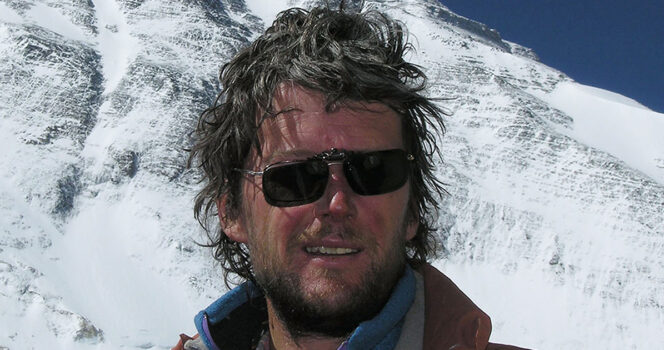
Imagine being left for dead on the world’s tallest mountain.
The freezing wind howls, the oxygen is thin, and every step could be your last.
This was the reality for Lincoln Hall, an experienced Australian climber, in 2006.
Yet against all odds, he survived.
Perched above a cliff at 8,000 feet
Climbing the world’s highest mountain is no joke and takes months of preparation.
Australian mountaineer Lincoln Hall was well aware of the risks, yet disaster struck when he attempted to climb Mount Everest in 2006.
At 8,600 meters (28,200 feet), near the summit, he suffered cerebral edema, a life-threatening swelling of the brain caused by extreme altitude.
His guides tried for hours to revive him, but as night fell and conditions worsened, they concluded he was dead. They left him behind to save their own lives.
The next day, Lincoln’s family was heartbroken to hear that he had tragically died during his Everest climb.
But that wasn’t the whole truth. Up on the mountain, the struggle for survival was still raging.
Lincoln was then alone on a narrow ridge, perched above a cliff dropping 8,000 feet, wearing nothing but a thin fleece top. His gloves, hat, goggles, and oxygen had been taken by those who assumed he had perished. The extreme cold and lack of gear could have killed him within hours — but somehow, Hall clung to life.
The next morning, another team of climbers including American mountaineer Dan Mazur came across Lincoln, who had been left alone a day earlier. Sitting upright, hallucinating, and believing he was on a boat rather than the world’s deadliest mountain, Hall was in a perilous state.
Mazur said that Lincoln’s first words to him were:
”I imagine you are surprised to see me here”.
”Where did you come from,” Mazur replied.
Abandoned their own summit attempt
Frostbitten and dehydrated, he was incoherent, his body already showing the severe toll of the night spent on Everest’s deadly slopes.
Mazur and his team, Andrew Brash, Myles Osborne, and Jangbu Sherpa, risked their own lives to save him. They gave him oxygen, food, water, and the clothes he desperately needed. For hours, they stayed, tending to him on the exposed ridge.
To do so, they abandoned their own summit attempt, an act of courage and humanity that defied the ruthless logic of high-altitude climbing.
”We didn’t discuss the decision to help. We all knew what he had to do,” Mazur told The Bulletin in 2006 and continued:
”You can always go back to the summit, but you only have one life to live. ”If we had left the man to die, that would have always been on my mind. How could you live with yourself?”
“I really wished we hadn’t found him there”
Eventually, Lincoln was brought down to the North Col and then to Advanced Base Camp, where he began the slow recovery from frostbite, cerebral edema, and near-death. Miraculously, despite losing the tips of his fingers and a toe, he survived.
”He was ‘dead,’ so the people he was with apparently took all his stuff,” Daniel Mazur told People.
”He’d had three Sherpas, and I heard they were like poking fingers in his eyes and he wasn’t moving. They figured he was dead. Maybe he was almost dead. A couple of people later told me they did everything they could.”
Lincoln Hall’s story didn’t end on Everest. Inspired by Tibetan Buddhism, he chronicled his ordeal in the book Dead Lucky: Life After Death on Mount Everest, reflecting on what it felt like to teeter between life and death.
In hindsight, Lincoln said he held no resentment toward his mates who had left him on the mountain.
After the rescue, Dan Mazur was flooded with congratulatory letters from Washington State Governor Christine Gregoire, Secretary of State Condoleezza Rice, and several members of Congress, along with hundreds of emails from the public. National Geographic also praised his efforts.
“I really wished we hadn’t found him there, but since we did, there was no choice,” Mazur said.
Lincoln Hall cause of death
Lincoln Hall went on to live fully, dedicating himself to mountaineering, writing, and humanitarian efforts in Nepal, until his passing six years later, in 2012.
He was 56.
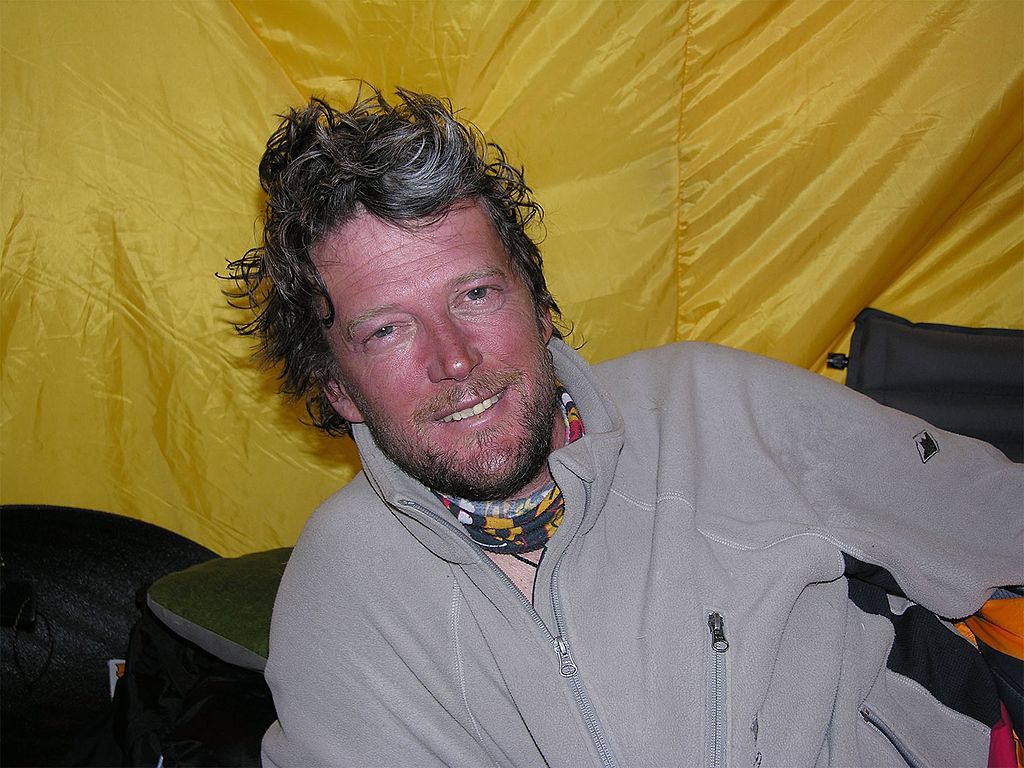
According to his friends, Hall passed away from mesothelioma, a rare form of cancer caused by asbestos. Lincoln had been exposed to the hazardous material while working as a construction worker in his youth.
Lincoln Hall left a wife and two sons behind.
