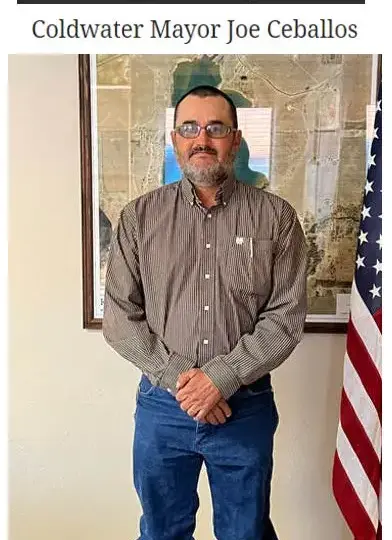
Just days after voters in Coldwater, Kansas celebrated the re‑election of their mayor, the mood in the small community shifted dramatically.
What had seemed like a routine local election — one in which Mayor Jose “Joe” Ceballos won a second term.
Suddenly became the center of statewide attention when the Kansas Attorney General’s Office filed criminal charges alleging he was ineligible to vote in the election he just won.
Rather than focusing solely on town business, residents now find themselves watching a high‑profile legal case with broader implications for election law and voter record verification in Kansas.
A Quiet Election in Coldwater — Until It Wasn’t
Coldwater, a city with a population of fewer than 700 people in Comanche County, typically draws attention only to local issues or annual municipal races.

On November 4, 2025, the mayoral election appeared to be another quiet civic event: Ceballos, who had served as mayor since 2021, ran unopposed and secured a fresh term in office with strong community support.
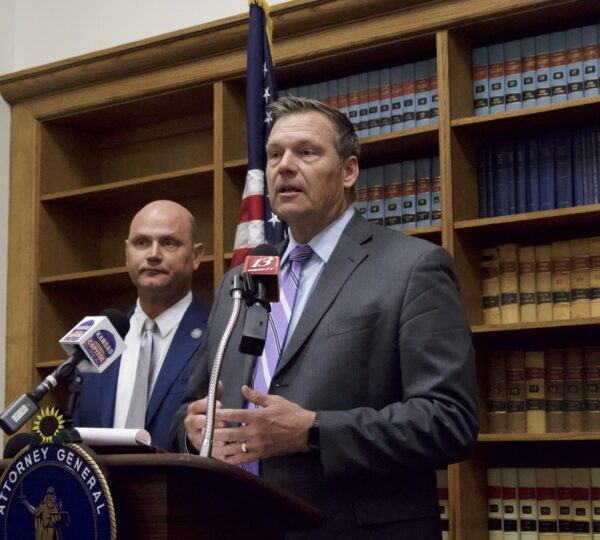
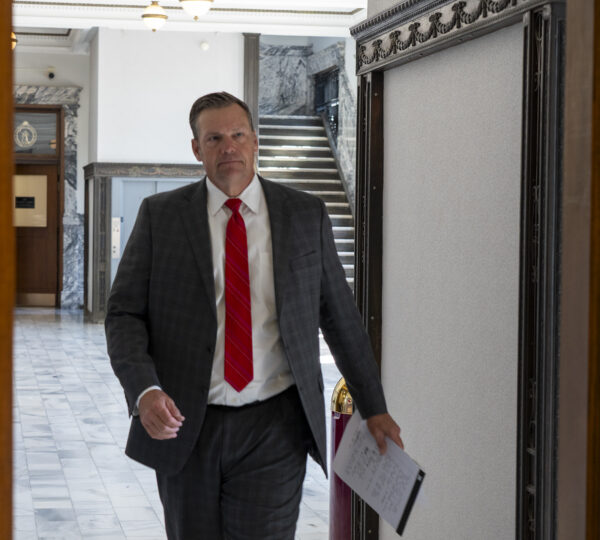
But just one day after the election, the Kansas Attorney General, Kris Kobach, made a startling announcement: his office had filed six felony charges against Ceballos in Comanche County District Court, alleging that he had voted illegally in multiple elections because he was not a U.S. citizen at the time he cast ballots.
The timing — a filing made immediately after votes were counted and the election was certified — raised immediate questions among local residents and observers about what triggered the review, and why the issue had surfaced only after the votes were cast.
What the Charges Allege
According to the criminal complaint made public by the Attorney General’s office, Ceballos was charged with:
Three counts of voting without being qualified, and
Three counts of election perjury.
Each count is a non‑person felony under Kansas law; if convicted on all counts, Ceballos could face more than five years in prison.
Prosecutors allege that Ceballos voted in several elections — including in November 2022, November 2023, and August 2024 — without being eligible to do so because he was not a U.S. citizen at the time.
Documents filed by the Attorney General contend that Ceballos, a lawful permanent resident holding a green card and a citizen of Mexico, was not legally permitted to register to vote or cast ballots in Kansas elections.
During the press conference announcing the charges, AG Kobach emphasized that under Kansas law it is a felony for non‑citizens to vote, and he alleged that the new evidence showed Ceballos had repeatedly violated that law.
Citizenship, Voter Rolls, and Record Verification
One of the central questions in the case is how Ceballos — a permanent resident who was not a U.S. citizen — was able to be both registered to vote and elected mayor in the first place.
Kansas law requires that a person be a “qualified elector” to vote — meaning they must be at least 18, reside in the jurisdiction, and be a U.S. citizen.
Candidates for most elected offices must also meet the same eligibility requirements, though cities exercising “home rule” can have some autonomy in setting terms of office.
AG Kobach’s office said the issue came to light after officials became aware of Ceballos’s permanent resident status during the naturalization process; specifically, Ceballos had filed an application for permanent citizenship earlier in the year, which raised questions about whether his prior voter registration was valid.
Kansas officials have pointed to newer verification tools — including cross‑checks with federal immigration records — as helping identify registration irregularities that older systems may not catch.
Before these tools, state and local voter rolls were typically maintained using attestation (when a voter “checked the box” asserting citizenship on a registration form), and aggressive cross‑checks were rare.
However, in Ceballos’s case, Secretary of State Scott Schwab later clarified that the charges were not compiled using the newer SAVE database checks alone, but rather a combination of records and indicators that raised sufficient concern for the Attorney General’s office to pursue criminal charges.
Local Officials Respond to Community Concerns
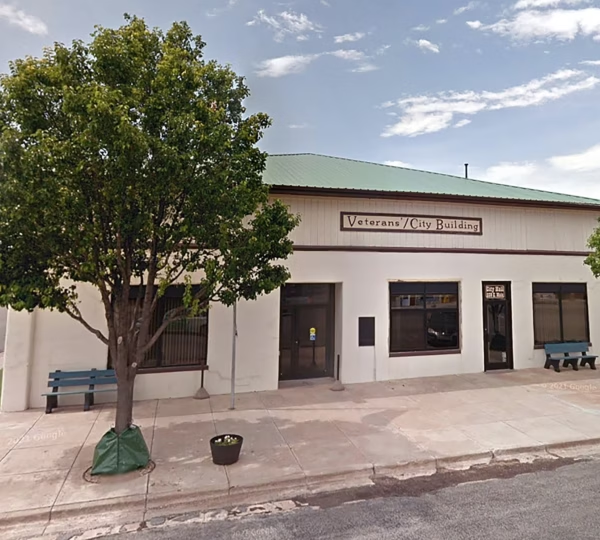
Following the announcement of the charges, Coldwater’s city leadership moved quickly to address concerns among residents about continuity of governance and public confidence.
At a special council meeting called shortly after the filing, City Council President Britt Lenertz issued a statement reaffirming that city operations would continue without disruption while legal proceedings unfold.
The council stressed that the matter is now in the hands of the judiciary and that any decision about the mayor’s ability to serve in office ultimately hinges on the outcome of official findings and any court rulings.
Lenertz also noted that the city had not yet received detailed updates on the evolving case and that city leadership was seeking guidance from state authorities about how to proceed in compliance with applicable laws.
City officials emphasized respect for due process, underscoring that criminal charges — however serious — are allegations until proven in court.
The council consistently stressed transparency in handling municipal affairs during the legal review, recognizing the importance of maintaining public trust.
A Broader Kansas Conversation on Voting and Citizenship
The Ceballos case has reignited broader conversations across Kansas about how voter eligibility is monitored and enforced.
Kansas, like all states, requires voters to attest that they are U.S. citizens when they register; lying on a voter registration form can carry criminal penalties.
But until recently, proving citizenship in practice was largely based on signed self‑attestation, not documentary evidence.
In the past decade, election administrators have wrestled with how to balance preventing ineligible voting with ensuring that eligible voters are not unfairly disenfranchised.
Kansas previously enacted a proof‑of‑citizenship requirement in the early 2010s, but that law was ultimately struck down by federal courts for placing an unconstitutional burden on the right to vote by requiring documentary proof from would‑be registrants.
Today, the debate over voter registration systems and citizenship verification remains active not only in Kansas but nationally, with differing views on how robust voter roll maintenance should be and how to prevent mistakes or fraud without depressing lawful voter participation.
The Ceballos case has thus become a practical flashpoint in an ongoing policy discussion about those issues.
Legal Process and Possible Outcomes
Because the charges are felonies, Ceballos faces the possibility of significant legal consequences, including incarceration if convicted.
The specific counts — voting without being qualified and election perjury — are considered serious offenses under Kansas law.
His attorneys and legal representatives have not publicly responded in depth as of the latest reporting, and Ceballos himself did not immediately comment when asked for one.
Beyond criminal penalties, the case also raises questions about whether Ceballos can legally continue to serve as mayor while proceedings are ongoing, and if his re‑election could be invalidated retroactively depending on the outcome.
These issues will ultimately be resolved in court, and may involve both criminal and civil components.
Observers have suggested that Kansas’s law granting cities “home rule” powers may factor into how long Ceballos can remain in office during the legal process; under state statute, officers must generally be qualified electors, and an unqualified elector can create a vacancy automatically upon disqualification.
Community Reaction and Impact
Coldwater residents have expressed a range of emotions in response to the news — from disbelief and concern to support for due process and calm deliberation.
Some community members said they were shocked that the issue reached the legal stage, particularly after Ceballos’s re‑election with substantial voter support.
Others noted that the legal system must run its course, recognizing that allegations do not equate to guilt.
Several residents told local news outlets they were watching closely, aware that the case could set precedents on how election oversight and eligibility reviews are conducted across the state.
Statewide, the case has fueled discussions about voter roll maintenance procedures, the effectiveness of verification tools, and the importance of accurate record‑keeping.
Policymakers, election officials, and civil rights advocates have all weighed in on various aspects of the broader debate — from calls for better technological systems to protect election integrity to concerns about potential disenfranchisement of eligible voters.
Looking Ahead
The legal proceedings involving Jose Ceballos are ongoing, and the outcome will likely depend on the evidence presented, interpretations of state law, and judicial decisions in Comanche County.
As Kansas continues to refine voter registration processes and eligibility checks, cases like this become important test points for how election laws are applied and enforced.
For Coldwater, a small town suddenly thrust into the wider public spotlight, the case is more than an abstract legal matter — it’s a test of community resilience, confidence in public institutions, and the rule of law.
As this situation unfolds, careful attention to verified reporting and official documents will remain essential.
What is clear today is that the intersection of local elections, eligibility requirements, and public trust is complex — and small‑town politics can have significant implications far beyond town hall.
