The Cleveland sky was the color of a bruised plum the morning my life, as I understood it, quietly dismantled itself.
I am sixty-five years old now. When you reach this vantage point, looking back at the timeline of your existence, you realize that history isn’t written in years or decades. It’s written in moments. The moment you said “I do.” The moment you bought the house with the leaky gutter on Elm Street. The moment you realized the person sleeping next to you was no longer a lover, but a habit.
For thirty-seven years, my history was inseparable from Patrick Miller.
We were not a fairytale. We were a mortgage, two cars that needed oil changes, and arguments about the thermostat. We were Sunday pot roasts and silent compromises. But I believed, with the stubborn, concrete certainty of a woman who had built a foundation brick by brick, that we were permanent. I believed that when the end of the world came, we would be standing in our kitchen, probably bickering about who forgot to buy milk, but we would be standing there together.
That belief ended on a Tuesday in a domestic relations courtroom that smelled of floor wax and stale anxiety.
The proceedings were clinical. The judge, a man who looked like he hadn’t slept well since the Reagan administration, shuffled papers with the indifference of a butcher wrapping meat. There were no dramatic outbursts. No throwing of vases. Just the quiet scratching of pens.
When the final signature was inked, sealing the dissolution of thirty-seven years of partnership, Patrick stood up. He buttoned his suit jacket—a charcoal wool blend I had bought him for Christmas three years prior—and reached into his pocket.
He didn’t look angry. He didn’t look sad. He looked remote, like a traveler already watching the shore recede from the deck of a ship. He handed me a plain white envelope containing a single bank debit card.
“This should cover you for a little while,” he said. His voice was flat, devoid of the cadence of the man who used to read the Sunday funnies out loud to me. “There are three hundred dollars on it.”
The air left the room.
Three hundred dollars.
That was the valuation? Thirty-seven years of ironing his shirts, raising his children, nursing him through the flu, and managing his ego? Three hundred dollars. It wasn’t just a pittance; it was a calculation. It was barely enough for a few weeks of groceries and a tank of gas.
I stood there, frozen in my sensible heels, clutching my purse until my knuckles turned ivory.
“Take care of yourself, Evelyn,” he said.
And then he turned. He walked down the center aisle of the courtroom, his footsteps echoing on the linoleum, a rhythmic click-clack that sounded like a clock counting down. He walked through the double doors and out of my life without looking back once.
I kept the card. I didn’t keep it because I intended to spend it. I kept it because throwing it away felt like admitting that the insult was true—that I was a woman who could be paid off and discarded like a used appliance. I shoved it into the bottom of my purse, beneath old receipts and mint wrappers, and I walked out into the gray Cleveland rain.
The Descent into the Shadows
After the divorce, my world shrank.
It didn’t happen all at once. It was a slow erosion. The house was sold, the proceeds swallowed by debts I hadn’t known existed—debts Patrick had apparently accrued in silence. I was left with nothing but my clothes and that toxic plastic card.
I moved to the edge of the city, to a neighborhood where the streetlights flickered and the sidewalks were cracked by aggressive weeds. I rented a single room behind a defunct grocery store. The landlord was a man named Mr. Henderson who chewed unlit cigars and accepted cash only.
The room smelled of damp plaster and memories of other people’s bad luck. There was a radiator that banged and hissed through the night like a dying animal.
I became invisible.
At sixty, the job market does not look at you with kindness. It looks right through you. I took what I could find. I became one of the ghosts who move through the city while the rest of the world sleeps.
I scrubbed floors in a downtown law firm from 4:00 a.m. to 8:00 a.m. I learned the intimate secrets of strangers by what they threw away—the crumpled drafts of apology letters, the empty bottles of scotch hidden in desk drawers.
In the afternoons, I worked at a laundromat, folding sheets that weren’t mine, inhaling the chemical scent of cheap detergent until my lungs burned.
On weekends, when the hunger gnawed at my stomach like a rat, I walked the alleys. I collected aluminum cans and glass bottles, trading my dignity for nickels and dimes at the recycling center.
Pride is a funny thing. It is the only luxury the poor can afford, and yet it costs the most.
There were nights when my cupboards were bare, save for a box of stale crackers. I would sit at my wobbly kitchen table, staring at the drawer where I kept the bank card.
“Three hundred dollars,” I would whisper to the peeling wallpaper.
I could have used it. I could have bought a heavy coat for the winter. I could have bought a steak. But using that money felt like accepting his assessment of my worth. It felt like taking charity from the executioner.
So, the card stayed in the drawer, gathering dust.
The Weight of Silence
My children, Sarah and Michael, were grown. They lived in different states—Sarah in Oregon, Michael in Texas. They called on holidays. They sent cards with generic printed messages about joy and peace.
I lied to them.
“I’m doing fine, honey,” I would say into the payphone receiver, wrapping my thin coat tighter against the wind. “I found a lovely little apartment. Small, but cozy. I’m enjoying the retirement.”
I didn’t tell them I was eating cat food tuna because it was cheaper. I didn’t tell them that my back throbbed so badly after scrubbing floors that I had to crawl into bed.
They visited once, three years after the divorce. I met them at a diner, arriving early to clean myself up in the restroom, pinching my cheeks to hide the pallor. They looked at me with vague concern, noting my weight loss.
“You look trim, Mom,” Michael said, cutting his pancakes. “Yoga?”
“Something like that,” I smiled.
They pressed a few hundred dollars into my hand before they left to catch their flights. They promised to visit again soon. They didn’t. They had their own mortgages, their own marriages, their own encroaching silences. I refused to be a burden. I was the mother. I was supposed to be the bedrock, not the landslide.
Five years passed this way.
Five years of gray skies. Five years of the radiator hissing. Five years of hardening my heart against the memory of Patrick Miller. I learned to hate him. The hate was useful. It was a fuel that kept me warm when the heat was cut off. I hated him for the betrayal, for the silence, and for the three hundred dollars.
The Collapse
The body keeps score, even when the mind tries to ignore the game.
It happened on a Tuesday in November. The wind was whipping off Lake Erie, cutting through my layers of mismatched thrift-store sweaters. I was walking home from the laundromat, clutching a bag of groceries that consisted of two cans of soup and a loaf of bread.
I reached the stoop of my building, and the world suddenly tilted.
The gray sky spun into a vortex of black. The sound of the traffic faded into a high-pitched whine. I reached for the railing, but my hand grasped only air.
I hit the concrete. The last thing I remembered was the cold, wet sensation of snow against my cheek and the thought: At least I don’t have to cook dinner.
When I opened my eyes, the light was blinding.
Fluorescent tubes buzzed overhead. The smell was sharp—antiseptic and floor wax. For a panicked second, I thought I was back in the courthouse.
“She’s awake,” a voice said.
A young man in a white coat stepped into my line of sight. He looked tired, with dark circles under his eyes, but his expression was kind.
“Mrs. Miller?” he asked.
“It’s Ms. Miller,” I croaked. My throat felt like sandpaper.
“I’m Dr. Evans. You collapsed. A neighbor found you.” He checked a chart on a tablet. “Ms. Miller, we’ve run some blood panels. You are severely malnourished. Your iron levels are dangerously low. Your heart is under immense strain.”
He paused, looking at me over the top of the chart.
“You’re starving yourself,” he said gently. “If you hadn’t been brought in today, your heart likely would have stopped within the week.”
I turned my head away, staring at the sterile white wall. Tears, hot and humiliating, leaked from my eyes.
“I can’t afford the hospital,” I whispered.
“We’ll worry about that later,” Dr. Evans said. “Right now, you need to rest. You need to eat.”
They kept me for three days. Three days of warm meals. Three days of sleeping in a bed that didn’t smell of mold.
On the third day, as I prepared for discharge, the reality of my situation crashed down on me. I had to pay for prescriptions. I had to buy real food. I couldn’t go back to the floors and the cans—not yet. I was too weak.
I sat on the edge of the hospital bed, my hands trembling in my lap.
Pride.
I had held onto it for five years. But pride doesn’t fill a belly. Pride doesn’t pay for iron supplements.
I thought of the drawer in my apartment. I thought of the white card.
“Okay, Patrick,” I whispered to the empty room. “You win. I’ll take your crumbs.”
The Bank
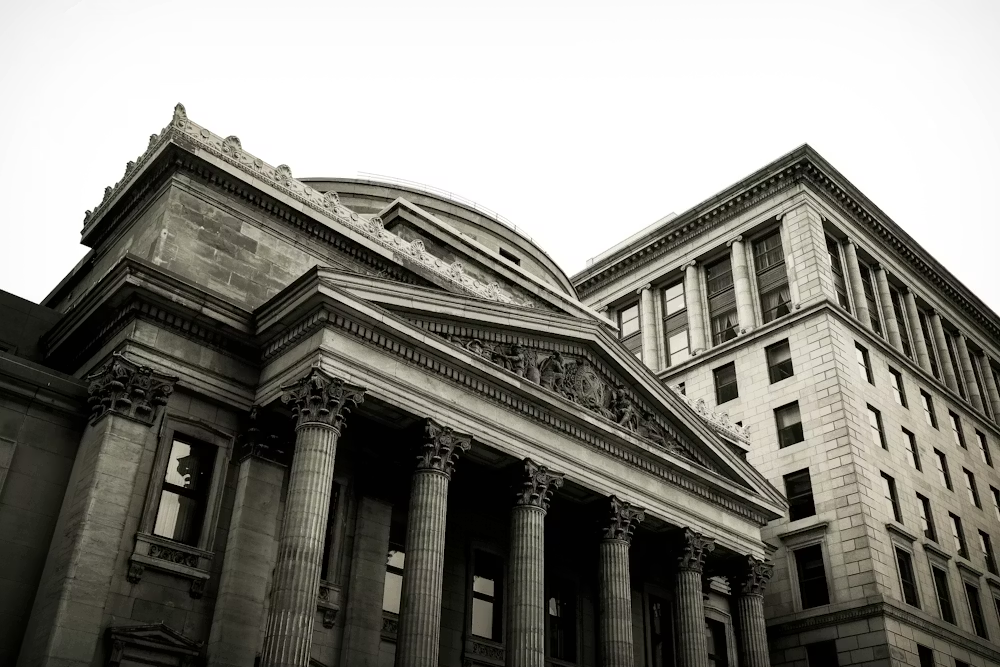
The morning after my discharge, I walked to the bank downtown. It was a grand old building with marble pillars and a hushed, cathedral-like atmosphere. I felt small and dirty in my worn coat.
I approached the teller window. The woman behind the glass was young, with bright red lipstick and a name tag that read Jennifer.
My hands shook as I slid the worn plastic card across the marble counter.
“I would like to make a withdrawal,” I said, my voice barely audible.
“Of course,” Jennifer smiled. “How much would you like to take out today?”
I swallowed hard. “The full balance. I want to close the account.”
I expected her to nod, count out three hundred dollars, and send me on my way. I was already mentally calculating how far three hundred dollars would go. Maybe two months of heating bills. Maybe a good winter coat.
Jennifer typed on her keyboard. Her brow furrowed. She typed again, faster this time. She adjusted her glasses and leaned closer to the screen.
The silence stretched. My anxiety spiked. Had he cancelled the card? Was it empty? Had I waited too long?
Jennifer looked up at me. The professional smile was gone, replaced by a look of genuine confusion and something else—awe.
“Ma’am,” she said softly. “I can’t give you the full balance in cash. We don’t keep that kind of currency in the vault. I can cut you a cashier’s check, or we can arrange a wire transfer.”
I blinked. “For three hundred dollars?”
Jennifer froze. She looked at me, then back at the screen, then back at me. She rotated the monitor on its swivel base.
“Ms. Miller,” she said gently. “The balance is not three hundred dollars.”
I looked at the screen. The numbers swam before my eyes. I squinted, trying to make sense of the commas and the zeros.
$987,540.00
I gripped the marble counter. My knees turned to water.
“That’s a mistake,” I whispered. “That’s… that’s not mine. It’s supposed to be three hundred.”
“It’s not a mistake,” Jennifer said. She tapped a few keys and brought up the transaction history. “Look here.”
I leaned in.
Deposit. Monthly Recurring. $16,000. P. Miller. Deposit. Monthly Recurring. $16,000. P. Miller. Deposit. Monthly Recurring. $16,000. P. Miller.
For five years.
Every single month since the day we walked out of that courthouse, Patrick had been depositing money. Thousands of dollars. Every month.
“Who… who put this here?” I asked, though I knew.
“The transfers are from a Patrick Miller,” Jennifer said. “Do you know him?”
The room spun. The marble pillars seemed to bend.
“He told me it was three hundred dollars,” I said, my voice rising in hysteria. “He handed it to me and said it was three hundred dollars!”
Jennifer reached through the slot and touched my hand. “Ma’am, do you want to sit down? I can get the manager.”
I didn’t answer. I grabbed the printed statement she offered and stumbled away from the window. I walked out of the bank, into the blinding sunlight, clutching a piece of paper that said I was a millionaire.
I walked. I didn’t know where I was going. I just walked until my legs burned.
Why?
Why would he do this? Why divorce me, humiliate me with a pittance, and then secretly build me a fortune while I starved in a damp room? It made no sense. It was cruel. It was madness.
I needed to find him. I needed to scream at him. I needed to throw the money in his face and demand to know why he had played this twisted game with my life.

The Journey to the Truth
I knew he hadn’t stayed in Cleveland. Patrick had always talked about the country. He had grown up in Western Pennsylvania, near the rolling hills and the Amish farms. He had a sister there, Eleanor.
I went back to my apartment. I packed a small bag. I didn’t touch the money yet—I couldn’t. It felt haunted. I used the last of my cash to buy a bus ticket to Lancaster, Pennsylvania.
The ride took six hours. I watched the landscape change from the rust and gray of industrial Ohio to the browns and deep greens of rural Pennsylvania. The tension in my chest tightened with every mile.
I arrived in the late afternoon. I took a taxi to the address I remembered from Christmas cards sent decades ago.
It was a small farmhouse, painted white, with a porch that wrapped around the front. It looked peaceful. It looked like the kind of place Patrick had always wanted.
I marched up the steps. My heart was hammering a frantic rhythm against my ribs. I was ready for a fight. I was ready to demand answers.
I knocked on the door.
A moment later, it opened.
Eleanor Grace stood there. She looked older, her hair completely white, her frame thinner than I remembered. She wore a cardigan and held a cup of tea.
When she saw me, the cup slipped from her fingers.
It shattered on the porch floor, ceramic shards skittering across the wood, tea splashing onto her slippers. She didn’t look down. She stared at me, her hands flying to her mouth.
“Evelyn?” she whispered.
“Where is he, Eleanor?” I demanded. I didn’t have the patience for pleasantries. “Where is Patrick? I know he’s sending the money. I know about the account. I need to see him.”
Eleanor’s face crumpled. It wasn’t fear. It wasn’t guilt.
It was a grief so profound it seemed to suck the light out of the afternoon.
She stepped back, opening the door wide.
“Oh, Evelyn,” she said, her voice breaking. “I was wondering if you would ever come.”
“Is he here?” I stepped into the foyer. It smelled of cinnamon and old wood. “Is he hiding?”
Eleanor shook her head slowly. Tears began to track down her cheeks.
“He’s not hiding, Evelyn.”
She gestured toward the living room. I walked in.
There, on the mantle above the fireplace, sat a simple wooden box. Next to it was a framed photograph of Patrick. He looked thin in the picture, gaunt, his skin pale, but his eyes were piercing.
I stopped. The anger in my chest hit a wall of ice.
“No,” I whispered.
Eleanor came up beside me. She placed a gentle hand on my arm.
“He passed away five years ago, Evelyn. Two months after the divorce.”
I shook my head. “That’s… that’s impossible. The transfers. The money keeps coming. I saw the statement yesterday.”
“It’s a trust,” Eleanor said softly. “He set it up before he died. He liquidated everything. His retirement, his investments, the sale of his business. He put it all into a trust to pay out to you monthly. He made sure it would look like it was coming from him.”
My legs gave out. I sank into the armchair, the room tilting violently.
“Dead?” I choked out. “But… why? Why the divorce? Why the three hundred dollars?”
Eleanor sighed, a sound that carried the weight of five years of silence. She walked to a small desk in the corner and opened a drawer. She pulled out a thick envelope, sealed with wax.
“He made me promise not to send this,” she said. “He said you had to come find it. He said if you never used the card, you would never know, and you would move on. But if you used the card, it meant you needed him, and you deserved the truth.”
She handed me the envelope. It had my name on it in Patrick’s jagged, distinctive scrawl.
“I’ll make some tea,” Eleanor said, and she left me alone in the room with the ghost of my husband.
The Letter
My hands shook so badly I could barely break the seal. I unfolded the yellow legal pad paper.
My Dearest Evelyn,
If you are reading this, it means you finally used the card. I hope it has been years. I hope you have lived a full, happy life without me. I hope you used the money to buy a villa in Italy or to spoil our grandchildren.
I know you hate me right now. I needed you to hate me.
Six months before we went to court, I was diagnosed with Stage 4 Pancreatic Cancer. The doctors gave me six months, maybe eight if I suffered through aggressive chemo. There was no cure, Evie. There was only an ending.
I watched my father die of this. Do you remember? You were there. You watched him wither away to eighty pounds. You watched my mother change his diapers and wipe the vomit from his chin. You watched the light go out of her eyes as she became a nurse instead of a wife. She died a year after him, not from disease, but because her heart was simply worn out.
I loved you too much to let that be your memory of me.
I didn’t want you to spend our life savings on treatments that wouldn’t work. I didn’t want you to be the widow who went bankrupt trying to save a corpse. I wanted you to have everything.
So, I became the villain. It was the only way I could think of to make you let go. I had to make you angry, because anger is easier to carry than grief. Anger keeps you warm. Anger helps you survive.
The “three hundred dollars” was a lie. I knew you, Evie. I knew you were stubborn. I knew if I handed you a million dollars, you would argue. You would try to spend it on my care. I had to make you think I left you with nothing so you would fight for yourself.
The money in the account is everything I had. It’s yours. It has always been yours.
I spent my final months here with Eleanor, watching the sun set over the fields, thinking of you. Every day, I thought of you. I didn’t die alone, Evie. You were with me in every memory.
Forgive me for the lie. It was the only way I could save you.
Live well, my love. Buy the good coat. Eat the steak. Be happy.
I will love you until the stars burn out.
— Patrick

The Sunrise
I sat in that chair until the sun went down and the room filled with shadows. I cried until my chest ached, until my throat was raw, until there were no tears left to shed.
I cried for the five years I spent scrubbing floors, hating him. I cried for the five years he spent dying, loving me.
He had played a terrible, beautiful trick. He had sacrificed his own comfort, his own need for comfort in his final days, just to ensure I wouldn’t be burdened by his death. He had accepted my hatred as the price of my future.
Eleanor came back in eventually. She didn’t say anything. She just sat with me, holding my hand as the grandfather clock ticked in the hallway.
“He watched the road every day,” she whispered. “Just in case you figured it out early. He missed you so much, Evelyn.”
“I missed him too,” I whispered. “I just didn’t know it.”
I am sixty-five years old now.
I live in the farmhouse with Eleanor. We are two old women who drink tea on the porch and watch the seasons change.
I used the money. Not for a villa in Italy, but to fix the roof of the farmhouse. To set up college funds for my grandchildren. To donate to the hospital that saved my life.
I kept the bank card. It sits in a frame on my dresser, next to the picture of Patrick.
Sometimes, when the wind blows through the cornfields, I sit on the porch and talk to him. I tell him about the grandkids. I tell him about the price of milk. I tell him that I am angry at him for leaving, and grateful to him for saving me.
I tell him that he was wrong about one thing.
Three hundred dollars wasn’t the valuation of our love. The valuation was the silence. The sacrifice. The stubborn, enduring protection of a man who loved me enough to break my heart so that it wouldn’t die with him.
I was never discarded. I was cherished. And that is a wealth no bank account can measure.
Let us know what you think about this story on the Facebook video! And if you like this story share it with friends and family—you never know who needs a reminder that love isn’t always what it seems on the surface.
