The silence of a suburban house at 3:47 a.m. is not peaceful; it is heavy. It presses against the eardrums with the weight of empty rooms and memories of noise that hasn’t existed for a decade. I was lying awake, watching the blades of the ceiling fan cut through the stagnant air, when my body decided to betray me.
It wasn’t the dramatic clutch-the-chest moment you see in movies. It was insidious. It started as a pressure, a dull ache in the center of my sternum, like I had swallowed a stone that was too large to pass. I tried to shift, to find a comfortable position, telling myself it was the leftover lasagna from dinner or perhaps just the ghost of anxiety that haunts empty nesters. But then the stone grew. It became a vice, turning slowly, crushing the breath out of my lungs. Then came the cold sweat, instantly soaking my nightgown, and the terrifying, electric numbness racing down my left arm.
I had spent twenty-eight years as an emergency room nurse. I had triaged thousands of patients. I had looked into eyes wide with panic and held hands as monitors flatlined. I knew the textbook. I knew the symptoms.
“This is it,” I whispered to the empty room. “This is the big one.”
I was fifty-two years old, and I was dying alone in the house I had bought to raise a family that had long since outgrown me.
My fingers, suddenly clumsy and vibrating with adrenaline, fumbled for my phone. The screen was a blinding supernova in the dark room. I didn’t dial 911 first. In that moment of primal fear, logic failed, and instinct took over. I wanted my children. I wanted the people whose hearts I had listened to before they were even born.
I called Ethan first. My firstborn by four minutes. The successful architect living in a glass tower downtown, overlooking the city he was helping to rebuild.
The phone rang. Once. Twice. Three times.
“Hello?” His voice was thick with sleep, laced with the irritation of a man who guards his rest like a dragon guards gold.
“Ethan,” I gasped, the air whistling through my constricted throat. “Ethan, I need help.”
“Mom? It is four in the morning. Is the house on fire?”
“My chest,” I managed to get out. “Pain. Can’t breathe. Need… hospital.”
I heard the rustle of high-thread-count sheets and a heavy sigh. “Mom, seriously? We went through this last year. You had a panic attack because dad’s birthday was coming up. Remember?”
“Not… panic,” I wheezed. “Real. Please, Ethan. Drive me.”
“Mom, I have the biggest presentation of my career in five hours. The Osaka contract. If I don’t sleep, I blow it. If I blow it, I’m done.”
The pain in my chest flared, a hot poker twisting deep, but his words cut deeper.
“I’m scared, Ethan.”
“Look, be reasonable. By the time I get dressed, get the car, and drive out to the burbs, it’s an hour. Just call an Uber. They’re everywhere. It’s faster. It’s logical.”
“An Uber?”
“Yes. Go to St. Mary’s. I’ll check in on you after the presentation. If it’s real, I’ll be there. But Mom… it’s probably just heartburn. Drink some water.”
The line went dead.
I stared at the phone, my vision blurring at the edges. Logical. That was Ethan. I had raised him to be pragmatic, to be strong. I hadn’t realized I had raised him to be cold.
I dialed Isabella. Bella. My wild child turned marketing executive. She was softer, usually. She was the one who remembered birthdays.
“Mother?” Her voice was sharp, alert. She was likely already awake, scrolling emails. “Why are you calling?”
“Bella, please. I think I’m having a heart attack.”
“Oh, God. Mom, don’t spiral. Did you take your anxiety meds?”
“I don’t need meds, I need a ride. I need my daughter.”
“I can’t,” she said, the answer coming too quickly. “I have the product launch at 8:00 a.m. My hair is in foils right now—I’m literally prepping. I cannot leave. I look like an alien.”
“Bella, I’m dying.”
“You’re not dying, Mom. You’re spiraling. Remember the ‘stroke’ that turned out to be a migraine? Just call a car. Seriously, an Uber is safer. They have GPS. I can’t drive right now anyway; I’ve taken a sleeping pill that hasn’t worn off. Just get a ride. Text me the room number.”
“You want me to take a stranger’s car?”
“It’s the gig economy, Mom. Use it. Love you, bye.”
Silence returned to the room, louder than before.
My children, the twins I had worked double shifts for, the babies I had nursed through fevers and heartbreaks, the adults I had helped with down payments and heartbreak… they had meetings. They had hair appointments. They had sleep to catch up on.
I was a line item on their schedule, and I was currently being rescheduled.
The Stranger in the Night
I don’t remember walking down the stairs. I remember gripping the banister, sweating through my pajamas, praying my legs wouldn’t buckle. I opened the app. My fingers shook so badly I hit the wrong destination twice.
Driver: Ahmad. Toyota Camry. 6 minutes away.
I sat on the front porch step, the cold concrete seeping through my thin robe. The suburban street was dead quiet. A dog barked in the distance. I looked at the moon and wondered if this was the last time I would see it. I wondered if my obituary would mention my children, or if they would be too busy to write it.
When the silver Camry pulled up, Ahmad didn’t wait for me to struggle to the curb. He saw me clutching my chest. He put the car in park and ran.
“Ma’am? Hospital?” he asked, his eyes wide with concern. He was young, maybe barely older than Ethan, with a kind, bearded face.
“St. Mary’s,” I whispered. “Please hurry.”
He helped me into the back seat with a gentleness that made me want to weep. He didn’t ask for a destination confirmation. He just drove. He drove fast but smooth, running a yellow light that was definitely blushing red.
“I call someone?” Ahmad asked, looking at me in the rearview mirror. “Husband? Son?”
I closed my eyes. “No. Just me. They’re… busy.”
Ahmad made a noise in his throat, a sound of disapproval and sorrow. “My mother is in Pakistan,” he said softly. “If she calls, I swim across ocean. Busy is not a word for mothers.”
Tears leaked out of my eyes, hot and humiliating. A stranger understood what my own flesh and blood did not.
When we hit the emergency bay of St. Mary’s, Ahmad refused the fare. I tried to hand him a twenty from my pocket, but he pushed it back. “You get better. Pray for me, I pray for you.” He helped me to the sliding doors, handed me off to a triage nurse, and vanished into the night—a guardian angel in a Toyota.
The Ghost in the White Coat
The ER was a sensory assault. Bright fluorescent lights, the smell of rubbing alcohol and old coffee, the rhythmic beeping of machinery. Because I was clutching my chest and gray in the face, I bypassed the waiting room.
“Female, 52, diaphoresis, radiating pain, BP 180 over 110!” a nurse shouted.
They stripped my shirt, slapping cold sticky electrodes onto my skin. I knew the drill. I had been the one slapping those electrodes on people for decades. I knew that the chaotic urgency meant I was in trouble.
Then, the curtain whipped back.
“Cardiology is here,” a voice announced.
I looked up, fighting the black spots dancing in my vision, and the world stopped. The pain in my chest was suddenly rivaled by the shock stopping my heart.
The man standing there was older now. His hair was silver at the temples, and there were lines around his eyes that hadn’t been there when we were seventeen. But I knew those eyes. I knew the way he held his jaw when he was focusing.
Dr. Colin Matthews.
My first love. The boy who had promised to marry me under the bleachers at the high school football game. The boy whose wealthy, prestigious parents had told him that a girl from the trailer park would ruin his future as a doctor. The boy who had left for medical school in London without saying goodbye, leaving me with a broken heart and a secret I had carried for thirty-six years.
He grabbed the chart, scanning the EKG strip. “ST elevation in leads V1 through V4. Looks like a proximal LAD occlusion. We need to get her to the cath lab immediately. Time is muscle, people, let’s move!”
Then he looked at the patient. He looked at me.
The chart fell from his hands. It hit the floor with a loud clap that silenced the room for a heartbeat.
“Victoria?” his voice was a ghost’s whisper.
“Hi, Colin,” I managed to wheeze. “Long time.”
He stepped closer, his professional mask crumbling. He touched my cheek, his hand trembling. “Tori? My God. I’ve been… I’ve been looking for you. For thirty years.”
“Well,” I grimaced as another wave of pain hit, “you found me.”
“You’re having a heart attack,” he said, the reality snapping him back. “A big one. The widow-maker.”
“I know. I was a nurse, Colin. Just fix it.”
He turned to the team, his voice booming with a ferocity that startled the residents. “Prep OR 1! Call Dr. Liu to assist, but I’m taking lead. This is… this is a VIP patient.”
As they unlocked the gurney to run me down the hall, Colin leaned over, running alongside the bed. “Tori, is there family? Who is in the waiting room? I need to update them.”
I looked up at the ceiling tiles rushing by. “Nobody.”
“Nobody?” He looked stricken. “You’re alone?”
“I called the kids,” I gasped. “They have meetings. They told me to take an Uber.”
Colin’s face went dark. A terrifying, stormy darkness. “They what?”
“Ethan and Isabella. They’re busy.”
We reached the double doors of the operating theater. Colin signaled for them to pause for one second. He leaned close to my ear.
“Ethan and Isabella?” he asked, his voice shaking. “How old are they, Tori?”
I looked him dead in the eye. I might die in the next hour. There was no time for lies anymore.
“They’re thirty-six, Colin.”
I saw him do the math. I saw the moment the realization hit him like a physical blow to the gut. Thirty-six years ago, he left. Thirty-six years ago, I was pregnant.
“Are they…?” he couldn’t finish the sentence.
“They’re yours,” I whispered. “They have your eyes. And apparently, your ambition.”
He looked like he was about to collapse, but the monitor behind me began to scream a rapid, erratic rhythm.
“V-Fib!” a nurse shouted. “She’s crashing!”
The last thing I saw was Colin Matthews, the love of my life and the father of my children, charging up the defibrillator paddles with tears streaming down his face. “Not today, Tori,” he roared. “You don’t get to die on me today!”
The Long Wait
I didn’t die.
I woke up in the ICU with a tube down my throat, which they removed a few hours later. My chest felt like it had been kicked by a mule, but the crushing weight was gone. A stent had opened the blockage. Blood was flowing.
Colin was sitting in the chair next to my bed. He wasn’t wearing his white coat. He was in wrinkled scrubs, his head in his hands. When I stirred, he sat up instantly.
“You’re back,” he said softly.
“I’m back.”
He poured a cup of water and held the straw to my lips. “I saved you,” he said. “And now, you have some explaining to do.”
“I wrote you letters,” I rasped, my throat raw. “Your mother returned them unopened. She told me you moved on. She said you didn’t want to be trapped.”
Colin closed his eyes, pain etching deep lines into his face. “My mother,” he said with cold venom, “told me you ran off with a mechanic. She said you wanted nothing to do with me.”
We sat in silence, mourning thirty-six years stolen by a lie.
“The children,” Colin said finally. “Ethan and Isabella. Where are they?”
“Probably at work. I haven’t checked my phone.”
Colin stood up. He walked to the window, looking out at the parking lot. “I called them,” he said. “I used your phone. I found ‘Ethan’ and ‘Bella’ in your contacts.”
“You didn’t tell them…”
“No. I didn’t tell them who I was. I told them I was the attending cardiologist. I told them their mother had a massive myocardial infarction and nearly died. I told them that if you had waited ten more minutes for that Uber, you would be dead.”
“What did they say?”
“They’re on their way. They were… distressed.”
“Distressed?” I let out a dry, bitter laugh. “Did they ask if the presentation went well first?”
Colin turned back to me. His eyes were hard. “They’re coming here. And when they get here, we are going to have a conversation.”

The Confrontation
They arrived twenty minutes later. I heard the click-clack of Bella’s heels in the hallway before the door opened.
They burst in, looking like the polished professionals they were. Ethan in a three-piece suit, looking pale. Bella in a power skirt, her makeup slightly smudged.
“Mom!” Bella rushed to the side of the bed, grabbing my hand. “Oh my god, Mom. We’re so sorry. We didn’t know.”
Ethan stood at the foot of the bed, looking terrified. “The doctor… on the phone… he said it was the widow-maker. He sounded furious.”
“I am furious,” a voice said from the corner.
Colin stepped into the light. He stood tall, imposing, radiating an authority that made Ethan shrink back slightly.
“You must be the children,” Colin said. The word children dripped with disdain.
“Are you Dr. Matthews?” Ethan asked, recovering his composure. “Thank you. Thank you for saving her. We… there was a misunderstanding. We thought it was anxiety.”
“A misunderstanding?” Colin crossed his arms. “Your mother called you terrified. She told you she was in pain. And you told her to call a rideshare because you had a PowerPoint presentation?”
“It was a multi-million dollar contract,” Ethan said defensively, then immediately looked ashamed. “That sounds stupid now. I know.”
“It sounds like you value your career over the woman who gave you life,” Colin said. “I looked at her chart. No emergency contact listed but you two. She lives alone. She has no support. And when she reached out, you pushed her away.”
“Who are you to judge us?” Bella snapped, her stress manifesting as anger. “You’re a doctor, you don’t know our family dynamic. She cries wolf sometimes! She gets lonely and invents symptoms!”
“I was an ER nurse for thirty years, Isabella,” I said softly from the bed. “I don’t invent symptoms.”
Bella flinched. “Mom, I’m sorry. I just… I was so stressed about the launch.”
Colin walked to the foot of the bed, standing directly in front of Ethan. He looked at him. Really looked at him. He was looking at his own nose, his own chin, reflected in a younger man.
“Do you know why I became a cardiologist?” Colin asked quietly.
Ethan blinked, confused by the pivot. “No. Why?”
“Because hearts are fragile,” Colin said. “They can break. And sometimes, when they break, they can’t be fixed. I spent my life trying to fix hearts because I couldn’t fix my own.”
He looked at me, asking for permission. I nodded.
“I grew up around here,” Colin said. “I fell in love with a girl when I was sixteen. But my parents told me I had to choose. Success, money, prestige… or love. I chose success. I went to London. I became the best in my field.”
“Okay?” Ethan said, shifting uncomfortably. “Why are you telling us this?”
“Because,” Colin said, his voice cracking, “that girl was your mother.”
The silence that fell over the room was heavier than the one in my house at 3:47 a.m.
Bella dropped my hand. She looked from Colin to me, then back to Colin. She looked at the shape of his eyes.
“No,” she whispered. “Dad… Dad left. Mom said he left before we were born.”
“I did leave,” Colin said, tears spilling over. “But I didn’t know. I didn’t know she was pregnant. If I had known… if I had known you existed… there is no meeting, no contract, no career in the world that would have kept me away.”
He glared at Ethan. “So when I see you,” he pointed a shaking finger at my son, “standing there, having had the privilege of knowing her your whole life, and treating her like an inconvenience? It takes everything in my power not to throw you out of this hospital.”
Ethan slumped into the visitor chair, burying his face in his hands. Bella started to cry, silent, shaking sobs.
“We didn’t know,” Ethan whispered through his fingers. “We didn’t know.”
“You didn’t know I was your father,” Colin said sternly. “But you knew she was your mother. That should have been enough.”
The Healing Process
Recovery is not a straight line. It is a messy, painful scribble.
I stayed in the hospital for a week. Colin didn’t take a single day off, but he wasn’t working. He was in my room. We talked for hours. We filled in the thirty-six-year gap. He told me about his failed marriage to a woman his parents approved of, a marriage that ended because he was “emotionally distant.” I told him about the struggle of raising twins on a nurse’s salary, the loneliness, the pride.
Ethan and Bella were there every day, too. The dynamic had shifted. The tectonic plates of our family had slammed together and created a new mountain range.
They were awkward with Colin at first. How do you talk to a stranger who is half of your DNA?
On the fourth day, Ethan brought a chessboard. He set it up on the rolling table.
“Mom says you like chess,” Ethan said to Colin, not making eye contact.
“I do,” Colin said. “I taught her.”
“She taught me,” Ethan said. “Play?”
They played. Ethan played aggressively, like he did in business. Colin played patiently, waiting for the opening.
“You expose your queen too early,” Colin noted softly. “You’re chasing the kill instead of protecting your board.”
Ethan looked up. “I guess that’s a metaphor.”
“Everything is a metaphor in this family, it seems,” Colin smiled. It was the first time they had smiled at each other.
Bella took a leave of absence. She, the girl who couldn’t spare an hour for a ride, took three weeks off. she cleaned my house. She threw away the salt in my pantry. She sat by my bed and just held my hand.
“I was awful,” she said one night. “I became a monster. I became everything you tried to protect us from.”
“You became successful,” I said. “But you forgot that success is lonely if you don’t have people to share it with.”
“I’m not leaving you again,” she promised. “And… I think I like him. Colin. Dad.”
“He’s a good man,” I said. “He just made a mistake. We all make mistakes.”
A Year Later
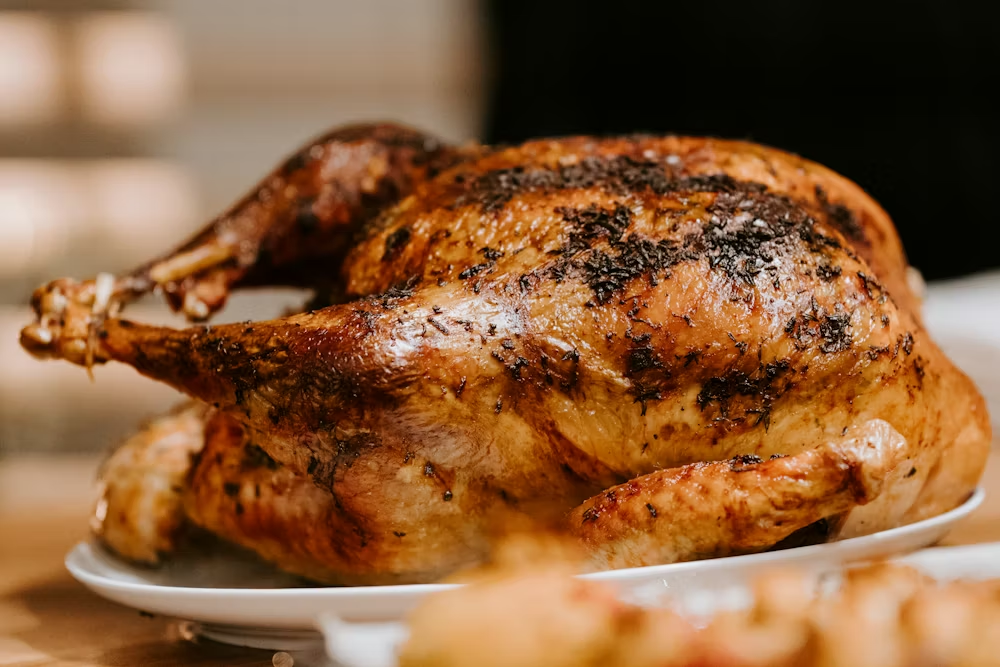
The Thanksgiving turkey was slightly dry, but nobody cared.
We were gathered in my dining room—not the empty house I had nearly died in, but a new place. A place Colin and I had bought together. It had a big porch and a garden where Colin tried to grow tomatoes and mostly grew weeds.
Ethan was there, without his phone. He had started his own firm, a smaller one, with partners who agreed on a “family first” policy. He looked younger, less gray in the face.
Bella was there with a new boyfriend, a schoolteacher who looked at her like she was the sunrise. She was laughing, cutting the pie, teasing Ethan about his receding hairline.
And Colin.
He sat at the head of the table, carving the bird with the precision of a surgeon. He looked at me across the centerpiece of autumn leaves. He winked.
“Speech!” Bella chanted, banging her fork on the table.
Colin wiped his mouth and stood up. He placed a hand on Ethan’s shoulder and the other on Bella’s.
“I spent thirty-six years looking for my heart,” Colin said, his voice thick with emotion. “I didn’t realize it had split into three pieces.”
He looked at the twins. “I am so proud of the people you are becoming. Not the executives. The people.”
He looked at me. “And to Victoria. Thank you for taking an Uber. Because if you hadn’t come to my ER, I would have lived my whole life without ever really being alive.”
“Don’t encourage the Uber,” Ethan groaned, his face red. “I’m never going to live that down.”
“No,” I said, raising my glass. “You won’t. And that’s a good thing. It’s a reminder.”
“Of what?” Bella asked.
“That work can wait,” I said. “That contracts can be signed tomorrow. But people? We are fragile. We are temporary. And we are the only thing that matters.”
We clinked glasses. The sound rang out like a bell, clear and true.
My chest ached sometimes, when it rained, a phantom reminder of the metal stent holding my artery open. But it didn’t hurt. It felt strong. It felt full.
I looked at my family—my messy, broken, beautiful, reunited family—and I knew that I was finally, truly, safe.
Let us know what you think about this story on the Facebook video! And if you like this story, share it with friends and family—you never know who needs a reminder that it’s never too late to fix a mistake.
