I’m a 62-year-old literature teacher, and for nearly four decades, my life has followed a gentle, predictable rhythm.
My days are measured in lesson plans and essays, quiet hallways, the soft rustle of paper, and the lingering aroma of tea left to cool before I remember to drink it.
I take comfort in routine—the slow turning of the seasons, the cadence of student voices punctuated by the occasional laugh, the quiet satisfaction of guiding young minds toward stories that illuminate life in small, meaningful ways.
December always brings a certain softness to the classroom: the crisp cold outside, the warm hum of fluorescent lights inside, and a subtle shift in the air as the year winds down.
Every year, without fail, I assign the same holiday project to my students: they must interview an older adult about their most meaningful memory of the season, a task meant to connect generations through stories of tradition, love, and hope.

I have watched them approach this assignment with excitement, curiosity, and sometimes trepidation, knowing that the adults they speak to carry lives full of both triumph and loss.
This year, a quiet, observant student named Emily asked if she could interview me.
I tried to deflect with a polite laugh and a shrug, insisting that my memories were ordinary, mundane—hardly worthy of attention.
But Emily, with a patience and steadiness I rarely encounter in teenagers, looked at me and said simply, “I want to hear your story.
You make other people’s stories feel real.” That struck me more than she could have known. It was as if she saw beyond the layers of routine and the walls I had built around my past.
The next afternoon, we met in an empty classroom, the sunlight falling at an angle through the tall windows, dust motes dancing in the beams.
Emily asked careful, thoughtful questions: about childhood holidays, family traditions, the small rituals that had shaped my sense of comfort and belonging.
Then, after a pause, she asked something more personal—something I had not voiced aloud in decades.
“Have you ever had a love story around Christmas?” she asked. The question hit me like a cold breeze through an old hallway, one that opened a door I had kept firmly shut for forty years.

When I was seventeen, I was in love with a boy named Daniel. We were young, bright-eyed, and convinced that the future belonged entirely to us.
We spent afternoons wandering snowy streets, listening to the crackle of Christmas lights reflected in shop windows, and dreaming of a life that seemed endless.
Daniel had a quiet intensity, a thoughtfulness that drew people in, but it was his laughter that made everything else fade away.
I had never felt more alive than in those days, never more certain that love could endure, that it would stretch across time and circumstance.
Then, one winter, his family vanished overnight. There was a scandal, a whisper of disgrace, and suddenly there was no goodbye, no explanation, no trace of him anywhere.
I searched for months, sent letters that were never returned, and slowly, reluctantly, accepted that some questions would remain unanswered.
Life demanded that I move forward, and I did what people do when closure is impossible: I adapted, I endured, and I tucked the memory into a quiet corner of my heart, where it waited, untouched, but never gone.
I shared the outline of this story with Emily, softened by the passing of time and careful to leave out the rawest edges of pain and longing.
I assumed that would be the end, that the interview would conclude and I would return to my quiet routines, leaving the past where it belonged.

But a week later, Emily burst into my classroom, her phone trembling in her hands, eyes wide with excitement and disbelief. She had found a local online post titled “Searching for the girl I loved 40 years ago.”
The details were staggering—my details: a blue coat, a chipped tooth, my dream of teaching. There was even a photograph. Mine.
Daniel had been looking for me all these years, still hoping, still searching, still holding onto the possibility of reunion.
At first, I could not breathe. I stared at Emily’s phone as if it might dissolve before me.
My hands shook, my mind raced, and yet, through all the shock and disbelief, a cautious hope began to bloom. I agreed—hesitantly—to let Emily send him a message.
The days that followed were a haze of anxious anticipation, tempered by fear: fear of disappointment, fear that time had changed him irrevocably, fear that my own heart had grown too cautious to trust in such a story again.
Finally, we arranged to meet at a small, unassuming café near the park, where holiday lights twinkled faintly through frost-tinted windows. The moment I saw him, all the years collapsed. Daniel.
His hair was silvered by time, his face etched with experience, but his eyes—those deep, steady eyes—remained exactly as I remembered.
In them, I saw the boy who had once held my hand on snow-dusted streets, and the man who had survived life’s turbulence without losing his tenderness.
We spoke first of the safe things: our careers, the shape of our families, the roads our lives had taken. Each word was careful, cautious, as if we were testing the water before diving into the depths we had both avoided for decades.
But soon, the silence between us became unbearable. I felt it—the silence that had carried my grief, my unanswered questions, my longing for a closure I had believed impossible. And then he spoke.

Daniel told me why he had disappeared. Shame, fear, and a letter he had never found the courage to send.
He explained how he had spent decades rebuilding his life, promising himself that he would return only when he felt worthy of me, only when he could stand before me without the shadow of past mistakes clouding the moment. I listened, my heart tender and fragile, understanding but unburdened by anger.
I had waited, yes, but I had also grown, endured, and found my own quiet resilience. There was no resentment left, only the kind of empathy born from years of reflection.
Before we parted, Daniel reached into his coat pocket and placed a small object on the table. A locket. I recognized it instantly—the one I had lost when I was seventeen, a token I had believed gone forever.
He had kept it safe all these years, believing that one day, he would return it to me himself. The gesture was more than romantic; it was a testament to constancy, to hope, to the strange and beautiful ways the heart endures.
He asked, gently, carefully, whether we might see where life could take us now—not as teenagers chasing a dream, but as two people who had been shaped by time, by joy, by loss, and by experience.
I said yes. Not to a past that no longer exists, not to a fairytale reconstructed from memory, but to a door I never expected to open again. And for the first time in decades, something quiet and brave stirred within me: hope.
We began meeting in small, measured ways—coffee on Sunday mornings, walks along familiar streets, conversations that bridged the gap between memory and reality.
We talked of everything: our joys, our regrets, the moments that had defined us, the moments that had nearly broken us. The world outside carried on, indifferent to the revival of a long-lost love, yet inside these hours, time itself felt malleable, forgiving, and generous.
I found myself recalling Christmases past, the small rituals that Daniel and I had shared, and the ways in which my life had continued without him. I realized that the loneliness I had felt was not merely for him but for the possibility that had been suspended, frozen in time, waiting for resolution.
Now, that resolution had arrived, not as a perfect reunion, but as a reconciliation of past and present—a recognition that love can endure not because it remains untouched, but because it survives transformation.
Emily, of course, became an unexpected witness to this reunion. She would sometimes join me in the classroom after our meetings, eyes wide with the wonder of youth, quietly documenting the slow, careful unfolding of our story.
“You made it real,” she said one afternoon, echoing the words that had first opened the door. “You made it feel possible again.”
And in her observation, I recognized the gift of storytelling: the ability to breathe life into experience, to honor the pain and beauty of memory, and to open space for hope.
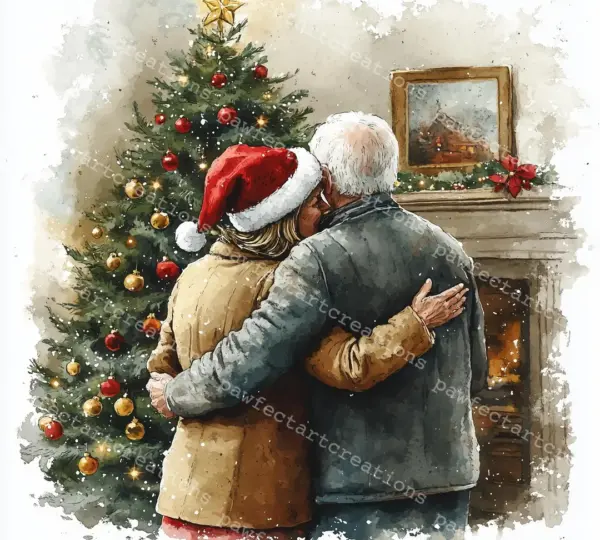
Daniel and I began to imagine small shared futures: attending the winter market together, volunteering at local libraries, perhaps taking a trip to revisit the streets where our young selves had walked.
We understood, more than anything, that time had shaped us but had not diminished our capacity for connection, for understanding, for love in its quietest, truest form.
On a snowy evening, as we walked past familiar windows lit with holiday cheer, he took my hand. It was not the clumsy, urgent grasp of youth, but a steady, confident touch, filled with the quiet assurance of someone who has waited long and well.
And in that moment, I understood that hope is not naive; it is courage maintained in the face of uncertainty, a belief that the heart can still find its way, even decades later.
Now, my classroom feels different. The essays my students write, the stories they uncover, and the traditions they cherish carry a deeper resonance for me.
I know, intimately, the weight of memory, the persistence of love, and the extraordinary ways in which life can surprise us when we least expect it. And every time I sip tea that has grown cold, I am reminded that some doors, once closed, can open again, revealing paths we believed were lost forever.
As the holidays approach this year, I will carry Daniel’s hand in mine, the locket warm against my palm, and the memory of a girl who waited and a boy who returned. In that, there is a quiet joy, the kind that does not announce itself with fireworks or grand declarations but whispers in moments of reflection, in stolen glances, in the steady heartbeat of shared presence.
I know now that love, when tempered by time and endurance, is not a fleeting dream but a living, breathing reality, shaped not by perfect circumstances, but by choice, courage, and the willingness to embrace the unexpected.
And so, as Emily’s project continues to inspire, and as my students ask about tradition, memory, and the lives that came before them, I tell this story.
Not as a fairy tale, not as a perfect reunion, but as a testament to the resilience of the human heart, the passage of time, and the enduring possibility of hope—quiet, brave, and eternal.
