Most days, my life moved at a relentless, almost mechanical pace. It wasn’t driven by ambition or dreams, but by responsibility.
I was a single parent with two young children, working full-time at a small insurance office that paid just enough to keep us afloat.
Every day followed the same rhythm: wake up before sunrise, get the kids dressed and fed, rush through traffic, work eight hours under fluorescent lights, then repeat the process in reverse.
There was no room for reflection, no space for big questions. My goal wasn’t happiness or fulfillment—it was simply survival.
Exhaustion became so normal that I stopped noticing it. It settled into my bones and stayed there. Mornings blurred into evenings. Weekdays bled into weekends.
I measured time not in memories, but in obligations. Lunch breaks were spent returning calls or catching up on paperwork.
Even quiet moments felt temporary, like borrowed time that would soon be reclaimed by responsibility.
My mother helped whenever she could, despite working long hospital shifts herself. She picked up the kids when I was stuck late at the office and dropped off groceries when my schedule collapsed.
I rushed through errands with my mind already focused on what still needed to be done—homework to supervise, dinners to prepare, bills to pay.
I wasn’t looking for inspiration, purpose, or change. I didn’t have the luxury to imagine a different life. I was just trying to hold everything together.
That’s why, on one cold evening in a grocery store parking lot, I had no idea that a brief interruption in my routine would quietly redirect the course of my entire future.
The air was sharp with winter, and my hands were numb as I loaded grocery bags into the trunk of my car.
I was already mentally calculating how much time I had before the kids’ bedtime and wondering if I could stretch the food until the end of the week.
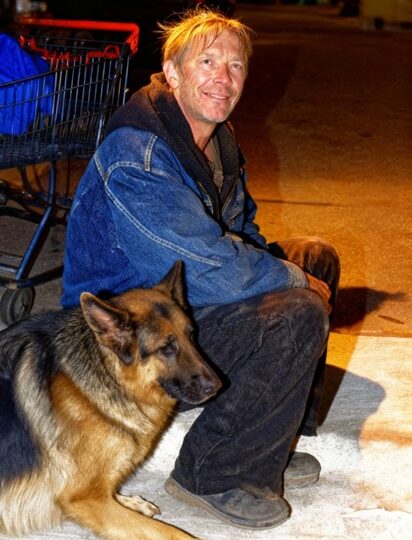
As I turned to close the trunk, I noticed a man sitting a short distance away, close to the edge of the parking lot.
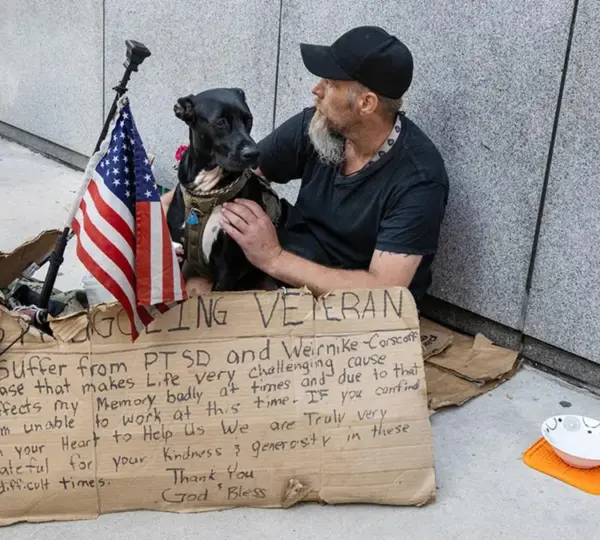
He wasn’t panhandling. He wasn’t shouting or waving signs. He was sitting quietly on the curb, with a medium-sized dog pressed close against his leg.
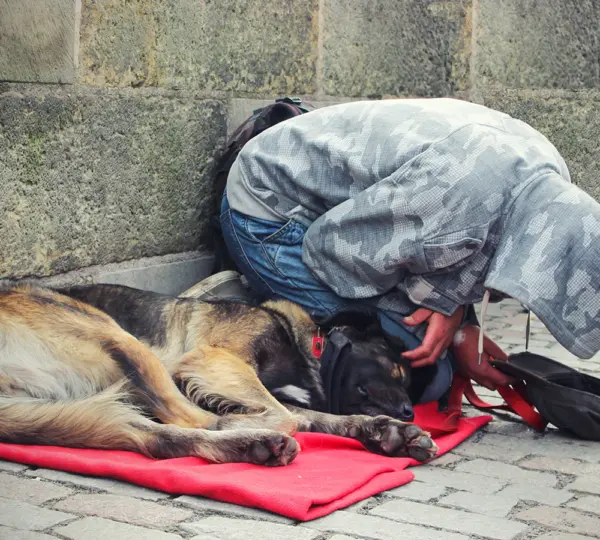
The dog caught my attention first. Its coat was clean, its posture calm. It leaned into the man with complete trust, as if that single point of contact was what anchored it to the world.
The man noticed me looking and spoke softly. He introduced himself, explaining that he was a veteran. His voice wasn’t desperate or demanding—just tired.
He said he hadn’t eaten since the day before. He didn’t ask for money. He asked if I could spare food.
I hesitated.
Not because I didn’t care, but because I was already stretched thin. I had mouths to feed at home. I was exhausted.
Part of me wanted to get into my car and drive away, convincing myself that someone else would help. That this wasn’t my responsibility.
But something about the way he gently adjusted the dog’s collar, making sure it was warm, stopped me. He was hungry, but he was still prioritizing another living being.
That small detail broke through my mental defenses.
I told him to wait. I went back inside the store.
I bought a warm meal, bottled water, and a small bag of dog food. It wasn’t extravagant, but it was what I could manage.
When I handed it to him, he thanked me quietly. Not with dramatic emotion, just simple, sincere gratitude. He thanked me again for remembering his dog.
I got into my car and drove home.
As I merged onto the road, I assumed the moment would end there. Just a small act of kindness tucked into an otherwise ordinary day.
Something I might remember briefly, then forget as life resumed its pace. I didn’t imagine it would matter beyond that parking lot.
Weeks passed.
Life continued exactly as before—until one morning when I was unexpectedly called into my boss’s office. There was no warning, no explanation.
I remember noticing how quiet the hallway felt as I walked down it, how the hum of the office seemed suddenly distant.
My boss didn’t invite me to sit. He handed me a letter.
The letter praised my kindness toward a veteran. It spoke about compassion, dignity, and the impact of small human gestures.
My name was clearly written at the top. I didn’t understand what I was reading.
Instead of appreciation, I was met with suspicion and anger. I was accused of acting inappropriately, of representing myself in a way that reflected poorly on the company.
The explanation was vague, but the outcome was clear. I was dismissed on the spot.
I barely remember gathering my things. I remember the sensation of my chest tightening, panic spreading as the reality sank in. I had no backup plan. No savings. Two children who depended on me.
As I sat in my car afterward, the letter still in my hands, fear gave way to confusion. I read it again, more carefully. The letterhead belonged to a legitimate veterans’ organization.
It praised me for reminding one of their members that he still mattered.
I realized then that the man from the parking lot had reached out for help. He had shared his experience—not to cause trouble, but to express gratitude.
I didn’t know what else to do, so I contacted the organization. I explained what had happened, not expecting justice—only clarity.
What followed was something I never could have predicted.
The organization listened. They confirmed the letter’s authenticity. They explained that the veteran had sought support, sharing that a stranger’s kindness had helped him through a difficult moment.
It reminded him that he hadn’t been forgotten. When they learned that I had lost my job because of it, their response changed.
They intervened, addressing the situation directly. The circumstances surrounding my dismissal were reviewed, and the issue was resolved fairly. But they didn’t stop there.
They asked about me.
About my background. About my children. About my interest in helping others. What started as a phone call turned into conversations, then interviews.
Eventually, I was offered a new role—one that involved working alongside them to support veterans as they rebuilt their lives.
I accepted, cautiously at first, afraid to hope too much.
Today, my work feels meaningful in a way it never did before. I help connect veterans with resources, housing assistance, and counseling.
I listen to stories that are difficult, complex, and deeply human. Some days are emotionally heavy, but they are honest. Purpose replaced routine.
My children see the difference. They see me tired but fulfilled. They understand, in age-appropriate ways, why kindness matters even when life feels overwhelming.
That grocery store parking lot taught me something I didn’t know I needed to learn. I wasn’t looking for purpose. I wasn’t trying to change my life.
I was simply responding to another person’s humanity in a brief, ordinary moment.
That moment changed everything.
It reminded me that compassion doesn’t require abundance—only attention. That small acts don’t always stay small.
And that sometimes, when life feels like an endless list of obligations, the quiet choice to care can open doors you never knew existed.
