I am seventy-three years old, and I have learned that silence is not empty. It has a weight. It has a texture. Since my wife, Ellen, died eight months ago, the silence in our small, siding-clad house in Ohio has become a roommate I never invited. It sits in the armchair where she used to knit; it lays across the foot of the bed like a heavy wool blanket; it fills the space between the tick and the tock of the grandfather clock in the hallway.
It isn’t a peaceful quiet. It is the sound of a life that has stopped moving forward. It makes the hum of the refrigerator sound like a fire alarm and the settling of the foundation sound like footsteps that never arrive.
For forty-three years, it was just us. We were a closed ecosystem, a planet of two. We had our rituals, the liturgy of a long marriage. There was the morning coffee at the wobbly kitchen table, where we solved the world’s problems between bites of burnt toast. There was her humming—always slightly off-key show tunes—while she folded laundry, a sound I used to pretend annoyed me but would now give my right arm to hear just once more. There was her hand finding mine in the pew at Grace Lutheran every Sunday, squeezing once when the pastor said something she liked, twice when she was bored and wanted to beat the brunch rush at the diner.
We never had children. Not by choice, exactly, and not entirely by accident. It was a long, quiet tragedy of doctors, timing, money, and one bad surgery in 1984 that closed the door forever. We grieved it then, in our thirties, and then we packed it away like winter clothes in the attic.
“It’s you and me against the world, Harold,” she used to say, smoothing my hair back when the gray started to overtake the brown. “And we’re doing just fine. We are enough.”
And we were. Until we weren’t.
Now the rooms feel cavernous. The house, a three-bedroom ranch we bought in ’78 thinking we’d fill it with kids, feels like a museum dedicated to a timeline that ended. The bed feels colder, an expanse of empty percale linen that I try not to drift into. I still make two cups of coffee some mornings, the muscle memory of forty years overriding the reality of the last eight months, before I remember she isn’t coming down the hall in her fuzzy pink slippers.
I pour the second cup down the sink. It’s the saddest sound in the world.
The Expedition to Walmart
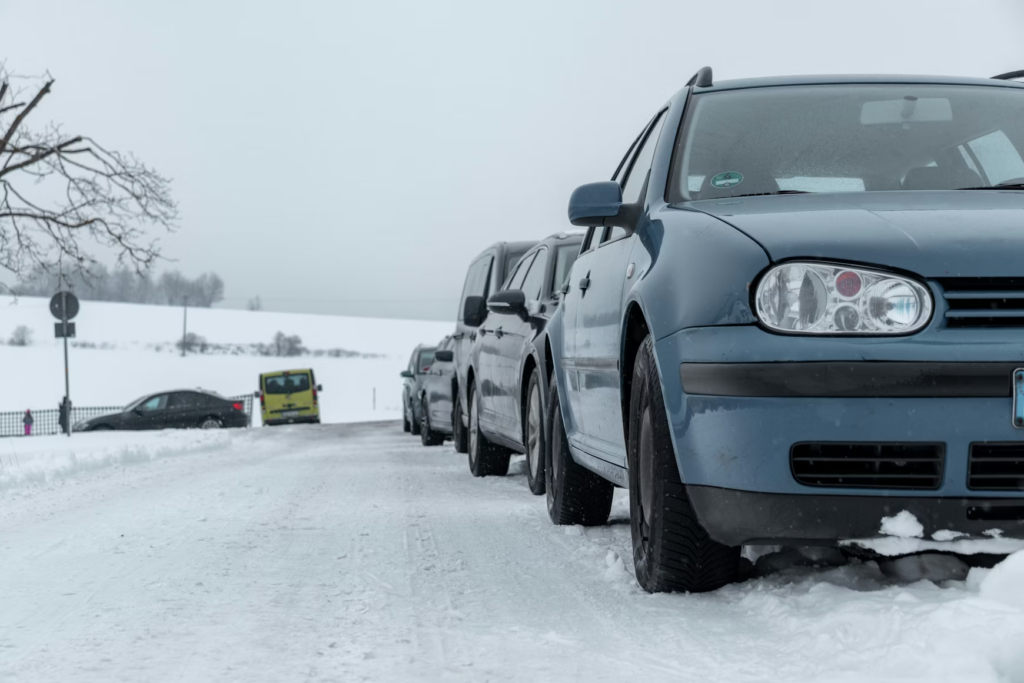
Last Thursday was a gray day, the kind where the sky looks like dirty dishwater and hangs low over the rooftops. I needed groceries. It’s a ritual now, something to fill the hours between waking up and going to sleep.
I bundled up. The weatherman had warned of a polar vortex dipping down from Canada, bringing wind chills that could freeze exposed skin in minutes. I put on the heavy winter coat Ellen had bought me two winters ago. It was an expensive parka, far nicer than anything I would have bought for myself.
“You look like a walking sleeping bag,” she’d said, laughing as she tugged the zipper up to my chin in the department store. “But you’re old, Harold, and I’m not letting you freeze on me. I need you around to open the jars.”
I patted the pocket where I kept my bus pass and stepped out the door.
The bus ride to Walmart was a study in mid-winter misery. The windows were frosted over, the heater rattled without producing much warmth, and the other passengers sat in huddled, stony silence. We were a collection of ghosts moving through the slush.
When I stepped off the bus at the supercenter, the wind hit me like a physical blow. It was a knife, sharp and serrated, cutting through my scarf and stinging my eyes. It was the kind of cold that makes your joints swear at you and your lungs seize up.
I grabbed a cart with a wobbly wheel—it’s always a wobbly wheel—and did my rounds. Canned soup. A loaf of wheat bread. Three bananas, green enough to last the week. A carton of half-and-half, the specific brand Ellen liked. I drink my coffee black, but I buy the cream anyway. I let it spoil in the fridge and then buy more. It’s a waste of money, I know, but seeing that carton in the door makes the fridge look less like a bachelor’s void.
I was checking out, debating whether to buy a crossword puzzle book, when I stepped through the automatic doors and back into the biting wind.
That’s when I saw her.
The Statue in the Parking Lot
She was standing near a concrete light pole, about fifty feet from the entrance. In the sea of rushing shoppers, idling cars, and the chaotic symphony of a busy parking lot, she was terrifyingly still.
She had no car. No stroller. No bags. Just her body, braced against the gale.
She wore a thin, knit sweater that might have been sufficient for a crisp October day but was suicide in February. Her hair whipped around her face in tangled strands. But it was what she was holding that stopped me in my tracks.
Clutched against her chest was a baby.
The child was wrapped in a threadbare towel—a faded, rough thing that looked like it belonged in a mechanic’s rag pile, not a nursery.
I watched her for a moment, squinting against the grit the wind kicked up. Her knees were knocking together, a visible tremor that traveled up her spine. Her lips were a pale, alarming shade of violet. She looked like a statue left out in the elements, forgotten by the sculptor.
People walked past her. They rushed to their heated SUVs, heads down, phones out, blind to the tragedy shivering right next to the cart return.
I couldn’t walk past. Ellen would have haunted me for the rest of my days if I had.
“Ma’am?” I called out. My voice was snatched away by the wind, so I moved closer, approaching her slowly, the way you’d approach a frightened bird that had hit a window. “Miss? Are you alright?”
She turned slowly, her movements stiff with cold. Her eyes were red-rimmed, large, and terrifyingly clear. There were no drugs there, no madness. Just a hollow, bottomless exhaustion.
“He’s cold,” she whispered. Her teeth chattered so hard the words were chopped up. “I’m doing my best. I’m trying to block the wind.”
She shifted the baby, tucking the rough towel tighter around his little body, curling her own freezing form around him to act as a human shield.
Maybe it was instinct. Maybe it was the empty house waiting for me, the silence I didn’t want to return to. Maybe it was the way she held that child, with a fierce, desperate love that reminded me of the mother Ellen never got to be.
I didn’t think. I just unzipped.
I shrugged out of the heavy, down-filled parka. The cold hit me instantly, biting through my flannel shirt, but I didn’t care.
“Here,” I said, holding the coat out. The wind caught it, making it flag like a surrender. “Take this. Put this on. Your baby needs it more than I do.”
Her eyes widened, filling with fresh tears that froze on her cheeks.
“Sir, I can’t,” she gasped, backing away slightly. “I can’t take your coat. You’re… you’re an elder. You’ll freeze.”
“I’m tough as old leather,” I lied, my own teeth starting to click. “And I’ve got another one at home. A better one. Come on. Let’s get you both warm. Please.”
She hesitated, her eyes darting around the parking lot as if she expected someone to jump out and reprimand her for accepting kindness. No one did. The world kept spinning, indifferent to our little drama.
“I’ll get you something hot,” I promised. “Just put the coat on.”
She nodded once, a small, jerky motion. “Okay,” she whispered.
She let me drape the heavy coat over her shoulders. I zipped it up over her and the baby. She vanished inside it, looking like a child playing dress-up, but I saw her shoulders drop an inch as the warmth began to trap itself against her skin.
“Come on,” I said, taking her elbow. “Inside.”
The Confession in the Café
We went back through the automatic doors, the blast of industrial heat from the air curtain feeling like a blessing. I steered her toward the Subway sandwich shop tucked in the front corner of the store.
“Sit down,” I said, pulling out a metal chair. “I’ll get you something hot.”
“You don’t have to—” she started, her voice thawing along with her body.
“Already decided,” I cut in, using my best ‘grumpy grandpa’ tone. “Too late to argue with an obstinate old man. Do you eat chicken?”
She nodded.
I ordered a footlong chicken noodle soup, a toasted sub, and the largest coffee they had. I got a tea for myself to warm my hands.
When I came back to the table, she had the baby—Lucas, she’d told me—tucked inside the coat, his tiny face peeking out like a pink matchstick from a cave. He was sleeping now, the warmth having knocked him out.
“Here you go,” I said, sliding the tray toward her. “Eat. It’s not gourmet, but it’s hot.”
She wrapped her hands around the coffee cup first, closing her eyes as the steam hit her face. She held it there for a long minute, just absorbing the heat, before taking a sip. Then she ate. She ate with a focused, desperate intensity that told me everything I needed to know about her last few days.
“We haven’t eaten since yesterday morning,” she murmured between bites. “I was trying to make the formula last. I watered it down a little. I know you’re not supposed to, but…”
Something twisted in my chest. A sharp, physical pain.
“Is there someone you can call?” I asked gently. “Family? Friends? A shelter?”
“It’s complicated.”
She stared down at the soup, stirring it aimlessly.
“It’s always complicated,” I said. “But you can’t stay in a parking lot.”
She looked up at me. She looked like someone who had been disappointed so many times that hope felt like a trap.
“I’m Harold,” I offered. “Harold Harris. I live on Elm, about four miles from here.”
She hesitated, assessing me. She saw the wrinkles, the hearing aid, the worn flannel. She decided I was safe.
“I’m Penny,” she said. “And this sleeping lump is Lucas.”
She kissed the top of his head, inhaling the scent of him.
“What happened, Penny?” I asked. “If you don’t mind me asking.”
The story spilled out of her, jagged and raw. There had been a boyfriend. Not Lucas’s father, but a guy who said he wanted to help. He had a temper. He had rules. That morning, the rule was that crying babies didn’t belong in his apartment while he was trying to sleep off a hangover.
“He said if I loved Lucas so much, I could figure out how to feed him myself,” she said, her voice flat, detached. “He threw my bag out the door. I grabbed Lucas and ran before he could grab me. I didn’t even have time to get my coat or the stroller. I just ran.”
I listened. I bore witness. There are a lot of things an old man can say—platitudes about fish in the sea or doors closing and opening. None of them felt big enough for that kind of pain.
“You did the right thing,” I managed to say. “Getting out. Keeping him with you. You saved him today.”
She nodded without looking up. “I don’t feel like I saved him. I feel like I’m failing him.”
“You’re feeding him,” I said. “You’re keeping him warm. That’s not failing. That’s surviving.”
When the soup was gone and the sandwich was just crumbs, she pulled my coat tighter around them both and stood up.
“Thank you,” she said. “For seeing us. Most people… they just look through us.”
“Keep the coat,” I told her when she reached for the zipper.
“I can’t—”
“You can,” I said firmly. “And you will. I have plenty of coats. Ellen—my late wife—she was a bit of a hoarder when it came to winter gear. Please. Call it my good deed for the year. Ellen would want you to have it. She hated being cold.”
She gave me a look like she wanted to argue, to hold onto some scrap of pride, but then she looked down at Lucas. She shook her head, tears threatening again.
“Okay,” she whispered. “Okay. Thank you, Harold.”
I walked her to the bus stop. I pressed a twenty-dollar bill into her hand—all the cash I had on me—and told her to get to the women’s shelter on 5th. She promised she would.
I watched her get on the bus, my coat hanging past her knees, the baby bundled close. She looked back once, through the dirty glass, and waved.
The Long Week of Quiet
I took the next bus home. The cold was brutal without my coat, seeping through my flannel shirt, turning my skin to gooseflesh. But inside, I felt a strange kind of warmth. A pilot light had been lit in the dark cavern of my grief.
At the kitchen table that night, I set out two plates by habit, then put one back. I ate my soup in silence, but the silence felt different. It felt contemplative, not oppressive.
“You’d have liked her, El,” I told Ellen’s empty chair. “She has your chin. Stubborn. Scared. But trying. She’s fighting like a badger.”
The house answered with the creak of the heater and the tick of the clock.
The week dragged on. The cold snap broke, replaced by a gray slush. I went back to my routine. Coffee. Crosswords. Nap. TV. Sleep. Repeat. But I kept thinking about Penny. I wondered if she made it to the shelter. I wondered if the coat was warm enough. I wondered if Lucas liked the formula.
I worried I had done too little. A coat and a sandwich—it was a drop in the ocean of her trouble.

The Knock That Shook the House
Seven days later. It was a Thursday again. I was heating up a leftover tuna casserole, the smell of baked noodles filling the kitchen.
Someone pounded on my front door.
It wasn’t a polite knock. It was heavy, authoritative. Boom. Boom. Boom. It rattled the picture frames in the hallway.
My heart jumped into my throat. Nobody visits me unannounced. The only people who knock like that are police or people selling things I don’t want.
I wiped my hands on a dish towel and walked to the door, my heart rate spiking.
I opened it.
Two men in black suits stood on my porch. They were enormous. Both over six feet, broad-shouldered, with haircuts so sharp you could set a watch by them. They wore long wool coats and serious expressions. They looked like they ironed their shoelaces and didn’t smile on Christmas.
“Can I help you?” I asked, my voice wavering slightly.
The taller one, a man with a nose that had been broken at least once, stepped forward.
“Sir,” he rumbled. His voice was deep, gravelly. “Are you Harold Harris?”
“I am.”
“Are you aware of what you did last Thursday? At the Walmart on Industrial Boulevard? That woman and her baby?”
My stomach dropped through the floorboards. Panic, cold and sharp, flooded my chest. What had happened? Had the boyfriend found her? Had she accused me of something? Was I in trouble for giving away a coat?
Before I could answer, the other man leaned in. He was younger, wiry, with intense eyes.
“You understand you’re not getting away with this,” he said, voice cold as ice.
People say things like that when they want you scared. It worked. I was terrified.
I tightened my grip on the doorframe, my knuckles turning white. I tried to summon some of the dignity of my age.
“What exactly do you mean by that?” I asked, trying to keep the tremor out of my voice. “And who are you? Police? FBI? If you’re selling security systems, your pitch needs work.”
The taller one shook his head.
“No, sir,” he said. “Nothing like that. But we do need to talk to you. It’s about Penny.”
I thought about slamming the door, locking the deadbolt, and calling 911. But my knees were slow, and their hands looked quick. I was an old man alone in a house full of memories. I had no defense.
“Is she okay?” I asked, the worry overriding the fear.
The men exchanged a look.
Before I could decide whether to run or fight, a car door slammed out on the street.
I leaned past the wall of black wool coats.
A black SUV sat at the curb, engine idling, exhaust puffing into the cold air. From the passenger side, a woman stepped out. She was cradling something in her arms.
My heart gave a strange little kick.
It was Penny.
She looked different. Better. She was wearing a real winter coat now—not mine, but a new one, thick and purple, zipped to her chin. A knitted hat covered her ears. Her cheeks were pink, not pale.
And the baby, Lucas, was bundled in a puffy snowsuit that made him look like a little marshmallow, complete with a tiny hat with bear ears.
The tension in my shoulders eased a notch. They looked warm. They looked safe. They looked fed.
Penny hurried up the walkway, navigating the slush.
“It’s okay!” she called out, waving a hand. “Harold! It’s okay! These are my brothers!”
“Brothers?” I repeated, looking up at the two giants on my porch.
“We just needed to make sure you actually lived here,” she said, breathless as she reached the steps. She shifted Lucas to her hip. “We didn’t want to scare some random old man. Though I think Stephan might have overdone the ‘bad cop’ routine.”
She glared at the taller man. He had the grace to look sheepish.
“Too late for that,” I muttered, clutching my chest. “My pacemaker almost skipped a beat.”
“How did you even find me?” I asked, bewildered. “I never gave you my address.”
The shorter brother spoke up. “We went back to Walmart,” he said. “We work private security. We know how to ask questions. We got the security team to pull the parking lot footage. Got your license plate number when you got on the bus—the bus cam caught you. The police already had a report going for our sister regarding the ex, so they helped verify the address when we told them you were a witness.”
He shrugged, almost apologetic.
“I’m Stephan,” the taller one added, extending a hand that felt like a brick. “This is David. We’re the big brothers.”
I nodded slowly, shaking their hands.
“Well,” I said, stepping back. “Since you’re already here, and you haven’t assaulted me yet, you might as well come in. No sense freezing on the porch. The casserole is probably burning anyway.”
The Living Room Tribunal
We filed into the living room. It was crowded. The heater hummed weakly in the corner, trying to keep up with the draft from the door. Family photos of Ellen watched from the walls—her smiling at the beach, her cutting a cake, her holding a cat.
Penny sank onto the floral couch with Lucas. Stephan and David stayed standing, hands clasped in front of them like they were guarding the president. They filled the room, making my furniture look doll-sized.
I cleared my throat.
“Now,” I said, looking at Stephan. “About that ‘you’re not getting away with this’ business. You mind explaining before I die of curiosity? Or a heart attack?”
For the first time, his stony face cracked into a smile. It transformed him from a thug into a big, goofy kid.
“I meant you’re not getting away from your good deed, sir,” he said. “Where we come from, good doesn’t disappear. It comes back. You put goodness out, it circles back. We’re the circle.”
I let out a breath I didn’t know I’d been holding. My legs felt weak, so I sat in my recliner.
“You have a heck of a way of saying thank you,” I said. “I thought I was being shaken down.”
David huffed a quiet laugh. “We told him that. He watches too many movies.”
Stephan ignored him.
“When Penny called us,” he went on, his voice serious again, “she was at the police station. She’d gone there after you left her at the bus stop. She told them everything. She filed the restraining order. Then she called us. We drove up from Cincinnati that night. Made it in four hours.”
My hands felt suddenly clumsy. I picked at the armrest of my chair.
Penny rubbed Lucas’s back in slow circles.
“The officer kept asking how long we’d been out there,” she said softly. “I told him about you. How you gave us your coat, bought us soup, didn’t ask for anything back. How you treated me like a person, not a vagrant.”
She glanced up at me, her eyes shining. “He wrote it in the report. Said it showed how dire the situation was, that a stranger had to intervene to save the infant from exposure. It helped, Harold. It helped them take me seriously.”
“Report?” I repeated.
“Her ex is trying to get custody,” Stephan said, his fists clenching at his sides. “Out of spite. He doesn’t want the kid; he just wants to hurt her. He’s saying she’s unstable, can’t provide. The police report shows he endangered the child by kicking them out in a freeze. It proves he’s the unfit one.”
Anger moved through me, slow and hot.
“He threw his own child out into the cold,” I said, shaking my head. “I wouldn’t throw a dog out in that weather.”
“Yes, sir,” David replied. “And you made sure they didn’t freeze. You kept them alive until she could get to safety.”
Penny’s voice wobbled.
“I don’t know what would’ve happened if you hadn’t stopped,” she said. “I was so cold, Harold. My thoughts were getting fuzzy. I was thinking about just… sitting down in the snow. Maybe I’d have gone back to him just to get warm. Maybe I’d have done something stupid. But you fed us. You made me feel like we mattered for an hour. That was enough for me to walk into that station and fight.”
She sniffed, smiling and crying at the same time.
“So we came to say thank you,” she finished. “Properly.”
Stephan nodded. He reached into his coat pocket.
“What do you need, Mr. Harris?” he asked. “Anything. House repairs. Rides. Groceries. We fix things. We build things. Say the word. We owe you a debt that money can’t pay, but labor can.”
I shook my head, embarrassed. I wasn’t used to being on the receiving end.
“I’m alright,” I said. “I live small. Don’t need much. Ellen—my wife—she left things in good order.”
Penny leaned forward.
“Please,” she said. “Let us do something. We can’t just walk away.”
I scratched my jaw, thinking. I looked at the kitchen, at the empty oven where the casserole was likely drying out. I looked at the empty chair opposite me.
“Well,” I said finally, “I wouldn’t say no to an apple pie. A real one. Been a long time since I had a homemade apple pie. Store-bought tastes like cardboard and preservatives.”
Penny’s whole face brightened. It was like the sun coming out.
“I can do that,” she said. “I used to bake with my mom all the time before she passed. I make the best crust in the county. It’s the vodka trick.”
“Vodka?”
“Makes the crust flaky,” she winked.
Her eyes flicked to a framed photo of Ellen on the mantel. It was from our 40th anniversary.
“Is that your wife?” she asked.
“Yeah,” I said, looking at the photo. “That’s Ellen. She’s been gone eight months.”
“She looks kind.”
“She was,” I said, a lump forming in my throat. “She’d have liked you showing up here with a baby and trouble. She had a soft spot for trouble.”
Penny smiled, cheeks pink.
“I’ll bring the pie in two days,” she said, standing up. “Saturday. Lunchtime. If that’s okay.”
“It’s more than okay,” I replied. “Just knock before Stephan gives me a heart attack again. Use a gentle knock.”
Stephan winced. “Yes, sir,” he said. “Fair enough. We’ll work on our approach.”
They left with promises and handshakes. David fixed the loose hinge on my screen door on his way out without even being asked. Lucas gave me a sleepy little fist wave from his carrier.
The house felt different after they left. Not louder. Just less empty. The air felt charged, moved around.
I caught myself humming while I washed the dishes later. It startled me. It was a show tune.

The Saturday Ritual
Two days later, Saturday arrived. The doorbell rang at noon. A gentle, polite ring.
When I opened the door, the smell of cinnamon, nutmeg, and butter floated in before Penny did.
She stood there with a pie wrapped in a checkered dish towel. It was still warm; I could feel the heat radiating from it. Lucas slept in a carrier on her chest, his tiny mouth open in a milk-drunk daze.
“I hope you like apple,” she said. “I used my mom’s recipe. Tart apples, not sweet.”
“If I don’t, I’ll lie,” I told her, stepping back. “Come in.”
We sat at the kitchen table. I got out the good plates, the ones with the little blue flowers that Ellen always saved for company. I made a fresh pot of coffee.
The crust flaked when I cut into it. Steam curled up into the air, carrying the scent of comfort.
I took one bite and had to close my eyes. It tasted like memory. It tasted like home.
“Lord,” I said. “You weren’t kidding. This is the real thing. Ellen couldn’t bake a pie to save her life—don’t tell her I said that—but this… this is art.”
She laughed, shoulders relaxing.
“If you say that after the second slice, I’ll really believe you,” she said.
We ate and talked. This time she told me more.
Her parents had died in a car accident when she was still young. Stephan and David had stepped in, filling the space as best they could, raising her while they were barely men themselves.
“They act tough,” she said, rolling her eyes. “But they cried more than I did when Lucas was born. Stephan fainted in the delivery room.”
She talked about the upcoming court dates. How her ex had suddenly discovered he cared about being a father when a judge got involved and child support was mentioned.
“He doesn’t want Lucas,” she said, her voice tightening. “He just doesn’t want me to have anything. He wants to win.”
She stared at her plate, pushing a crumb of crust around.
“I’m scared,” she admitted. “What if the judge believes him? What if I mess up again? I’m living with my brothers, sleeping on their couch. I don’t have a job yet.”
“Listen,” I said, leaning forward. “I watched you out there in the cold. You’re scared and you’re tired, but you were still holding that baby like the whole world depended on it. That counts for something. That counts for everything.”
Her eyes filled.
“You really think so?” she asked.
“I know so,” I said. “I’ve seen parents who didn’t care. You aren’t one of them. You’re a fighter, Penny. And you have an army now. You have those brothers. And you have me.”
She looked at Lucas, sleeping peacefully.
“Sometimes I wish I had someone older to talk to,” she said. “Someone who’s already messed up and survived it. Someone who knows that life goes on.”
I snorted. “Oh, I’ve messed up,” I said. “You’re looking at the reigning champion of mistakes. I once bought a boat without telling Ellen. We lived in Ohio. There’s no water.”
She smiled.
“Then maybe I can learn something from you,” she said.
“I’ve got coffee,” I replied. “And a table. And a lot of time. Those are my qualifications.”
She glanced around the kitchen, at the extra chair, the stack of crossword books, the little ceramic rooster Ellen had loved. She saw the loneliness, but she also saw the space.
“I’m going to bring you a berry pie next Saturday,” she said suddenly. “If you don’t mind. Stephan says I make a mean blueberry crumble.”
I felt a laugh rise up in my chest, warm and unfamiliar. It felt like a muscle stretching after a long cramping.
“Mind?” I said. “I haven’t looked forward to a Saturday this much since Ellen used to bribe me with pancakes to weed the yard.”
She laughed too.
“Then it’s a plan,” she said, standing and slipping on her coat—the purple one. “You make the coffee. I’ll handle the sugar.”
I walked her to the door. The air outside was sharp, but the sky was clear, a brilliant, hard blue.
“Drive carefully,” I said. “And tell your brothers they still owe me an apology for the dramatic entrance. Tell them I expect my gutters cleaned in the spring.”
She grinned. “I’ll put it on their list.”
I watched her drive away in the SUV. I went back inside.
The house was quiet, but it wasn’t empty anymore. It was just waiting for next Saturday.
I washed the plates—the good plates—and dried them carefully. Then I went into the living room and sat in my chair.
“You were right, Ellen,” I whispered to the room. “It’s not just me against the world anymore. The team got bigger.”
And for the first time in eight months, the grandfather clock didn’t sound like it was counting down. It sounded like it was keeping time.
We want to hear from you! Have you ever experienced a random act of kindness that changed your life? Or have you ever helped a stranger and never expected anything in return? Let us know your stories in the comments on the Facebook video. And if this story touched your heart, share it with your friends and family—you never know who needs a reminder that good people still exist.
Please let us know your thoughts and SHARE this story with your Friends and Family!
