Sometimes the past stays quiet—until it doesn’t. It waits in the dark corners of our lives, dormant beneath layers of dust and time, until the moment you least expect it to speak. For me, that moment didn’t come with a bang or a shout. It came with the soft slide of paper against cardboard on a freezing Tuesday afternoon.
I wasn’t looking for her. Not really. But somehow, every December, when the house dimmed by 5 p.m., and the old string lights blinked in the window just like they used to when the kids were small, Sue always found her way back into my thoughts.
It was never deliberate. She’d float in like the scent of pine or the distant sound of a choir. Thirty-eight years later, and still, she haunted the corners of Christmas.
My name is Mark, and I’m fifty-nine years old now. I am a man of routines, of quiet weekends and black coffee. But when I was in my twenties, I lost the woman I thought I’d grow old with. Not because the love ran dry, or we had some dramatic falling-out. No, life just got noisy, fast, and complicated in ways we couldn’t have predicted when we were those wide-eyed college kids making promises under the bleachers.
“I’ll love you until the sun burns out,” I had told her once. It sounds cheesy now, the kind of thing a boy says before he knows what a mortgage is or how much a parent’s illness can cost you. But I meant it then.
The Golden Haze of 1983
Susan—or Sue, to everyone who knew her—had this quiet, steel-strong way about her that made people trust her instantly. She was the kind of woman who’d sit in a crowded room and still make you feel like you were the only one there.
We met during our sophomore year of college in a lecture hall that smelled of chalk dust and floor wax. She dropped her pen. It rolled across the linoleum and tapped against my sneaker.
“I think that belongs to me,” she had whispered, her eyes crinkling at the corners.
I picked it up. “I think you’re right.”
That was the beginning. We were inseparable. We were the kind of couple people rolled their eyes at but never really hated because we weren’t obnoxious about it. We were just… right. We studied together in the library until the janitors kicked us out. We drove my beat-up Ford to the lake on weekends, talking about the future as if it were a map we had already drawn.
But then came graduation. The real world has a way of tearing maps apart.
I got the call that my dad had taken a fall. He’d already been declining—early-onset Parkinson’s—and Mom wasn’t in any shape to handle it all alone. The farm needed work, the bills were piling up, and I was the only son. So, I packed my bags and moved back home to rural Ohio.
Sue had just landed a job offer from a nonprofit in Chicago that gave her room to grow and a sense of purpose. It was her dream, and there was no way I’d ask her to give that up.
“It’s just for a little while,” I told her, holding her face in my hands outside her dorm. “I’ll get Dad settled, hire some help, and I’ll be up there before the leaves change.”
“I know,” she said, though her eyes were shining with tears. “We’ll write. Every week.”
We believed love would be enough. We survived through weekend drives to each other and letters thick with ink and longing. But the distance grew heavy. My father didn’t get better; he got worse. The farm demanded more of me. Sue was working sixty-hour weeks trying to save the world.
And then, just like that, she disappeared.
There was no argument, no goodbye—just silence. One week, she was writing me long, inky letters about the wind off Lake Michigan, and the next, nothing. I sent more letters. I called her apartment, but her roommate said she was always out.
I wrote again anyway. This one was different. It was the “Hail Mary.” In it, I told her I loved her, that I could wait. That none of it changed how I felt.
“I will wait for you, Sue. Just tell me you’re still in this,” I wrote.
That was the last letter I ever sent. I even called her parents’ house in Connecticut, nervously asking if they’d pass along my message.
Her father answered. He was a stern man, a lawyer who thought I was too blue-collar for his brilliant daughter. He was polite but distant.
“I’ll ensure she gets the message, Mark,” he had said.
“Thank you, sir. It means everything to me,” I replied.
I believed him.
Weeks passed. Then months. And with no reply, I started telling myself she’d made her choice. Maybe someone else came along. Perhaps she outgrew me and the idea of life on a struggling farm. Eventually, I did what people do when life doesn’t provide closure.
I moved forward.
A Different Kind of Life
I met Heather three years later. She was different from Sue in every way. She was practical, solid, and someone who didn’t romanticize life. And honestly, at that time, I needed that. I needed someone who helped me balance the books, not someone who wanted to write poetry about them.
We dated for a few years. Then married. We built a quiet life together—two kids, a dog, a mortgage, PTA meetings, camping trips, the whole script.
It wasn’t a bad life. It was a good life. I loved Heather. I loved our children, Jonah and Claire, more than breath itself. But there was always a small, quiet room in the back of my heart that stayed locked.
Sadly, at age forty-two, Heather and I divorced. It wasn’t because of cheating or chaos. We were just two people who realized that, somewhere along the way, we’d become more like housemates than lovers. The spark hadn’t burned out; it had never really been a fire, just a steady pilot light that finally clicked off.
“I think we both deserve to be happy, Mark,” Heather had said one evening over lasagna. “Not just content. Happy.”
“I think you’re right,” I admitted.
Heather and I split everything down the middle and parted with a hug in the lawyer’s office. Our kids were old enough to understand. And thankfully, they turned out okay.
But Sue never really left me. She lingered. Every year around the holidays, I’d think of her. I’d wonder if she was happy, if she remembered the promises we made when we were too young to understand time, and if she’d ever really let me go.
I’d lie in bed some nights, staring at the ceiling, hearing her laugh in my head.
Then last year, on a Tuesday in December, everything changed.
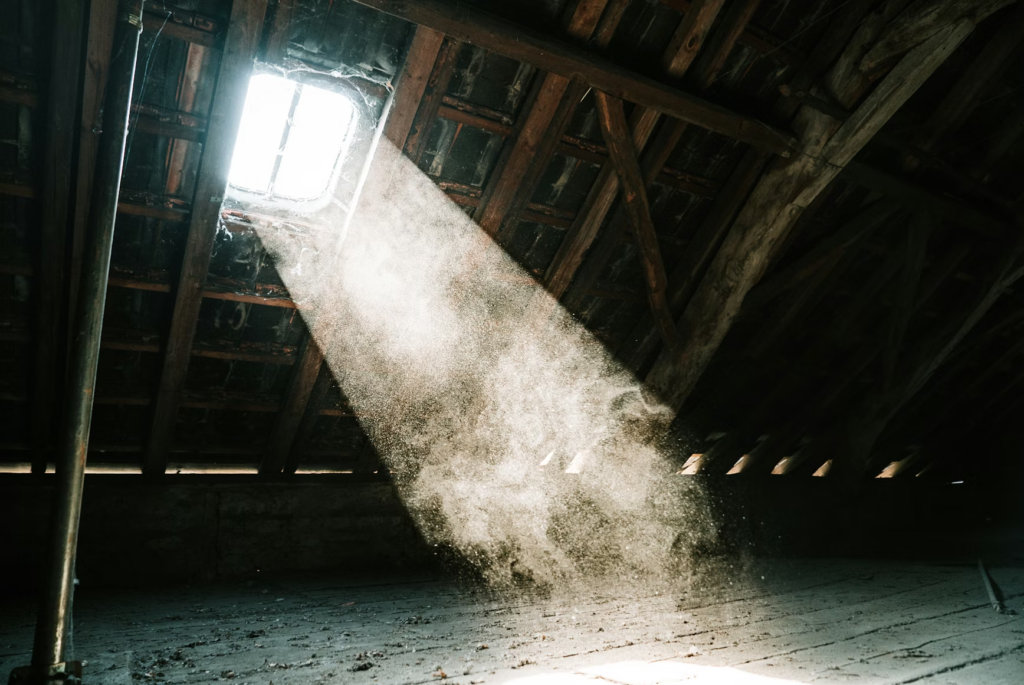
The Discovery in the Dust
I was up in the attic, looking for the box of vintage ornaments that somehow vanishes every December. It was one of those bitter afternoons where your fingers sting even indoors, the wind rattling the rafters.
I shoved aside a stack of old tax returns and reached for a high shelf. My hand brushed against an old, leather-bound yearbook—my senior year of college. As I pulled it down, something slipped out from the pages and fluttered to the floor, landing on my boot.
It was a slim, yellowed envelope.
I bent down to pick it up, groaning slightly as my knees popped. I turned it over.
My full name was written in that unmistakable, slanted handwriting.
“Mark.”
I swear I stopped breathing.
Her handwriting.
I sat down right there on the rough floorboards, surrounded by fake wreaths and broken ornaments. The attic dust danced in the sliver of light coming from the window. I stared at the postmark.
December 12, 1991.
The year Heather and I got married.
My chest tightened. I turned the envelope over. It had been opened. The seal was broken, then carefully taped shut again with clear tape that had yellowed and peeled with age.
A knot formed in my stomach, heavy and cold.
There was only one explanation.
Heather.
I don’t know exactly when she found it, or why she didn’t tell me. Perhaps she saw it in the mail pile the week before our wedding. Maybe she thought she was protecting our future. Maybe she was scared that if I read it, I wouldn’t meet her at the altar. Or perhaps she found it years later and didn’t know how to tell me she had hidden it.
It doesn’t matter now. She’s gone from my life, and anger is a useless emotion to carry for thirty years. But the envelope had been inside the yearbook, tucked on the back shelf of the attic. And that wasn’t a book I ever touched.
With shaking fingers, I pulled out the letter. The paper was brittle.
“Dearest Mark,” it began.
I felt tears prick my eyes before I even finished the first sentence.
“I only just found out. My father… he never gave me your letters. I found them in his desk when I went home for Thanksgiving. He told me you had called and said to let me go. That you didn’t want to be found. That you had met someone else.”
I felt sick. Physically sick. Her father had lied. He had looked at my simple life and decided his daughter deserved better, so he erased me.
I kept reading, my heart hammering against my ribs.
“They’ve been pushing me to marry Thomas, a family friend. You remember him? The banker. They say he’s stable. Reliable. The kind of man my father always wanted for me. I don’t know if I love him, Mark. I know he’s good on paper. But he isn’t you.”
She went on to describe her confusion, her hurt, and the ache of thinking I had abandoned her.
“I need to know if it was true. Did you stop loving me? Because I never stopped. If you tell me to come, I will come. I’ll leave the job. I’ll leave Chicago. But I need to know.”
Then came the sentence that burned itself into my memory, the ink slightly smudged as if she had been crying when she wrote it:
“If you don’t answer this, I’ll assume you chose the life you wanted—and I’ll stop waiting. I will marry Thomas.”
Her return address was at the bottom.
For a long time, I just sat there. The attic grew darker as the sun set. It felt like I was in my twenties again, heart in pieces, except this time I had the truth in my hands, and it was thirty years too late.
If I had received this letter in 1991, I would have driven through the night to get to her. I would have left everything. But Heather had intercepted it. And Sue, thinking I had ignored her final plea, had married Thomas.
The Digital Ghost
I climbed back downstairs, my knees aching, the letter clutched in my hand like a lifeline. I sat on the edge of my bed. The house was silent.
I pulled out my laptop and opened a browser.
My fingers hovered over the keys. I felt foolish. I was a fifty-nine-year-old man chasing a ghost. But I couldn’t unread those words.
I typed her name into the search bar. Susan Miller.
Millions of results.
I added her college. Then her hometown.
I didn’t expect to find anything. It had been decades. People change names, move away, delete their online footprints. But still, I searched.
Then, I saw it.
“Oh my God,” I whispered to the empty room.
Her name led me to a Facebook profile, only now she had a different last name. Susan Bennett.
The profile was mostly private, locked down tight. But there was a photo—her profile picture—updated just three months ago.
I clicked on it. My heart jumped into my throat.
Sue was smiling, standing on a mountain trail, wearing a hiking vest. A man about my age stood next to her.
My stomach dropped.
Her hair was streaked with gray now, tied back in a messy bun, but it was still her. Her eyes hadn’t changed. They were still that deep, thoughtful hazel. She still had the soft tilt of her head and the easy, gentle smile that used to calm me down when I was spinning out about crop yields.
I looked closer at the man beside her.
He was tall, balding, with a kind face. But he didn’t look like a husband. He wasn’t holding her hand. There was nothing romantic in the way they stood—just two people posing for a picture near a scenic overlook.
But honestly? It was hard to tell. They could have been married for twenty years. They could be siblings. They could be anything.
But it didn’t matter. She was real. She was alive. And she was just a click away.
I stared at the screen for a long time, the blue light illuminating my face in the dark room. What was I doing? She had a life. She had probably forgotten me, or worse, she remembered me as the guy who broke her heart by ignoring her most vulnerable letter.
I typed a message to her. “Hi Sue, it’s Mark.”
Deleted it. Too plain.
“Sue, I found a letter you wrote in 1991.”
Deleted that too. Too creepy. Too intense.
Everything sounded forced. Everything sounded too late.
Then, without overthinking, I did the only thing I could do. I clicked “Add Friend.”
The button turned gray. Request Sent.
I closed the laptop and pushed it away. I figured she might not even see it. Or if she did, maybe she’d ignore it. Or perhaps she wouldn’t even recognize my name after all these years. Mark from Ohio. A lifetime ago.
I went to the kitchen to make dinner, but I couldn’t eat. I paced the living room. I turned on the TV and didn’t watch it.
Less than five minutes later, my phone pinged.
I froze.
I picked it up.
Friend Request Accepted: Susan Bennett.
My heart lurched so hard I had to grab the counter for support.
Then came the message. Three little dots danced on the screen, indicating she was typing.
“Hi! Long time no see! What made you suddenly decide to add me after all these years?”
The tone was light. Friendly. Casual. It wasn’t the tone of a woman who was angry. It was the tone of an old friend.
I sat there stunned.
I tried to type, but gave up. My thumbs were clumsy. How do you explain thirty years of silence in a text box? How do you explain a stolen letter and a stolen life?
Then I remembered I could send a voice message.
I pressed the microphone icon. I cleared my throat.
“Hi, Sue. It’s… really me. Mark.” My voice sounded rougher than I remembered. “I found your letter—the one from 1991. I found it in an attic today. I never got it back then. I… I’m so sorry. I didn’t know. I’ve thought about you every Christmas since. I never stopped wondering what happened. I swear I tried. I wrote. I called your parents. I didn’t know they had lied to you. I didn’t know you thought I walked away.”
I stopped the recording before my voice cracked. I took a breath. I pressed record again.
“I never meant to disappear. I was waiting for you too. I would’ve waited forever if I’d known you were still out there wanting me. I just thought… you’d moved on. I thought you chose the city.”
I sent both messages.
Then I sat in the silence. The kind of silence that presses against your chest like a heavy hand.
She didn’t reply. Not for ten minutes. Not for an hour.
I watched the clock on the microwave change numbers. 8:00. 9:00. 10:00.
She didn’t reply that night.
I barely slept. I tossed and turned, wondering if I had just reopened an old wound and poured salt in it. Maybe she was happy. Maybe hearing my voice was a disruption she didn’t need.
The Morning After
The next morning, the winter sun was blinding against the frost on the windows. I checked my phone the moment I opened my eyes.
There was a message. It had come in at 3:00 AM.
“We need to meet.”
That was all she said. But that was all I needed.
I typed back instantly. “Yes. Just tell me when and where.”
She replied within seconds. She must have been awake too.
“I’m in Pittsburgh now. Where are you?”
Pittsburgh. That was just under four hours from me.
“I’m still in Ohio,” I wrote. “I can drive to you. Or we can meet in the middle.”
“There’s a café in Steubenville,” she wrote. “It’s halfway. Saturday? Noon?”
“I’ll be there,” I promised.
I put the phone down. My hands were trembling.
I called my kids. I had to tell someone. I didn’t want them to think I was chasing ghosts or losing my mind.
“Dad,” Jonah said, laughing on the other end of the line. “That’s literally the most romantic thing I’ve ever heard. You have to go. You have to.”
“It’s not a movie, Jonah,” I said, though it felt like one. “We’re old now. A lot has happened.”
Claire, ever the realist, added, “Just be careful, okay? People change. Thirty years is a long time. She might not be the person you remember.”
“Yeah,” I said, looking at the faded yearbook on my kitchen table. “But maybe we changed in ways that finally line up.”
The Café at the Crossroads
I drove that Saturday with the radio off. I needed to think. I rehearsed what I would say a thousand times, but every version sounded stupid.
The café was tucked away on a quiet street corner in Steubenville, brick-walled and smelling of roasted beans. I got there twenty minutes early. I sat at a table near the window so I could see her coming.
I checked my watch every thirty seconds.
At 11:55, a silver SUV pulled up.
The door opened.
And just like that, there she was.
She wore a navy peacoat and a cream-colored scarf. Her hair was pulled back, showing the silver streaks that I had seen in the photo. She looked older, yes. Life had etched lines around her eyes and mouth. But the way she walked—that confident, purposeful stride—was exactly the same.
She walked in. The bell above the door jingled.
She scanned the room. Her eyes locked on mine.
She smiled. It was warm and unguarded, and the years just… evaporated.
I stood up before I even realized I was moving. My legs felt like jelly.
“Hi,” I said.
“Hi, Mark,” she replied. Her voice was deeper, richer, but it hit the same chords in my chest.
We stood there for a second, just looking. Then we hugged.
It was awkward at first, a hesitation of strangers, but then she squeezed me tighter, and I squeezed back. It was like our bodies remembered something our minds hadn’t caught up to yet. The smell of her shampoo—vanilla and something floral—was different, but the feeling of her head against my shoulder was the homecoming I didn’t know I needed.
We sat down. I ordered black coffee. She ordered hers with cream and a hint of cinnamon—just like I remembered.
“I don’t even know where to start,” I said, staring at my hands wrapped around the mug.
She smiled, a little sad. “The letter, maybe.”
I reached into my jacket pocket and pulled out the envelope. I slid it across the table.
“I’m so sorry,” I said. “I never saw it. I think Heather, my ex-wife, found it before we got married. I found it in a yearbook upstairs, one I haven’t touched in years. I think she hid it. I don’t know why. Maybe she thought she was protecting something. Maybe she was scared.”
Sue picked up the envelope. She ran her thumb over her own handwriting. Her eyes filled with tears.
“I believe you,” she said softly. “My parents… they told me you wanted me to move on. That you had said not to contact you again. It wrecked me, Mark. I spent a year waiting for the phone to ring. And when you didn’t answer this letter, I thought… I thought you were a coward.”
“I called,” I insisted. “I begged them to make sure you got my letters. I never knew they never gave them to you.”
“They were trying to steer my life,” she said, wiping her eye. “They always liked Thomas. Said he had a future. And you… Well, they thought you were too much of a dreamer. Too tied to the dirt.”
She sipped her coffee, then looked out the window for a moment.
“I married him,” she added softly. “Thomas.”
“I figured,” I said. It hurt to hear, even now.
“We had a daughter. Emily. She’s twenty-five now. She’s wonderful.” Sue smiled, a proud mother’s smile. “But the marriage… it was hard. Thomas was a good man, but he wasn’t my person. We divorced after twelve years together. He wanted a wife who was content. I was always looking out the window.”
“I’m sorry,” I said.
“After that, I married again,” she went on, brutal in her honesty. “It lasted four years. He was kind, but I was tired of trying to fit a square peg in a round hole. So I stopped. I’ve been on my own for a decade now.”
I watched her, trying to see the years that had passed between us. The joys, the heartbreaks, the mundane Tuesdays.
“What about you?” she asked.
“I married Heather. We had Jonah and Claire. Good kids. The marriage… it worked until it didn’t. We were good partners, but we weren’t… connected. Not like this. We split almost twenty years ago.”
She nodded. “So we’ve both been walking around with these ghost lives.”
“Christmas was always the hardest,” I admitted. “That’s when I’d think about you the most. The lights. The snow. It all reminded me of sophomore year.”
“Me too,” she whispered. “I still have the ornament you gave me. The wooden cardinal. I put it on the back of the tree so no one would ask about it.”
There was a pause, long and heavy, but not uncomfortable. It was the silence of two people putting down a heavy load.
I reached across the table, fingers barely brushing hers.
“Who’s the man in your profile picture?” I finally asked, afraid of the answer.
She looked confused for a second, then she chuckled. The sound was like music.
“My cousin, Evan. We work together at the museum in Pittsburgh. He’s married to a wonderful man named Leo. They’ve been together for fifteen years.”
I laughed out loud, the tension in my shoulders melting all at once. I felt lightheaded.
“Well, I’m glad I asked,” I said.
“I was hoping you would.”
The Second Act
We sat in that café for four hours. We drank three pots of coffee. We ate stale muffins. We talked until the sun started to dip low in the sky.
We talked about everything. The careers we chose. The parents we lost. The children we raised. The scars we carried.
As we walked out to the parking lot, the air was crisp. It felt like snow.
“So,” Sue said, leaning against her car. “What now?”
I looked at her. I saw the twenty-year-old girl who dropped her pen. I saw the fifty-nine-year-old woman who had survived a lifetime without me.
“Sue… would you ever consider giving us another shot?” I asked. “Even now. Even at this age. Maybe especially now—because now we know what we want. And we know what it costs to lose it.”
She stared at me for a moment. Her eyes searched mine, looking for the boy she knew and the man I had become.
“I thought you’d never ask,” she said.
That’s how it started again. Not with fireworks, but with a quiet agreement in a parking lot.
She invited me to her house for Christmas Eve. I drove to Pittsburgh. I met her daughter, Emily, who looked at me with skepticism at first, then warmth when she saw how her mother looked at me.
Sue met my kids a few months later. Jonah gave her a bear hug. Claire asked her a million questions. Everyone got along better than I could have imagined.
This past year has felt like stepping back into a life I thought I’d lost—but with fresh eyes. Wiser ones. We aren’t the same people we were. We have aches and pains. We have set ways. We argue about what temperature the thermostat should be.
But we also have a depth of gratitude that young people just can’t understand.
We walk together now—literally. Every Saturday morning, we pick a new trail, bring coffee in thermoses, and walk side by side. We talk about the birds we see. We talk about retirement. We talk about nothing at all.
Sometimes she looks at me and says, “Can you believe we found each other again?”
And every time, I say, “I never stopped believing.”
This spring, we’re getting married.
We want a small ceremony. Just family and a few close friends. No big white dress, no tuxedo. She wants to wear blue. I’ll be in gray. We’ll stand in her backyard, under the old oak tree.
Because sometimes life doesn’t forget what we’re meant to finish. It just waits until we’re finally ready to hold it properly.
And this time, I’m not letting go.
Let us know what you think about this story on the Facebook video and “if you like this story share it with friends and family.”
