The windshield wipers were fighting a losing battle against the wet, heavy snow that defines December in the Pacific Northwest. Thwack, hiss. Thwack, hiss. It was a hypnotic rhythm, one that should have lulled me into a sense of holiday peace. Instead, my hands were gripping the steering wheel of my sedan tight enough to turn my knuckles the color of the ice forming on the asphalt.
I looked in the rearview mirror. Leo was back there, staring out at the passing pines, his breath fogging up the glass. He was wearing his favorite sweater, the one with the rocket ship knit into the chest. He looked small. Too small for seven. And certainly too small for the anxiety I felt radiating off him in waves.
“We’re almost there, buddy,” I said, forcing a brightness into my voice that didn’t reach my eyes.
He didn’t turn from the window. “Is Grandma going to be happy today?”
The question hit me like a physical blow. Not Is Grandma going to be nice? or Are we going to have fun? But Is she going to be happy? As if her happiness was a volatile weather system we had to navigate, and he was the tiny boat trying not to capsize.
“It’s Christmas,” I told him, and I told myself. “Everyone is happy on Christmas.”
I believed it. Or maybe I just needed to believe it. I needed to believe that the magic of the season, the carols playing on the radio, and the red-and-green veneer of the world could mask the cracks in the foundation of my family. I thought this year, finally, the performance would be enough.
We pulled up to the house in Silverwood. It was a picture-perfect suburban fortress: white siding, black shutters, a wreath the size of a tractor tire on the front door, and a lineup of SUVs in the driveway that looked like a dealership lot. My sister Carla’s car was already there, taking up two spots.
I took a deep breath, grabbed Leo’s hand, and walked up the steps. I didn’t know it then, but I was walking my son into the last heartbreak he would ever suffer at their hands.

The Silence of a Crowded Room
The inside of my mother’s house smelled like cinnamon brooms and expensive perfume—the scent of a woman who cares deeply about how things appear. The living room was a masterclass in holiday decor. A twelve-foot artificial spruce dominated the corner, laden with glass ornaments that probably cost more than my first car.
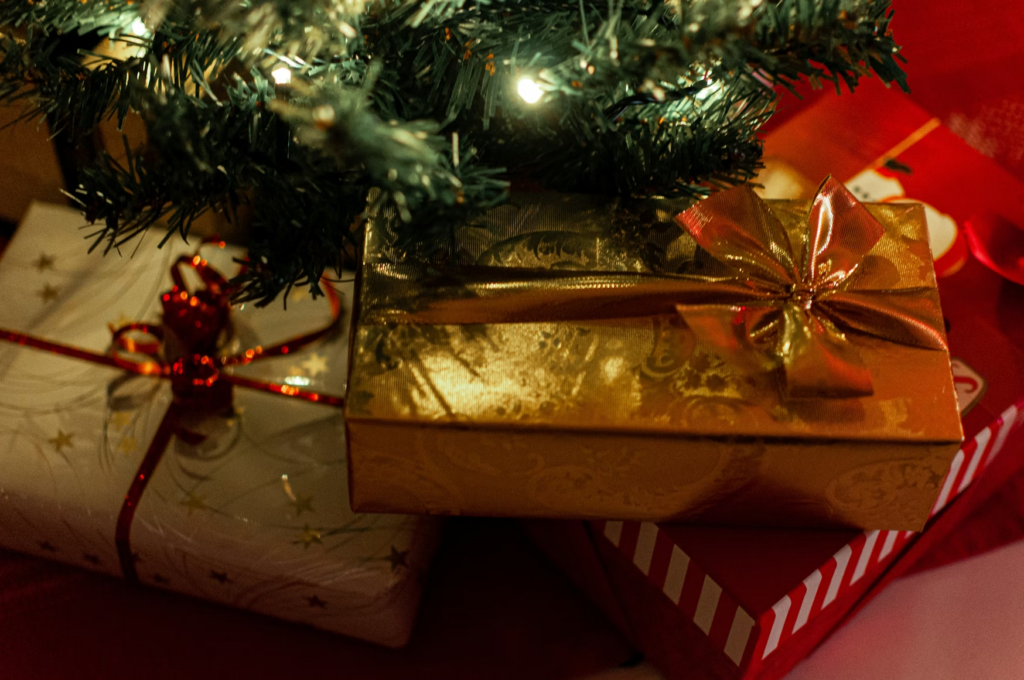
And beneath it? A mountain. A literal topographic feature made of shimmering foil, velvet ribbons, and oversized bows.
My sister Carla was on the beige sectional, wine glass in hand despite it being ten in the morning. Her husband, Neil, was already filming, his phone held horizontally to capture the cinematic glory of their children tearing into the hoard.
“Nora! You made it,” my mother, Diane, said. She didn’t move to hug me. She was too busy arranging the pile of gifts to ensure the lighting was optimal for social media. “Sit, sit. We’re just starting the big opening.”
We sat. Leo chose a spot on the carpet near the edge of the room, tucking his legs beneath him.
Then, the frenzy began.
It was a blur of tearing paper and shrieking voices. Carla’s kids—Kayla, Mason, and the toddler, Ruby—were like sharks in a feeding frenzy.
“An iPad! Oh my god, Mom, look!” Kayla screamed, holding the white box aloft like a trophy.
“Get a shot of that, Neil,” my mother directed, beaming. “Turn it so the light hits the logo.”
Mason ripped open a box containing a drone. Then a VR headset. Then a mountain bike that Neil had to wheel in from the garage because it wouldn’t fit under the tree.
Leo sat still. He clapped when his cousins opened their gifts. He smiled that polite, heartbreakingly gentle smile of a child who is trying to be good.
I watched the pile shrink.
I watched the wrapping paper drift across the floor like snowdrifts.
I watched my son’s eyes dart from the tree to his grandmother, waiting for his name.
Thirty minutes passed. The mountain was flattened. The floor was covered in loot worth thousands of dollars.
And Leo was still sitting with his hands in his lap. Empty.
My blood ran cold. I scanned the debris. Maybe it was hidden? Maybe there was a special envelope?
“Okay!” my mother clapped her hands, dusting off glitter. “Who’s ready for brunch? I made that quiche everyone likes.”
The silence that roared in my ears was deafening.
Leo looked at me. His lower lip wasn’t trembling—not yet. He was just confused. A deep, profound confusion that shattered me.
“Mom,” I said. My voice was quiet, but it cut through the room like a razor.
Diane turned, a mimosa in her hand. “What is it, Nora? You look pale.”
“Where is Leo’s present?”
The room stopped. Carla looked up from setting up Mason’s drone. Neil lowered his phone.
My mother blinked. She looked at the tree. She looked at Leo. And then, she let out a laugh—a nervous, fluttering sound.
“Oh! Oh my goodness,” she said, pressing a hand to her chest. “You know, with all the shopping for the grandkids… I must have just… slipped up. There were so many lists.”
She turned to Leo, offering him a smile that didn’t reach her eyes. “Grandma will get you something next time she goes to the store, okay, sport? Maybe a gift card.”
Carla snorted into her drink. “Honestly, Nora, don’t make a face. He has plenty of toys at home. It’s just a mix-up.”
“A mix-up,” I repeated. “There are thirty-six gifts in this room, Carla. I counted. And zero for him.”
“Well, I told you,” Carla said, her voice dropping to that venomous whisper she used when she wanted to be cruel without being loud, “that Mom feels closer to the kids she actually sees. Maybe if you visited more than once a month…”
“I work,” I said, my voice rising. “I work two jobs.”
“Mom,” Leo whispered.
I looked down. He wasn’t looking at them. He was looking at his hands.
“Did I do something bad?”
That was it. The tether that held me to this family, to this obligation, to this desperate need for their approval—it snapped. It didn’t fray. It didn’t stretch. It broke.
“Stand up, Leo,” I said.
“Nora, don’t be dramatic,” my mother snapped, her pleasant mask slipping. “We’re about to eat. You’re going to ruin Christmas over a simple mistake.”
“This wasn’t a mistake,” I said, zipping Leo’s coat up to his chin. “This was a choice.”
I took his hand. I walked him to the door.
“If you walk out that door,” my mother called out, her voice pitching high and sharp, “don’t expect me to come running after you. I am the grandmother. I deserve respect!”
I opened the door, letting the biting wind swirl into the overheated, perfumed room.
“You’re right, Mom,” I said, looking back at the woman who had given birth to me but had never learned how to love me. “You don’t have to run. Because we won’t be there.”
We walked out. I didn’t slam the door. I closed it softly. The click of the latch was the loudest sound I had ever heard.
The Drive Away form the Past
The car ride home was silent. Not the angry silence of a fight, but the heavy, suffocating silence of shock.
Leo stared out the window. I could see his reflection in the glass. He looked older than he had an hour ago.
We were halfway back to our small townhouse in Silver Pine when he finally spoke.
“Mom?”
“Yeah, baby?”
“Why does Grandma love them more?”
I pulled the car over. I couldn’t drive. I steered onto the shoulder of the highway, threw the hazard lights on, and turned in my seat to face him.
“Listen to me,” I said, unbuckling so I could reach back and grab his hands. “Look at me.”
He looked up, eyes swimming with tears he hadn’t shed yet.
“There is nothing wrong with you. You are brilliant. You are kind. You are funny. You are the best thing in my universe. What happened back there? That is broken. They are broken. Their love has holes in it, and it leaks out. That is not your fault.”
He sniffled. “She forgot me.”
“I know,” I whispered, my throat tightening. “But I never will. Do you hear me? I see you. I will always see you.”
He nodded, leaning his cheek against my hand.
We drove the rest of the way home. When we walked into our house, it was quiet. No tree. No lights. I hadn’t decorated much because we were supposed to be at Mom’s.
I went into the kitchen to make cocoa. My hands were shaking so hard I spilled the milk twice.
While the milk heated, I walked into my bedroom, opened my laptop, and logged into my bank. Then my email. Then my legal portal.
I didn’t scream. I didn’t throw things. I typed.
I drafted an email to my lawyer.
Subject: Immediate Changes to Estate Plan.
Body: Please remove Diane Ellington and Carla Winslow from all beneficiary listings effective immediately. All assets are to be held in trust for Leo Ellington.
I hit send.
Then I picked up my phone. 14 missed calls from “Mom.” 6 from “Carla.”
I blocked them. Both of them.
Then I went into the living room with two mugs of cocoa.
“Leo,” I said. “Get your coat back on.”
He looked up from the floor where he was pushing a toy car back and forth. “Where are we going?”
“To the hardware store.”
“Why?”
“Because,” I said, smiling for the first time that day, “your room needs to look like outer space, and we have painting to do.”
Painting Over the Hurt
We spent Christmas afternoon covered in Deep Galactic Blue paint.
We didn’t just paint the walls; we transformed them. We bought glow-in-the-dark stars, planets, and a moon lamp. We ate gas station pizza on the floor, listening to an audiobook about black holes.
For the first time in years, I saw Leo breathe. Really breathe.
Around 8 PM, he was lying on his back, staring up at the plastic constellations we had stuck to the ceiling.
“Mom?”
“Yeah?”
“This is better than the iPad.”
I squeezed his shoulder. “Yeah?”
“Yeah. Because we did it together.”
He rolled over and fell asleep right there on the drop cloth.
I went to the kitchen to clean up. On the counter, I saw a piece of paper Leo had been drawing on earlier. It was a crude drawing of the solar system.
At the center was a big yellow sun labeled “MOM.”
Orbiting it was a little Earth labeled “LEO.”
Pluto was way off in the corner, a tiny dot. It was labeled “GRANDMA.”
Underneath, in his shaky second-grade handwriting, he had written: Family is who stays in your orbit.
I taped it to the fridge. It was the only manifesto I needed.
The Assault of Paper
The peace didn’t last. The silence from Silverwood lasted exactly three days before the letters started coming.
Since I had blocked their numbers, they resorted to the postal service.
The first one was a greeting card. On the front, a cute kitten. Inside, a novel written in aggressive, slashing cursive.
“Nora, you are being cruel. You are using my grandson as a weapon. I made a mistake. Call me immediately.”
I put it in a shoebox I labeled “Documentation.”
A week later, a letter from Carla.
“You’re embarrassing the family. People are asking why you weren’t at New Year’s. Stop acting like a victim.”
Into the box.
Then, three months later, the tone shifted.
I received a certified letter from a law firm in downtown Seattle.
I opened it at the kitchen table while Leo was at school. The header was heavy, embossed. Petition for Grandparent Visitation Rights.
My mother was suing me.
She was claiming that I was an “unfit custodian” who was “alienating the child from his established familial support system.” She wanted court-mandated visitation every other weekend and two weeks in the summer.
My hands shook, but this time, it wasn’t from fear. It was from a cold, hard rage.
I called the number at the bottom of the page. Not her lawyer—mine.
“Marlene,” I said when she picked up. “We have a problem. And I need to go to war.”
The Courtroom of Truth
The hearing was set for September. The waiting period was agonizing. Leo didn’t know the specifics, but he felt the tension. He asked fewer questions, spent more time in his “space room.”
When the day came, I dressed in a charcoal suit. I dressed Leo in his Sunday best, though I hated that he had to be there. The judge insisted on speaking to him in chambers, but he had to be present.
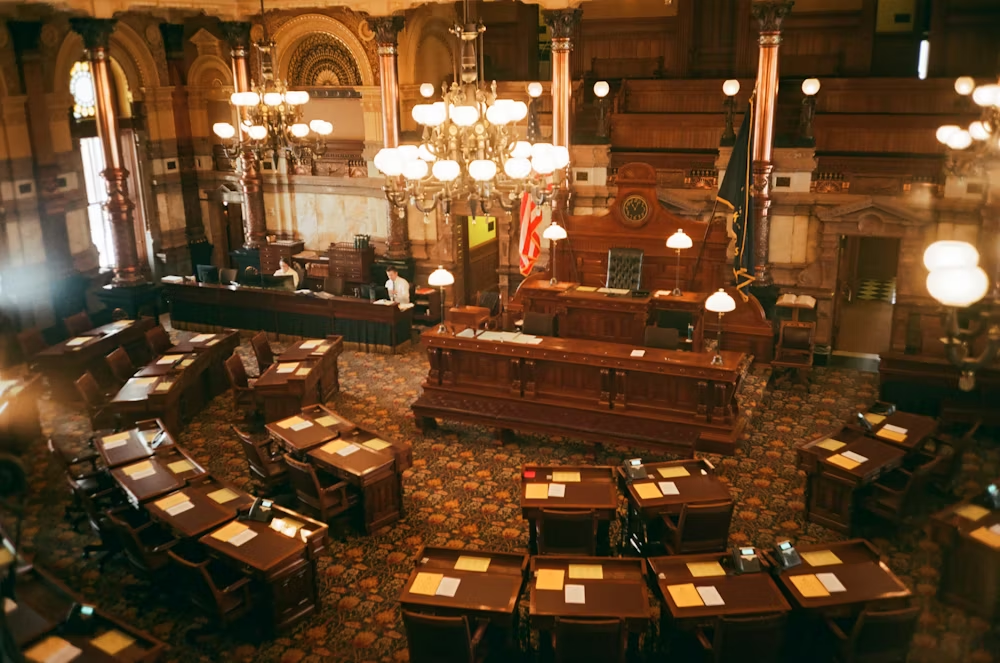
My mother was there, flanked by Carla and a lawyer who looked like he cost more than my house. She looked fragile. She was wearing a soft pink cardigan, clutching a handkerchief, playing the part of the grieving, excluded grandmother to perfection.
When she saw me, she made a move to approach, arms open.
“Nora, darling—”
I didn’t break stride. I walked past her to the defendant’s table and sat down.
The proceedings were brutal. Her lawyer painted a picture of a loving matriarch who had been cut off by a vindictive, unstable daughter over a “misunderstanding regarding gifts.”
“It is in the best interest of the child,” her lawyer argued, smoothing his silk tie, “to have access to his extended family and his heritage.”
Then, it was Marlene’s turn.
Marlene was sixty, wore thick glasses, and had a mind like a steel trap.
“Your Honor,” Marlene said, standing up. “We are not disputing that biology connects these people. We are disputing that there is a relationship to preserve. There is nothing to preserve because Ms. Ellington has never built a foundation.”
Marlene pulled out a flash drive.
“I would like to submit Exhibit A. A video taken by Mr. Neil Winslow, the petitioner’s son-in-law, on the morning in question.”
My mother stiffened.
The video played on the monitors. The sound was crisp. The laughter. The tearing paper. The pile of gifts.
And the camera panned. There, in the corner, was Leo. Sitting on his hands. Watching.
The video played for three minutes. In those three minutes, Leo was ignored completely.
Then, Marlene paused the frame on Leo’s face. The look of resignation was high-definition.
“Thirty-six gifts,” Marlene said. “Zero for the child in question. This is not a ‘mix-up.’ This is erasure.”
The judge, a stern woman named Justice Halloway, looked over her spectacles at my mother.
“Ms. Ellington,” the judge asked. “Can you tell me your grandson’s middle name?”
My mother stood up, looking confident. “Of course. It’s… Edward. After my father.”
“No,” I said softly from my table.
“Silence,” the judge said, though not unkindly. She looked back at my mother. “Is that your answer?”
“Yes,” my mother said.
“And his birthday?”
“July 4th,” my mother said, smiling. “He was a firecracker baby.”
The courtroom went silent.
Marlene handed a birth certificate to the bailiff.
The judge read it. Then she looked at my mother.
“Ms. Ellington, the child’s middle name is James. And his birthday is October 12th.”
My mother’s mouth opened and closed like a fish. “Well, I… I have so many grandchildren…”
“You have four,” the judge cut in. “Knowing the birth date of a child you claim to be vital to is the bare minimum requirement of a ‘vital relationship.’”
The judge took off her glasses.
“Petition denied. The court finds that forcing visitation would be detrimental to the child’s emotional well-being. Ms. Ellington, you are to cease all contact unless initiated by the mother.”
My mother collapsed into her chair, sobbing. But they weren’t tears of remorse. They were tears of embarrassment. She had lost the audience.
I walked out of that courtroom and took a deep breath of the damp Seattle air. It tasted like victory.
The Encounter at Target
We moved on. We healed. It wasn’t a straight line—there were nights Leo cried because he felt rejected, and nights I cried because I felt guilty. But we built a life.
A year later, we were in Target, in the school supply aisle. Leo was debating between a shark backpack and a galaxy backpack.
“Nora.”
I froze. It was Carla. She had her daughter, Ellie, with her.
“Hello, Carla,” I said, turning my body to shield Leo.
Ellie, who was ten now, looked at Leo. Then she burst into tears.
“Why do you hate Grandma?” Ellie screamed, her voice echoing off the linoleum. “Mommy says you made Grandma sick because you’re mean!”
Leo shrank back against the shelving unit.
Carla didn’t shush her daughter. she looked at me with a smug satisfaction. “See what you’ve done? You’ve traumatized everyone.”
I stepped forward. I didn’t yell. I lowered my voice to a terrifying calm.
“Ellie,” I said to the little girl. “I don’t hate Grandma. But Grandma didn’t treat Leo nicely. And in our family, we don’t let people treat us badly, even if we are related to them.”
I looked up at Carla. “And if you ever weaponize your child against mine in a public place again, I will file a harassment order so fast your head will spin. Move.”
Carla grabbed Ellie’s hand and practically ran to the checkout.
Leo looked at me, his eyes wide.
“You were scary, Mom.”
“Sometimes,” I said, smoothing his hair, “moms have to be scary to keep the monsters away.”
“Did I make Grandma sick?” he asked, his voice trembling.
“No,” I said firmly. “People get sick because of bodies, not because of boundaries. Never let them put that on you.”

A Life Built on Stars
Years slipped by like water.
Leo went to Space Camp in Alabama. I worked extra shifts to pay for it, and it was worth every penny to see the photos of him in a flight suit, grinning with a confidence that Silverwood had almost stolen from him.
He graduated middle school. Then high school. He grew into a young man who was kind, observant, and fiercely protective of his friends.
He never asked about them. They were like a dark planet that had drifted out of our solar system.
Then, the call came.
It was a Tuesday in November. I was making dinner. The phone rang, and the ID said “Aunt Lorraine”—my mother’s sister, the only one who had stayed in touch, quietly, over the years.
“Nora,” she said. “It’s your mother. She had a massive stroke this morning. She’s gone.”
I turned off the stove. I looked out the window at the rain.
“Okay,” I said.
“The funeral is Saturday,” Lorraine said. “Carla is organizing it.”
“Okay,” I repeated.
I hung up.
Leo walked in a moment later, tossing his college backpack on the table. He was studying astrophysics now.
“Who was that?” he asked, stealing a carrot from the cutting board.
“Aunt Lorraine. Grandma Diane died.”
Leo stopped chewing. He looked at me, searching my face for cues on how to react.
“How do you feel?” he asked.
“I feel…” I searched for the word. “Quiet. I feel quiet.”
“Are we going to the funeral?”
I looked at him. “Do you want to?”
He thought about it. He really thought about it.
“No,” he said finally. “I said goodbye to her when I was seven years old, Mom. In that living room. That was the end for me.”
“Then we aren’t going.”
The Final Burn
I didn’t go to the funeral. But a week later, Lorraine stopped by. She looked tired. She handed me a folded newspaper clipping.
“I thought you should see this before someone sends it to you,” she said.
It was the obituary.
Diane Ellington, beloved mother and grandmother, is survived by her daughter Carla Winslow, and her grandchildren Kayla, Mason, and Ruby.
There was no mention of me. No mention of Leo.
Even in death, she wanted to edit the narrative. She wanted to pretend we didn’t exist because our existence proved she was flawed.
Lorraine looked apologetic. “I tried to tell Carla…”
“It’s okay,” I said, and I meant it. “It’s perfect, actually. It’s the truth. We weren’t her survivors. We were the ones who escaped.”
That night, after Lorraine left, I went to the closet. I pulled out the shoebox labeled “Documentation.”
I took it to the backyard. I had a small fire pit where Leo and I used to roast marshmallows.
I lit a fire.
I took out the greeting card with the kitten. Toss. It curled into black ash.
I took out the letter from Carla calling me a victim. Toss.
I took out the legal petition for grandparents’ rights. Toss.
I watched the legal threats and the guilt trips and the manipulative birthdays cards turn into smoke. The smoke rose up, gray and thin, disappearing into the vast, star-filled sky.
Leo came out the back door. He was holding two mugs of cocoa.
He didn’t say anything. He just handed me one and stood next to me, watching the fire die down.
“You know,” he said, pointing up at the sky. “Some stars died millions of years ago, but their light is still traveling to us. We see them, but they aren’t really there.”
“Yeah?” I asked, leaning my head on his shoulder. He was taller than me now.
“Yeah. I think Grandma and that whole life… they’re like a dead star. We can still see the light sometimes, the memory of it, but the thing itself? It’s gone. It can’t burn us anymore.”
I looked at my son. The boy who had sat on a beige carpet with empty hands. The boy who had learned to paint his own universe.
“You’re right,” I said. “It’s just a ghost light.”
We kicked dirt over the embers, extinguishing the last of the heat. Then we turned back toward the house—our house, warm and bright and full of a love that didn’t require an invitation.
We went inside, and we closed the door.
Let us know what you think about this story on the Facebook video and “if you like this story share it with friends and family.”
