The humidity in our corner of southern Ohio was the kind that sat on your chest like a wet wool blanket, heavy with the scent of ozone and dying corn. It was late July 1998. The cicadas were screaming in the maple trees, a deafening electric buzz that rose and fell with the heat, and the air smelled of cut grass and impending thunderstorms. I was seven years old, a scrawny kid with knees permanently stained by grass and dirt, navigating the minefield of my own backyard.
To understand why the dog attacked me, you have to understand the silence of our house. It wasn’t a peaceful silence. It was the silence of a held breath, the kind that happens right before a dam breaks.
The first time Shadow ever frightened me was also the day he saved my life.
He was a remnant of a happier time, a massive black shepherd mix with eyes the color of burnt whiskey and a coat that felt like rough wire. My mother had brought him home as a puppy just months before the ovarian cancer took her. After she passed, Shadow became a ghost in our ranch-style house—quiet, watchful, moving from room to room as if looking for the woman who used to scratch him behind the ears. When my father, Richard, remarried two years later, Shadow retreated further. He spent his days under the back porch, watching the new regime with a stoic, unreadable gaze. He was an old soul in a dog’s body, and he knew things we didn’t.
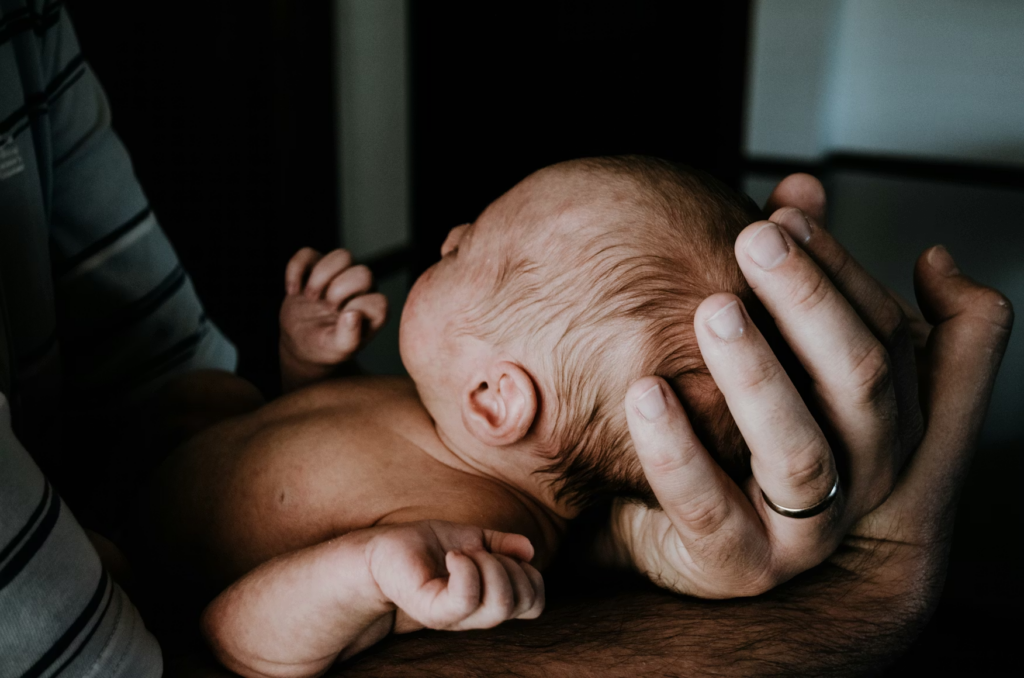
On that Tuesday, I was carrying Daniel, my ten-month-old half-brother, across the scraggly lawn. The grass was dying, yellowed by the relentless sun and my father’s lack of time to water it. Daniel was heavy, a dense weight of formula and baby fat, smelling of talcum powder and milk. I loved him. In a house that had become cold and sharp-edged, Daniel was soft. He was the only one who smiled when I walked into a room. He didn’t know I was the “problem child.” He just knew I was the one who made funny faces.
I was halfway to the back door when I heard the sound of claws tearing into the dry earth.

It wasn’t a playful trot. It was the heavy, rhythmic thud of a predator closing the distance. I turned, tightening my grip on Daniel, and saw Shadow. The old dog, who had never so much as snapped at a fly, was charging at me like a bolt of black lightning.
He didn’t growl. He didn’t bare his teeth in a snarl. There was no warning bark.
He just sprinted toward me faster than I’d ever seen a living thing move. He launched himself, not at my throat, not at my arm, but at my chest. His jaws clamped onto my shirt.
“Shadow!” I squealed, stumbling backward. The impact nearly knocked the wind out of me, but instinct made me lock my arms around the baby. “Stop! That hurts!”
But he refused to release me.
He dug his paws into the dirt, his muscles bunching under his black fur. He tugged, pulling at the cloth like he was trying to tear it away from my body. I looked down, terrified. His eyes weren’t angry. They were wide, frantic. Desperate. It was the look of a creature that knew something I didn’t.
“Shadow, NO!” a voice screamed from the patio. “Let him go!”
It was Linda. My stepmother.
She stood on the back step, a plastic mixing spoon in one hand, a dishtowel in the other. She was a woman of sharp angles and forced smiles, someone who had entered our lives with the efficiency of a demolition crew. She had called me useless more times than she had called me by my name. She was the woman who said I talked too much, ate too much, existed too much. She was the architect of my loneliness.
But she adored Daniel. She loved my infant brother with a fierceness that frightened me. Sometimes, I would watch her rocking him, cooing soft words I hadn’t heard since I was four, and I would try to remember what it felt like to be the center of someone’s world.
My father appeared behind her. Richard. He was covered in a fine layer of grey cement dust from the plant, exhaustion carved into his face like erosion in a canyon. He looked like a man sleepwalking through his own life, a man who had buried his grief under sixty-hour work weeks and cheap beer.
All three of them—the woman who barely tolerated me, the man I idolized even when he looked right through me, and the dog who had been my mother’s shadow—stared as the animal battled a piece of cloth like it was alive.
Then, the tension snapped.
“What is WRONG with him?!” my stepmother shrieked, her voice piercing the heavy air. “That stupid mutt is attacking my baby!”
“Shadow!” my dad barked, stepping off the porch, his heavy boots thudding on the wood. “Leave it! NOW!”
Shadow ignored him completely. It was as if he couldn’t hear them, or didn’t care. He shook his head violently, a terrier-like thrash, his teeth locked on the hem of my hand-me-down striped t-shirt.
Linda grabbed a broom leaning against the siding.
“If he touches Daniel—!”
She raised it high, her face twisted into a mask of pure venom. It was a look I had seen before, usually when my father wasn’t around, but never this open, never this raw.
Shadow flinched. He knew what the broom meant. But he didn’t let go. He growled, a low, rumbling sound that vibrated through the fabric and into my ribs. He pulled harder, his claws tearing furrows in the grass.
And suddenly, something shifted in Linda’s expression.
The rage suspended. It was replaced by a flash of confusion, followed by a dawning, horrific recognition. It was the look of a gambler realizing they’ve been caught counting cards.
“Wait,” she gasped, lowering the broom an inch. “He’s not trying to bite Danny. He’s going after the shirt. Richard, LOOK at the shirt.”
My father froze mid-step. He blinked, the cement dust on his eyelashes catching the light.
Then his eyes snapped to mine. For the first time in months, maybe years, he really saw me. He didn’t see the nuisance, or the extra mouth to feed, or the reminder of his dead wife. He saw his seven-year-old son. He saw the shaking in my arms, the terror on my sweat-streaked face, and the way Shadow’s teeth were clenched only around the cotton fabric.
“Keep holding your brother,” Dad said softly. His voice was different. Awake. “Don’t let go, Danny.”
I nodded, trembling so hard my teeth clicked together.
He stepped forward, moving slowly now. He grabbed Shadow’s leather collar with one rough, calloused hand and grabbed the shoulder of my shirt with the other.
“Easy, boy,” he whispered. “I’ve got it. I’ve got it.”
He pulled.
The fabric, already strained, gave way with a loud riiiip.
Shadow dropped the shredded piece instantly. He backed up, panting hard, his tongue lolling out. He didn’t look at me. He stared at the torn cloth lying on the grass like it was a venomous snake.
A breeze hit my chest, the shirt hanging open, flapping uselessly.
My father stared at what was stitched into the lining of the torn fabric.
The Secret Hidden in the Seams
The silence in the backyard was absolute. The cicadas seemed to pause. The distant hum of traffic on the highway vanished.
There, nestled in a crude pocket sewn into the inner hem of the shirt, was a small, dirty packet. It looked like industrial packaging, crinkled and ominous. The bold black letters stood out against the white foil:
SUPER POTENT RAT POISON – ONE DOSE IS FATAL
I heard the wind rustling the dry leaves of the maple tree. I heard the thudding of my own heartbeat in my ears, a whoosh-whoosh sound that made me dizzy.
“What… is that?” Linda whispered. Her voice was barely audible, thin and reedy.
Dad didn’t answer her. He knelt in the dirt, ignoring the stains on his work pants. His shaking hands reached out and pried the packet free from the loose stitching. He held it up to the sunlight, squinting as if hoping the words would change.
“Who…” His voice failed him. He swallowed hard and tried again, his voice cracking like dry wood. “Who put this in my son’s clothes?”
Shadow whined, a high-pitched, mournful sound. He nudged my leg with his wet nose, checking on me.
My father’s gaze snapped up. He didn’t look at the neighbors’ yard. He didn’t look at the street. He looked directly at my stepmother.
Her face drained of color, leaving her looking like a wax statue melting in the heat. Her eyes darted around the yard, looking for an exit that didn’t exist.
“I—I don’t know,” she stammered, taking a step back toward the safety of the kitchen. “Someone must want to hurt him—hurt us—maybe a neighbor—”
But everyone knew. Even at seven, I knew.
We knew who did the laundry. We knew who sorted the baskets on Sunday nights. We knew who laid out my clothes on the end of the bed every morning while complaining about how fast I outgrew them. We knew who sighed whenever she had to deal with me, treating my existence as an administrative error she was forced to correct.
Dad’s expression hardened. The exhaustion vanished, replaced by a cold, terrifying clarity.
“Call the police.”
Our neighbor, Mr. Greene, was standing by the chain-link fence. He had been talking to Dad about construction work just ten minutes ago. He stood there now, his mouth slightly open, a beer in one hand. He fumbled for his phone, dropping it once in the grass before snatching it up.
My stepmother started to shake. It wasn’t a subtle tremble; it was a violent vibration. “Richard, this is insane! I would NEVER—you can’t be serious! You’re going to embarrass us over a misunderstanding?”
Shadow growled.
It was a sound from the depths of his chest, low and threatening. He stepped between her and me. He turned his broad, black back to me, facing her, his hackles raised.
For the first time since my mother died, I felt protected.
Not by accident. Not as an afterthought. On purpose.
“Don’t move,” Dad said to her. He stood up, placing the packet carefully in his pocket. He walked over to me and took Daniel from my arms. He held the baby close, smelling his head, then put a heavy hand on my shoulder. “Danny, go stand by Mr. Greene. Do not come back over here until I say so.”
The Arrival of Authority and the Unraveling
The police arrived quickly. In a small rust-belt town like ours, a call about poisoning a child tends to cut through the noise of domestic disturbances and traffic stops. Two cruisers pulled up to the curb, their lights cutting through the afternoon haze, silent but authoritative.
Shadow sat pressed against my leg by the fence, calm and steady. He didn’t bark at the officers. He seemed to know they were the cavalry.
Officer Jenkins was a large man with a kind face and a mustache that drooped over his upper lip. He knew my dad from high school football. He knelt in front of me, ignoring the dirt on his uniform knees.
“Danny, isn’t it?” he asked softly. “Can you tell me what happened, son?”
I told him everything. I told him about carrying Daniel. I told him about Shadow running. I told him about the ripping sound. My voice shook, but I got the words out.
He listened carefully, nodding. Then he stood up and turned to my father.
“Richard, I need the shirt and the packet. We need to dust for prints. And we need to secure the scene.”
My stepmother gave a high, brittle laugh from the patio. It sounded like glass breaking.
“Prints?” she shrieked. “Of course my fingerprints will be on it! I do all the laundry! I washed that shirt yesterday! That proves nothing!”
Officer Jenkins looked at her. His eyes were cold. “Fair enough, Ma’am. But we check everything. And we check the sewing, too.”
They bagged the shirt. They bagged the packet.
Then, Officer Jenkins did something unexpected. He asked for the shirt back for a second. He put on latex gloves and turned the torn fabric inside out, examining the pocket where the poison had been hidden.
He found something else.
Tucked deep inside the fold, stitched so tight it was almost invisible, was a tiny square of folded paper. It had been sewn in with the packet, perhaps to pad it so it wouldn’t crinkle and make noise when I walked.
Officer Jenkins unfolded it with tweezers.
The backyard went silent again. Even Mr. Greene stopped chewing his lip.
Officer Jenkins’ jaw tightened. He looked at the paper, then at Linda, then at my father.
“Read it,” my father said. His voice was dead.
Officer Jenkins cleared his throat.
“It says: ‘If he dies, my son and I can finally live in peace.’”
The world stopped spinning.
I looked at my father. He looked like he had been struck by a sledgehammer. He looked at Linda, his wife, the mother of his second child.
She looked at no one. She stared at a crack in the cement patio, her lips moving silently.
Officer Jenkins’ partner, a younger female officer, stepped onto the patio and gently took Linda’s arm. “Ma’am, we need you to come with us.”
That was the moment Linda broke.
“It was an accident!” she sobbed, her legs giving out. The officer had to hold her up. “I just—I just wanted to scare him! I never meant for him to actually open it! It was just… he’s always there! He’s always watching me!”
“Scare him with poison?” my father choked out. The veins in his neck were bulging. “You SEWED it into his shirt, Linda. You sewed it right over his heart.”
“He wears my son’s clothes!” she screamed, thrashing against the handcuffs clicking onto her wrists. “He eats our food! He drains our money! We can’t afford two of them, Richard! We can’t!”
“He. Is. My. Son.” my father thundered. The sound terrified me more than the dog attack had. It was a roar of grief and fury that had been suppressed for three years.
The baby, still in Dad’s arms, began to wail.
Shadow barked sharply—once—silencing the yard.
Linda collapsed into the officer’s arms, weeping hysterically.
As they led her away, shuffling past the rose bushes she had planted, she looked back at me. Her eyes were red and swollen, stripped of the mask she wore for the neighbors.
“Did you hate me that much?” I asked. I was surprised by the sound of my own voice. It was small, but steady.
She opened her mouth to speak. She looked at me, then at the baby in my father’s arms. She closed her mouth.
Then she let the officers carry her to the cruiser.
The Quiet After the Storm
When the police cars pulled away, taking the flashing lights and the screaming woman with them, the silence that fell over our house was heavy. It wasn’t peaceful. It was the stunned silence of survivors standing in the wreckage of a bomb blast.
Mr. Greene went home, giving my dad a pat on the shoulder that communicated more than words could.
My father stood in the middle of the yard. He looked at the empty back door. He looked at the dying grass. Then he turned to me.
He walked over and knelt in the dirt. He placed Daniel gently on the grass beside us, then reached out and pulled me into his chest.
“I’m sorry, Danny,” he whispered into my hair. I felt his chest hitching. He was crying. My father, the man made of cement dust and silence, was weeping. “I should have known. I should have seen it. I should have SEEN you.”
I didn’t know what to do. I had spent years making myself small, trying not to be a burden. But now, held in his arms, I felt the walls I had built start to crumble.
“She didn’t like me,” I said simply.
“I know,” he sobbed. “I know, and I let it happen because I was too tired to fight it. I am so sorry.”
Shadow pushed his way into the hug. He was warm and solid, smelling of earth and dog. He licked the tears off my father’s face, then rested his heavy head on my shoulder.
I held on to both of them. For the first time in a long time, the house didn’t feel like a cage. It felt like a fortress.
The First Night Alone
That first night without Linda was surreal. The house felt massive, echoing with the absence of her constant clatter and criticism. My father didn’t know what to feed us. He opened the pantry and stared at the shelves as if they contained alien artifacts.
“Pizza?” he suggested, his voice hoarse. “Do we like pizza?”
“I like pepperoni,” I said quietly.
We sat on the living room floor, eating from a cardboard box. Dad held Daniel, feeding him bits of soft crust. Shadow lay between us, watching the front door. He wasn’t relaxing. He was on duty.
Later, after Daniel was asleep, I saw my father go into their bedroom. He didn’t sleep in the bed. He stripped the sheets—the floral ones Linda loved—and threw them in the trash. He slept on the couch that night, his arm hanging off the side so his hand could rest on Shadow’s back.
I lay in my bed, staring at the ceiling. For the first time in three years, I wasn’t afraid to close my eyes. I knew the dog was there. I knew my dad was awake.
In the middle of the night, I heard movement. I crept to the hallway door. My father was in the kitchen, going through the cupboards. He was pulling out boxes of cereal, bags of flour, jars of spices—everything Linda had bought. He was throwing it all into garbage bags.
He stopped when he saw me. He looked wild, his hair standing up, his eyes red.
“I can’t trust it,” he said, his voice shaking. “I don’t know what she touched. I don’t know what else she poisoned.”
I walked over to the corner of the pantry, reached behind a loose baseboard, and pulled out my stash. A half-eaten bag of pretzels. Three granola bars. A juice box.
“I have safe food,” I said, offering it to him.
My father looked at the pitiful hoard of a hungry child. He sank to the floor amidst the pile of discarded groceries and buried his face in his hands.

The Investigation Deepens
The days that followed were a blur of blue uniforms and social workers. Detective Miller, a sharp-eyed woman with a notebook that never seemed to run out of pages, came to the house.
She sat at our kitchen table, treating me with a seriousness that made me feel ten feet tall.
“Danny,” she said. “Did your shirt ever feel heavy before?”
I thought about it. “Sometimes,” I said. “Sometimes my clothes scratched. Or smelled funny. Like chemicals.”
She wrote that down.
The investigation revealed a horror show that we hadn’t anticipated. Linda hadn’t just snapped that afternoon. This was a campaign.
They found the search history on the family computer. “Symptoms of slow rat poison ingestion.” “How to make a child sick without doctors knowing.” “Life insurance policies for stepchildren.”
She had been planning it for months. The packet in the shirt wasn’t meant to kill me instantly. The forensics team found pinpricks in the foil. The plan was for the poison to leak out slowly, absorbing into my skin through sweat, or falling onto my hands before I ate my lunch. She wanted me to get sick. She wanted me to wither away. She wanted it to look like a tragedy, not a murder.
The discovery broke my father all over again.
“She was playing the long game,” Dad whispered to Mr. Greene over the fence one evening. “She was washing his clothes in death, Frank. Every single day.”
But the investigation also revealed the heroes.
Shadow.
Detective Miller told us that dogs have a sense of smell forty times greater than humans. Shadow had likely smelled the chemicals on me for weeks. That explained why he had been so clingy lately, why he nudged me when I was getting dressed, why he sometimes whined when I put on certain shirts.
On the day of the attack, the concentration of poison in that fresh packet must have been overwhelming to him. He didn’t see a boy; he saw a boy wrapped in fire. He didn’t attack me. He attacked the threat.
The Legal Battle and The Town’s Judgment
Linda went to court. It wasn’t a quiet affair. In a small town, a stepmother attempting to poison a child is the kind of scandal that lingers for decades. It was the talk of the diner, the church, the hardware store.
At first, the whispers were cruel. People speculated. “Maybe the boy was troubled.” “Maybe she snapped.” But as the evidence came out—the search history, the note, the customized sewing—the town turned on her with biblical fury.
Her defense lawyer tried to argue insanity. He tried to paint a picture of postpartum depression gone wrong, of financial stress breaking a fragile mind.
But the note damned her. The sewing damned her.
I didn’t have to testify in the courtroom, thankfully. My video deposition was enough. But Dad went every day. He wore his best suit, the one he usually saved for funerals. He sat in the front row, staring at the back of her head.
One afternoon, he came home early. He looked lighter, as if a physical weight had been lifted.
“She plead out,” he told me, sitting on the porch steps while I threw a tennis ball for Shadow. “Twenty years. No parole for at least fifteen.”
“Is she coming back?” I asked.
“Never,” he promised. “Not while I’m breathing.”
The Slow Road to Healing
With Linda gone, the house changed. It was messy. It was loud. It was ours.
Dad took a leave of absence from the cement plant. We lived off savings and casseroles brought by neighbors who suddenly remembered I existed.
But the biggest change wasn’t the legal battle. It was my father.
He learned how to be present. Really present.
He went through the house, cleaning out Linda’s things. He donated her clothes. He painted over the beige walls she loved with bright colors—blue for my room, yellow for the kitchen.
In the process, he found the evidence of my life that he had missed. He found the notes from school about me falling asleep in class, notes Linda had hidden from him. He found a half-erased drawing in the recycling bin where I had drawn a family picture—Dad, Linda, Daniel, and Shadow—and had drawn myself standing far away, almost off the page.
He framed that drawing. He hung it in his bedroom as a reminder.
He changed.
He started cooking dinner—terrible, burnt meals that we ate with laughter because they were made with love. He came to my soccer games. He asked me about my day and actually waited for the answer.
And Shadow? Shadow never left my side.
He became my constant shadow, true to his name. He slept at the foot of my bed. He walked me to the bus stop and waited there until the bus disappeared.
When the rumors at school crushed me—when kids whispered that I was the “poison boy” or asked if my stepmom was a witch—I would come home and lie on the living room floor. Shadow would come over, his claws clicking on the hardwood, and place his heavy head on my chest. He would breathe with me, his steady rhythm calming my racing heart.
“I’m alive because of you,” I’d whisper to him, burying my face in his fur.
His tail would thump against the floor. Thump. Thump. Thump.
The Brother I Chose to Love
The hardest part, strangely, was Daniel.
As he grew from a baby into a toddler, he looked like her. He had Linda’s nose. He had her chin. Sometimes, when he threw a tantrum, I would see a flash of her expression on his face, and my blood would run cold.
There were nights I lay awake wondering if he would turn out like her. If the “bad blood” was real.
But then Daniel would waddle into my room, dragging his blanket, and ask for “Danny” to read him a story. He followed me around like a duckling. He fed Shadow treats under the table.
One evening, when Daniel was four, he found an old photo of Linda in a box in the garage.
“Who’s this lady?” he asked.
My dad froze. I froze.
“That’s your mother,” Dad said, his voice tight.
“Where is she?”
“She’s in a timeout,” Daniel said, nodding sagely. “A big timeout.”
“Yeah,” I said, kneeling down to look him in the eye. “A really big timeout. Because she wasn’t nice.”
“I’m nice,” Daniel said. “And Danny is nice. And Shadow is nice.”
“Yes,” I said, hugging him. “We are.”
We made a choice, my dad and I, not to blame the boy for the sins of the mother. We raised him with love. We raised him to be gentle. And he was. He was the sweetest kid I ever knew.

The Long Goodbye
Shadow lived until I was sixteen.
He grew grey around the muzzle. His hips gave out, and he moved slower and slower. But his eyes never lost that intelligence, that deep, soulful watchfulness.
The last year was hard. I had to carry him up the porch steps. We bought him an orthopedic bed. Dad cooked him steak for dinner on Sundays.
When the end came, it was peaceful. It was a Saturday in autumn. The air was crisp, smelling of fallen leaves—the opposite of that humid, suffocating day years ago.
Shadow couldn’t stand up. He looked at me, gave a soft whine, and thumped his tail once.
The vet came to the house. Dad held Shadow’s head. I held his paw. Daniel sat by his flank, crying softly.
“It’s okay, boy,” Dad whispered, tears streaming down his face. “You did good. You can rest now. I’ve got them. I promise, I’ve got them.”
When he took his last breath, the house felt empty in a way it never had before. The guardian was gone.
We buried him under the maple tree in the backyard, the same tree that had witnessed his heroism.
My little brother, Daniel, now nine years old, had made a wooden sign in his woodshop class. He had carved the letters carefully, painting them black.
He hammered it into the earth at the head of the grave.
SHADOW The Dog Who Saved a Life
Neighbors came. Mr. Greene, now old and using a cane, brought a hotdish. Officer Jenkins, now retired, stopped by to shake my hand.
No one said, “It was just a dog.”
They knew better.
They stood around the mound of earth and told stories. But they didn’t talk about the poison. They didn’t talk about the trial or the scandal or the woman in prison.
They talked about the moment a dog tore a shirt to save a child.
They talked about how he knew. How he sensed the malice that humans were too blind to see. How he risked the wrath of the people who fed him to protect the boy who loved him.
I stood there, looking at my father and my brother. We were a family. Scarred, stitched back together, but whole.
I realized then that Shadow hadn’t just saved me from the poison. He had saved us all. He had broken the spell of silence in our house. He had forced the truth into the light. He had given my father back his son, and me back my father.
He taught us that love isn’t passive. Love is action. Love is tearing the shirt off someone’s back if you know it’s killing them.
Epilogue: The Shirt
A few years ago, I was helping my dad clean out the attic. He was getting ready to downsize, moving into a condo now that Daniel was in college and I was married.
In a dusty box marked “Legal,” I found the evidence bag.
The police had returned the shirt years ago, after the trial concluded. I don’t know why Dad kept it.
I pulled it out. It was a cheap, striped polo shirt, faded and small. The rip was still there, a jagged tear through the shoulder.
I touched the fabric. It felt harmless now. Just cotton and polyester.
“You found it,” Dad said, appearing behind me.
“Yeah.”
“I kept it,” he said, looking at the shirt. “To remind me.”
“Of her?”
“No,” he said. “To remind me that miracles happen in dirty backyards. And to remind me to listen.”
He took the shirt from my hand and tossed it into the trash bag.
“We don’t need it anymore,” he said. “We survived.”
We walked out of the attic together, leaving the past in the dust where it belonged. Downstairs, my own dog—a black shepherd mix I’d rescued from the shelter—was waiting. He thumped his tail when he saw me.
Sometimes animals notice what humans pretend not to. We get wrapped up in our jobs, our stress, our politeness. We ignore the gut feelings because we don’t want to cause a scene.
But a dog doesn’t care about politeness. A dog doesn’t care about causing a scene. A dog cares about the pack.
Shadow acted first. He saw the danger, and he didn’t hesitate.
The rest of us are still learning to follow his lead.
What do you think about this story? Let us know in the comments on the Facebook video! If you like this story, share it with friends and family to help spread the word that sometimes, our pets are the best guardians we have.
