Donald Trump, the 45th president of the United States and a figure who continues to dominate American political discourse, has a long history of contentious relationships with the press.
While his criticism of journalists spans decades, his recent remarks have drawn significant attention because of their focus on female reporters.
Over the past few months, Trump’s verbal assaults have intensified, sparking debates about misogyny, journalistic freedom, and the boundaries of presidential decorum.
One of the reporters targeted in this series of attacks has publicly pushed back, bringing renewed scrutiny to the president’s conduct toward women in the media.
The Context: Trump and the Media
Trump’s contentious relationship with the press is well-documented.
Throughout his political career, he has frequently labeled unfavorable coverage as “fake news,” a term that has become closely associated with his approach to media criticism.
Critics argue that his confrontational style has undermined public trust in journalism, while supporters claim that he is simply holding the media accountable.
However, the escalation in attacks specifically targeting female reporters represents a notable shift in the tenor of his rhetoric.
Historically, the idea of a U.S. president publicly insulting a journalist would have been widely condemned and considered a national scandal.
Yet, under Trump’s tenure and continuing into his post-presidency activities, such behavior has increasingly been normalized.
The president has called reporters names ranging from “stupid” to “nasty,” and has even used ableist and derogatory terms against elected officials.
While the White House insists that these remarks have “nothing to do with gender,” the pattern of targeting women has raised alarm among media watchdogs and advocacy groups.
Recent Escalation: Verbal Attacks on Female Reporters
In November, the president sparked outrage when he told a Bloomberg White House correspondent to “quiet, piggy” during a press encounter.
The journalist’s question, relating to the Epstein files, was one Trump clearly preferred not to answer.
The remark drew condemnation from press organizations and civil rights advocates, who argued that such language was both inappropriate and degrading.
The attacks did not stop there. Shortly afterward, Trump directed a series of insults at a female CNN reporter, calling her “nasty” and “stupid.”
These comments, made in a public setting, quickly circulated across social media platforms, reigniting discussions about the president’s treatment of female journalists.
Critics argued that the comments reflected a broader trend of using gendered insults to demean women in positions of authority, while supporters claimed the criticism was aimed solely at the reporters’ questions or coverage.
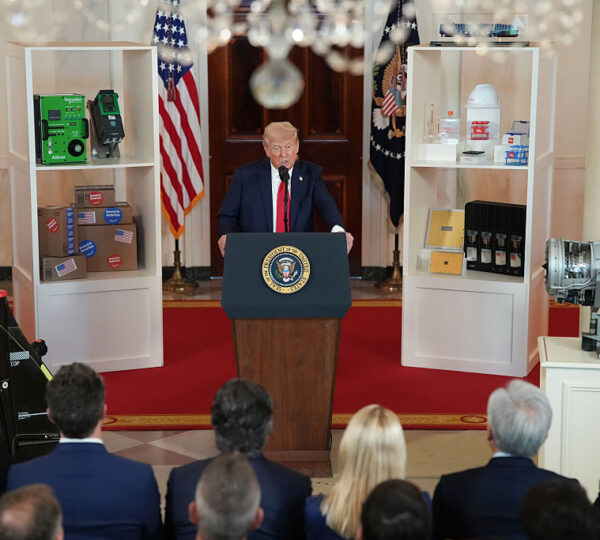
Thanksgiving week saw further examples of the president’s confrontational style.
Through posts on his social media platform, Truth Social, Trump attacked political rivals and public figures using language that many considered discriminatory.
He referred to Minnesota Governor Tim Walz using an ableist slur and targeted Representative Ilhan Omar with an Islamophobic remark, describing her as “the worst ‘Congressman/woman’ in our Country… always wrapped in her swaddling hijab.”
These statements illustrate a broader pattern of using personal attacks as a political strategy, often directed at individuals who challenge him or question his actions.
The Kaitlan Collins Incident
Perhaps the most widely discussed recent incident involved CNN’s Kaitlan Collins, the network’s chief White House correspondent.
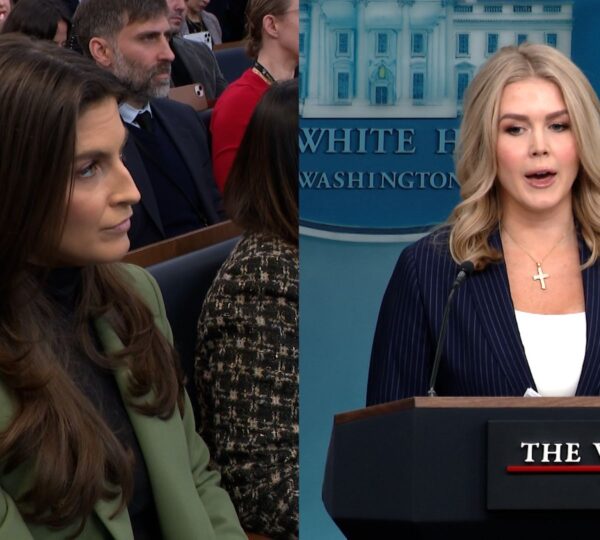
During a press conference, Collins asked Trump questions about renovations at the White House, including a new ballroom the president claimed was privately funded.
Rather than respond directly, Trump snapped at Collins, asking: “Are you stupid? Are you a stupid person?”
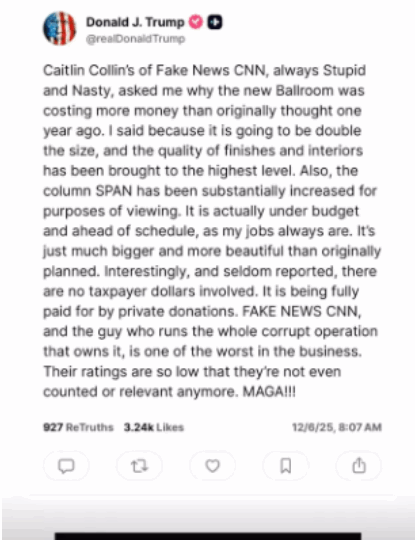
Later, Trump took to Truth Social to further criticize Collins, misspelling her name and writing: “Caitlin Collin’s of Fake News CNN, always Stupid and Nasty…”
He also defended the renovations, claiming the project was “under budget and ahead of schedule,” “much bigger and more beautiful than originally planned,” and “fully paid for by private donations,” all while continuing to rail against what he termed “FAKE NEWS CNN.”
CNN responded swiftly to the president’s attacks, defending their journalist: “Kaitlan Collins is an exceptional journalist… audiences around the world know they can trust.”
Collins herself also posted a measured correction on Instagram, pointing out that her question had been about Venezuela, referencing a deadly bombing off the Venezuelan coast that killed more than 80 people.
The incident, widely condemned internationally, raised questions about compliance with international law and the ethics of military action.
The Pentagon maintained that their operations were lawful under both U.S. and international law.
Attacks on Other Media Outlets
Trump’s criticism has not been limited to individual reporters. After The New York Times published a report suggesting that the president was showing “signs of fatigue” and facing “the realities of aging in office,” Trump fired back on social media:
“The Creeps at the Failing New York Times are at it again… I have never worked so hard in my life.”
He added that while “there will be a day where my energy will run out,” recent medical tests indicate “that won’t be anytime soon.”
The Times stood by its reporting. Charlie Stadtlander, a spokesperson for the newspaper, stated: “Name-calling and personal insults don’t change that.
Our journalists will not hesitate to cover this administration.”
The exchange highlights a recurring tension between the Trump administration and major news organizations, with personal attacks often overshadowing substantive debate over policy or governance.
Gendered Criticism and the White House Response
While Trump’s attacks have predominantly targeted female reporters in recent weeks, the White House maintains that the president’s comments “have nothing to do with gender.”
Spokeswoman Abigail Jackson told The Independent: “President Trump has never been politically correct, never holds back, and in large part, the American people re-elected him for his transparency.
This has nothing to do with gender – it has everything to do with the fact that the President’s and the public’s trust in the media is at all-time lows.”
Critics, however, argue that dismissing the gendered aspect of these attacks ignores a longstanding issue in journalism and politics.
Research indicates that women in media often face disproportionate harassment, including sexist remarks and threats, compared with their male counterparts.
This has broader implications for press freedom, public discourse, and the safety of journalists.
Historical Perspective and Comparisons
Trump’s approach represents a stark departure from historical norms. While presidents have occasionally criticized the press, few have done so in such a personal, public, and frequent manner.
Comparing current events to previous administrations highlights the evolving nature of political communication, particularly in the age of social media.
Platforms like Truth Social and Twitter allow direct, unfiltered communication between the president and the public, bypassing traditional journalistic scrutiny.
While this offers immediacy and transparency, it also amplifies insults and rhetoric that might previously have been mediated through official channels.
Broader Implications for Journalism
The recent escalation in Trump’s attacks has raised important questions about the role of journalists in holding leaders accountable.
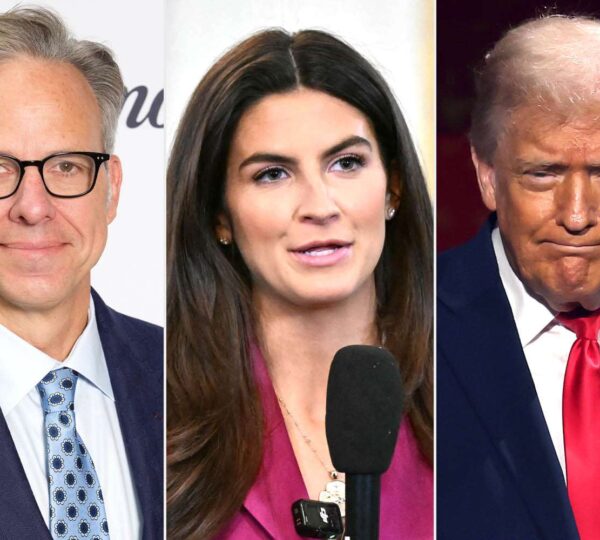
Insults, name-calling, and public disparagement can intimidate reporters, potentially chilling investigative reporting.
Organizations such as the Committee to Protect Journalists and Reporters Without Borders have expressed concern about trends that undermine press freedom, particularly when state leaders engage in public attacks.
Despite these challenges, many journalists have remained steadfast in their commitment to objective reporting. Kaitlan Collins’ measured response to Trump’s attack serves as an example of professionalism in the face of hostility.
Similarly, news organizations continue to publish investigative pieces, hold press conferences, and challenge misleading narratives, reflecting a resilience that underscores the importance of a free press in democratic societies.
Conclusion
Donald Trump’s recent pattern of attacking female reporters marks a concerning trend in American political discourse.
From calling journalists “stupid” and “nasty” to targeting elected officials and media outlets with derogatory language, his approach has intensified in recent months, drawing widespread condemnation.
While the White House asserts that these attacks are not gendered, the preponderance of female journalists as targets raises important questions about sexism, media freedom, and presidential conduct.
Journalists like Kaitlan Collins exemplify the courage and professionalism required to navigate these challenging dynamics.
Meanwhile, major news outlets continue to defend their reporters and uphold journalistic standards, emphasizing that personal attacks will not deter investigative reporting.
As this pattern continues to unfold, the broader implications for American democracy, media accountability, and public trust in institutions remain significant.
In a climate where insults and personal attacks have become normalized, the resilience of journalists, the vigilance of media organizations, and the scrutiny of the public play a vital role in maintaining the integrity of the press and the principles of free expression.
Donald Trump’s engagement with the media, particularly female reporters, will remain a defining feature of his political persona, offering both cautionary lessons and ongoing debates about the intersection of power, gender, and press freedom in the 21st century.
Donald Trump, the 45th president of the United States and a figure who continues to dominate American political discourse, has a long history of contentious relationships with the press.
While his criticism of journalists spans decades, his recent remarks have drawn significant attention because of their focus on female reporters.
Over the past few months, Trump’s verbal assaults have intensified, sparking debates about misogyny, journalistic freedom, and the boundaries of presidential decorum.
One of the reporters targeted in this series of attacks has publicly pushed back, bringing renewed scrutiny to the president’s conduct toward women in the media.
The Context: Trump and the Media
Trump’s contentious relationship with the press is well-documented.
Throughout his political career, he has frequently labeled unfavorable coverage as “fake news,” a term that has become closely associated with his approach to media criticism.
Critics argue that his confrontational style has undermined public trust in journalism, while supporters claim that he is simply holding the media accountable.
However, the escalation in attacks specifically targeting female reporters represents a notable shift in the tenor of his rhetoric.
Historically, the idea of a U.S. president publicly insulting a journalist would have been widely condemned and considered a national scandal.
Yet, under Trump’s tenure and continuing into his post-presidency activities, such behavior has increasingly been normalized.
The president has called reporters names ranging from “stupid” to “nasty,” and has even used ableist and derogatory terms against elected officials.
While the White House insists that these remarks have “nothing to do with gender,” the pattern of targeting women has raised alarm among media watchdogs and advocacy groups.
Recent Escalation: Verbal Attacks on Female Reporters
In November, the president sparked outrage when he told a Bloomberg White House correspondent to “quiet, piggy” during a press encounter.
The journalist’s question, relating to the Epstein files, was one Trump clearly preferred not to answer.
The remark drew condemnation from press organizations and civil rights advocates, who argued that such language was both inappropriate and degrading.
The attacks did not stop there. Shortly afterward, Trump directed a series of insults at a female CNN reporter, calling her “nasty” and “stupid.”
These comments, made in a public setting, quickly circulated across social media platforms, reigniting discussions about the president’s treatment of female journalists.
Critics argued that the comments reflected a broader trend of using gendered insults to demean women in positions of authority, while supporters claimed the criticism was aimed solely at the reporters’ questions or coverage.
Thanksgiving week saw further examples of the president’s confrontational style.
Through posts on his social media platform, Truth Social, Trump attacked political rivals and public figures using language that many considered discriminatory.
He referred to Minnesota Governor Tim Walz using an ableist slur and targeted Representative Ilhan Omar with an Islamophobic remark, describing her as “the worst ‘Congressman/woman’ in our Country… always wrapped in her swaddling hijab.”
These statements illustrate a broader pattern of using personal attacks as a political strategy, often directed at individuals who challenge him or question his actions.
The Kaitlan Collins Incident
Perhaps the most widely discussed recent incident involved CNN’s Kaitlan Collins, the network’s chief White House correspondent.
During a press conference, Collins asked Trump questions about renovations at the White House, including a new ballroom the president claimed was privately funded.
Rather than respond directly, Trump snapped at Collins, asking: “Are you stupid? Are you a stupid person?”
Later, Trump took to Truth Social to further criticize Collins, misspelling her name and writing: “Caitlin Collin’s of Fake News CNN, always Stupid and Nasty…”
He also defended the renovations, claiming the project was “under budget and ahead of schedule,” “much bigger and more beautiful than originally planned,” and “fully paid for by private donations,” all while continuing to rail against what he termed “FAKE NEWS CNN.”
CNN responded swiftly to the president’s attacks, defending their journalist: “Kaitlan Collins is an exceptional journalist… audiences around the world know they can trust.”
Collins herself also posted a measured correction on Instagram, pointing out that her question had been about Venezuela, referencing a deadly bombing off the Venezuelan coast that killed more than 80 people.
The incident, widely condemned internationally, raised questions about compliance with international law and the ethics of military action.
The Pentagon maintained that their operations were lawful under both U.S. and international law.
Attacks on Other Media Outlets
Trump’s criticism has not been limited to individual reporters. After The New York Times published a report suggesting that the president was showing “signs of fatigue” and facing “the realities of aging in office,” Trump fired back on social media:
“The Creeps at the Failing New York Times are at it again… I have never worked so hard in my life.”
He added that while “there will be a day where my energy will run out,” recent medical tests indicate “that won’t be anytime soon.”
The Times stood by its reporting. Charlie Stadtlander, a spokesperson for the newspaper, stated: “Name-calling and personal insults don’t change that.
Our journalists will not hesitate to cover this administration.”
The exchange highlights a recurring tension between the Trump administration and major news organizations, with personal attacks often overshadowing substantive debate over policy or governance.
Gendered Criticism and the White House Response
While Trump’s attacks have predominantly targeted female reporters in recent weeks, the White House maintains that the president’s comments “have nothing to do with gender.”
Spokeswoman Abigail Jackson told The Independent: “President Trump has never been politically correct, never holds back, and in large part, the American people re-elected him for his transparency.
This has nothing to do with gender – it has everything to do with the fact that the President’s and the public’s trust in the media is at all-time lows.”
Critics, however, argue that dismissing the gendered aspect of these attacks ignores a longstanding issue in journalism and politics.
Research indicates that women in media often face disproportionate harassment, including sexist remarks and threats, compared with their male counterparts.
This has broader implications for press freedom, public discourse, and the safety of journalists.
Historical Perspective and Comparisons
Trump’s approach represents a stark departure from historical norms. While presidents have occasionally criticized the press, few have done so in such a personal, public, and frequent manner.
Comparing current events to previous administrations highlights the evolving nature of political communication, particularly in the age of social media.
Platforms like Truth Social and Twitter allow direct, unfiltered communication between the president and the public, bypassing traditional journalistic scrutiny.
While this offers immediacy and transparency, it also amplifies insults and rhetoric that might previously have been mediated through official channels.
Broader Implications for Journalism
The recent escalation in Trump’s attacks has raised important questions about the role of journalists in holding leaders accountable.
Insults, name-calling, and public disparagement can intimidate reporters, potentially chilling investigative reporting.
Organizations such as the Committee to Protect Journalists and Reporters Without Borders have expressed concern about trends that undermine press freedom, particularly when state leaders engage in public attacks.
Despite these challenges, many journalists have remained steadfast in their commitment to objective reporting. Kaitlan Collins’ measured response to Trump’s attack serves as an example of professionalism in the face of hostility.
Similarly, news organizations continue to publish investigative pieces, hold press conferences, and challenge misleading narratives, reflecting a resilience that underscores the importance of a free press in democratic societies.
Conclusion
Donald Trump’s recent pattern of attacking female reporters marks a concerning trend in American political discourse.
From calling journalists “stupid” and “nasty” to targeting elected officials and media outlets with derogatory language, his approach has intensified in recent months, drawing widespread condemnation.
While the White House asserts that these attacks are not gendered, the preponderance of female journalists as targets raises important questions about sexism, media freedom, and presidential conduct.
Journalists like Kaitlan Collins exemplify the courage and professionalism required to navigate these challenging dynamics.
Meanwhile, major news outlets continue to defend their reporters and uphold journalistic standards, emphasizing that personal attacks will not deter investigative reporting.
As this pattern continues to unfold, the broader implications for American democracy, media accountability, and public trust in institutions remain significant.
In a climate where insults and personal attacks have become normalized, the resilience of journalists, the vigilance of media organizations, and the scrutiny of the public play a vital role in maintaining the integrity of the press and the principles of free expression.
Donald Trump’s engagement with the media, particularly female reporters, will remain a defining feature of his political persona, offering both cautionary lessons and ongoing debates about the intersection of power, gender, and press freedom in the 21st century.
