The asphalt of Route 27 shimmered under the mid-July sun, creating a mirage that made the horizon look like it was melting into a pool of mercury. It was the kind of heat that sat heavy in your lungs, thick with the scent of ozone, exhaust, and drying hay. For Ryder Blake, the heat was a comfort. It was a physical weight that distracted him from the invisible one he carried in his chest every single day.
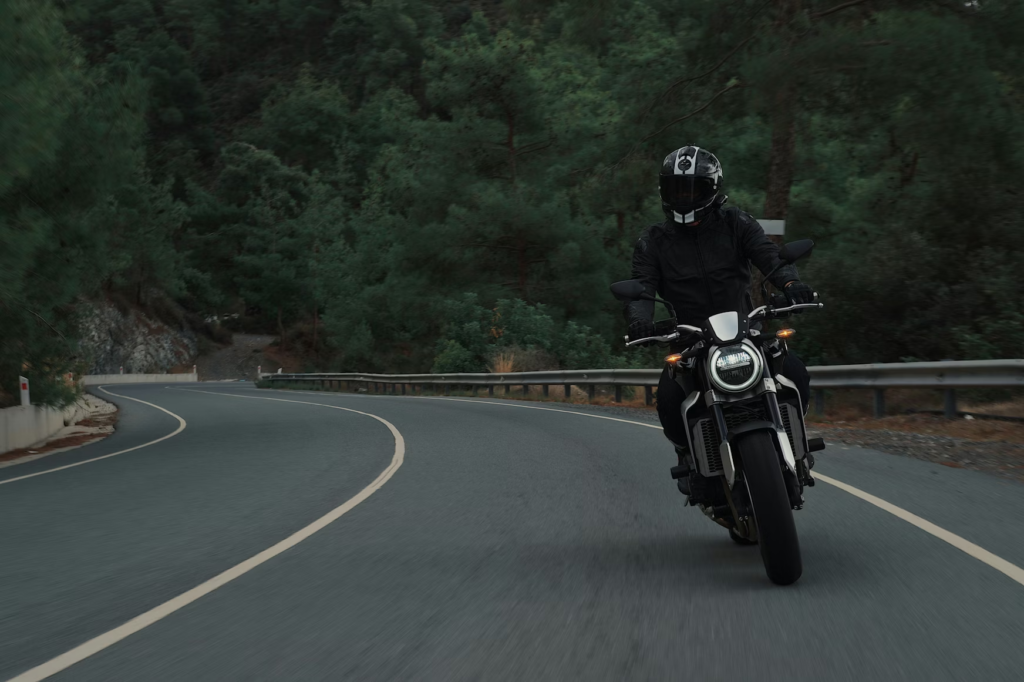
He throttled the grip of his customized Harley, the engine responding with a guttural roar that vibrated through his bones. Behind him, in a tight, practiced formation, rode the Iron Hawks. There was Tank, a mountain of a man whose beard was graying at the edges; Mason, the mechanic who could listen to an engine and tell you which bolt was loose; and Viper, the youngest, whose restless energy was only ever tamed by the open road.
They were passing through the outskirts of Brookfield, a town that felt like it was holding its breath. It was a patchwork of manicured lawns on one side of the tracks and fading siding on the other. The Iron Hawks weren’t looking for trouble. They had just come from a charity run two towns over, raising money for veterans. They were tired, thirsty, and looking for nothing more than a stretch of open highway to clear their heads.
Ryder’s eyes scanned the road ahead, a habit born of years of riding. He saw the potholes, the oil slicks, the stray dogs. But then, he saw a splash of yellow against the gray sidewalk that made him frown.
It was a child.
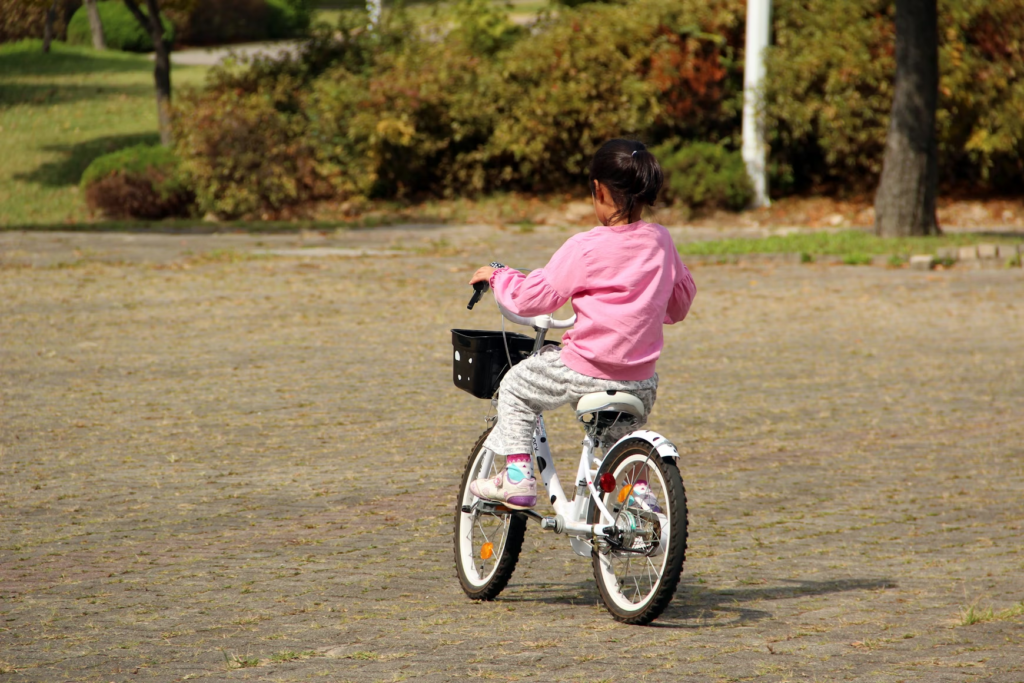
She was standing dangerously close to the curb, a statue in a faded yellow dress that had seen brighter days. Next to her was a bicycle, small and pink, leaning precariously against a fire hydrant.
Ryder didn’t signal; he didn’t have to. He simply eased off the throttle, and the collective roar of the Iron Hawks dropped an octave. As he drifted closer, the details sharpened. The girl couldn’t have been more than six. Her hair was pulled back in a messy ponytail, and her knobby knees were dusted with dirt.
But it was the sign that made Ryder squeeze his brake lever.
A piece of torn cardboard dangled from the handlebars of the pink bike, held on by strips of duct tape. The letters were written in black marker, shaky and uneven, sloping downward as if the writer had grown tired halfway through.
“For Sale.”
Ryder guided his bike to the curb, his boots hitting the pavement with a heavy thud. The sudden silence as the four engines cut out was deafening. The cicadas in the trees seemed to scream in the void.
The little girl didn’t run. She didn’t flinch. She just stared up at them with eyes that were too old for her face.
The Bargain That Broke a Heart
Ryder kicked down his stand and swung his leg over the seat. He was a large man, clad in leather and denim, his arms sleeves of ink. To most, he was a figure of intimidation. But as he removed his helmet, revealing a face weathered by wind and sun, his expression was anything but threatening.
He crouched down, his leather vest creaking, until he was eye-level with the girl.
“Hey there, little bit,” Ryder said, his voice a low rumble, soft like distant thunder. “That’s a mighty fine bike you got there. You really selling it?”
The girl’s hands were gripping the hem of her dress so tight her knuckles were white. She looked at Ryder, then at Tank and the others who had gathered behind him like a wall of silent sentinels.
She nodded. It was a jerky, fragile movement.
“Yes, sir,” she whispered.
Ryder tilted his head. “How come? You outgrow it? Want something faster?”
The girl shook her head. She took a breath that hitched in her chest, a sound that hit Ryder square in the gut.
“Buy my bike, sir…” she said, the words barely audible. “Mommy hasn’t eaten in two days.”
The world seemed to stop. The heat, the cicadas, the traffic—it all fell away.
Ryder froze. He felt Mason shift uncomfortably behind him. Tank let out a heavy sigh through his nose. These were men who had seen bar fights, road rash, and the inside of jail cells. They were hardened against the world’s edges. But this? This was a different kind of violence. This was the quiet violence of poverty.
Ryder swallowed the lump in his throat. “What’s your name, sweetheart?”
“Mira,” she said. “Mira Langley.”
“Well, Mira,” Ryder said, keeping his voice steady despite the tremor in his hands. “Where is your mommy right now?”
Mira pointed a small finger toward a cluster of oak trees set back from the road, near the entrance of a closed-down park. In the shadows, sitting on the roots of a massive tree, was a figure.
Ryder stood up slowly. He exchanged a look with Tank. It was a look that communicated a thousand words in a split second. We are not leaving this.
They walked toward the tree, the gravel crunching under their heavy boots. As they got closer, the figure resolved into a woman. She was wrapped in a thin blanket despite the ninety-degree heat. She was pale, her cheekbones sharp against her skin, her eyes closed as if sleep was the only escape she could afford.
“Ma’am?” Ryder called out softly, stopping ten feet away to give her space.
The woman’s eyes snapped open. Fear flashed through them instantly—the primal fear of a mother who knows she is vulnerable. She scrambled to sit up, pulling the blanket tighter.
“I… I’m sorry,” she stammered, her voice dry and brittle. “Is she bothering you? Mira! Come here, baby.”
Mira ran to her mother, burying her face in the woman’s shoulder. The woman looked at the bikers—four large men looming over her—and Ryder could smell the desperation rolling off her.
“She wasn’t bothering us,” Ryder said gently. “I’m Ryder. This is Tank, Mason, and Viper. We just… we saw the sign on the bike.”
The woman, Clara, slumped against the tree bark. The fight seemed to drain out of her. “I told her not to do that,” she whispered, stroking Mira’s hair. “I told her we’d be fine.”
“She said you haven’t eaten,” Viper said. He was the youngest, and he lacked the filter of the older men. His voice was thick with emotion.
Clara looked down at her hands. They were shaking. “I’m Clara. Clara Langley. And… we’ve had a rough patch. That’s all. Just a rough patch.”
Ryder crouched again. He knew a “rough patch” didn’t force a six-year-old to sell her toys on a roadside. This was a collapse.
“Clara,” Ryder said. “We aren’t here to judge. We’re here to ride. But we can’t ride past this. What happened?”
Clara tried to maintain her dignity. She straightened her spine, even though it clearly cost her energy she didn’t have. “I worked. I worked hard. Administrative assistant at Hensley Industries for five years. Never late. Never missed a day.”
She paused, swallowing hard.
“Mr. Hensley… he decided to restructure. He called it ‘trimming the fat.’ I begged him. I told him I didn’t have savings, that rent was due. I asked for two weeks. Just two weeks to find something else.”
“And?” Tank asked, his arms crossed over his massive chest.
Clara let out a bitter, hollow laugh. “He said everyone is replaceable. He had security escort me out before I could even pack my desk. That was a month ago. The eviction notice came three days ago. The car broke down yesterday.”
She looked at Mira, who was watching Ryder with wide eyes.
“So here we are,” Clara whispered. “Waiting for a miracle, or the end. I’m not sure which comes first.”
The Echo of a Lost Son
Ryder looked at Mira. She had let go of her mother and walked back to him. She tugged on the leather of his vest, right near a patch that read In Memory of Leo.
“Please, sir,” Mira said, her voice filled with a heartbreaking business-like seriousness. “The bike is still good. The tires are okay. I can clean the dirt off. It costs twenty dollars.”
Twenty dollars. To her, it was a fortune. It was a meal. It was survival.
Ryder felt a cracking sensation in his chest. It was a familiar pain, an old wound tearing open.
Years ago, Ryder had a son named Leo. Leo would have been about Mira’s age when he died. It was a car accident—stupid, senseless, quick. Ryder had spent years in a bottle, trying to drown the silence of his own house. He had eventually found the Iron Hawks, found a brotherhood that kept him sober, kept him moving.
But looking at Mira, he didn’t see a stranger. He saw the innocence that the world had tried to crush. He saw the failure of a society that let a child barter her childhood for a loaf of bread.
He reached into his back pocket and pulled out his wallet. It was a thick leather biker wallet attached to a chain. He didn’t count the bills. He just grabbed the wad of cash he kept for emergencies—gas, repairs, motels.
He took Mira’s small hand and pressed the money into it. It was hundreds of dollars.
“Keep your bike, kiddo,” Ryder said, his voice thick. “You keep that bike, and you ride it until the wheels fall off. You hear me?”
Mira looked at the money, then up at Ryder. Her face scrunched up in confusion. “But, sir… that’s too much. It’s only twenty.”
Ryder smiled, and for the first time in a long time, it reached his eyes. “No, sweetheart. It’s exactly right. That’s a custom paint job. Pink is rare.”
Tank stepped forward. He pulled a crisp fifty from his pocket. “For a helmet,” he grunted, placing it in her hand.
Mason and Viper emptied their pockets too. Crumbled tens, twenties, a handful of quarters. They piled it into Mira’s hands until she had to use her dress as a basket to hold it all.
Clara was sobbing now. Not the quiet weeping of despair, but the heaving sobs of relief. “You can’t,” she cried. “I can’t pay you back.”
Ryder stood up and walked over to her. He looked down, his shadow falling over her, offering shade from the relentless sun.
“You don’t owe us a dime,” Ryder said. “But I need to know something. This man… Hensley. Where is he?”
Clara wiped her eyes. “The big glass building downtown. On Fourth. Top floor.”
Ryder nodded. His jaw set into a hard line. The sorrow in his eyes was replaced by a cold, focused fire.
“Stay here,” he commanded gently. “We’ll be back with food. Real food. Don’t go anywhere.”
He turned to his brothers. “Mount up.”
As the engines roared to life, shaking the leaves of the oak tree, Mira hugged her bike tightly. She watched the leather-clad men peel out onto the asphalt, moving not like a gang, but like a cavalry.
The Glass Fortress
Brookfield’s downtown was trying hard to be a city. It had a few high-rises, a convention center, and Hensley Industries—a monolith of blue glass and steel that reflected the sun like a weapon.
It was a place of air-conditioning and hushed tones, of ergonomically designed chairs and filtered water. It was a world away from the dusty curb where Clara Langley sat.
Ryder led the Hawks right up to the front entrance. Usually, they would respect parking zones, but today, Ryder pulled his Harley onto the pristine paved plaza in front of the revolving doors. Tank, Mason, and Viper flanked him.
Security guards inside the lobby stiffened. Shoppers on the street stopped to gawk. Four bikers, dusted with road grit, looking like thunder personified, marching toward the corporate stronghold.
They pushed through the revolving doors. The lobby was cool, smelling of lilies and floor wax. The reception desk was a slab of marble behind which sat a young woman who looked like she might faint.
“We’re here to see Richard Hensley,” Ryder said. He didn’t shout. He didn’t have to. His voice carried across the marble floor.
“Do… do you have an appointment?” the receptionist squeaked.
Ryder leaned his hands on the desk. “Tell him the appointment is regarding a bicycle. He’ll know.”
He wouldn’t know, of course. But the absurdity of the statement, combined with Ryder’s intensity, made the receptionist fumble for her phone. She whispered frantically. A moment later, she looked up, pale.
“He… he says he’s busy.”
Ryder looked at the elevators. He looked at the security guard—an older man who was slowly unholstering a taser but looking like he prayed he wouldn’t have to use it.
Ryder looked the guard in the eye. “We aren’t here to hurt anyone. We’re just here to talk. You want to stop us, you can try. But I wouldn’t recommend it.”
The guard hesitated. He saw something in Ryder’s face. It wasn’t malice. It was righteous indignation. The guard slowly took his hand off the taser and stepped aside.
“Top floor,” the guard muttered. “Don’t make me regret this.”
The elevator ride was silent. The four men watched the numbers climb. 10… 20… 30.
When the doors opened, they stepped into a plush waiting area. A personal assistant jumped up, but Ryder walked past her as if she were a ghost. He pushed open the double mahogany doors at the end of the hall.
The Cost of Greed
Richard Hensley was a man who looked like he had been manufactured, not born. His suit was tailored to the millimeter. His hair was silver and perfectly coiffed. He was sitting behind a desk that cost more than Ryder’s motorcycle, sipping espresso from a tiny cup.
He looked up, annoyed, expecting a subordinate. When he saw the four bikers filling his doorway, the cup rattled in its saucer.
“What is the meaning of this?” Hensley demanded, standing up. He tried to project authority, but his voice was thin. “Who let you in? I’m calling the police.”
He reached for the phone.
Mason moved faster than a man his size should be able to. He didn’t touch Hensley. He simply reached out and placed a gentle hand over the phone receiver, pressing it back into the cradle.
“Not yet,” Mason said.
Ryder walked to the center of the room. He reached into his vest pocket. Hensley flinched, expecting a weapon.
Instead, Ryder pulled out the piece of torn cardboard he had gently removed from Mira’s bike before they left.
He placed it on the center of the mahogany desk. The tape was still sticky. The marker was faded. “For Sale.”
“You recognize this?” Ryder asked quietly.
Hensley stared at the cardboard. He looked confused, then indignant. “No. What is this? Garbage?”
“That,” Ryder said, his voice vibrating with suppressed rage, “is the only asset of a six-year-old girl named Mira. She was selling her bike on the side of Route 27 an hour ago.”
Hensley scoffed, trying to regain his footing. “And what does that have to do with me? I don’t run a pawn shop.”
“She was selling it because her mother hasn’t eaten in two days,” Ryder continued, stepping closer. “Her mother is Clara Langley.”
Hensley’s face flickered. Recognition. Just a flash of it, before he masked it with indifference.
“Ms. Langley,” Hensley said, straightening his tie. “A former employee. She was let go. It was a business decision. We were overstaffed in administration. It’s unfortunate, but it’s the economy.”
“Unfortunate,” Ryder repeated the word, tasting the bile in it. “She begged you. She told you she had nothing. She asked for two weeks. You gave her security escorts.”
“I don’t make these decisions lightly,” Hensley lied smoothly. “But a CEO must prioritize the health of the company. If the ship sinks, everyone drowns.”
“The ship isn’t sinking,” Viper spoke up from the doorway, looking around the opulent office. “You got a Picasso on the wall and you’re drinking coffee that smells like it costs five bucks a bean. The ship is doing fine. You just threw someone overboard to make the ride smoother for yourself.”
Hensley flushed red. “Gentlemen, you are trespassing. I demand you leave.”
Ryder leaned over the desk. He was close enough to see the sweat beading on Hensley’s forehead.
“There is a woman sleeping under a tree right now because of you,” Ryder said. “There is a little girl who thinks she has to sell her childhood to feed her mother because of you. You sit here in the sky, looking down on the ants, and you think you’re untouchable.”
“I followed the law!” Hensley snapped. “Employment is at-will!”
“We aren’t talking about the law,” Ryder growled. “We’re talking about humanity. You remember that word? Or did you trade it for that watch on your wrist?”
The room went silent. The air conditioning hummed, a sterile sound against the tension.
Ryder didn’t hit him. He didn’t flip the desk. He did something worse. He held up a mirror to the man’s soul.
“You have a daughter, don’t you Hensley?” Ryder asked, glancing at a framed photo on the credenza. A smiling girl in a graduation gown.
Hensley moved to block the photo, defensive. “Leave my family out of this.”
“Imagine her,” Ryder said relentlessly. “Imagine her six years old. Imagine her standing on a burning sidewalk, begging strangers for twenty dollars so you could eat. How does that feel?”
Hensley stared at him. His mouth opened, but no words came out. The image landed. Ryder saw it land.
“You can’t buy forgiveness, Hensley,” Ryder said, his voice dropping to a whisper. “Money doesn’t clean the stain off your soul. But you can earn it back. Start now.”
Ryder turned his back on the CEO. “Let’s go,” he said to his brothers.
At the door, Ryder paused. “We’ll be checking on Clara. If she’s still under that tree tomorrow… we’ll be back. And next time, we won’t just be talking.”
They left the office. Hensley was left standing alone in the silence of his glass tower, staring at the dirty piece of cardboard on his polished desk.

The Ripple Effect
News travels fast in small towns, but it travels faster when four Harley Davidsons are involved.
By the time the sun began to dip toward the horizon, painting the sky in bruises of purple and orange, the story of the confrontation at Hensley Industries had leaked. The security guard told his wife. The receptionist texted her friends.
The Iron Hawks stood up for Clara.
But the real shock came an hour later.
Richard Hensley’s personal car, a sleek sedan, was seen pulling up to the local grocery store. He didn’t send an assistant. He went himself. Witnesses said he looked pale, shaken. He filled two carts. Not with cheap staples, but with everything—fresh produce, meats, formula, diapers, vitamins.
Then he went to the bank.
Then he went to the realty office.
When the Iron Hawks returned to the oak tree on Route 27, the light was fading. The heat had broken, leaving a gentle, warm breeze.
Mira heard them first.
“Mommy! They came back!” she screamed, jumping up and running across the grass.
Clara stood up. She looked terrified that they wouldn’t return, and overwhelmed that they had.
Ryder killed the engine and hopped off. This time, the bikes were loaded down. Saddlebags stuffed with sandwiches, water, juice boxes, and a teddy bear Tank had won at a claw machine at the gas station.
“We wanted to make sure you were okay,” Ryder said, handing Clara a bag of food.
Clara took it, her hands shaking. She looked at the feast—real turkey sandwiches, cold water, fresh fruit. “You didn’t have to… you don’t even know us. Why are you helping?”
Ryder looked at her, his eyes reflecting the dying light. “Because someone once helped me when I didn’t deserve it. And because no mother should ever have to watch her child go hungry.”
As they sat there, watching Mira eat a sandwich with the ferocity of a starving animal, a black sedan pulled up to the curb.
It was Richard Hensley.
The bikers stood up, tensing. But Hensley stepped out with his hands up, palms open. He wasn’t wearing his suit jacket. His tie was gone.
He walked over to the tree. He looked at Clara, really looked at her, for the first time in five years. He saw the dirt on her dress. He saw the exhaustion.
“Clara,” Hensley said, his voice cracking.
Clara stood up, holding Mira close. “Mr. Hensley?”
“I…” Hensley struggled. He looked at Ryder, who was watching him with arms crossed. He looked back at Clara. “I made a mistake. A terrible mistake.”
He reached into his pocket and pulled out an envelope.
“This is back pay,” he said, handing it to her. “Plus severance. And… I made a call. I have a friend who runs the logistics firm across town. They need an office manager. He’s expecting your call tomorrow. I vouched for you. I told him you were the best assistant I ever had.”
Clara took the envelope. She opened it. It was a check. Enough to cover rent for months.
“Why?” she whispered.
Hensley looked at the cardboard sign still sitting on Ryder’s bike seat.
“Because someone reminded me that I’m human,” Hensley murmured. “I’m sorry, Clara. Truly.”
He turned and walked back to his car. He didn’t look like a titan of industry anymore. He looked like a man who had just barely escaped losing his soul.
The Stars and the Road
They stayed until it was fully dark.
The fireflies came out, dancing in the tall grass. Mira giggled as she showed Tank her bike, which Viper had cleaned up with a rag and some polish. It shined under the streetlights.
Ryder watched her ride in small, wobbly circles on the sidewalk.
“Look at me! I’m fast!” she yelled.
“You’re lightning, kid,” Ryder called back.
Clara sat beside him on the grass. She looked different. The fear was gone, replaced by a fragile hope.
“I don’t know how to thank you,” she said. She tried to hand back some of the cash Ryder had given her earlier.
Ryder gently pushed her hand away. “You don’t owe us anything. Just promise me one thing.”
“Anything,” she said.
“Never give up,” Ryder said. “And when you get back on your feet… you help the next one.”
“I promise,” she said, tears sliding down her cheeks. “I won’t forget this.”
As the Iron Hawks mounted their bikes to leave, the air was cool. The ride home would be long, but Ryder didn’t mind.
He put his helmet on. He looked up at the sky. It was a clear night, the stars dusted across the black expanse like diamonds.
For years, every time he looked at the stars, he felt a hollow ache for his son, Leo. He felt the guilt of the survivor.
But tonight, as he revved the engine and felt the vibration in his chest, the ache was duller. It was quieter.
He thought of Mira’s smile. He thought of Clara’s relief. He thought of the cardboard sign that had changed the course of a day.
“You did good, Dad,” he imagined a voice saying in the wind.
Ryder smiled behind his visor.
“Yeah,” he whispered to the wind. “We did good.”
The Iron Hawks rolled out, four red taillights fading into the darkness, leaving behind a family that was safe, a CEO who was humbled, and a town that would never look at a biker quite the same way again.
Sometimes, real strength isn’t in fists or fear. Sometimes, it’s in the courage to stop for a twenty-dollar bicycle.
What did you think of Ryder’s actions? Let us know your thoughts on the Facebook video! And if you like this story, share it with friends and family to remind them that kindness can come from the most unexpected places.
