What began as a simple texting mistake has grown into one of the most beloved Thanksgiving stories of the modern digital age. Nearly a decade ago.
An Arizona grandmother named Wanda Dench set out to send a routine message to her grandson, asking about plans for the upcoming Thanksgiving holiday.
Like millions of people every day, she typed out a warm, practical text meant for a family member. But one small error — a wrong phone number — changed the course of her life in a way she never could have anticipated.
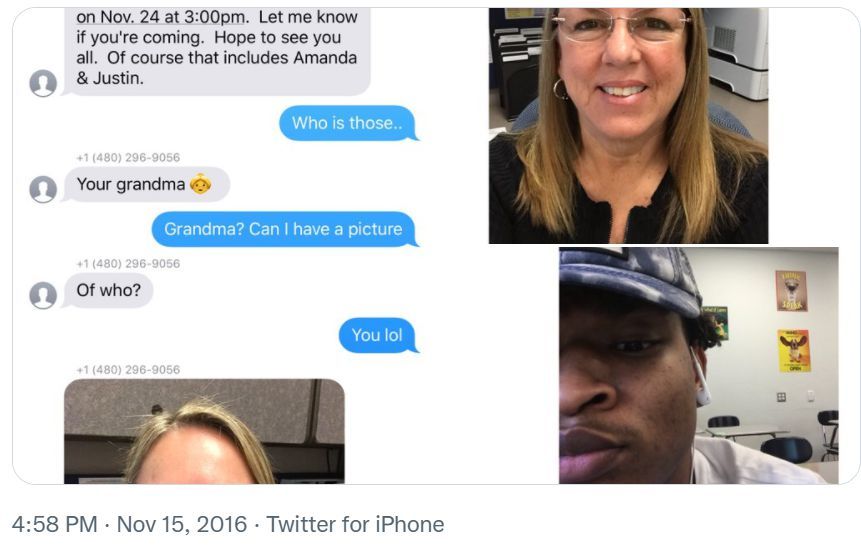
Instead of reaching her grandson, the message landed on the phone of Jamal Hinton, a high school student living in Phoenix at the time. Confused but curious, Hinton replied, asking who was sending the message. Dench, equally puzzled, realized something was off.
To clear up the misunderstanding, Hinton asked her to send a photo so he could confirm whether she was indeed his grandmother. When Dench sent back a picture of herself, the confusion became clear: they were complete strangers.
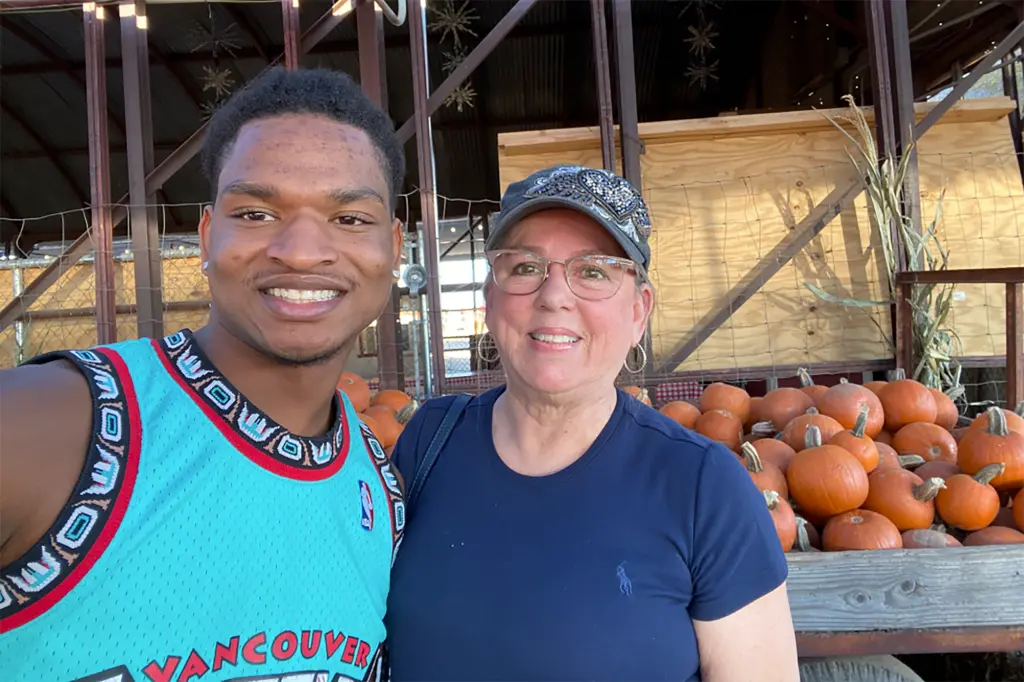
Under normal circumstances, the exchange would have ended there. Dench quickly apologized for the mistake, fully expecting the conversation to fade away like so many brief digital misfires.
But instead of letting the moment pass, Hinton responded with humor. In a lighthearted message that would later become iconic, he asked whether he could still come over for Thanksgiving dinner and get a plate of food anyway.
What happened next transformed a harmless joke into a meaningful human connection.
Rather than dismissing the request, Dench replied with warmth and generosity, telling him that he was welcome to join her family for Thanksgiving. Her response was not driven by publicity or expectation, but by instinct — the kind rooted in hospitality, kindness, and a belief in treating others like family whenever possible.
When Thanksgiving Day arrived, Jamal Hinton decided to take her up on the offer. He showed up at Dench’s home, unsure of what to expect but hopeful that the exchange had been genuine.
Dench, for her part, welcomed him with the same sincerity she would offer any guest at her table. What could have been an awkward encounter instead became a comfortable, joyful gathering built on laughter, shared food, and easy conversation.
That first Thanksgiving marked the beginning of a tradition neither of them had planned. Despite their age difference, different backgrounds, and the unlikely way they met, Dench and Hinton formed a bond that felt natural and enduring.
They stayed in touch after the holiday, exchanging messages and checking in on each other’s lives. Over time, it became clear that their connection was more than a one-time feel-good story — it was the foundation of a real friendship.
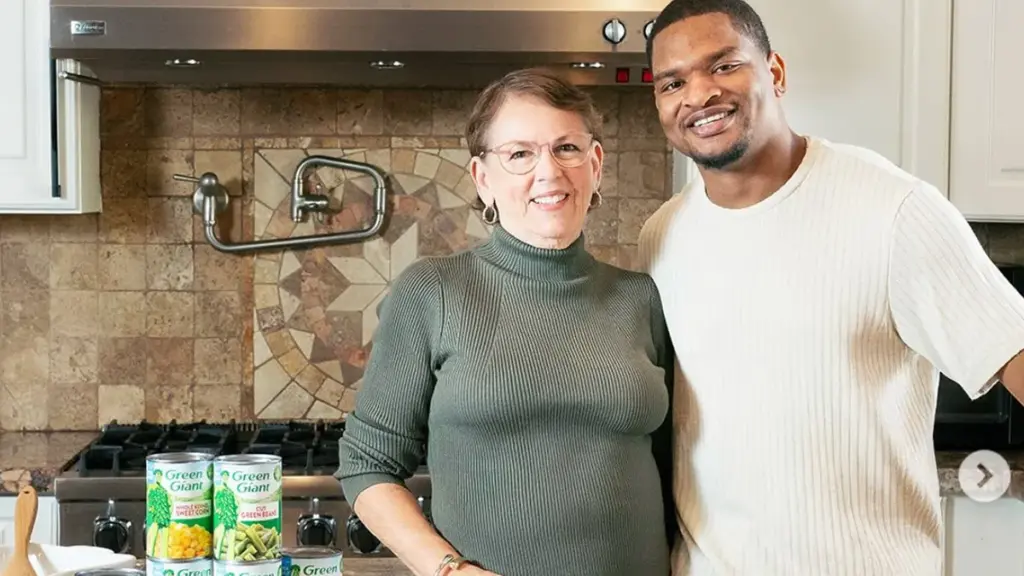
As the years passed, Dench and Hinton continued to reunite for Thanksgiving, turning their accidental meeting into a consistent annual tradition.
Each reunion reinforced the trust and affection that had grown between them. The story began circulating online after Hinton shared screenshots of their original text exchange on social media, where it quickly resonated with people around the world.
In an online environment often associated with division or negativity, their story stood out as a reminder of how kindness and humor can bridge gaps between strangers.
The attention never seemed to change the nature of their relationship. Interviews over the years have consistently shown that Dench and Hinton view their bond as personal rather than performative.
For Dench, the friendship became a source of joy and gratitude. She has repeatedly described meeting Hinton as something that felt meaningful beyond coincidence, often saying she believes their connection was meant to happen.
In interviews, she has emphasized how grateful she feels for the unexpected turn that began with a simple mistake.
Hinton has expressed similar sentiments, noting that the tradition has become something he looks forward to every year.
While the story gained public attention, he has consistently framed it as a genuine relationship rather than a viral moment.
According to him, knowing that their friendship brings happiness to others is rewarding, but the bond itself is what matters most.
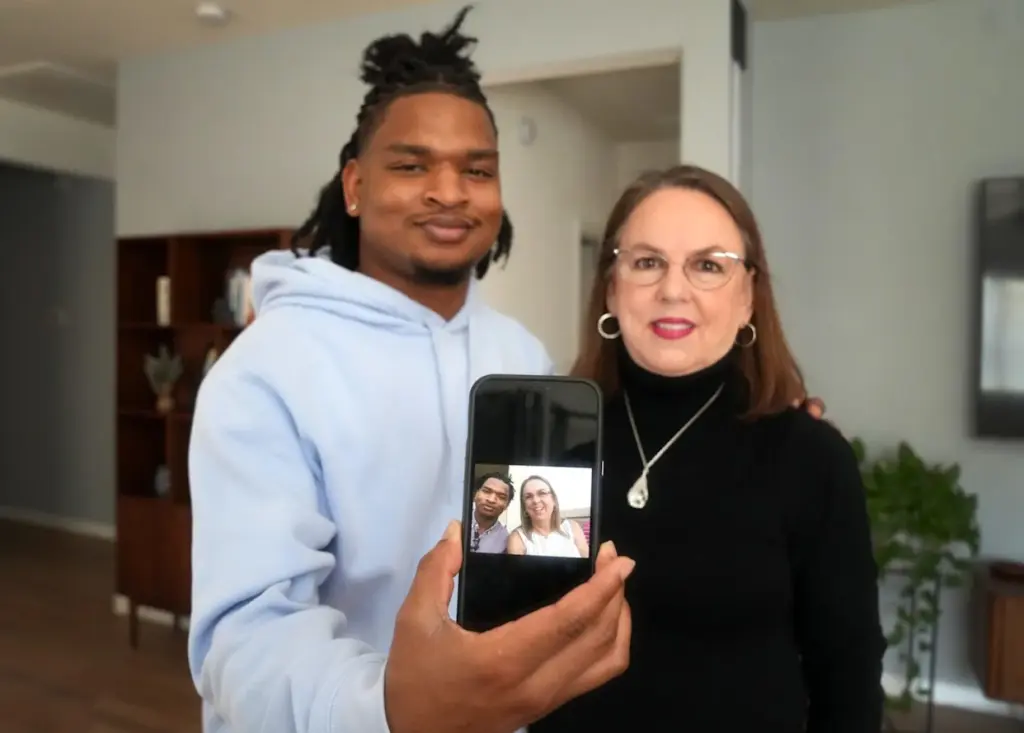
Over time, the annual Thanksgiving reunion became a symbol of continuity. In a world where traditions often fade due to distance, changing circumstances, or busy schedules, Dench and Hinton’s commitment to meeting year after year stood out.
Their story evolved alongside their lives, with each Thanksgiving serving as both a celebration of the holiday and a reaffirmation of the connection that started it all.
As the tradition approached nearly ten years, the story gained renewed attention.
The longevity of their friendship highlighted something deeper than a viral anecdote: it demonstrated how small acts of openness can lead to lasting relationships.
What began with a mistaken text message grew into a shared ritual built on trust, consistency, and mutual respect.
In interviews reflecting on the journey, Dench has often noted that she never expected a wrong number to lead to such a meaningful friendship.
For her, the experience reinforced a belief in kindness as a guiding principle. Hinton, meanwhile, has spoken about how the tradition continues to remind him of the importance of staying open to unexpected opportunities and connections.
As their nearly decade-long Thanksgiving tradition continues, Dench and Hinton’s story remains a powerful reminder that meaningful relationships do not always begin in predictable ways.
Sometimes, they start with a simple mistake — and grow through generosity, humor, and the willingness to welcome a stranger to the table.
As Wanda Dench and Jamal Hinton’s Thanksgiving tradition continued year after year, the story gradually took on a life beyond their own dinner table.
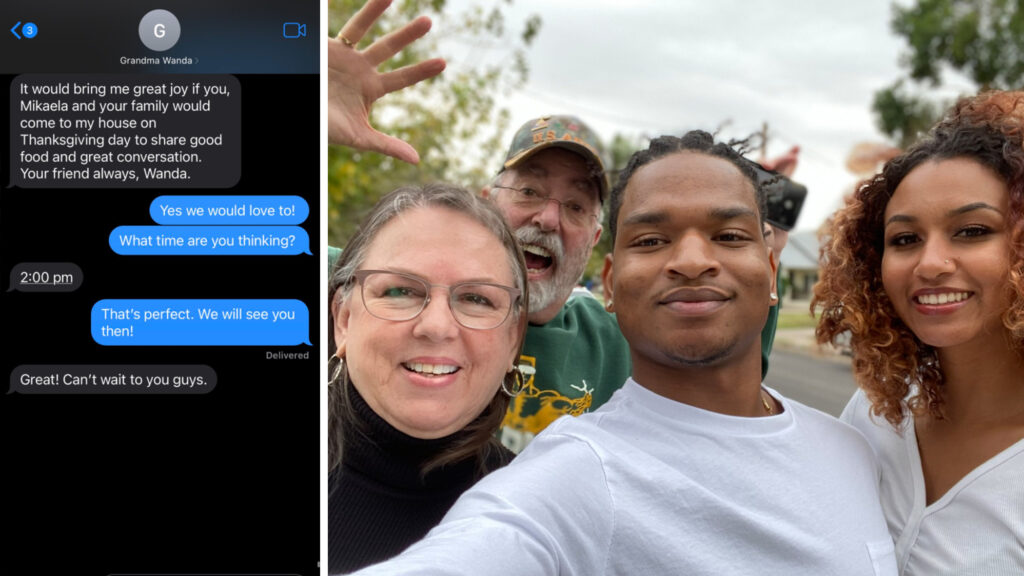
What initially resonated as a feel-good anecdote became a broader cultural symbol of kindness in an increasingly digital and often impersonal world.
Each time the pair reunited for the holiday, renewed interest followed, with people eagerly awaiting updates on whether the tradition was still alive. Consistently, the answer was yes.
The longevity of their bond played a significant role in why the story continued to resonate. Viral moments often fade quickly, but this one endured because it was backed by genuine action rather than a single exchange.
Dench and Hinton did not simply meet once for a photo opportunity; they returned to the table year after year, reinforcing the idea that kindness is most powerful when it is sustained.
Their continued commitment to one another helped transform public curiosity into lasting admiration.
Social media remained a key platform for sharing updates about their Thanksgiving reunions. When Hinton posted photos or messages marking another year together, the responses were overwhelmingly positive.
Commenters frequently described the tradition as comforting and inspiring, especially during times when global events or personal challenges made holidays feel more complicated.
For many, the story served as a reminder that human connection can still emerge organically, even through something as simple as a text message.
The attention surrounding their friendship eventually led to broader opportunities to share its message. In recent years, Dench and Hinton have participated in public conversations, interviews, and partnerships that emphasize gratitude, togetherness, and generosity.
One such collaboration involved a well-known food brand associated with family meals and holiday traditions.
The partnership focused on celebrating shared moments around the table rather than on promoting celebrity or spectacle, aligning naturally with the values at the heart of their story.
Importantly, both Dench and Hinton have been careful to frame these appearances as extensions of their relationship, not replacements for it.
In interviews, they have repeatedly emphasized that Thanksgiving remains about spending time together, honoring the original spirit of the invitation, and appreciating how far a simple act of openness has carried them. The public dimension, while meaningful, has never replaced the personal bond that started it all.
Their story has also sparked broader reflection on how technology shapes relationships. While digital communication is often criticized for creating distance, Dench and Hinton’s experience highlights its potential to do the opposite.
A wrong number, usually dismissed as an inconvenience, became a doorway to connection because both people chose curiosity and kindness over indifference.
Analysts and commentators have noted that this aspect of the story resonates especially strongly in an era defined by quick judgments and limited attention.
Another reason the tradition continues to inspire is its simplicity. There was no elaborate plan, no viral strategy, and no expectation of recognition.
The decision to invite a stranger to Thanksgiving dinner was grounded in everyday hospitality, a value many people recognize from their own family traditions.
That familiarity makes the story relatable and accessible, encouraging others to consider how small gestures in their own lives might have unexpected impact.
Over time, the annual reunions also came to symbolize continuity and stability. As life circumstances changed — careers evolved, responsibilities grew, and the world itself shifted — Dench and Hinton kept returning to the same shared ritual.
Observers often point out that this consistency is what elevates the story from a pleasant coincidence to something more meaningful. It demonstrates that relationships formed unexpectedly can still be nurtured with intention and care.
From Dench’s perspective, the friendship has been a source of gratitude and reflection.
She has spoken openly about how the experience reinforced her belief in treating people with warmth and openness, even when outcomes are uncertain.
For Hinton, the tradition has become a reminder of the value of humor and openness, qualities that transformed a moment of confusion into a lasting bond.
Both emphasize that neither of them could have predicted the result, which is precisely why the story feels so genuine.
As the tradition approaches a full decade, public interest shows little sign of fading. Each Thanksgiving serves as a quiet milestone, not marked by grand announcements but by the simple act of showing up.
That consistency continues to set their story apart in a media landscape often driven by novelty rather than substance.
Ultimately, the enduring appeal of Wanda Dench and Jamal Hinton’s Thanksgiving tradition lies in what it represents rather than how it began.
It is a reminder that kindness does not require perfection, planning, or familiarity. Sometimes, it begins with a mistake — and grows through patience, humor, and an open heart.
In a time when many holiday traditions struggle to survive the pressures of distance, division, or change, this one continues to thrive.
Born from a wrong number and sustained by genuine connection, it offers a simple but powerful message: meaningful relationships can emerge anywhere, and when they do, they are worth showing up for — year after year.
