The fluorescent hum of the 7-Eleven sign buzzed overhead, a flickering, sickly electric heartbeat against the bruised purple of the Chicago sky. It was late October, a Friday night where the air smelled of wet asphalt, gasoline, and the decaying leaves clogging the storm drains.
I walked out of the store clutching two lukewarm colas and a bag of salt-and-vinegar chips, the plastic crinkling in the silence. I was tired. It was a bone-deep, marrow-level exhaustion that comes from fifteen years of pretending to be someone you aren’t. I’m a risk assessment officer for a mid-sized insurance firm. I wear pleated khakis. I drive a 2015 Toyota Camry that smells like vanilla wafers and old coffee. I am invisible.
Or at least, I try to be.
My son, Leo, was supposed to be waiting by the front fender, probably scrolling through his phone, ignoring the world. Leo is fifteen. He is all elbows and knees, a sketch of a boy not yet filled in. He reads graphic novels about heroes with capes because he believes the world has a moral arc. He apologizes when inanimate objects bump into him. He is soft, and I love him for it, even if I know the world loves to sharpen its teeth on soft things.
When I looked up, the spot by the fender was empty.
My eyes scanned the perimeter. Old instincts, dormant but never dead, flared to life. I saw them in the blind spot, the jagged wedge of shadow between the humming ice machine and the rusted dumpster.
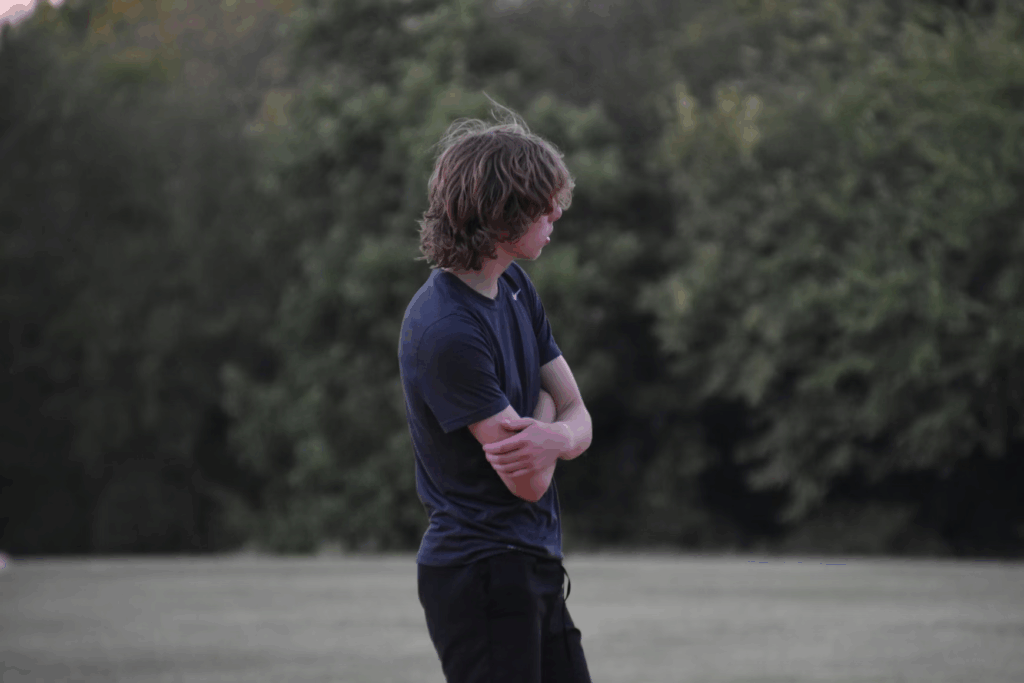
There were three of them. Varsity jackets. The kind of kids who peak at seventeen and spend the next forty years angry about it. They had Leo cornered against the brick wall.
The ringleader was a kid I recognized from the neighborhood block parties. Marcus. A linebacker built like a vending machine, with a neck as thick as a tree stump and eyes that looked like they hadn’t blinked in a week.
Marcus had his forearm pressed against Leo’s throat. My son’s feet were tiptoeing on the pavement, seeking purchase that wasn’t there. His face was a map of pure, unadulterated terror. He wasn’t struggling. He was frozen. That’s what prey does when it realizes the predator is simply too big.
“I told you, didn’t I?” Marcus hissed, his voice dripping with that casual, recreational cruelty only teenagers possess. “I told you this was my block.”
The other two laughed. It was a nervous, hyena-like sound, the sound of followers who are relieved they aren’t the victim.
I stopped. The sodas in my hand were cold, sweating condensation onto my palms.
In a past life—before the grey hairs, before the dad bod, before the desk job—I would have roared. I would have dropped the sodas and charged in, a blur of kinetic violence. I would have broken things that don’t heal right.
But I wasn’t that man anymore. Sarah, my wife, had made me promise. We had built a life on the foundation that the “Other Jack” was dead and buried.
I took a breath. I let the oxygen fill my lungs, holding it for a three-count, then releasing it slowly through my nose. It’s a technique to lower the heart rate before breaching a door.
I set the sodas down on the hood of the Toyota. The metal clinked softly.
Marcus didn’t hear it. He was too busy winding up his right hand, making a fist that looked like a sledgehammer. He wasn’t just posturing. He was going to hurt my boy. He was going to break something fragile.
I saw the tension in Marcus’s shoulder. The kinetic energy coiling.
I walked over.
I didn’t run. Running signals panic. Running triggers the chase instinct in animals. I walked with the steady, rhythmic pace of a man walking to his mailbox to check for bills.
I stopped three feet behind Marcus.
The two sidekicks saw me first. Their smiles faltered, then vanished. They saw a guy in a beige windbreaker and sensible shoes. They didn’t see a threat. They saw a victim-in-waiting.
One of them, a lanky kid with acne scars mapping his jawline, sneered. “Keep walking, old man. This ain’t your business.”
Marcus didn’t turn around. He tightened his grip on Leo’s throat. Leo’s eyes met mine. They were wide, pleading, wet with tears he was too ashamed to shed.
“Let him go,” I said.
My voice wasn’t loud. It wasn’t a shout. It was flat. Monotone. Devoid of any emotion whatsoever. It was the voice of a bureaucrat reading a tax code.
Marcus froze. He slowly turned his head, looking over his massive shoulder. He looked me up and down, processing the generic dad outfit, the thinning hair, the lack of visible muscle definition.
He laughed. It was a wet, ugly sound.
“Or what?” Marcus asked, turning fully toward me now, though he kept one hand pinned on Leo’s chest to keep him in place. “You gonna ground me? You gonna call my mommy?”
He took a step toward me, looming. He was six-foot-two. I’m five-ten on a good day. He had youth, testosterone, and rage on his side.
“Go back to your car, pops,” Marcus spat, poking a finger hard into my chest. “Before I fold you in half like a lawn chair.”
The Weight of a Pen and a Piece of Paper
The finger poking my sternum was annoying.
But it was the look in his eyes that was interesting. It was the look of someone who has never been told ‘no’ in a language he understands. It was the look of a boy protected by something bigger than himself.
I didn’t flinch. I didn’t bat his hand away. I didn’t step back.
I just looked at him.
I looked at his pupils—dilated. Adrenaline. I looked at his knuckles—scabbed. He hits drywall when he’s mad at his parents. I looked at the way he stood—weight forward on his toes. Aggressive, but off-balance.
“I asked you a question,” Marcus barked, his bravado slipping just a fraction because I wasn’t reacting the way victims are supposed to react. I wasn’t cowering. “Are you deaf?”
I reached into my back pocket.
The two sidekicks flinched, stepping back, probably expecting a weapon. A knife. A phone.
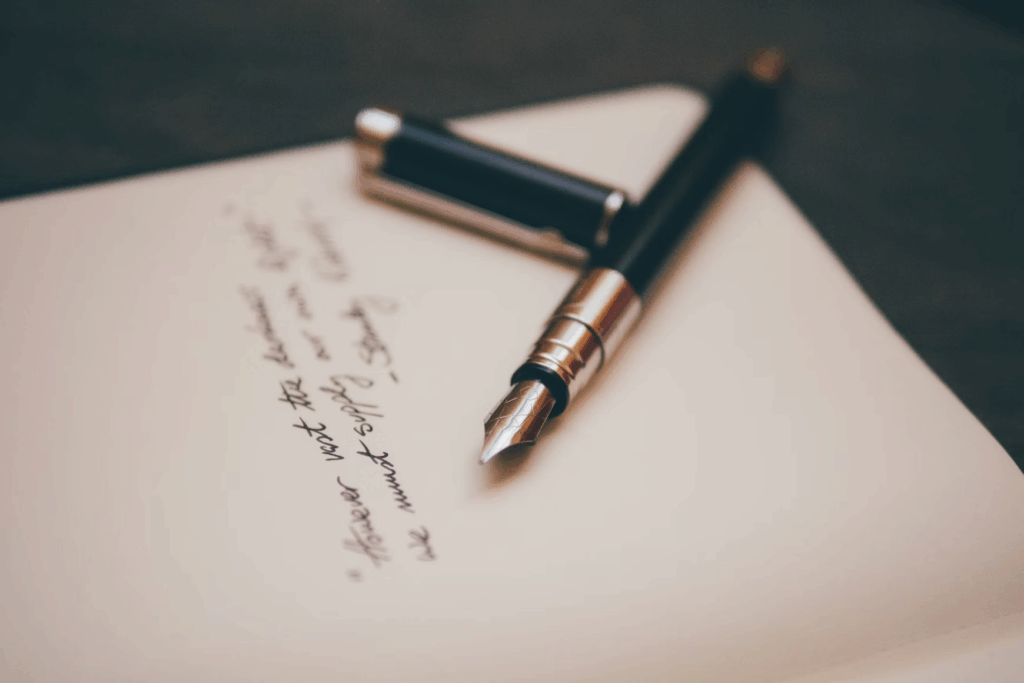
I pulled out a small, leather-bound notebook and a silver pen.
I flipped the notebook open with a snap of my wrist. The sound was sharp, disproportionately loud in the quiet alley, like a twig snapping in a dead forest. I clicked the pen.
I looked down at the paper, then up at Marcus, then back at the paper.
“Marcus Jennings,” I said softly, writing it down. “Senior at Westside High. Varsity linebacker. Driving a 2018 Ford F-150, license plate roughly… KLY-492.”
Marcus blinked. The color drained slightly from his face. “How do you know my name?”
I ignored him. I looked at the lanky kid. “And you. Tobias Miller. Your dad owns the hardware store on 5th, right? Does he know you’re out here acting like a felon, or does he think you’re at the library studying for the SATs?”
Tobias took a step back, his mouth opening and closing like a fish on a dock.
I turned my gaze back to Marcus. I stepped into his personal space. I smelled the cheap body spray, the stale tobacco smoke, and the underlying scent of fear sweat.
I looked him dead in the eyes. I let the ‘Dad’ mask slip away. I let the ‘Old Jack’ surface—the Jack who used to work Internal Affairs, the Jack who investigated dirty cops and cartel hitmen, the Jack who knew exactly how to dismantle a human life without ever throwing a punch.
My eyes went dead. Cold. Empty. The eyes of a shark in deep water.
“I’m going to give you a choice, Marcus,” I said, my voice dropping to a whisper that cut through the noise of the traffic nearby. “You can walk away right now. You can get in your truck, drive home, and never look at my son again.”
I paused. I clicked the pen again.
“Or,” I continued, tilting my head slightly, “do you want me to write the report?”
Marcus frowned, confused but rattled. “What report? You ain’t a cop. I don’t see a badge.”
“I’m not a patrolman, Marcus,” I said, leaning in so close he could feel the heat of my words. “I don’t arrest people. I investigate them. I find the things they hide. I find the stash in the glove box. I find the texts you deleted. I find out where your father really gets his money.”
I tapped the pen against the notebook. Tap. Tap. Tap.
“If I write this report,” I said, “it doesn’t go to the principal. It goes to the District Attorney. It goes to the college admissions board where you applied last week. It goes to your insurance company. It goes to every single place that matters to your future.”
I smiled. It wasn’t a nice smile. It was the smile of the guy who pulls the lever on the trap door.
“So, I’ll ask you one more time,” I said, my voice cold enough to freeze the rain on the pavement. “Do you want me to open a file on you tonight? Because once I start writing, I don’t stop until the subject is finished.”
The silence that followed was heavy, pressing down on the asphalt.
Marcus looked at his friends. They were already backing away toward their car, abandoning him. He looked at Leo, who was sliding down the wall, gasping for air.
He looked back at me. He searched for fear in my face and found absolutely nothing. He only found a mirror showing him exactly how small he really was.
Marcus shoved Leo one last time, but it was weak. A face-saving gesture.
“Whatever, man. You’re crazy,” Marcus muttered. He backed away, hands up, but eyes darting to the notebook. “We were just messing around.”
“Go,” I commanded. One word. Like a gunshot.
They scrambled. The tires of the F-150 screeched as they peeled out of the lot, fleeing from a middle-aged man with a pen.
I closed the notebook. I put the pen away. The adrenaline dumped, leaving me cold.
I looked at Leo. He was shaking.
“Dad…” he whispered. “Who are you?”
I didn’t answer him then. I picked up the sodas.
“Let’s go home, Leo.”
But I knew it wasn’t over. Men like Marcus don’t like to lose. And men like me… we never really retire.
The Silence of a Suburban Kitchen
The ride home was suffocating.
My Camry usually felt like a sanctuary. Tonight, it felt like a cage. Leo sat in the passenger seat, his knees bouncing nervously. He kept glancing at me, then at the road, then back at me. He looked at my hands on the steering wheel—ten and two, steady as a surgeon’s.
He was looking for the shakes. He was looking for the post-confrontation tremors that normal people get after almost getting into a fistfight with three varsity athletes.
He didn’t find them. My hands were still. My pulse was resting at sixty-two beats per minute.
“Dad?” Leo asked. His voice cracked, a sound of puberty and panic.
“Yeah, bud?” I kept my eyes on the suburban road, scanning mirrors. Force of habit.
“You… you aren’t just an insurance adjuster, are you?”
I sighed. I signaled a left turn into our subdivision. The cookie-cutter houses lined up like silent sentinels, lawns manicured, windows glowing with the blue light of televisions. It was the life I had bought with blood money. The life I wanted to protect.
“I work in risk management, Leo. You know that,” I lied. It was a practiced lie. Smooth like polished stone. “I assess liabilities. That’s all I did back there. I made him realize he was a liability to himself.”
Leo shifted in his seat, pulling his seatbelt away from his neck. “You knew exactly what to say to break him. You didn’t even yell. You just… dissected him.”
I pulled into the driveway. The garage door opened with a mechanical groan.
“Bullies are simple creatures, Leo,” I said, putting the car in park. “They rely on fear. Take away the fear, and they’re just insecure kids with anger issues. Now, let’s get inside. Your mom made meatloaf.”
“Dad, stop,” Leo snapped.
I froze, hand on the door handle. It was the first time Leo had ever used that tone with me.
“He said he was going to kill me,” Leo whispered, the trauma finally catching up to him. “And you… you looked like you’ve done this a thousand times. Who are you, really?”
I turned to look at my son. I saw the doubt in his eyes. The fear was no longer just for Marcus; it was for the stranger sitting in the driver’s seat.
“I’m your father,” I said firmly. “And I’m the guy who makes sure you get to grow up. That’s all you need to know.”
We went inside. Dinner was normal. Surreally normal. Sarah talked about her book club. She talked about the leak in the upstairs bathroom. She didn’t notice that Leo barely touched his food. She didn’t notice that every time a car drove slowly past the house, my fork stopped halfway to my mouth.
I was listening.
I was listening for the engine of a Ford F-150. I was listening for the distinctive heavy tread of truck tires.
Later that night, after Sarah and Leo had gone to bed, I didn’t sleep. I went down to the basement.
It was finished—carpeted, with a big sectional sofa and a massive TV. A typical dad cave. But behind the bookshelf, there was a loose panel.
I moved the shelf. I pried the panel open.
Inside was a small, fireproof safe.
I spun the dial. Left to 22. Right to 04. Left to 17. The lock clicked.
I didn’t keep guns in there. I had promised Sarah no guns in the house. But there were other things.
I pulled out a burner phone—an old Nokia brick that held a charge for a week. I pulled out a stack of cash, wrapped in rubber bands. And I pulled out a dossier.
I sat on the cold concrete floor and dialed a number I hadn’t called in six years.
It rang four times.
“I thought you were dead,” a gravelly voice answered. No hello. No identity check. The voice belonged to ‘Gulliver,’ an information broker who operated out of a laundromat in Queens but had eyes everywhere.
“Not yet,” I said. “I need a run on a plate. Illinois. KLY-492. Ford F-150.”
“You’re retired, Jack. We had a deal. You go play house, I forget you exist.”
“Just run the plate, Gully. It involves my kid.”
There was a pause. The line crackled. “Give me two minutes.”
I waited in the dark. The house creaked above me.
“Okay,” Gully came back. “Registered to a ‘Jennings Construction.’ Owned by one Silas Jennings.”
My blood ran cold.
Silas Jennings wasn’t just a contractor. In the Chicago underworld, Jennings was the guy you called when you needed a building to burn down for the insurance money, or when you needed a union rep to have an unfortunate accident. He was mid-level organized crime. Violent, stupid, and protected.
“Jack?” Gully asked. “You still there?”
“Yeah.”
“Silas has two sons,” Gully continued. “Marcus is the youngest. The golden boy. But the older one… Darius. He just got out of Stateville Penitentiary three months ago. Aggravated assault. Attempted murder.”
“Great,” I whispered.
“If you messed with the youngest,” Gully warned, his voice low, “you didn’t just poke a bear. You poked a hydra. Silas is protective. Darius is psychotic.”
“Thanks, Gully.”
“Jack. Don’t engage. Move towns.”
“I’m done running,” I said. And I hung up.
I sat there in the dark, the Nokia heavy in my hand. I had thought I was dealing with a high school bully. I wasn’t. I had just declared war on a crime family.
When the Paper Burns
Sunday morning. Still quiet.
The silence is always the worst part. It’s the deep breath the ocean takes before the tsunami hits.
It happened on Monday.
I was at work, sitting in my cubicle, staring at a spreadsheet of actuarial tables for flood damage in Florida. My phone buzzed.
It was the school.
“Mr. Harper?” The principal’s voice was tight. “You need to come to Westside High immediately. There’s been… an incident.”
I didn’t ask questions. I was out of my chair and sprinting to the elevator before she finished the sentence.
I broke every speed limit getting there. My mind raced through scenarios. Was he beaten up? Was he stabbed? Was he… gone?
When I burst into the nurse’s office, the air left my lungs in a rush of relief, followed instantly by a surge of cold, white-hot rage.
Leo was sitting on a cot, holding an ice pack to his ribs. His lip was split. His left eye was swollen shut, turning a violent shade of purple. He looked small. Broken.
“Who?” I asked.
Leo looked up. He tried to smile, but it hurt. “It wasn’t Marcus.”
“Who?” I repeated.
“Three guys,” Leo mumbled. “Older. Not students. They caught me behind the gym during lunch. No cameras there.”
I walked over and gently touched his shoulder. He flinched.
“What did they say, Leo?”
Leo swallowed hard. “They said… they said the notebook doesn’t work on them. They said… tell your dad that paper burns.”
I closed my eyes.
Paper burns.
It was a message from Darius. It was a direct response to my threat in the parking lot. I had used bureaucracy and investigation as a weapon; they were responding with brute force to show me that rules didn’t apply to them.
I drove Leo home in silence. Sarah was frantic when we walked in. She cried. She screamed about calling the police.
“We are calling the cops, Jack!” she yelled, pacing the living room while Leo lay on the couch. “Look at him! This is assault! This is a crime!”
“The police won’t help,” I said quietly.
“What are you talking about? Of course they will!”

“Silas Jennings owns half the precinct’s retirement fund, Sarah,” I snapped, the mask slipping again. “He has officers on payroll. If we file a report, they get the address. They get the timeline. We hand them the keys to our lives.”
Sarah stopped pacing. She looked at me like I was speaking a foreign language. “How do you know that? How do you know who these people are?”
I looked at her. I loved her. I had loved her for fifteen years. And for fifteen years, I had hidden the darkest parts of myself to keep her light.
“Because I know their type,” I said, vague but firm. “Sarah, take Leo upstairs. Pack a bag. Go to your sister’s in Ohio.”
“Jack, you’re scaring me.”
“Good. Be scared. Scared keeps you alert. Go.”
I waited until they left. I watched the taillights of Sarah’s minivan disappear down the street. The house was empty.
I went to the kitchen. I poured a glass of water. I drank it slowly. Then, I went to the garage.
I didn’t take the Toyota. It was compromised.
In the corner of the garage, under a heavy canvas tarp, sat a 1969 Chevy Nova. It was a restoration project I had been “working on” for a decade. It looked like a rust bucket.
It wasn’t.
I turned the key. The engine roared to life—a modified V8 that sounded like a thunderstorm trapped in a steel cage.
I wasn’t going to wait for them to come to my house. I wasn’t going to wait for a Molotov cocktail through the window. Internal Affairs investigators build cases. They wait. They document.
But before I was IA, I was something else. I was a cleaner. I was the guy they sent in when the law wasn’t enough.
I backed the Nova out of the driveway. I wasn’t going to the police station. I was going to the hardware store.
The Ghost in the Lumber Yard
Jennings Hardware was a sprawling warehouse on the industrial edge of town. By day, it sold lumber and drywall. By night, it was the nerve center of Silas Jennings’ operation.
It was 11:00 PM. The parking lot was empty, except for a few trucks near the loading dock. One of them was the Ford F-150. Plate KLY-492.
I parked the Nova a block away, in the shadow of a defunct textile factory. I walked the rest of the distance.
I wasn’t wearing my beige dad jacket anymore. I was wearing dark charcoal fatigues and a black hoodie. I had leather gloves on—knuckles reinforced.
I approached the building from the rear. No cameras on the east wall. I knew this because I had pulled the blueprints from the city archives on my phone while sitting in the driveway.
The back door was steel. Locked.
I knelt down. I didn’t pick the lock; that takes too long. I used a small, high-tensile pry bar I’d brought from my “special” toolkit. I jammed it into the frame, found the leverage point, and applied four hundred pounds of torque.
The metal groaned, then popped.
I slipped inside.
The air smelled of sawdust and cheap beer. I heard voices echoing from the main office on the second floor, overlooking the warehouse floor.
I moved through the shadows of the lumber aisles. I was a ghost. My breathing was shallow, silent.
I climbed the metal stairs to the office. The door was ajar.
I peeked in.
Silas Jennings was there. He was an older man, bald, with a face that looked like it had been carved out of granite. He was sitting behind a messy desk, counting a stack of cash.
Marcus was there, sitting on a leather couch, playing on his phone. He looked bored.
And there was a third man. Darius.
Darius was leaning against the wall, spinning a butterfly knife. He was leaner than Marcus, but he had the eyes of a shark. Dead. Predatory.
“The kid didn’t say much,” Darius was saying. “He cried, though.”
Marcus laughed. “His dad tried to act tough at the 7-Eleven. Should have seen him. Pulled out a notebook. ‘I’m gonna write a report.’”
Silas chuckled, a dry, raspy sound. “Civilian. They think the world runs on rules. They don’t know it runs on leverage.”
“I should go pay the dad a visit tonight,” Darius said, snapping the knife shut. “Burn that notebook. Maybe burn the house while I’m at it.”
My hand tightened on the pry bar. I had heard enough.
I kicked the door open. It slammed against the wall with a crash that sounded like an explosion.
All three men jumped. Darius dropped his knife. Silas reached for a drawer—presumably for a gun.
I didn’t give them time to process. I took three steps into the room.
“Don’t reach for it, Silas,” I said. My voice was different now. It wasn’t the flat monotone of the parking lot. It was the command voice. The voice of God.
Silas froze, his hand inches from the drawer. He looked at me, squinting.
“Who the hell are you?”
“I’m the report,” I said.
Darius recovered first. He was fast. He snatched the knife off the floor and lunged at me.
It was a clumsy attack. Telegraphed.
I side-stepped. As his arm extended, I caught his wrist with my left hand, twisting it outward until the radius bone snapped with a sickening crack.
Darius screamed.
I didn’t stop. I used his momentum to swing him around, slamming his face into the metal filing cabinet. He crumpled to the floor, unconscious.
One down.
Marcus was staring at me, his mouth open. The bully was gone. The terrified child was back.
“Sit down, Marcus,” I said, not even looking at him.
Marcus sat.
I turned my attention to Silas. The old man hadn’t moved. He was smart enough to know that if he touched that gun, he’d be dead before he cleared the holster.
I walked over to the desk. I picked up the stack of cash Silas had been counting.
“You have a nice operation here, Silas,” I said calmly. “Laundering money through construction contracts. Intimidating locals. It’s quaint.”
“You’re a cop,” Silas spat. “You can’t come in here without a warrant. This is inadmissible.”
I leaned across the desk, my face inches from his.
“Do I look like a cop, Silas?”
I picked up a heavy stapler from his desk and hurled it through the glass window of the office. It shattered, raining shards down onto the warehouse floor below.
“Cops have rules,” I whispered. “Cops have paperwork. I have a son with a black eye.”
I reached into my pocket and pulled out the notebook. I tossed it onto his desk.
“Open it,” I commanded.
Silas hesitated, then opened the book. His eyes widened. It wasn’t blank.
It contained a list. Not of names, but of dates and coordinates.
“What is this?” Silas asked, his voice trembling.
“That,” I said, “is the location of every body your crew has buried in the marshlands for the last ten years. I’ve been tracking you since I moved here. Not because I wanted to arrest you. But because I like to know where the monsters live.”
It was a bluff. Mostly. I had some intel from Gully, but the specifics were exaggerated. But fear fills in the gaps.
“If my family sees so much as a shadow of you or your sons again,” I said, leaning back, “I don’t call the police. I call the Chicago Tribune. I call the FBI. And I call the Colombians you stole that shipment from in 2019.”
Silas went pale. “How do you know about the Colombians?”
“I know everything, Silas. That’s my job.”
I turned to leave. I stepped over Darius’s groaning body. I stopped at the door and looked back at Marcus.
“You finish high school,” I said to the boy. “You get your grades up. You go to college. And if you ever look at my son again, I will come back here, and I won’t be using a pry bar next time.”
I walked out.
I walked back to the Nova. My hands were still steady.
But as I drove away, I knew it wasn’t over. I had humiliated them. I had hurt them. Men like Silas Jennings don’t forgive. They regroup. I had bought time. But I hadn’t bought safety.
My phone buzzed. It was Gully.
“Jack,” Gully’s voice was urgent. “Get off the road. Now. Silas didn’t call the cops. He called The Baker.”
My stomach dropped. The Baker wasn’t a pastry chef. He was a freelance cleaner from Detroit who specialized in making problems—and people—disappear into industrial incinerators.
The rearview mirror lit up with high beams. Two SUVs, blacked out. They were closing fast.
The Fire in the Mud
I couldn’t lead them to the safe house. I couldn’t lead them out of town. I had to end it.
I swerved the Nova toward the abandoned “Oak Ridge Estates” construction site—a maze of half-built houses and mud that Silas’s own company had left to rot.
I smashed through the chain-link gate. Metal screamed. I killed the lights and drifted the car behind the skeleton of a McMansion.
I rolled out into the mud.
Four men got out of the SUVs. Tactical vests. Professionals. One was huge—The Baker.
“Find him,” The Baker whispered. “Burn him.”
They made one mistake. They were hunting a terrified insurance adjuster. They weren’t hunting Jack Harper.
I moved through the scaffolding like smoke. I used the environment. A thrown bolt to distract them. A shadow to hide in.
I took them out one by one. Not with guns—I didn’t have one. But with the darkness. With leverage. With the sheer, terrifying will of a father protecting his cub.
When only The Baker was left, standing by my car with a knife, I lit a road flare.
The red light hissed, illuminating the night.
“You’re good,” The Baker grunted. “But you’re old.”
“I’m not old,” I said, stepping into the light. “I’m experienced.”
The fight was short. Brutal. He had size; I had rage. When the police sirens finally wailed in the distance—real police, the State Troopers Gully had tipped off—The Baker was zip-tied to the bumper of my Nova.
I sat on the hood, bleeding from a cut on my forehead, watching the red and blue lights wash over the mud.
Silas was arrested an hour later. Gully had leaked the files. The real files.
I drove home as the sun came up.
The house was quiet. I cleaned the mud and blood off in the basement sink. I put on my flannel pajamas.
I went upstairs and sat in the chair by Leo’s bed. He was sleeping. The bruise on his eye was dark, but he was safe.
He woke up as the sun hit his face. He saw me. He saw the exhaustion.
“Dad?” he whispered. “Is it over?”
I looked out the window. The paperboy was riding his bike. The world was turning.
“Yeah, Leo,” I said. “It’s over.”
“Did you write the report?” he asked, a small smile touching his lips.
I chuckled. It hurt my ribs, but it felt good.
“Yeah. I submitted it. It was a long one.”
I’m just a dad. I drive a Camry. I mow the lawn. But God help anyone who touches my family. Because the notebook is always in my back pocket. And I never run out of ink.
Let us know what you think about this story on the Facebook video! If you like this story, share it with friends and family.
