The silence of the house was the hardest part. You’d think, after two tours where the noise was constant—the hum of generators, the rotors, the shouting, the crack of gunfire that sounded like dry wood snapping—that silence would be a gift. But for me, and for the ninety-pound Belgian Malinois pacing the hardwood floor of my living room, silence was just a vacuum waiting to be filled by something worse.
It had been two weeks since I signed the adoption papers at the base in San Antonio. Rex was a retired Multi-Purpose Canine, a fur missile with a titanium tooth and a resume that was classified. I was Mark, a retired Staff Sergeant with a bad knee, a TBI that made bright lights hurt, and a mind that wouldn’t stop scanning the perimeter. We were roommates who knew each other’s nightmares but hadn’t quite figured out how to share a civilian breakfast.
The mornings were a ritual of avoidance. I would wake up at 0400, sweating, my heart hammering a frantic rhythm against my ribs. I’d check the locks. Front door. Back door. Windows. Then I’d find Rex. He was usually by the back slider, staring into the dark backyard, his ears swiveling like radar dishes. He didn’t sleep much either. He was waiting for a command that wasn’t coming.
We existed in a stalemate of trauma. I fed him. He ate with military efficiency. I walked him at night to avoid people. He heeled perfectly, his shoulder brushing my thigh, checking six, checking three, checking nine. We were a two-man fire team patrolling a suburban cul-de-sac in Oakhaven, Nevada.
Then my phone buzzed on the coffee table, shattering the mid-afternoon quiet. It was my sister, Emily.
The text was a photo. Bleachers glowing under desert lights, the sky a bruised purple behind the scoreboard.
“Game tonight. They’re doing a salute on the fifty. Come.”
I stared at the screen. The glass was cracked in the corner from when I dropped it last week during a tremor.
I started to type “Can’t make it.”
I didn’t do crowds. Not anymore. The erratic movement of civilians, the shouting, the unpredictable noises—it was too much data. My brain tried to process every threat, and when there were a thousand people, there were a thousand threats.
Rex nudged my elbow with a wet nose. I looked down. His amber eyes were clear, expectant. He had sensed the shift in my pheromones, the spike in cortisol. He was checking on me.
“You want to go out, buddy?” I asked.
He chuffed, a soft exhale through his nose, and trotted to the door where his tactical collar hung. He didn’t want to go out to pee. He wanted to work. He was bored. He was rotting in this quiet house just like I was.
And Emily… she had been bringing me groceries for months. She had driven me to the VA. She was the only reason I hadn’t completely boarded up the windows.
I deleted “Can’t make it.”
“We’ll be there,” I typed back.

Part II: The Approach
We took the truck. It’s an old Ford F-150, the suspension shot, the engine rattling in a way that feels like a conversation. It smelled of old oil and dog.
Rex jumped into the passenger seat before I could even lower the tailgate. He sat up straight, bracing his paws against the dashboard, watching the sagebrush and strip malls of Oakhaven pass by. He didn’t hang his head out the window like a normal dog, tongue lolling in the wind. He scanned. He watched the overpasses. He watched the cars merging. He was identifying vectors.
I turned on the radio to drown out the ringing in my ears. Classic rock. Something predictable.
We parked by the Little League field, far enough away from the main lot to avoid the crush of suburban SUVs but close enough to smell the event.
I stepped out and took a breath. The air smelled of autumn in America—dried leaves, diesel exhaust from the idling school buses, and the heavy, salty scent of deep-fryer grease from the concession stands. It was a smell that used to mean nothing to me—just Friday night. Now, it smelled like exposure.
I reached into the cab and clipped the heavy leather leash to Rex’s tactical collar. It had a handle on the back for close-quarters control.
“You ready?” I asked him.
He looked at me, his tail giving a single, slow swish. I am if you are.
“Let’s go, buddy,” I said quietly. “Heel.”
He moved to my left side, his shoulder pressed against my leg. We walked toward the lights.
Part III: The Gauntlet
The entrance to the stadium was a bottleneck of humanity. It was the bottleneck I feared.
Teenagers with faces painted blue and gold ran past us, screaming. Parents carried stadium cushions and oversized bags of popcorn. Old men in letterman jackets that hadn’t closed in thirty years stood by the fence, debating the defensive line.
My heart rate climbed. 90. 100. 110. My vision started to get that sharp, grainy edge it gets before a panic attack. The noise was a physical wall—the drumline warming up, the PA system crackling, the sheer volume of three thousand conversations.
Rex felt it. He took the “block” position at my left, angling his body outward to create a buffer. It’s a move designed to create space, to keep people from bumping into my bad knee or startling me from the blind side. He didn’t growl. He didn’t bare his teeth. He just existed with such intense, kinetic potential that people naturally parted around us like water around a stone.
A group of high school girls stopped, cooing. “Oh my god, look at the dog!”
One reached out. Rex didn’t flinch, but he shifted his weight. I saw the muscle in his hind leg tense.
“Please don’t,” I said, my voice rougher than I intended.
The girl pulled her hand back, looking offended. “I just wanted to pet him.”
“He’s working,” I said.
She rolled her eyes and walked away. I felt a spike of shame. I was the weird guy with the scary dog.
We kept moving.
A boy in a ball cap, maybe six years old, stopped right in front of us. He was holding a melting snow cone. His eyes went wide, fixing on the scarred patch of fur on Rex’s shoulder—a souvenir from an IED in Helmand.
“Can I pet him?” the boy asked. He didn’t reach. He asked.
Rex’s ears swiveled. He looked at the boy, then up at me. He was waiting for a command. He was assessing the threat level of a six-year-old with a snow cone.
I took a breath. The kid was respectful.
“He’s working, buddy,” I said, softening my tone. “But you can wave. He likes waves.”
The kid retracted his sticky hand and waved like it was serious business. “Hi, dog. Thank you for your service.”
I blinked. The kid’s dad, a guy in a flannel shirt, nodded at me. “Nice Malinois. Beautiful animal.”
“Thanks,” I muttered.
Rex swished his tail once—a microscopic acknowledgment—and scanned the edges again.
We found a spot near the end zone, away from the dense pack of the student section. Veterans in caps that said things like KOREA and DESERT STORM took the aluminum seats the way men do who’ve stood too long in other places—easing down with groans that were half-pain, half-relief.
I stood. I couldn’t sit. Sitting felt like being trapped. Sitting meant I couldn’t move if I needed to. I stood with my back against the chain-link fence, giving me a 180-degree view of the field and the crowd.
The high-school band began to play. They were trying to find “The Star-Spangled Banner” in the right key, their brass instruments gleaming under the floodlights. The announcer’s voice crackled over the PA system, bouncing off the metal bleachers and the dark sky.
“Ladies and gentlemen, please rise to honor our nation.”
The crowd stood. Hats came off. Hands went over hearts.
I stood at attention out of habit. My hand went to a salute before I remembered I was in civvies, so I placed it over my heart.
The music swelled. The rockets’ red glare. The bombs bursting in air.
For a second, I wasn’t in Nevada. I was back in the sandbox. I smelled the burn pits. I felt the concussion of the mortar. My breathing hitched. The panic clawed at my throat.
Rex leaned into my shin. He pressed his entire body weight against my leg. It was a grounding technique. He was telling me, I am here. The ground is solid. You are here.
“Breathe,” his weight said.
I breathed. All the way out. For the first time in a long time, my lungs listened.
Part IV: The Unexpected Formation
The first half was a blur of colors and noise. The Oakhaven Cougars were down by a touchdown, but the energy was electric. Every time the crowd roared, Rex’s ears would flatten slightly, checking my heart rate, ensuring I wasn’t spiking. He wasn’t watching the game. He was watching the people behind us.
At halftime, the field cleared. The cheerleaders ran off, shaking pom-poms that looked like fireworks.
“We invite all veterans to the field for a brief salute,” the announcer boomed. “Please, join us on the fifty-yard line.”
I stiffened. “No,” I whispered to Rex. “We’re good here. We’re safe here.”
I started to turn, to head for the exit before the rush.
Then Emily appeared. I hadn’t seen her approach—my situational awareness was slipping, or maybe she was just that good at sneaking up on her big brother. She was wearing a thick scarf and holding two hot chocolates. Her nose was red from the cold.
“You made it,” she said, her smile bright enough to light up the sideline. She looked at Rex. “And you brought the tank.”
“We made it,” I said, taking the cup she offered. My hands were warm for the first time in an hour. “But we’re not going down there, Em. Too many people.”
Emily’s hand found my sleeve. It wasn’t a pull; it was an anchor. She looked at me, really looked at me, past the scars and the thousand-yard stare.
“Mom would have wanted you to,” she said softly. “Just walk down. You don’t have to wave. You don’t have to smile. Just stand there. For the guys who didn’t come back. For the guys who can’t stand.”
That was the low blow. That was the sister card.
I looked at Rex. He looked back, unbothered.
“Fine,” I grunted.
Somehow, we were walking down the concrete steps. Rex stayed tight to my leg, guiding me through the gauntlet of popcorn buckets and knees. We stepped onto the track, the rubber spongy under my boots.
There were a few dozen others. Men in jeans and blazers, women in old dress blues that were a little tight around the middle. An old guy with a walker and a World War II hat being helped by his grandson.
We lined up on the fifty-yard line. The lights were blinding. I felt exposed. I felt like a target. I felt the eyes of three thousand people boring into me.
But then I looked down.
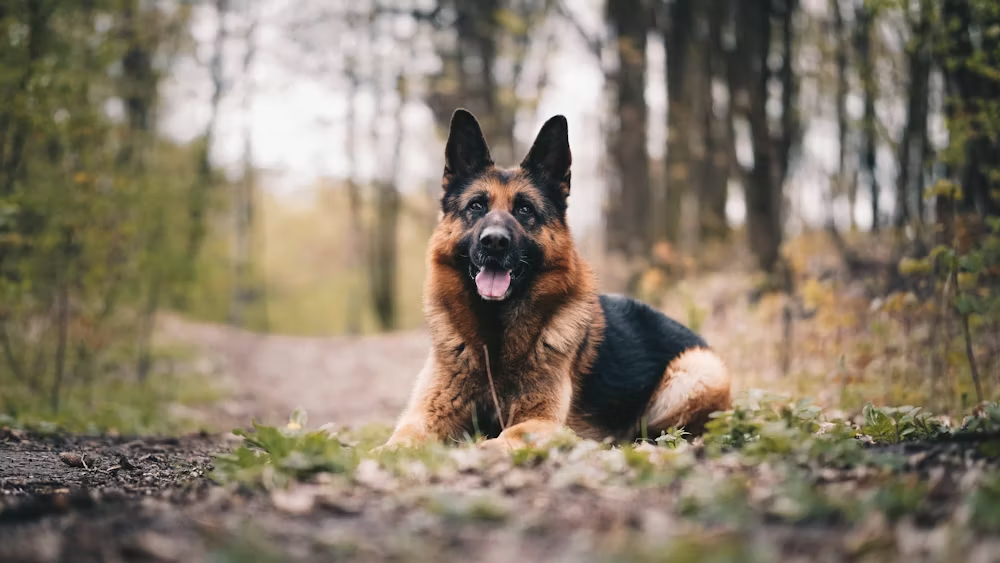
Rex was sitting perfectly still at my heel. His chest was out. His ears were up. He looked into the stands with a regal calmness that shamed my anxiety. He was proud. He knew he belonged there. And because he was part of me, I belonged there too.
The flag snapped high on the pole. The cheer rolled across the stands like a thing with weight—a physical wave of gratitude that hit us in the chest. It wasn’t pity. It was respect.
For a moment, just a moment, I didn’t feel like a broken thing. I felt like part of the town.
Part V: The Shift
If the story ended there, it would be enough. A nice evening. A step forward. A hot chocolate with my sister.
But stadiums hold little human emergencies the way deserts hold heat—quietly, everywhere, until they boil over.
We were walking off the field, the applause fading into the buzz of halftime chatter. I was heading toward the concession stand to meet Emily, who had run ahead to get napkins.
The atmosphere shifted.
It wasn’t a sound at first. It was a frequency. A disruption in the pattern. The chatter near the pretzel stand stopped. A ripple of confusion moved through the crowd near the north gate.
Then, a voice sharpened from casual to stranded.
“Molly? Molly!”
It was a mother’s voice. It cut through the low hum of the crowd like a knife through canvas. It was the specific, terrifying pitch of a parent who has turned around and found empty space where a child used to be.
The PA system stalled mid-song. A cluster of people turned all at once and then nowhere at all, looking at the ground, looking around legs.
“She was just here,” the woman screamed, her voice cracking into hysteria. She was spinning in a circle, grabbing the arms of strangers. “She was holding my jacket! Molly!”
A little girl. Gone.
In a stadium of five thousand people, a child had vanished into the seams.
I froze. The old instinct kicked in—assess, identify, react. But I was a civilian. I was just a guy with a dog. I wasn’t supposed to intervene. I was supposed to call 911 and wait.
I didn’t hear the detail first. Rex did.
His head shot up. His ears, usually swiveling independently, locked forward, carved into the night. His body went rigid, not with fear, but with a sudden, terrifying focus. The hair along his spine stood up.
He wasn’t a pet anymore. He wasn’t a retired veteran. He was a weapon system coming online.
He let out a low whine, a sound deep in his throat. He looked at me, amber eyes burning, then he looked toward the dark space beneath the visiting team’s bleachers.
I looked at the mother. She was spiraling. People were crowding her, asking questions, making it worse. “What was she wearing? How old is she?”
“She’s wearing a unicorn hoodie!” the mother sobbed, clutching her own hair. “She’s five! Someone help!”
A unicorn hoodie. Pink. Bright.
The police officer by the gate—Officer Miller, I knew him from high school, a good guy but soft around the middle—was trying to radio for backup, but the noise was too loud. The crowd was beginning to panic, a dangerous thing in a confined space.
I looked at the darkness under the bleachers. It was a maze of cross-bracing, trash, and shadows. A perfect place for a kid to hide. Or be taken.
I touched Rex’s collar. I felt the steady thrum of his pulse under my palm. It was slow. Steady. He was ready.
In training, we used whistles and hand signals and words that mean nothing to anyone who hasn’t needed them. We used German commands, sharp gutturals that cut through the noise of combat. Tonight, I didn’t have my gear. I didn’t have my unit.
I had a breath, and I had two syllables I hadn’t used in public since a far country where the dust tasted like pennies and the heat melted your boots.
I knelt down, grabbing the sides of Rex’s face. He locked eyes with me. The world fell away. The noise of the crowd became background static.
“Find,” I said.
Part VI: The Track
It wasn’t a request. It was permission.
Rex didn’t bark. He didn’t run around sniffing aimlessly like a bloodhound in a movie. He cut a line along the concourse clean as a pencil stroke.
I dropped the leash.
“Make a hole!” I shouted, my voice finding that command tone I thought I’d left in the desert. It wasn’t a shout; it was a detonation. “Move!”
People jumped. They saw the dog—ninety pounds of focused velocity—and they moved.
Rex threaded past coolers and knees, moving with a fluid speed. He wasn’t aggressive, but he was unstoppable. He moved under a poster with a flag and THANK YOU VETERANS fluttering in the breeze, ignoring the smell of dropped hot dogs, ignoring the other dogs barking in the parking lot.
He was air-scenting. He was tracking something I couldn’t see, something I couldn’t smell. He was tracking fear.
“Hey! Get that dog on a leash!” a security guard yelled, stepping into our path, hand on his belt.
I didn’t stop. I ran right past him. “He’s working! Back off!”
Rex didn’t even acknowledge the guard. He banked hard to the right, heading toward the darkest part of the stadium—the underside of the massive aluminum bleachers on the visitor’s side.
It was a restricted area. Fenced off. Dark. The kind of place where teenagers went to smoke and trouble went to hide.
Rex stopped by the chain-link fence that separated the track from the under-structure. He cocked his head. He whined again, a high-pitched sound of frustration.
He couldn’t get through the fence.
I ran up, my knee screaming in protest, my lungs burning in the cold air. “Show me, Rex. Show me.”
He reared up, pawing at the fence, barking once—a sharp, demanding bark. He looked through the mesh, then looked back at me. He bit the wire, trying to pull it back.
I looked through. It was pitch black. I couldn’t see anything but support beams and old candy wrappers.
“Is she there?” I asked him.
Rex dropped to all fours. He paced the fence line, back and forth, agitated. Then he found it—a spot where the chain link had been curled up at the bottom, likely by kids sneaking in. A gap maybe ten inches high.
He looked at me. He waited.
“Go,” I said.
He dipped under the aluminum, belly-crawling neat as a drill he hadn’t practiced in years. He disappeared into the darkness.
Part VII: The Silence Under the Bleachers
The band went silent. The crowd did too. Word had spread. The music had stopped. Five thousand people were watching a man and a dog at the fence line. The silence was heavier than the noise had been.
For a heartbeat that lasted a year, the stadium held its breath, and I realized I was holding mine with it.
I gripped the fence, my fingers white.
“Rex!” I called out.
Nothing. Just the wind whistling through the aluminum struts.
Then, a bark.
Not a warning bark. Not an attack bark. It wasn’t the guttural growl of a dog engaging a target.
It was the “Alert” bark. Rhythmic. Continuous. High-pitched. Woof. Woof. Woof.
The sound that says, I have found the objective. I am holding position.
My knees almost gave out.
“He found her!” I shouted to the police officer running toward me. It was Miller. He was panting, his hand on his radio. “He’s got her!”
Miller didn’t argue. He pulled out his tactical flashlight. He aimed the beam through the fence, sweeping the dirt under the bleachers.
The beam cut through the dust motes. It hit a concrete pylon. It swept left.
And there they were.
Huddled in the dirt against a concrete pylon was a splash of pink. The unicorn hoodie.
She was curled in a tight ball, her face buried in her knees, terrified, hiding from the noise and the lights. She looked tiny. Fragile.
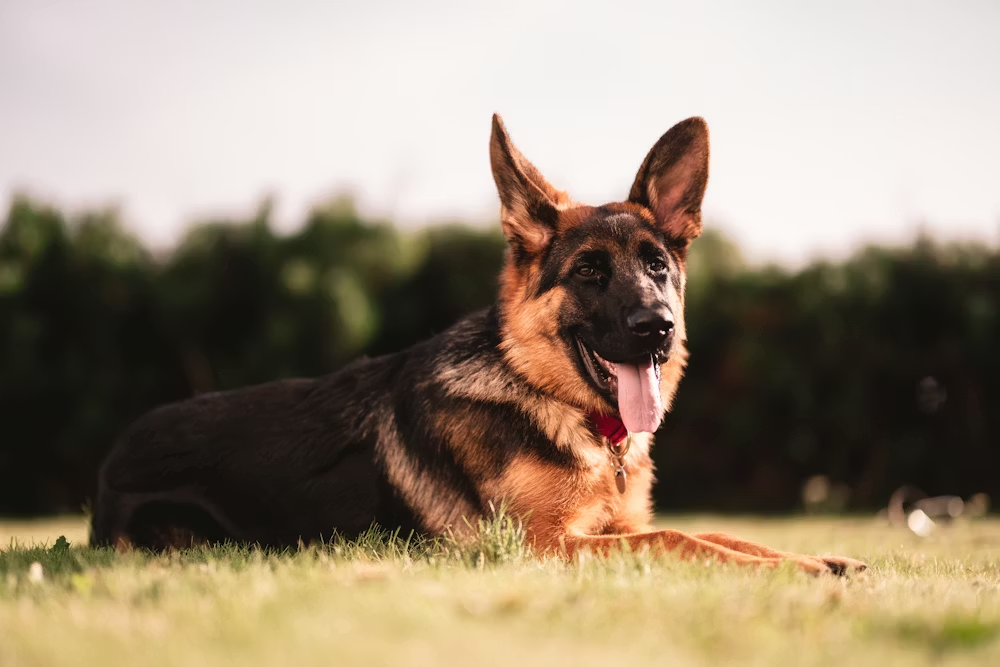
And sitting right in front of her, creating a living wall between her and the scary world, was Rex.
He wasn’t touching her. He wasn’t crowding her. He was sitting in a perfect guard position, back straight, ears up, facing outward. He was shielding her.
He looked back at the flashlight beam, his eyes reflecting green. He gave one more soft woof, and then wagged his tail. A slow, gentle thump against the dirt.
Part VIII: The Extraction
“I need bolt cutters!” Miller shouted into his radio. “Maintenance gate, south side. Now!”
“I’m going over,” I said.
I didn’t wait for the cutters. I grabbed the top of the eight-foot fence. My bad knee screamed, a hot knife of pain, but I hauled myself up. I rolled over the top, the wire snagging my jeans, and dropped into the dirt on the other side.
I landed hard, stumbling, but I was up in a second.
“Rex, stay,” I said softly.
He didn’t move. He kept his eyes on the girl.
I approached slowly. I didn’t want to scare her. To her, I was a stranger in the dark. To her, Rex was a wolf.
The girl lifted her head. Her face was streaked with tears and dirt. Her eyes were wide, fixed on the dog.
“Hi there,” I said, keeping my voice low and level. I crouched down, making myself small. “My name is Mark. That’s my dog, Rex.”
The girl sniffled. She looked at the ninety-pound war machine sitting like a statue in front of her.
“He’s big,” she whispered. Her voice was trembling.
“Yeah, he is,” I agreed. “He’s very big. But he’s safe. He found you so your mom could find you.”
Rex chose that moment to break protocol. He sensed the girl’s fear. He lowered his head, inching forward on his belly until his nose was just inches from her sneaker. He let out a soft huff of breath.
The girl reached out a tentative hand. She touched his wet nose.
Rex closed his eyes and leaned into her hand.
“He likes unicorns,” I improvised.
A small, watery smile appeared on her face. “Really?”
“Really. He thinks they’re the best.”
I held out my hand. “Ready to go see mom? She’s waiting right over there.”
She took my hand. Her grip was surprisingly strong.
“Come on, Rex,” I said. “Let’s go home.”
Part IX: The Reunion
By the time we walked back to the maintenance gate, the bolt cutters had done their work. The gate swung open.
We walked out of the darkness and into the stadium lights. Rex heeled perfectly at my left side, flanking the girl on the right. We were a formation.
When the crowd saw the pink hoodie, the sound that erupted wasn’t a cheer. It was a sob, a collective release of tension that shook the ground. People were hugging strangers.
The mother broke through the police line. She fell to her knees, disregarding the gravel, gathering the girl into her arms, burying her face in the unicorn hood.
“Oh god, oh god, thank you,” she wept. “Molly, oh my god.”
Molly clung to her mother, but she was looking back at Rex.
The mother looked up. She saw me. She saw the scars on my hands. Then she looked at Rex.
She didn’t care that he was a terrifying-looking animal with a tactical collar. She didn’t care that he looked like he could take down a bad guy in three seconds.
She reached out and grabbed Rex’s furry neck, burying her face in his ruff.
“Thank you,” she sobbed into his fur. “Thank you, thank you.”
Rex, the dog who had taken down insurgents, who had sniffed out IEDs, who had guarded me while I slept in the dirt, did something I had never seen him do.
He leaned into her. He licked the tears off her cheek.
He absorbed her grief. He took it from her.
Part X: The Long Road Back
The aftermath was a flurry of handshakes and flashing cameras. The mayor was there, talking on local TV about “heroes.” The police chief shook my hand and gave Rex a pat that was a little too hard, but Rex took it with dignity.
Officer Miller clapped me on the shoulder. “Hell of a job, Mark. Hell of a dog.”
“He did the work,” I said. “I just held the leash.”
We slipped away before the reporters could corner us. I didn’t want the fame. I didn’t want the questions. I just wanted to go home.
My knee was throbbing with a dull, rhythmic ache. My adrenaline was crashing, leaving me shaking.
We got back in the truck. Emily was there, waiting by the cab. She didn’t say anything. She just hugged me, hard.
“I told you,” she whispered.
“Yeah, yeah. You told me.”
I lifted Rex into the truck—he was tired now, the energy dump hitting him too. He curled up on the seat, asleep before the key was even in the ignition. He twitched, chasing something in his dreams. Maybe a rabbit. Maybe a unicorn.
I drove through the quiet streets of Oakhaven. The town looked different now. The streetlights seemed warmer. The houses seemed friendlier. It didn’t look like a place I was hiding in. It looked like a place I lived.
I pulled into the driveway. I turned off the engine.
I touched the flag magnet on the dash. My hands weren’t shaking.
“Wake up, buddy,” I said softly. “We’re home.”
Rex opened one eye, stretched, and let out a long, contented sigh.
Part XI: The Morning After
The next morning, I woke up at 0700. I had slept for six hours straight. No nightmares. No waking up reaching for a rifle that wasn’t there.
I walked into the kitchen. Rex was asleep on his rug.
I made coffee. I opened the front door to get the paper.
There, on my porch, was a box.
It was filled with dog treats. Tennis balls. A handmade card with a drawing of a dog that looked like a potato with teeth, and the words THANK YOU REX written in crayon.
And a note from Sarah, the mother.
“You gave me my life back. There are no words. Thank you for being there. Thank you for coming home.”
I sat on the porch step. Rex came out, stretching, blinking in the morning sun. He sniffed the box of treats. He looked at me.
I opened a bag of high-end jerky. I gave him a piece.
“Good boy,” I said. “Good job.”
That afternoon, we went to the grocery store. Usually, I went at midnight to avoid people. Today, we went at noon.
People stopped us. They didn’t stare with suspicion. They smiled. A guy in the produce section gave me a nod. “That the dog from last night?”
“Yeah,” I said. “That’s him.”
“Good dog,” the guy said. “Good to have you around, Mark.”
He knew my name.
We walked out into the sunshine.
We were retired. We were scarred. We were a little broken around the edges. But we were useful. We were part of the pack again.
And that, I realized as I watched Rex watching the world with his calm, amber eyes, was enough.
Let us know what you think about this story on the Facebook video and “if you like this story share it with friends and family.”
