The snow was falling in thick, heavy sheets outside the window, blanketing the manicured lawn of the colonial estate in a silence that felt deceptively peaceful. Inside, the kitchen was alive with the kind of warmth that usually signals a home, though I knew better. The air smelled of sage, brown butter, and the deep, earthy musk of black winter truffles.
The turkey was resting on the carving board, its skin lacquered to a mahogany shine. The Beef Wellington, a golden brick of puff pastry hiding a tenderloin that had cost more than my first car, was waiting its turn for the convection oven. But my attention was entirely focused on the copper pot simmering on the back burner.
I stood over the stove, finding a meditative rhythm in the stirring of the Arborio rice. It was a precise science—ladle the hot stock, stir until absorbed, repeat. This kitchen, with its six-burner Viking range and Carrera marble countertops, was a chef’s dream. My parents loved to show it off to neighbors, implying it was the fruit of my father’s shrewd “investments.” In reality, I had paid for every appliance, every tile, and even the copper pot I was holding.
My phone buzzed against the granite counter, vibrating with an insistence that cut through the hiss of the simmering broth. I glanced at the screen.
Caller ID: Sequoia Capital. Subject: Series B Funding – Aurora Collective. Valuation: $150 Million.
I wiped my hands on my apron, a small smile playing on my lips, and pressed the red “Decline” button.

To the world of high finance and haute cuisine, I was Julian Sterling, the phantom founder of the Aurora Collective, the fastest-growing ultra-luxury restaurant group on the globe. But today, inside these walls, I wasn’t a tycoon. I wasn’t a visionary. I was just Julian, the disappointment. The son who “didn’t have a real job.” The househusband who stayed home with his daughter, Lily, while his wife, Sarah, traveled for her corporate law career.
Sarah was the shield they understood. She wore suits. She had billable hours. I wore hoodies and apron strings. To my father, Arthur, that made me invisible.
The kitchen door swung open, shattering the culinary sanctuary. A draft of biting December air swirled in, followed immediately by the booming, performative voice of my father.
“Still playing house, Julian?”
Arthur Sterling marched in, aggressively stomping snow off his boots onto the travertine floor I had installed last year. He was wrapped in a camel-hair coat that he believed projected the image of a titan of industry, blissfully unaware it was two sizes too small, straining at the buttons across his midsection. Trailing in his wake was my older brother, Marcus.
Marcus was the golden child, a Vice President at BlueFin Logistics, a mid-tier trucking company that moved paper products and frozen vegetables. He wore a Bluetooth earpiece even on Christmas Day, the blue light blinking rhythmically, a beacon of his self-importance.
“Hey, little brother,” Marcus grinned, clapping me on the shoulder with enough force to send a splash of stock onto the burner. The liquid hissed violently. “Smells like… well, it smells like food. At least you’re good for something.”
“It’s Beef Wellington, Marcus,” I said, keeping my voice even as I turned back to the stove to check the consistency of the rice. “And Black Truffle Risotto for Lily.”
“Risotto?” Arthur scoffed, walking to the wet bar and pouring himself a generous glass of my 25-year-old single malt scotch without asking. “Why can’t you just make mashed potatoes like a normal person? Always trying to be fancy. It’s a waste of money.”
“It’s Christmas, Dad,” I said quietly, adding a knob of cultured butter to the pot. “I wanted to make something special.”
“Special is a paycheck,” Arthur snapped, turning to face me. The alcohol was already flushing his cheeks. “Special is providing for your family. Look at Marcus. He just closed a deal for twenty trucks. That’s a legacy. What’s your legacy? A good gravy recipe?”
I tightened my grip on the wooden spoon until my knuckles turned white. The irony was suffocating. They didn’t know that the “legacy” Marcus was bragging about—the contract that had saved his quarter—was with my supply chain subsidiary. They didn’t know that the scotch Arthur was gulping down cost more than his monthly mortgage payment. A mortgage that, unbeknownst to him, I subsidized every single month so the bank wouldn’t put a foreclosure sign on the front lawn.
“I provide, Dad,” I said, forcing my shoulders to relax. “Sarah and I are doing fine.”
“Because of Sarah!” Arthur shouted, slamming his hand on the counter. “You’re a leech, Julian. Living off your wife’s hard work while you play chef. It’s embarrassing. When I meet my friends at the club, I have to lie about what you do. I tell them you’re a ‘consultant’.”
“Technically true,” Marcus laughed, leaning against the refrigerator and picking at the appetizer tray. “He consults on which diaper brand is best.”
They roared with laughter, a sound that echoed hollowly in the high-ceilinged room.
I looked down at the risotto. It was transforming. The squid ink had turned the grains a deep, glossy black, darker than a moonless night, studded with diamond-like chunks of black truffle. It was earthy, rich, and incredibly complex. It was Lily’s favorite dish, the only thing she asked for.
I swallowed the anger rising in my throat like bile. Keep the peace, I told myself. For Lily. For Mom. Just get through dinner, put on the smile, and leave.
“Dinner will be ready in ten minutes,” I said, my voice devoid of emotion. “Please go sit down.”
Arthur swirled his drink, the amber liquid catching the light. “Fine. But don’t expect a tip.”
The Darkness on the Plate and the Light in a Child’s Eyes
The dining room was a testament to Arthur’s desperate need to project wealth he didn’t possess. It was decorated with excessive tinsel and flashing lights that gave the room the ambiance of a discount casino. My mother, a quiet woman who had shrunk over the years under the weight of her husband’s ego, was already seated, nervously smoothing the linen napkins.
I began the service. The Beef Wellington was perfect—the pastry shattered at the touch of a knife, revealing the pink, tender meat within. The vegetables were glazed to a jewel-like shine, smelling of thyme and garlic.
And then, I brought out the small, porcelain bowl for Lily.
Lily was six years old, her legs swinging high above the floor as she sat perched on a stack of velvet cushions. Her eyes, wide and innocent, lit up the moment she saw me approach.
“Daddy! Is that the special rice?”
“It sure is, princess,” I smiled, feeling the tension in my chest loosen for the first time that day. I placed the bowl in front of her with the care one might use for a crown jewel. “The Midnight Risotto. Just for you.”
Lily clapped her hands together, a sound of pure, unadulterated joy, and picked up her silver spoon.
Arthur leaned over from the head of the table, squinting at the bowl through the haze of his third scotch. His face contorted into a mask of utter disgust.
“What in God’s name is that?” he demanded, his voice cutting through the holiday music playing softly in the background.
“It’s risotto, Grandpa,” Lily chirped, oblivious to the malice radiating from him. “It has truffles!”
“It looks like mud,” Arthur sneered. His nose wrinkled as if he had smelled a sewer. “It smells like dirt. Julian, are you feeding my granddaughter dirt?”
“It’s squid ink and truffle, Dad,” I explained patiently, taking my seat. “It’s supposed to look like that. It’s a delicacy.”
“Delicacy?” Arthur spat the word out like a curse. “It’s filth. It’s peasant food trying to be fancy. Look at it! It’s black! Food shouldn’t be black!”
“I like it!” Lily insisted, her voice wavering slightly as she sensed the shift in the room. She moved to take a spoonful.
Arthur’s hand shot out across the table, fast and aggressive. He grabbed the bowl away from her before the spoon could reach her mouth.
“No!” Arthur shouted, his face turning a dark shade of plum. “I won’t have you poisoning her with your experimental garbage!”
“Dad, stop!” I stepped forward, my chair scraping loudly against the hardwood. My voice rose, cracking the veneer of calm I had maintained. “Give it back to her.”
“Grandpa!” Lily started to cry, huge tears spilling over her lashes. “I want it!”
“You don’t know what you want!” Arthur yelled at her, looming over the small girl. “You’re a child! You eat what normal people eat! You don’t eat mud because your father is too lazy to cook a real meal!”
He stood up, swaying slightly, and walked to the kitchen trash can that I had brought out to clear the appetizer plates. He held the bowl over the bin.
“Please, Dad,” I said, my voice low and dangerous. “Don’t.”
He looked me in the eye, a cruel smirk twisting his lips. He turned the bowl over.
Splat.
The risotto—five hundred dollars worth of premium ingredients, prepared with three hours of love and patience—slid into the bin with a sickening, wet sound. It landed on top of potato peels and raw eggshells, a ruined masterpiece.

The sound of Lily’s sobbing filled the room, a high, keen wail that broke my heart.
My mother gasped, her hand flying to her mouth. “Arthur! That was unnecessary!”
“It was necessary!” Arthur bellowed, slamming the empty bowl back onto the table with enough force to rattle the silverware. “Someone has to teach this boy how to be a man. You don’t feed family garbage!”
He turned to Marcus, who was watching the scene with a look of amused detachment. “Marcus, get your phone. Order a pizza. Pepperoni. Let’s get some real food in here.”
Marcus chuckled, pulling his smartphone from his suit pocket. “You got it, Dad. Pizza it is. Sorry, Julian, looks like your ‘masterpiece’ got vetoed. Maybe stick to mac and cheese next time.”
I stood there, frozen in time.
I looked at Lily, whose face was buried in her hands, her small shoulders shaking with the force of her grief. I looked at the trash can where my labor of love lay ruined among the refuse. And then I looked at my father.
He looked triumphant. He looked like a man who had finally asserted his dominance over the weak link in the herd, the alpha wolf disciplining the stray.
Something inside me broke. Or maybe, more accurately, something woke up. The dormant giant that I had kept sedated for the sake of family harmony opened its eyes.
I didn’t yell. I didn’t flip the heavy oak table.
I walked over to Lily, picked her up effortlessly, and kissed her damp forehead. “It’s okay, sweetie. Don’t cry. Daddy’s going to fix it.”
Then I turned to Marcus.
“Marcus,” I asked softly, my voice devoid of the pleading tone I had used my entire life. “You work for BlueFin Logistics, right?”
“Yeah,” Marcus said, not looking up as he scrolled through a delivery app. “VP of Operations. Why? You want me to get you a job driving a forklift? I might be able to pull some strings.”
“No,” I said. I pulled my own phone from my apron pocket. It wasn’t the cracked model I used around them; it was the sleek, unreleased prototype given to board members. “I just wanted to be sure before I make this call.”
The Phone Call That Changed the Temperature
The room went quiet. There was something in my tone—a cold, metallic edge that sounded like a knife being sharpened—that made even Arthur pause his triumphant posturing.
I scrolled through my contacts. I bypassed the “Family” list. I went straight to the “Board of Directors” list.
I pressed call.
“Who are you calling?” Arthur demanded, narrowing his eyes. “Your therapist? Going to cry about your rice?”
“Hello, Bill,” I said into the phone. My voice was calm, projecting perfectly in the silent room.
Marcus froze mid-tap. “Bill? Bill Henderson? My CEO?”
“Julian!” Bill Henderson’s voice boomed through the speakerphone, loud and crystal clear. “Merry Christmas! To what do I owe the pleasure? Did you decide on the expansion? Please tell me you’re taking the London deal.”
“We can discuss the London expansion later, Bill,” I said, keeping my eyes locked on Marcus, watching the color drain from his face. “Right now, I have a personnel issue regarding one of your employees. A Marcus Sterling.”
Marcus dropped his phone. It clattered onto his china plate with a sharp crack.
“Marcus?” Bill asked, his tone shifting from jovial to confused. “Yeah, he’s a VP of Ops. Decent guy. A bit loud, mediocre numbers, but he fills a seat. Is he bothering you?”
“He’s currently sitting at my table,” I said, enunciating every syllable. “He and his father just abused my six-year-old daughter. They threw her dinner in the trash and mocked her until she cried. I don’t feel comfortable doing business with a logistics company that employs people with such… poor judgment and lack of character.”
“Julian,” Bill’s voice dropped, becoming deadly serious. “You know Aurora Collective is our biggest client. You represent 60% of our annual revenue. If we lose your contract, we go under.”
“I know,” I said. “Which is why I’m telling you: I want him gone. Terminate him. For gross misconduct and reputational damage to the client relationship. Effective immediately.”
“Done,” Bill said instantly. There was zero hesitation. “I’ll call HR. I’ll override the holiday protocol. It’ll be processed in five minutes.”
“Thank you, Bill. Merry Christmas.”
I hung up.
Marcus stared at me, his mouth opening and closing like a fish pulled from the water. “You… you’re bluffing. You don’t know Bill Henderson. You’re a househusband! You’re a nobody!”
His phone rang.
It was the specific ringtone he had set for his boss. The Imperial March from Star Wars. A joke he had made once, claiming he was the rebel.
Marcus answered it with shaking hands, pressing the phone to his ear. “Hello? Mr. Henderson?”
We could hear the shouting from three feet away. “Pack your things, Sterling! You insulted who? Do you have any idea who Julian Sterling is?! He is the Aurora Collective! He owns the supply chain! You’re fired! Don’t bother coming in on Monday! Security will mail you your personal effects!”
The line went dead.
Marcus looked at me. He looked pale, green even, like he was going to vomit onto the tablecloth. “You… you got me fired? On Christmas? Over rice?”
“You laughed,” I said simply. “When Dad made Lily cry, you laughed. That was expensive laughter, Marcus.”
Arthur stood up, his face purple with a rage that shook his entire frame. He pointed a trembling finger at me. “You… you little snake! You ruined your brother’s career! Who do you think you are? Calling his boss and lying?”
“Who am I?” I repeated.
I walked over to the large 85-inch flat-screen TV mounted on the wall, the one I had bought them for their anniversary two years ago. It was tuned to a football game. I grabbed the remote and switched it to the Financial News Network.
“You ask who I am?” I said. “Watch.”

The Ghost Chef Revealed
The TV screen flickered. A breaking news banner ran across the bottom in bright, urgent red.
BREAKING: AURORA COLLECTIVE FOUNDER ‘JULIAN STERLING’ DECLINES BILLION-DOLLAR BUYOUT.
The anchor was speaking excitedly, graphics of stock trends flashing behind her.
“In a shocking move today, the reclusive chef and entrepreneur Julian Sterling, known in the culinary world as the ‘Ghost Chef,’ has turned down a massive offer from venture capitalists. Sterling, whose restaurant empire spans twelve countries and includes three Michelin-starred venues, stated he wants to keep the business family-owned.”
A picture of me appeared on the screen. It was a professional headshot I had taken for a magazine profile I never showed them. I was wearing a pristine white chef’s coat, standing in the stainless-steel kitchen of my flagship restaurant in Paris, holding a plate of…
Black Truffle Risotto.
The anchor continued: “Sterling is famous for his signature dish, The Midnight Risotto, a squid-ink and truffle creation valued at $500 a plate. It is currently the most requested dish in New York City, with a waiting list of six months just for a reservation.”
I turned to Arthur.
The silence in the room was heavier than lead. It was a physical weight pressing down on everyone. Arthur looked at the TV. He looked at the risotto—the “mud”—in the trash can. He looked at me.
“That…” Arthur whispered, his voice trembling. “That’s you.”
“That’s me,” I said, my voice steady. “The ‘unemployed’ son. The ‘leech’. The ‘disappointment’.”
I walked over to the trash can and looked down at the mess.
“You just threw the ‘Dish of the Gods’ into the garbage, Dad,” I said. “You called my life’s work ‘filth’. And you did it to hurt a six-year-old girl because you felt small.”
Arthur slumped into his chair, the fight draining out of him like water from a cracked vessel. “I… I didn’t know. Why didn’t you tell us?”
“I tried,” I said, feeling the old ache in my chest. “When I bought my first restaurant, I invited you to the opening. You said you were busy bowling. When I got my first Michelin star, I framed the article and gave it to you for Father’s Day. You used the frame for a picture of Marcus’s truck and threw the article away.”
“But… the money?” Marcus stammered, staring at the TV as if it were an alien artifact. “If you’re worth… millions…”
“Billions,” I corrected. “The company valuation as of this morning is just over one point two billion.”
Marcus looked like he might cry. “And you let us pay for dinner? You let Dad pay the mortgage? Why didn’t you just give us the money?”
I laughed. It was a dry, humorless sound that felt like sandpaper in my throat.
“You really think Dad pays the mortgage?” I asked.
I pulled out my phone again and opened a banking app.
“Dad,” I said, turning to Arthur. “Do you remember three years ago when the bank threatened foreclosure? You hid it from Mom, but I knew. And then suddenly, the bank called and said they ‘restructured’ the loan and lowered the payments to almost nothing?”
Arthur nodded slowly, sweat beading on his forehead.
“I bought the note,” I said. “I own the mortgage. I own this house. I’ve been letting you live here for $500 a month out of charity. I covered the rest. Every month. For three years.”
I tapped a button on my screen. The interface turned red.
“But charity has limits. And my limit is my daughter’s tears.”
My phone dinged loudly in the quiet room. Notification: Foreclosure Proceedings Initiated.
“I just instructed my legal team to enforce the acceleration clause,” I said. “You’re three months behind on the ‘charity’ payments, Arthur. You prioritized your scotch and your country club dues over your home. I’m foreclosing.”
“No!” my mother screamed, standing up for the first time, her hands shaking. “Julian! You can’t! It’s Christmas! You can’t do this to your father!”
“I can,” I said, looking at her with pity. “And I am. You stood by and watched him bully me for thirty years, Mom. You watched him bully Lily tonight. Silence is complicity.”
The Exodus
Arthur looked small. He didn’t look like the patriarch anymore. He didn’t look like a man of consequence. He looked like a frightened old man in a cheap, ill-fitting coat.
“Julian,” he pleaded, his voice cracking, reaching out a hand toward me. “We’re family. You can’t throw us out. It was a mistake. I was stressed! The market… the cold… I’ll apologize to Lily. Lily, honey, Grandpa is sorry! Grandpa loves you!”
Lily hid her face in the crook of my neck. She didn’t want his apology. She wanted safety. She wanted to go home.
“Family,” I said, tasting the word like spoiled milk. “You keep using that word. But you don’t know what it means. You think family is blood? You think family is obligation?”
I walked to the hallway and grabbed Lily’s pink puffer coat and my own wool trench.
“Family protects each other,” I said, zipping up Lily’s jacket with gentle, steady hands. “Family encourages each other. You mocked me for years. You belittled me. And I took it, because I thought maybe, deep down, you loved me. But tonight showed me the truth. You don’t love me. You love feeling superior to me.”
I looked at Marcus, who was sitting with his head in his hands, rocking back and forth.
“You loved the idea of being better than me,” I said to him. “That was the only way you could feel big. By making me feel small. Well, Marcus, look at us now. Who’s small?”
I opened the front door. The wind howled outside, carrying swirls of snow into the warm foyer.
“Your pizza will be here in thirty minutes,” I said. “Enjoy it. It’s the last meal I’ll ever subsidize. You have thirty days to vacate the property.”
“Wait!” Marcus ran to the door, grabbing the frame. “Julian! My job! Please! I have a car loan! I have credit card debt! I’ll lose everything! Just call Bill back! Tell him it was a joke!”
“You should have thought of that before you called my daughter’s food ‘garbage’,” I said coldly. “You like ‘real food for real men’? I hope you like the taste of unemployment. I hear they’re hiring forklift drivers.”
“Julian!” my mother cried from the dining room archway. “Where will we go?”
“I hear Florida is nice this time of year,” I said. “Marcus has a truck, doesn’t he? Maybe you can all live in it. Consider it a family bonding experience.”
I stepped out into the snow, the cold air feeling crisp and cleansing against my flushed skin.
The heavy oak door slammed shut behind us, cutting off their wailing. It was the most satisfying sound I had ever heard—the sound of a toxic chapter closing forever.
A sleek, black stretch limousine was idling at the curb, its exhaust puffing white clouds into the night air. My driver, Thomas, a man who had been with me since my first restaurant, stepped out and opened the rear door.
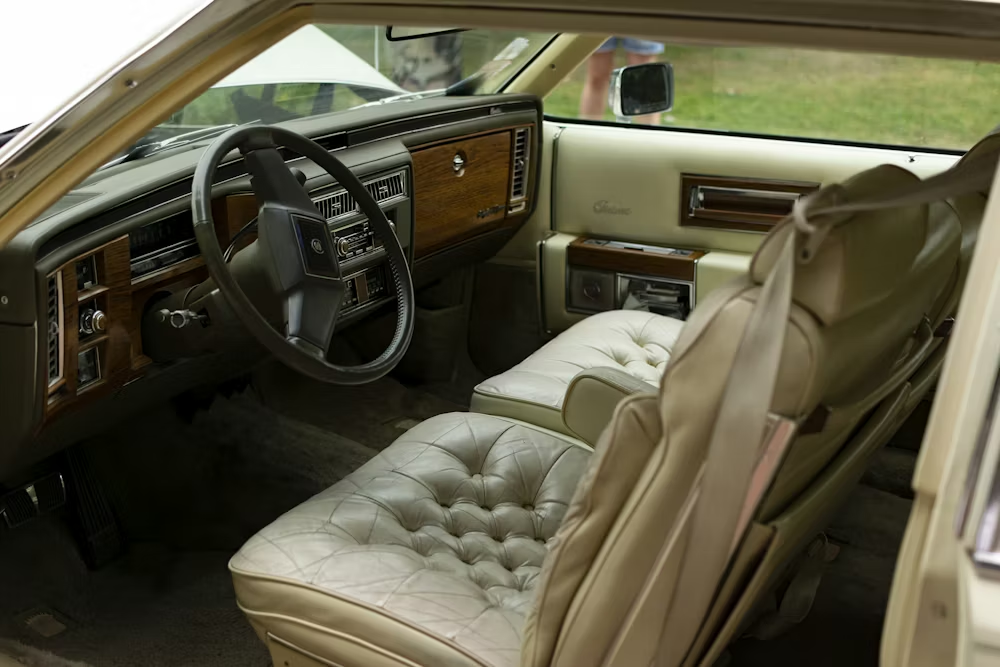
“Ready to go, Chef?” Thomas asked, his breath visible in the cold.
“Yes, Thomas,” I said, sliding into the warm, cream leather interior.
Lily looked up at me, her eyes still red and puffy, clutching my lapel. “Daddy, where are we going? Is Christmas over?”
I smiled and wiped a stray tear from her cheek with my thumb.
“No, sweetheart,” I said softly. “Christmas is just beginning. We’re going to a place where people know how to treat a princess. We’re going to a place where the food is celebrated, not thrown away.”
The King in His Kitchen
The limo glided through the snowy streets and pulled up to the service entrance of The Aurora, my flagship restaurant downtown. Even on Christmas, the lights were on. The kitchen was prepped and ready for the private event I was hosting later for my staff and their families.
We walked in through the back.
The moment I stepped through the double swinging doors, the noise stopped. The clatter of pans, the shouting of orders, the hiss of steam—all of it vanished.
Fifty chefs, sous-chefs, and line cooks froze in place. They saw me. They saw Lily holding my hand.
“Chef on deck!” the Chef de Cuisine shouted, snapping to attention.
“Chef!” The entire kitchen roared in unison, a sound of respect, discipline, and loyalty that my father’s house had never known.
I walked to the main pass, the stainless steel heart of the operation. I set Lily down on a high stool at the Chef’s Table—the best seat in the house, right in the middle of the action, usually reserved for royalty and celebrities.
“Team,” I said, my voice carrying easily over the vast space. “We have a VIP guest tonight. My daughter, Lily. She had a very bad dinner experience earlier. Someone told her that her favorite food was garbage.”
A murmur of outrage went through the kitchen like a wave. These people knew food. They knew art. They knew that to insult the food was to insult the soul.
“We are going to fix that,” I said. “Sous-chef! Prep the risotto station. I’m cooking.”
I took off my wool coat and tossed it aside. A line cook immediately caught it and hung it up. I put on my fresh, starch-white chef’s jacket, buttoning it up the front. I tied my apron—the same style of apron my family had mocked just an hour ago, but here, in this cathedral of cuisine, it was a vestment of authority.
I started cooking.
The motion was muscle memory. I chopped the shallots with machine-gun speed. I toasted the rice until it smelled nutty and sweet. I deglazed the pan with a vintage white wine, the steam rising up to embrace me. I added the squid ink, turning the rice a deep, lustrous black. I shaved fresh black truffles over the top, the aroma filling the kitchen like the most expensive perfume in the world.
The staff watched in silence, mesmerized. This wasn’t just cooking; it was a reclamation. It was an exorcism of the shame my father had tried to force upon me.
I plated the risotto in a beautiful, wide-rimmed white porcelain bowl. I garnished it with delicate edible gold leaf and a sprig of micro-greens.
I walked around the pass and placed it in front of Lily.
“The Midnight Risotto,” I said softly. “For the most important critic in the world.”
Lily took a silver spoon. She took a bite, closing her eyes as the flavors hit her tongue. She smiled, a real, genuine smile that reached her eyes.
“It’s perfect, Daddy,” she said. “It’s better than pizza.”
The kitchen staff cheered, clapping and banging their ladles against the counters. Lily giggled, the sound echoing off the tiles.
I kissed the top of her head, breathing in the scent of her shampoo, finally letting the tension leave my shoulders.
My phone buzzed in my pocket. It was a text from Sarah.
Just landed. Heading home. How was dinner with your parents?
I looked at the message, then at my daughter eating happily, surrounded by people who respected us.
I typed back: Dinner was cancelled. Meet us at the restaurant. We’re starting a new tradition. One without them.

I looked around the kitchen. The warmth, the smells, the respect. This was my world. I had built it with my own hands, despite every insult, despite every doubt, despite every time my father told me I was wasting my life.
I thought of Arthur and Marcus, eating their pepperoni pizza in a cold house they no longer owned, wondering where it all went wrong. They had mistaken kindness for weakness. They had mistaken silence for submission.
But the giant was awake now, and he was hungry.
I poured myself a glass of vintage red wine and sat next to my daughter.
“Eat up, sweetheart,” I said. “We have dessert coming next. And I promise, nobody is ever going to take your plate away again.”
We’d love to hear your thoughts on this story! Do you think Julian was too harsh on his family, or did they get exactly what they deserved? Let us know in the comments on the Facebook video, and if this story touched your heart, please share it with your friends and family!
