I had never been particularly sensitive to my surroundings, at least not in the way some people are, who notice every creak in the floorboards or every subtle change in the air.
But spending a few nights at my friend’s old apartment changed that entirely. The first bump I noticed on my arm was small, unremarkable.
I barely thought about it. Perhaps a mosquito, perhaps just irritation from the fabric of the sheets. But then the pattern became apparent, and suddenly the bumps weren’t just small, isolated annoyances—they were a signal.
By the second night, my skin had started to feel like a map of warning signs, each small rise and itch pointing to something unseen, something wrong that my mind couldn’t yet identify.
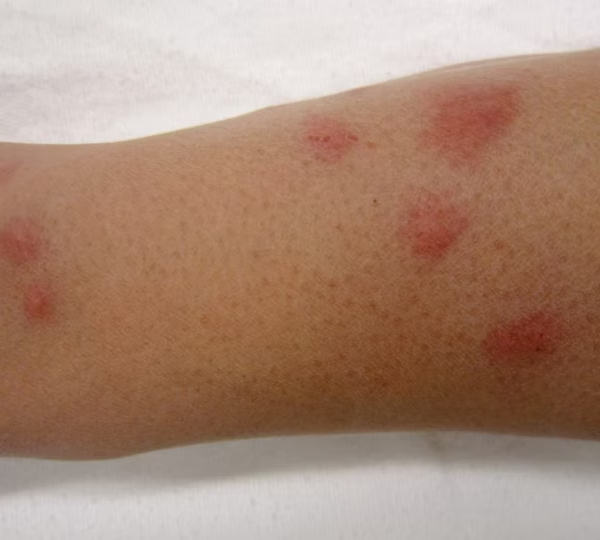
The initial clusters appeared in predictable places: areas where my body pressed most firmly against the mattress. My shoulders, the small of my back, the tops of my legs—spots where contact was constant.
Each itch was quiet, subtle, almost polite, yet relentless. It was like an alarm system I kept ignoring, choosing to hit snooze instead of paying attention. At first, I tried to rationalize it.
Maybe it was the detergent, maybe I had eaten something strange, or maybe my skin was simply reacting to stress. But nothing had changed.
My soap, my shampoo, the food I ate, my routine—everything remained identical to what I was used to at home.
The only difference was the space I was occupying, and that realization alone made the discomfort feel heavier, more significant.
Old apartments carry invisible histories, histories written not in stories or photographs, but in the very walls, floors, and fabrics that survive decades of human use.
I had read about these things before, of course: bed bugs hiding in the seams of mattresses, fleas burrowing in carpets, dust mites flourishing in pillows, mold creeping in unnoticed corners, chemical residues clinging to upholstery.
But reading about them is one thing; experiencing them on your own skin is another entirely. And in this apartment, my body was the first to notice. It reacted instinctively, warning me before my mind had even fully acknowledged the threat.
Some of the bumps faded quickly, dissolving into harmless spots that disappeared overnight. Others throbbed, stubbornly persistent, making it impossible to ignore them.
I scratched some unconsciously in my sleep, only to wake and find new clusters forming in slightly different locations. Lying awake in the dim light of the room, I couldn’t help but wonder what had actually been sharing the space with me.
Were they bed bugs? Fleas? Dust mites? Something else entirely?
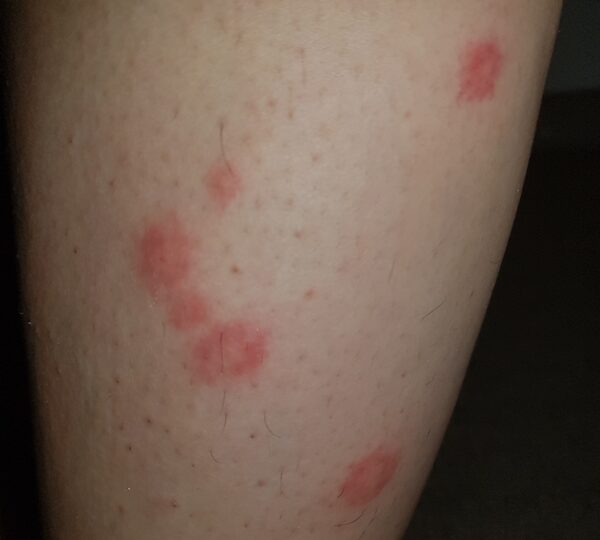
The uncertainty was more unsettling than the itch itself. It felt as if my body had perceived the presence of these tiny invaders long before my conscious mind did, a silent, instinctive alarm that I had only begun to understand.
That night, I started paying attention in a way I never had before. I examined the mattress edges meticulously, sliding my fingers along the seams, inspecting the crevices of the headboard.
Every corner, every fold, every shadow became a potential hiding spot. I washed everything I had brought with me, not just my clothes but also the towels, the blankets, and even the small backpack I had left on the floor.
My showers became longer and more deliberate, almost ritualistic, as if I were trying to rinse the apartment itself off my skin. Each act was both preventative and therapeutic.
I felt a strange sense of control in taking these measures, a way to reclaim my own space within someone else’s home.
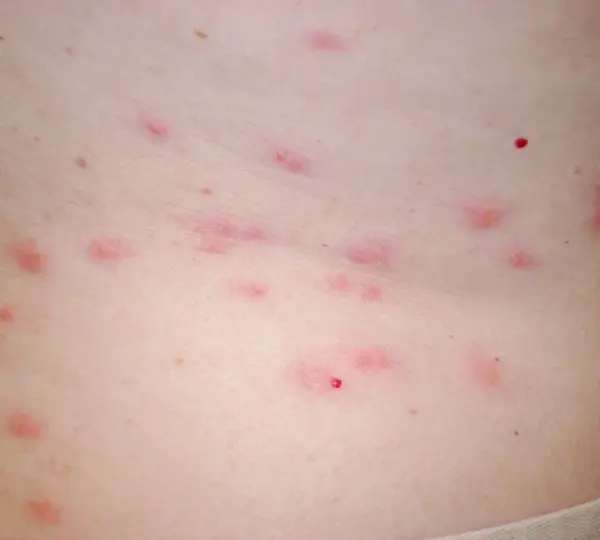
By the third night, I had noticed that the bumps tended to cluster in areas where the mattress fabric met the bed frame. This subtle pattern, barely discernible to the naked eye, suggested the presence of bed bugs.
I couldn’t see them, of course—these creatures are experts at hiding—but the evidence was undeniable.
Tiny punctures surrounded by faint redness, an almost imperceptible swelling that itched relentlessly, were enough to confirm what my intuition had already suspected.
It was fascinating, in a way, to realize how sensitive our bodies can be. Skin reacts before thought. The body perceives threats that the mind cannot yet define, translating them into sensations that are difficult to ignore.
The irritation eventually faded after I took extensive precautions. I washed every piece of clothing again, vacuumed the areas I could reach, and treated the mattress as best I could with sprays and protective covers.
Even as the physical discomfort diminished, the lesson lingered. Our bodies communicate constantly, often in ways we overlook.

Itchiness, tingling, and discomfort are not always random annoyances—they can be informative, signaling environmental hazards that our conscious awareness has yet to detect.
In that sense, discomfort is not a nuisance; it is intelligence encoded in sensation, a subtle yet vital warning system that can protect us if we pay attention.
This experience also taught me to be mindful of the invisible histories carried by unfamiliar spaces. Apartments, houses, and other living areas accumulate layers of presence over time.
Each tenant leaves something behind: a scent, a stain, an unseen residue, or tiny creatures that survive in silence. It is easy to assume that a place is harmless simply because it appears clean and orderly.
But appearances can be deceptive. My skin had become the first line of recognition, perceiving what my eyes could not, deciphering a history that was hidden in fabric and wood, in walls and floors.
The bumps I experienced were not merely physical reactions; they were signals that demanded interpretation. Each flare-up, each cluster, told a story.
They spoke of previous occupants, of unnoticed infestations, of accumulated dust and potential allergens. In responding to these signs, I learned a kind of environmental literacy, a method of reading spaces through the sensations they provoke on the body.
It was both humbling and empowering. My skin became a translator, turning tiny, almost imperceptible threats into warnings I could understand and act upon.
Interestingly, the psychological aspect of this experience was just as significant as the physical one. The awareness that I shared my space with unseen entities—be they insects, mites, or spores—transformed the way I perceived my surroundings.
Ordinary objects became suspect: the mattress felt loaded with potential hazards, the carpet seemed alive in subtle ways, the pillows no longer offered simple comfort. Sleep, normally a refuge, became a negotiation between relaxation and alertness.
I had to trust my own senses while not letting anxiety dominate.
It was a delicate balance, but it reinforced the broader truth: the human body is an incredibly sensitive instrument, capable of detecting environmental changes that the mind might overlook.
As I reflect on that period, I realize how rare it is to experience this level of bodily communication. Most of us move through spaces without truly registering them beyond conscious observation.
We clean surfaces, wash clothes, and arrange furniture, but our skin often remains a passive participant. When it begins to signal, though, the messages are precise.
The pattern, the location, the persistence of irritation—they all convey information that can help us respond appropriately. In my case, paying attention meant acting.
Checking the mattress, washing belongings, showering meticulously—it was a form of dialogue with my own body, a response to the silent warnings it had issued.
Even now, years later, the memory of those nights in that old apartment lingers. It reminds me that spaces are not neutral; they carry histories, both visible and invisible.
Bed bugs, dust mites, mold, and chemical residues are just some of the tangible ways those histories manifest. Our bodies are remarkably attuned to these subtleties, often alerting us to danger long before any rational analysis occurs.
Ignoring these signals is tempting—after all, who wants to overreact to a few itches?—but doing so can come at a cost, both physically and psychologically.
In the end, the apartment taught me a profound lesson: discomfort is information, and attention is the key to interpreting it.
Our skin reacts for a reason, and understanding those reactions can reveal hidden truths about the spaces we inhabit.
It’s a reminder that vigilance need not be paranoia. Rather, it is a form of respect for the intelligence of the body, an acknowledgment that our senses are finely tuned instruments capable of perceiving realities beyond immediate perception.
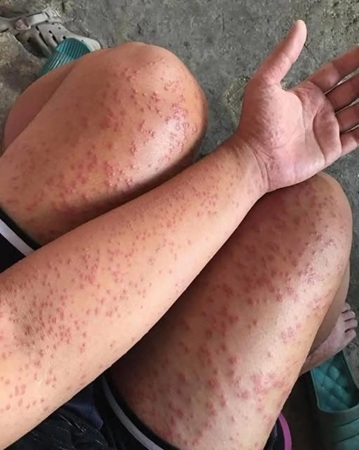
Unfamiliar spaces carry invisible histories, and our bodies are often the first to recognize them. When skin begins to speak in welts, bumps, and clusters, it may be signaling that a place is not as harmless as it appears.
Listening carefully, responding thoughtfully, and respecting those signals allows us not only to protect ourselves but also to engage with the world in a richer, more aware way.
The lessons learned from that small, itchy apartment extend far beyond the nights I spent there—they are applicable to any space, any environment, any situation where unseen forces quietly influence our well-being.
Through this experience, I discovered a kind of environmental literacy I hadn’t known existed. It is a skill that requires patience, observation, and a willingness to trust the body’s instincts.
It reminds me that comfort is not always obvious and that danger often hides in plain sight. But it also offers reassurance: the body, when listened to, communicates clearly, providing guidance even in the absence of visible evidence.
The bumps, the clusters, the itches—they were all messages, and by heeding them, I gained not just relief, but understanding.
In short, my time in that old apartment was more than a minor inconvenience. It was a lesson in perception, attentiveness, and respect for the subtle ways the world interacts with us
. It taught me that skin has memory and intelligence, that discomfort is not always a nuisance, and that even small, invisible histories can leave a tangible mark.
For anyone entering unfamiliar spaces, it is a reminder: pay attention. Listen to your body. The signals are there, often quiet, often overlooked, but always meaningful.
They tell the truth about the spaces we occupy—and sometimes, they are the only way we can know what truly hides beneath the surface.
