The dressing table had been discarded without ceremony. Scratched, poorly painted, and marked simply “Free,” it sat at the roadside as people passed without a second glance. The assumption was easy: it was beyond saving. Then Ross Taylor stopped. Where others saw something finished, he saw something unfinished.
What he brought home was not obviously valuable. Thick yellow paint had been applied unevenly, drawers were damaged, and some parts were missing altogether. Most people would have stripped it for parts or left it behind. Taylor chose a slower approach. He began carefully removing layers of paint, repairing broken sections, and rebuilding what had been lost. There was no rush—only patience and steady attention.
As the surface came away, the piece began to reveal its past. Beneath the paint was well-crafted wood, balanced proportions, and the subtle elegance of Art Deco design. What had appeared crude was hiding thoughtful craftsmanship. Taylor treated each step with care, working as if the table’s history mattered, even after it had been forgotten.
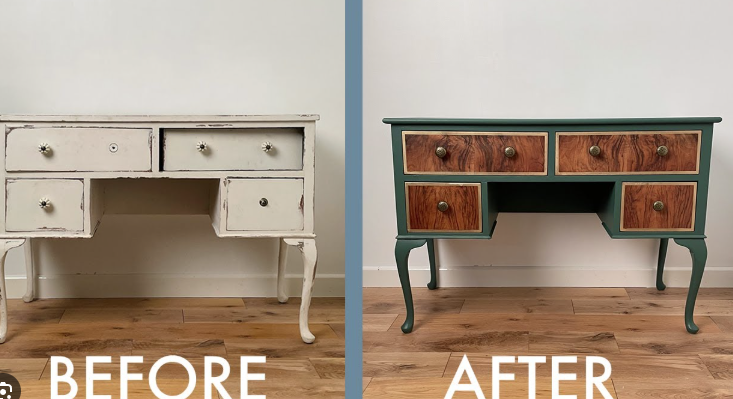
When the restoration was complete, the change was striking but restrained. A deep walnut frame and warm mahogany drawers emerged. The table no longer needed attention; it simply held it, quietly and naturally. When Taylor shared the process online, millions watched. Not just for the final reveal, but for the patience behind it. The story resonated because it reflected something familiar—that value is often hidden beneath neglect, and renewal takes time. Sometimes, it only takes someone willing to look twice.
