The drive to my daughter’s house was usually a route I could navigate with my eyes closed, a forty-minute hum of asphalt winding through the gray, leafless suburbs of Connecticut. But that Tuesday, the road felt different. The tires hummed a nervous vibration against the pavement, syncing with the knot that had been tightening in my stomach for weeks.
I almost never went to Laura’s house without calling first. It was an unwritten rule of modern parenting: you give your adult children space. You respect their privacy. You wait for the invitation. But the invitations had stopped coming six months ago.
The calls had become shorter. Her voice, once vibrant and full of stories about her graphic design work or her garden, had thinned out. It sounded brittle, like dried leaves skittering over pavement. When I asked how she was, the answers were scripted. “I’m fine, Mom. Just busy. Daniel likes the house kept a certain way.”
It wasn’t a logical deduction that drove me into my car that afternoon. It was something primal. It was the biological alarm bell that rings in a mother’s ear when the silence becomes too heavy. I decided, for the first time in three years, to break the rules.
The House That Felt Like a Vault
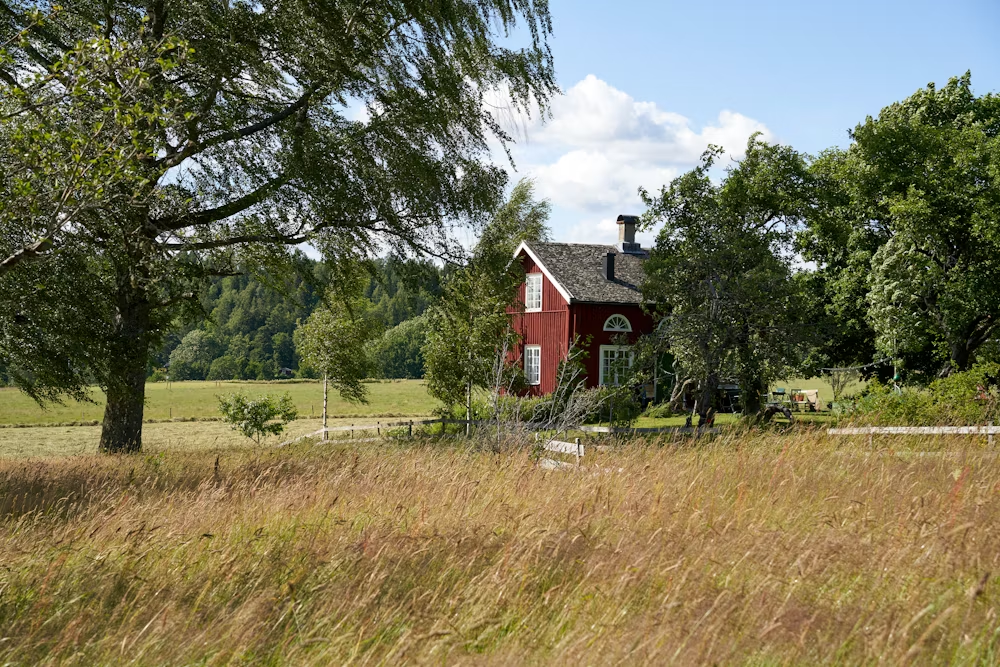
I pulled into the driveway. The house was impressive—a colonial revival with manicured hedges and black shutters. Daniel, my son-in-law, was obsessed with curb appeal. To the outside world, it was the picture of upper-middle-class success.
I walked up the path, clutching my purse against the biting November wind. I rang the doorbell and waited.
Silence.
I rang again. I knew they were home; Daniel’s BMW was in the driveway, and so was Margaret’s sedan. Margaret, his mother, had moved in “temporarily” four months ago to recover from a minor surgery. That temporary stay had stretched on, indefinable and suffocating.
After two minutes of standing on the porch, I reached into the zippered pocket of my bag. I pulled out the spare key Laura had given me on her wedding day. “Just in case,” she had said then, laughing, her eyes bright with a future she couldn’t wait to start.
I slid the key into the lock. It turned with a heavy, expensive click.
The moment I stepped inside, the atmosphere hit me. It wasn’t just the temperature, though the thermostat was clearly set punishingly low. It was the air itself. It felt stagnant, pressurized, like the air inside a submarine before a dive.
“Laura?” I called out.
My voice seemed to be swallowed by the high ceilings. There was no answer.
From the back of the house, down the long hallway that led to the kitchen, I heard a sound. It was the steady, rhythmic rush of running water.
I didn’t take off my coat. I walked down the hall, my boots silent on the runner.
A Scene of Quiet Cruelty
The kitchen was the heart of the house, a vast space of marble countertops and stainless steel appliances. But as I stood in the archway, it didn’t look like a home. It looked like a stage play where the actors had forgotten their humanity.
Laura was standing at the farmhouse sink. Her back was to me. She was wearing a thin, gray cotton sweater that looked threadbare, her shoulders hunched up toward her ears as if she were trying to disappear into herself. Her hands were submerged in water, scrubbing a pot with a repetitive, frantic motion.
She was shivering. Visibly shaking.
At the large oak dining table, just ten feet away, sat Daniel and Margaret.
The contrast was so sharp it was almost a caricature. Daniel was wearing a thick, cable-knit sweater and nursing a glass of red wine. Margaret was wrapped in a plush cashmere shawl, a plate of roast beef and potatoes in front of her. The room smelled of rosemary and garlic, warmth and comfort—but only for them.
They were chatting. I caught snippets of it—something about the stock market, something about a neighbor’s tacky holiday lights. They ate with languid, comfortable movements.
Laura might as well have been a ghost.
Margaret pushed her plate away, leaving it half-full. She didn’t stand up. She didn’t clear it. She just sighed, a sound of heavy, performative satisfaction.
Daniel reacted instantly. He didn’t look at his mother; he looked at his wife’s back.
“Are you done yet?” he barked. His voice wasn’t loud, but it cut through the room like a whip. “Bring more food. Mother is still hungry.”
Laura flinched. It was a small movement, a contraction of her spine, but I saw it. She turned off the tap. She didn’t grab a towel. She wiped her red, wet hands on her jeans—jeans that looked too loose on her frame.
“Yes,” she whispered.
She turned around, and that was when she saw me.
Her face was unrecognizable. The spark was gone. Her eyes were dull, rimmed with dark circles that stood out starkly against her pale skin. Her hair, usually blown out and glossy, was pulled back in a messy, utilitarian bun. She looked drained. Not just tired—empty.
In that split second, the pieces of the puzzle slammed together. The missed calls. The weight loss. The isolation. This wasn’t a marriage; it was a regime.
Margaret turned in her chair, following Laura’s gaze. Her eyes narrowed when she saw me, but she plastered on a smile that didn’t reach her eyes.
“Oh,” Margaret said, remaining seated like a queen holding court. “We didn’t expect you today. Did you call?”
I didn’t answer her. I couldn’t look at her without screaming, and I knew screaming wouldn’t help Laura right now.
I looked at my daughter. She had frozen near the oven, a serving spoon in her hand. She looked terrified—not of me, but of the situation. She looked like a child waiting to be scolded for something she didn’t do.
“Hello, Mom,” Laura breathed.
Daniel stood up, wiping his mouth with a linen napkin. “You know, it’s polite to ring the doorbell,” he said, his tone smooth, charming, and utterly menacing.
“I did,” I said, my voice steady. “Nobody answered. I let myself in.”
“We were having a private family dinner,” Daniel said, stepping between me and Laura.
“I can see that,” I replied. “I can see exactly what you’re doing.”
The Call
Laura returned to the sink. She didn’t run to hug me. She went back to the work. Her movements were careful, surgical, as if dropping a fork would result in a catastrophe. She kept her head down.
That silence frightened me more than any scream could have. It was the silence of someone who has learned that speaking only brings pain.
I needed to get her out. But I knew Daniel. He was a lawyer. He was litigious, manipulative, and smart. If I just grabbed her and ran, he would spin a story of kidnapping or mental instability. He would call the police on me.
I needed leverage.
“I just need to use the restroom,” I lied. “Long drive.”
I stepped out of the kitchen and into the hallway. My hands were trembling as I pulled out my phone. I didn’t go to the bathroom; I went to the foyer, near the front door, where the acoustics would carry but I couldn’t be seen.
I scrolled to a contact I hadn’t used in years but kept for emergencies. Javier – Legal.
Javier was an old friend of my late husband. He was a family law attorney who specialized in high-conflict divorces and coercive control cases. He was also the kind of man who answered his phone on the first ring.
“Eleanor?” he answered. “Is everything alright?”
“I need you to come here,” I said quietly, keeping my eye on the kitchen archway. “To my daughter’s house. Right now.”
“What’s happening?”
“It’s Daniel,” I said. “I think… I think it’s a hostage situation that looks like a marriage. I need a witness, Javier. And I might need the police.”
“Send me the address,” he said instantly. “I’m twenty minutes away. If you feel immediate danger, call 911.”
“Just hurry.”
I hung up and composed myself. I walked back into the kitchen.
Nothing had changed. Daniel had sat back down and was pouring more wine. Margaret was picking at a roll. Laura was scrubbing the same pot.
“Would you like a plate, Eleanor?” Daniel asked, his voice dripping with false hospitality. “Though, I’m afraid Laura hasn’t prepared quite enough for four.”
“I’m not hungry,” I said. I walked over to the sink and stood next to my daughter.
I reached out and touched her arm. Her skin was ice cold.
“Laura,” I whispered. “Why is it so cold in here?”
She didn’t look up. “Daniel says the heat makes him sleepy. We keep it down during the day.”
“It’s fifty degrees in here, Laura.”
“It keeps us alert,” she recited, as if reading from a script.
The Knock at the Door
Twenty minutes is a lifetime when you are watching your child suffer. I stood there, making small talk, commenting on the weather, playing the part of the oblivious mother-in-law. Every minute that ticked by felt like a physical weight.
Then, finally, three sharp raps on the front door.
Daniel frowned. “Who is that?”
“I’ll get it,” I said quickly, moving before he could stand.
I opened the door to see Javier. He was in a suit, looking formidable. Behind him, parked at the curb, was a squad car. Two officers were walking up the driveway.
I had texted Javier the details: Mental distress. Potential domestic abuse. Unsafe conditions. He had called in a wellness check to accompany him.
Daniel appeared behind me. He looked annoyed, ready to dismiss a solicitor. But when he saw Javier and the uniforms, his expression shifted instantly. The arrogance vanished, replaced by the calculating mask of a predator who knows he is being watched.
“Good afternoon,” Javier said calmly. His voice was deep, authoritative. “We received a call expressing serious concern regarding the welfare of a resident here.”
“Concern?” Daniel laughed, a hollow, nervous sound. “From whom? This is harassment.”
Margaret appeared in the hallway, clutching her shawl. “There must be a misunderstanding,” she declared, her nose in the air. “Everything is fine here. We are having dinner.”
“We need to speak with Laura Bennett,” one of the officers said. He was older, with kind eyes. He looked past Daniel, scanning the interior of the house.
“She’s busy,” Daniel said, blocking the doorway.
“Sir, step aside,” the officer said. It wasn’t a request.
I stepped back and nodded to the officers. “She’s in the kitchen.”
We walked in. The kitchen felt small with so many people in it. Laura had stepped away from the sink when she heard the voices. She was standing in the center of the room, clutching the edge of her thin sweater, her knuckles white.
When she saw the police, she froze. Her eyes darted to Daniel, seeking permission, seeking a cue on how to react.
“Ma’am, are you Laura?” the officer asked gently.
Laura looked at Daniel. His eyes were hard, boring into her. Then she looked at Margaret, who was shaking her head slightly.
Then she looked at me.
I nodded. Tell them.
“Are you okay?” the officer asked. “We had a report that you might be in distress.”
The silence stretched. I could see the battle in her mind. The conditioning of the last few years fighting against the reality of the moment.
Finally, she lowered her eyes to the floor.
“No,” she said softly. The word was so quiet it was almost invisible. “No… I’m not okay.”
The air left the room.
Margaret gasped. “Laura! Don’t be dramatic. She’s just tired, officer. She works hard.”
“She looks freezing,” Javier noted, stepping forward. He looked at the thermostat on the wall. “It’s fifty-eight degrees in here. And she’s wearing cotton.”
The officers observed the environment. They saw the imbalance. The husband in wool, the wife in rags. The feast on the table, the woman standing by the sink. They saw the tremor in Laura’s hands.
Margaret began to argue, her voice rising in pitch. “She is too sensitive! This is just how families work! Everyone pitches in!”
Javier interrupted her, his voice low and dangerous.
“Ma’am, I advise you to remain calm. Everything is being noted. This is not how families work. This is how prisons work.”
The Extraction
The officers separated them. One took Daniel into the living room. The other stayed in the kitchen with us.
I walked over to Laura. She was shaking violently now, the adrenaline crash hitting her. I took off my heavy winter coat and wrapped it around her shoulders. She pulled it tight, burying her face in the collar.
For the first time in a long while, her face showed relief. It was mixed with terror, yes, but underneath the fear was the realization that the secret was out. She didn’t have to hide anymore.
“I didn’t want it to come to this,” she whispered, tears finally spilling over. “I thought I could fix it. I thought if I just worked harder, if I was just better, he would go back to how he used to be.”
“I know,” I said, holding her. “But you don’t have to face this alone anymore. You don’t have to fix him.”
In the living room, voices were raised. Daniel was trying to use his legal jargon to intimidate the officers. It wasn’t working. They weren’t there for a debate; they were there for a wellness check, and they didn’t like what they saw.
Javier came back into the kitchen.
“Laura,” he said gently. “Do you want to leave?”
She looked up. “Can I?”
“Yes,” Javier said. “You can walk out that door right now. Your mother will take you. I will stay here and ensure Daniel does not follow.”
She looked at the sink full of dishes. She looked at the half-eaten roast. She looked at the life she had built, which had become a cage.
“I need my shoes,” she said.
That afternoon, Daniel was asked to leave the house temporarily while the situation was reviewed. The police issued a temporary domestic incident report, enough to get an emergency restraining order started. Margaret left angrily, packing a bag and insisting that I had ruined her son’s life.
“It’s not over,” she hissed at me on her way out. “You’ll hear from his lawyers.”
“Let them come,” I said.
When the door finally closed, the house grew quiet. Really quiet. Not the tense silence of before, but the empty silence of a vacuum.
Laura sat on the sofa, wrapped in my coat. She took a deep breath, filling her lungs as if she could finally breathe oxygen instead of anxiety.
“I thought no one would believe me,” she said. “It’s not… he never hit me, Mom. I have no bruises. People don’t understand when there are no bruises.”
“I always believe you,” I replied. “And abuse isn’t just hitting. It’s control. It’s making you small so he can feel big.”

The Long Road Back
We didn’t stay at her house that night. We went back to mine.
The weeks that followed were difficult. They were a blur of meetings with Javier, counseling appointments, and long, sleepless nights.
Laura blamed herself at times. This is common, the therapists told us. It’s called the Stockholm Syndrome of the domestic sphere. She wondered if she had tried harder, if she had just cooked the roast perfectly, if things would have been different.
“He loved me in the beginning,” she would say, crying over her morning coffee.
“He loved owning you,” I would correct gently. “There is a difference.”
Slowly, painfully, she began to recover something she had lost—her voice.
It started with small things. She chose what we ate for dinner. She picked a movie to watch. She bought a sweater that wasn’t gray.
With support and guidance, she learned to identify the mechanisms of control that had been used against her. The financial isolation. The criticism disguised as “help.” The weaponization of his mother.
One day, about three months later, we went back to her house to pack up the rest of her things. We were putting the house on the market. She didn’t want to live there anymore.
It was a cold day, much like the day I had intervened. We walked into the kitchen. It was empty, echoing.
Laura walked over to the thermostat. She stared at it for a long moment.
Then, she reached out and turned the dial. She turned it up to seventy-two degrees.
The furnace roared to life. Warm air began to blow through the vents.
She stood there, feeling the warmth hit her face. It was a small action—turning a dial—but it was a powerful reclamation of her environment.
“I’m never going to be cold again,” she said.
The Aftermath
Daniel tried to contact her a few times. He sent emails oscillating between begging for forgiveness and threatening legal action. Javier handled them all. The divorce was finalized a year later. He kept his money; she kept her sanity.
Margaret faded out of our lives, a bitter memory of a woman who chose her son’s cruelty over another woman’s safety.
One morning, as we sat drinking coffee in my kitchen—a kitchen that was warm, messy, and loud with the radio playing—Laura looked at me.
She looked different. Her hair was cut short, a bob that framed her face. She had gained a little weight, and she looked healthy. The dark circles were gone.
“Mom,” she said.
“Yeah, honey?”
“Thank you for not looking away,” she said. “Most people… they see it, but they don’t want to see it. It’s easier to pretend it’s just a bad mood. Thank you for breaking the rules.”
That sentence stayed with me.
Because harm doesn’t always come from loud moments. It doesn’t always look like a screaming match or a broken arm. Sometimes it hides in routine, in silence, and in the quiet click of a thermostat being turned down. It hides in the way a husband speaks to a wife when he thinks no one is listening.
Too often, people choose not to intervene because they are afraid of being rude. They are afraid of being wrong.
But I learned that being wrong is a risk worth taking. Because being right might save a life.
Laura is rebuilding her life now. It isn’t perfect. There are good days and difficult ones. She still flinches sometimes when a door slams. She still doubts herself. But she walks differently now—more upright, more sure of herself. She has her own apartment. She has her own thermostat.
And sometimes, that change alone is enough to begin again.
Let us know what you think about this story on the Facebook video! Did Eleanor do the right thing by intervening, or was she overstepping? If you suspect someone you love is in a controlling relationship, please share this story—it might just be the wake-up call they need.
