The snow in Western Massachusetts doesn’t fall politely; it accumulates with a heavy, wet persistence that muffles the world. It was the kind of snow that swallows sound, turning the streetlights into hazy islands of amber in a sea of white.
I stood at the kitchen window, watching my breath fog the glass, a mug of black coffee cooling in my hand. It was December 23rd. The calendar on the wall said it was just a Tuesday, but my body knew better. My bones knew the date. My chest carried the specific, crushing weight that always arrived this week, a phantom limb pain for a life that ended ten years ago.
My wife, Katie, died on Christmas Day.
She didn’t fade away in the autumn or leave during a rainy April. She left while the world was singing carols, in a sterilized hospital room that smelled of pine cleaner and iron. She left me with a newborn son, a car seat I didn’t know how to install, and a silence in the house that was so loud it sometimes woke me up at night.
For a decade, I had built a fortress around that silence. I filled it with routines. I filled it with Liam.
“Dad?”
The voice came from the living room, small and sleep-rough.
I turned. Liam was standing in the doorway, his hair sticking up in the chaotic cowlicks that refused to be tamed. He was wearing his flannel pajamas, the ones that were getting a little too short at the ankles. Ten years old. He was growing so fast it felt like I was watching a time-lapse video I couldn’t pause.
“Hey, buddy,” I said, softening my voice. “You’re up early. The sun isn’t even awake yet.”
“I couldn’t sleep,” Liam said, shuffling into the kitchen. He climbed onto the tall stool at the island—the one Katie used to sit on while she traced patterns on her swollen stomach—and rested his chin in his hands. “I was thinking about the cookies.”
“The peanut butter blossoms?” I asked, moving to the pantry. “We’re making them tomorrow. Christmas Eve tradition. You mash the chocolate kiss in the middle, I burn the first batch. It’s the law.”
Liam didn’t smile. He looked at me with eyes that were unnervingly intelligent. They were Katie’s eyes—a hazel that shifted between green and brown depending on the light.
“Do you think Santa gets tired of them?” he asked. “I mean, everyone leaves cookies. What if he wants something savory? Like a ham sandwich?”
I laughed, the sound rusty in my throat. “A ham sandwich? You want to leave a ham sandwich on the mantel?”
“I just think he might appreciate the variety,” Liam said seriously. “It’s a long night. Sugar crashes are real, Dad. You tell me that every time I want soda before noon.”
“I do say that,” I admitted, pouring him a glass of orange juice. “But stick to the cookies. Santa runs on magic and cocoa butter. He’ll be fine.”
He took the juice, but his gaze drifted to the mantel in the living room. There, centered between two evergreen garlands, was the photo. Katie in a blue sundress, her head thrown back in laughter, her hand resting on my shoulder. It was taken six months before she died. Before the complications. Before the world ended and restarted.
“Do you think she liked peanut butter cookies?” Liam asked quietly.
He rarely asked about her directly. He usually asked around the edges of her memory.
“She loved them,” I lied softly. Katie actually preferred oatmeal raisin, a fact I found unforgivable, but for the sake of the Christmas mythos, she loved peanut butter. “She had a sweet tooth. Just like you.”
Liam nodded, satisfied with the data point. He was a boy of data, of patterns. He organized his LEGOs by color and function. He needed the world to make sense because his entry into it had been so senseless.
“Go get dressed,” I said, ruffling his hair. “Bus comes in twenty minutes. Last day before break.”
“Okay, Dad.”
He slid off the stool and padded down the hallway. I watched him go, a fierce, protective ache spreading in my chest. He was everything. He was the anchor that kept me tethered to the earth when the grief tried to blow me away.
I promised him a life of certainty. I promised I would be enough for both parents.
I had no idea that a car was already driving toward our house, carrying a truth that would shatter the floorboards beneath my feet.
The Arrival of the Ghost
The stranger arrived at 3:00 p.m.
I was in the driveway, shoveling the fresh accumulation from the walkway, the rhythmic scrape-toss, scrape-toss of the shovel acting as a meditation. The air was crisp, smelling of woodsmoke from the neighbor’s chimney.
A gray sedan pulled up to the curb. It wasn’t a car I recognized. In our neighborhood, you knew everyone’s car. You knew Mrs. Gable’s Buick and the mailman’s jeep.
A man stepped out. He was tall, wearing a wool coat that looked expensive but not showy. He had dark hair, dusted with snow, and he stood by his car for a long moment, just staring at my house.
I stopped shoveling. I leaned on the handle, watching him. A salesman? A Jehovah’s Witness?
He walked up the driveway, his hands deep in his pockets. As he got closer, the air in my lungs seemed to freeze.
It wasn’t that I knew him. I had never seen this man before in my life.
It was that I recognized him.
I recognized the way his shoulders curved inward, a defensive posture against the cold. I recognized the sharp line of his jaw. I recognized the specific, brooding set of his eyebrows.
I recognized him because I saw those same features every morning across the breakfast table.
He looked like Liam.
Not a vague resemblance. It was visceral. It was like looking at a time-traveling projection of my son twenty-five years in the future.
My heart began to hammer a frantic rhythm against my ribs.
“Can I help you?” I asked. My voice was tight, defensive. I planted my feet firmly on the asphalt, blocking the path to the front door.
The man stopped a few feet away. He looked tired. He looked terrified.
“I hope so,” he said. His voice was deep, steady, but threaded with anxiety.
“Do I know you?” I asked, though the sickness in my gut told me the answer before he spoke.
“No,” he said quietly, the steam from his breath rising between us. “But I think you know my son.”
The world stopped. The sound of the wind, the distant traffic, the scrape of the shovel—it all vanished.
“You need to leave,” I said. It wasn’t a request. “Get off my property.”
“My name is Spencer,” he said, not moving. “I didn’t come here to cause a scene. I didn’t come here to hurt you. But I believe I am Liam’s father. Biologically.”
“Liam is my son,” I snarled, taking a step forward. The shovel was still in my hand, a weapon now. “I raised him. I fed him. I held him when he cried. You’re mistaken.”
“I know you raised him,” Spencer said, holding up a hand in surrender. “And by all accounts, you’ve done an incredible job. But I’m not mistaken.”
He reached into his coat pocket. I tensed, but he only pulled out a thick white envelope.
“I didn’t want to start like this, Caleb,” he said, using my name. The familiarity felt like a violation. “But I brought proof. I thought you would need it before you would listen to a word I said.”
“I don’t want your proof,” I said. “I want you to get in your car and drive away. My wife died ten years ago. My family has been through enough. We don’t need a con artist.”
“It’s not a con,” Spencer said softly. “And Katie didn’t tell me either. Not until the end. Or rather… she left instructions.”
The mention of her name cracked my armor. Katie.
“What did you say?”
“Katie,” he repeated. “She left a letter. With her sister. With Laura.”
My sister-in-law. Laura lived three towns over. We did Sunday dinners. She bought Liam his school shoes every September.
“Laura sent you here?” I asked, my voice trembling.
“Laura sent me the letter,” Spencer corrected. “Last week. She said she promised Katie she would wait ten years. She said Katie wanted Liam to be old enough to understand, but young enough to adapt. I don’t know… I think she was just scared to blow up your life.”
He held out the envelope.
“Please,” he said. “Just read it. If you read it and still want me to leave, I will go. I swear.”
I stared at the envelope. The snow was falling harder now, dusting his shoulders, dusting the paper.
I dropped the shovel. It clattered loudly on the pavement. I took the envelope.
“Inside,” I said, the word tasting like ash. “Before the neighbors see.”
The Paper Grenade
My kitchen was warm, smelling of the coffee I’d brewed earlier. It felt like a sanctuary that had been breached. Spencer stood by the door, refusing to sit, looking around the space with a hunger that broke my heart. He was looking for signs of the boy. He was looking at the growth chart pencil-marked onto the doorframe.
I sat at the table. I opened the envelope.
There were two things inside.
The first was a paternity test result, dated two weeks ago. It compared Spencer’s DNA to a sample Laura had apparently provided—a hairbrush? A toothbrush? I didn’t want to know. The probability of paternity was 99.9%.
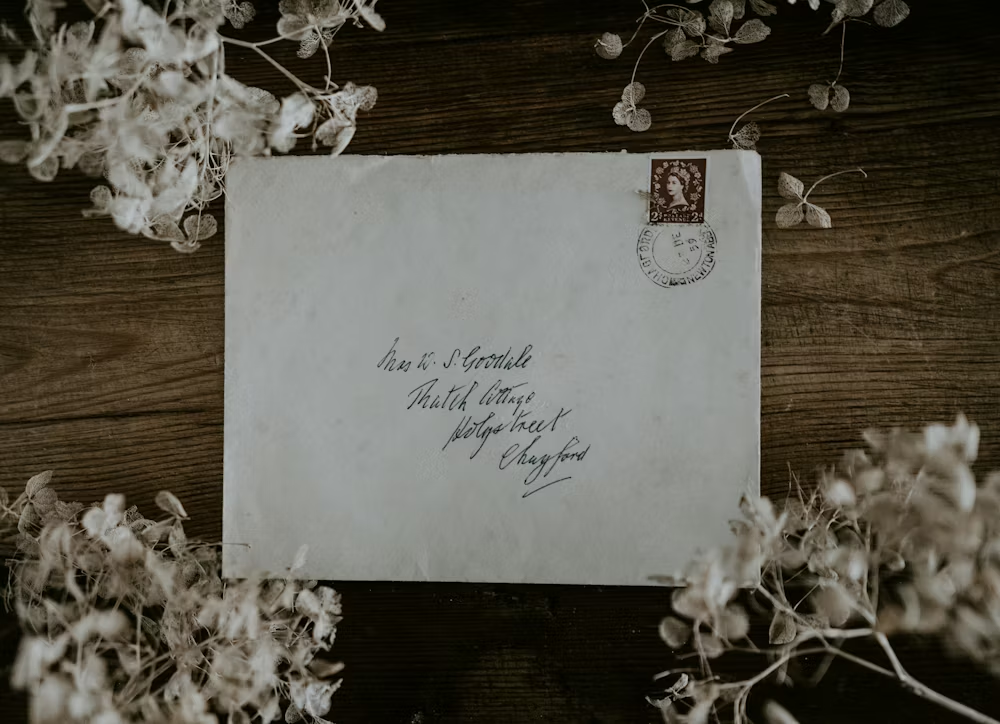
The second was a letter. The paper was old, slightly yellowed at the edges. The handwriting was unmistakably hers. The looping ‘L’s, the sharp ‘T’s.
I felt tears prick my eyes before I even read the first word.
My dearest Caleb,
If you are reading this, I am gone. And if you are reading this, I have failed you in the one way I promised I never would.
I don’t know how to start, so I will just say the truth. I hope the truth is enough.
Eleven years ago, during that month we took a break—the month I went to stay with Laura at the lake house—I wasn’t just alone. I met someone. An old friend from college. Spencer.
It wasn’t a romance, Caleb. It was a moment of weakness. I was scared about us. I was scared about the future. It happened once. And then I came home to you, and I realized that you were the only future I wanted.
When I found out I was pregnant, I did the math. I knew. I knew there was a chance it wasn’t yours. But I prayed. God, I prayed. I wanted him to be ours. I wanted to bury the mistake and live the life we planned.
But I couldn’t leave it to chance. I couldn’t die—and I have a feeling, Caleb, deep down, that this birth might be the end of me—without telling the truth to someone. I gave this to Laura. I told her to find Spencer if I didn’t make it. I told her to wait until Liam was ten.
Why ten? I don’t know. It seemed like a lifetime away. Maybe I hoped that by then, you and Liam would be so solid that nothing could shake you. Maybe I was a coward.
Spencer is a good man, Caleb. If he is there, if he has come to you, it means he wants to know his son. Please don’t shut him out. But please, never doubt that I loved you. You were my husband. You were my home.
Love our boy. He is the best of me.
Forever, Katie
I put the letter down. My hands were shaking so violently I had to press them flat against the table to stop the tremors.
The silence in the kitchen was absolute. The refrigerator hummed. The clock ticked.
She had lied.
For the entire pregnancy, she had lied. When we picked out names. When we painted the nursery yellow. When she squeezed my hand in the hospital and told me she loved me before they wheeled her away.
She had lied.
“She told me it was a break,” I whispered to the empty air. “She said she needed time to think.”
“I didn’t know you existed,” Spencer said softly from the doorway. “Back then. She told me she was single. When she left the lake house, she just… vanished. I looked for her. But I didn’t know her married name.”
He stepped closer to the table.
“Caleb, I have a family. I have a wife. I have a daughter. I live in Boston. I didn’t ask for this to happen. But when Laura contacted me… when she sent me a picture of him…”
He pulled his phone out and tapped the screen, turning it toward me. It was a photo of Liam from the school soccer game, taken from the sidelines. Laura must have sent it.
“Look at him,” Spencer said, his voice cracking. “He’s me. He’s my face. How could I stay away? How could I not know him?”
I looked at the phone, then at Spencer. The rage that had been building in my chest suddenly collapsed into exhaustion.
“He’s ten years old,” I said. “He sleeps with a reindeer plush. He believes in Santa because I work my ass off to keep the magic alive for him. He thinks his mother was a saint who died bringing him into the world.”
I looked up at Spencer, tears finally spilling over.
“You want to blow that up? You want to walk in here and tell him his life is a lie? On Christmas?”
“I don’t want to tell him it’s a lie,” Spencer said earnestly. “I want to tell him the truth. That he has more people who love him. Not fewer.”
“You’re a stranger,” I spat.
“I’m his father,” he countered. “Biology counts for something, Caleb. You know it does. You see it every time you look at him and wonder why he has that nose, or why he walks that way.”
He was right. And that was the knife twist.
For ten years, I had looked for myself in Liam and found only Katie. I had looked for my chin, my hands, my temperament. And when I didn’t find them, I told myself it was just genetics being funny.
Now I knew. I had been raising a ghost.
“I’m not making a deal with you,” I said, standing up. The chair scraped loudly against the floor. “I’m not handing over my son.”
“I’ve spoken to a lawyer,” Spencer said, his tone shifting to something firmer. “I haven’t filed anything. I don’t want a custody battle. I don’t want to drag this into court and let a judge decide. But I promise you this: I won’t disappear. I have rights. And I have the means to fight for them.”
He took a breath.
“I’m asking for one thing. Let me meet him. Let me tell him. Let him decide if he wants to know me.”
“He’s a child,” I argued. “He can’t decide.”
“He’s ten,” Spencer said. “He’s old enough to know that secrets are poison.”
The bus brakes squealed outside.
Panic surged through me. “He’s here. You have to go. You cannot be here when he walks in.”
Spencer looked at the window, then at me. He saw the desperation in my eyes.
“Okay,” he said. “I’m staying at the Inn downtown. I’ll give you until Christmas morning. Talk to him, Caleb. Because if you don’t, I will have to do it the hard way.”
He turned and walked out the back door just as the front door burst open.
“Dad! Dad! I got a ninety on the math test!”
Liam came thundering into the hallway, snow stomping off his boots, cheeks flushed red with cold and victory. He dropped his backpack and looked at me, beaming.
Then his smile faltered. He looked at my face. He looked at the envelope on the table.
“Dad?” he asked, his voice dropping. “You look… sad. Did something happen?”
I forced a smile onto my face. It felt like painting over a crack in a dam.
“No, buddy,” I said, sweeping the envelope into a drawer. “Just… thinking about Mom. It’s that time of year.”
Liam walked over and wrapped his arms around my waist. He smelled of cold air and pencil shavings. I hugged him back, holding him so tight he squirmed.
“It’s okay,” he mumbled into my sweater. “We’re okay.”
I held him and looked at the drawer where the truth was hiding.
“Yeah,” I lied. “We’re okay.”
The Graveyard Confessional
That afternoon, I left Liam with the neighbor, Mrs. Gable, telling her I had last-minute shopping to do.
I drove to the cemetery.
The snow was deep here, untouched. I crunched through it until I reached the gray stone marker.
Katherine Anne Miller. Beloved Wife and Mother.
I stood there for a long time, staring at the granite. I waited for the anger to consume me. I wanted to scream at her. I wanted to kick the snow. I wanted to ask her how she could leave me with this bomb ticking in my chest.
But the anger didn’t come. Just a profound, aching sadness.
I remembered the hospital. I remembered the way her hand felt in mine as she faded. I remembered the fear in her eyes—not just of death, but of this. She had died terrified that I would stop loving the boy she was leaving behind.
“You should have told me,” I whispered to the cold wind. “I would have loved him anyway, Katie. I would have loved him because he was yours.”
I sat on the cold ground. I thought about the last ten years.
I thought about the night Liam had a fever of 104 and I sat in the shower with him for hours, letting the cool water run over us, singing lullabies until my voice gave out.
I thought about the first time he rode a bike, and the look of pure trust he gave me when I let go of the seat.
I thought about the Father’s Day cards. To the best Dad in the universe.
Spencer provided the DNA. He provided the nose and the chin and the height.
But I provided the life.
I was the one who trimmed the fingernails. I was the one who checked under the bed for monsters. I was the one who taught him that kindness is strength.
Biology is a map. Fatherhood is the hike.
I stood up. My knees were wet and cold. I wiped my face.
“I’m keeping him,” I told her headstone. “But I won’t lie to him. Not anymore.”
The Christmas Truce
Christmas morning dawned bright and blindingly white. The sun reflected off the snowdrifts, filling the living room with a pure, sharp light.
Liam was up at 6:00 a.m., vibrating with energy. We did the stockings. We drank cocoa. He opened the LEGO set he’d been begging for—the Death Star—and screamed with joy.
For two hours, we were just a father and son on Christmas. It was perfect. And because it was perfect, I knew I had to ruin it.
“Liam,” I said, when the wrapping paper was cleared away. “Come sit with me.”
Something in my tone made him pause. He put down the LEGO instruction manual. He padded over in his reindeer pajamas and climbed onto the couch beside me, pulling the old reindeer plush into his lap.
“Is it bad?” he asked. “Did I fail a class?”
“No,” I said, taking his hand. His hand was warm, sticky with candy cane residue. “You’re perfect. This isn’t about you doing anything wrong. This is about… a story I need to tell you.”
I took a breath.
“You know how we talk about Mom? How much she loved us?”
“Yeah.”
“Well, there was a part of Mom’s life, before you were born, that I didn’t know about until a few days ago. And it’s about how you came to be.”
I explained it simply. I didn’t use words like affair or betrayal. I told him that parents are people, and people get confused. I told him that Mom had a friend, a special friend, before she fully decided to build a life with me.
“And that friend,” I said, my voice trembling, “is your biological father.”
Liam stared at me. He blinked slowly. He looked down at his hands, then back at me.
“Does that mean you’re not my real dad?” he asked. His voice was so small it nearly broke me.
“Liam, look at me.” I waited until he met my eyes. “I am the one who cut your cord. I am the one who fed you your first bottle. I am the one who taught you to read. I am the one who loves you more than anything on this earth.”
I squeezed his hand.
“Being a ‘real’ dad isn’t about blood. It’s about who stays. It’s about who shows up. I’m your dad. I will always be your dad. Nothing changes that. Not ever.”
“But… the other guy?” Liam asked. “Where is he?”
“He’s here,” I said. “In town. He wants to meet you. He knows he missed ten years, and he wants to say hello. But he knows I’m your dad. He just wants to be… a friend. Maybe an uncle-type person. It’s up to you.”
Liam processed this. He looked at the tree. He looked at the photo of Katie on the mantel.
“Does he like LEGOs?” Liam asked.
I let out a laugh that was half-sob. “I don’t know, buddy. We can ask him.”
“Okay,” Liam said. “I’ll meet him. But only if you stay right next to me.”
“I’m not going anywhere,” I promised.
The New Shape of Family
An hour later, a gray sedan pulled into the driveway.
I opened the door. Spencer stood there, holding a box wrapped in silver paper. He looked terrified.
“Come in,” I said.
He stepped into the hallway. He saw Liam standing by the tree, clutching his reindeer. Spencer stopped. His eyes filled with tears. He saw his own face looking back at him.
“Hi, Liam,” Spencer choked out.
“Hi,” Liam said. He didn’t run to him. He stepped back, closer to me. He leaned his side against my leg. I put my hand on his shoulder, claiming him, supporting him.
“My dad said you knew my mom,” Liam said.
“I did,” Spencer said. “She was wonderful.”
“She liked oatmeal raisin cookies,” Liam said. “But Dad and I pretend she liked peanut butter so we can make them for Santa.”
Spencer laughed, a surprised, genuine sound. “That sounds like her.”
He held out the gift. “I didn’t know what you liked. But I guessed.”
Liam took the box. He tore it open. It was a telescope.
“Whoa,” Liam said. “Cool.”
“I have one just like it,” Spencer said. “Maybe… maybe sometime I can show you how to find Jupiter.”
Liam looked up at me. I nodded.
“Maybe,” Liam said. “But my Dad has to come too. He knows all the constellations.”
“Of course,” Spencer said, looking at me with gratitude and respect. “Your Dad is the expert.”
We spent the afternoon in a strange, fragile truce. Spencer stayed for an hour. We didn’t solve everything. There would be lawyers later, and custody agreements, and awkward schedules. There would be anger and confusion.
But for that hour, on Christmas Day, there was peace.
I watched them together—Spencer showing Liam how to adjust the lens, Liam explaining the intricate backstory of his Star Wars figures. They looked alike. They moved alike.
But every time Liam laughed, he looked at me to make sure I was laughing too. Every time he felt uncertain, he came back to my side.
I realized then that Katie hadn’t ruined our family. She had just complicated it. And we would survive the complication.
Later that night, after Spencer had left and the wrapping paper was in the trash, I tucked Liam into bed.
“Dad?” he murmured, sleep already pulling him under.
“Yeah, bud?”
“You’re still my favorite.”
I kissed his forehead, right on the hairline where his cowlick defied gravity.
“You’re my favorite too.”
I walked out into the living room. The house was quiet. The tree lights were still twinkling. I looked at Katie’s photo on the mantel.
“We’re okay,” I whispered to her. “We made it.”
I poured a glass of wine and sat by the window, watching the snow fall on a world that was bigger, messier, and fuller than it had been yesterday.
Let us know what you think about this story on the Facebook video! If you like this story, share it with friends and family—you never know who needs a reminder that family isn’t just DNA, it’s who stays.
Please let us know your thoughts and SHARE this story with your Friends and Family!
