The silence in a hospital room after a delivery is a deceptive thing. It feels heavy, thick with the scent of antiseptic, dried sweat, and that peculiar, metallic smell of life entering the world. I was drowning in that silence, my body a wrecked vessel that had just carried my son, Leo, onto the shores of the living.
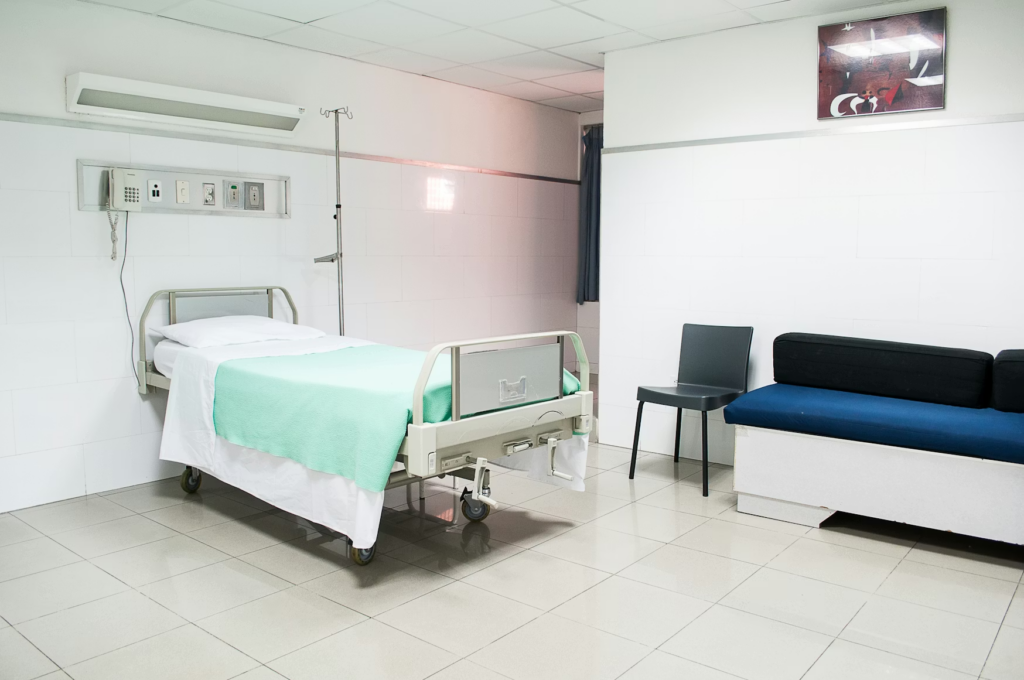
I lay back against the scratchy, starched pillowcases of St. Jude’s Medical Center, listening to the rhythmic beeping of the monitors. My legs felt like lead, heavy and numb from the epidural that was slowly wearing off, leaving behind a dull, throbbing ache that radiated from my hips to my toes.
Mark, my husband of three years, had just stepped out. “I need to take this, Sarah,” he had said, holding up his vibrating phone. “It’s the investors. I’ll be right outside.”
He had kissed my forehead—a quick, dry peck—and vanished into the hallway, leaving the heavy door to click shut behind him. The nurses had wheeled Leo out just moments before for his first bath and routine measurements.
It was just me and Emily.
My daughter. My eight-year-old shadow. She was sitting in the oversized vinyl recliner in the corner, her knees pulled up to her chest, her eyes wide and unblinking. She hadn’t said a word since Leo arrived. She hadn’t smiled. She had just… watched.
I turned my head, the movement requiring more effort than it should have. “Em?” I whispered, my voice raspy. “You okay, baby? You’re a big sister now.”
I expected a smile. I expected her to hop down and ask when she could hold him again. Emily was a creature of light—always dancing, always singing, full of an imagination that turned our suburban backyard into enchanted forests.
But she didn’t smile.
She slid off the chair. She didn’t skip; she crept. Her sneakers made no sound on the linoleum floor as she moved toward my bed. She looked like a small ghost in her denim jumper, her blonde hair messy from the long hours of waiting.
She came right up to the guardrail of the bed. Her blue eyes, usually so full of mischief, were dark pools of terror. She leaned in close, so close I could feel her breath on my cheek.
“Mom,” she whispered. The word trembled. “Get under the bed. Now.”
I blinked, my brain foggy from exhaustion and hormones. I tried to laugh, thinking this was a game. “What? Em, honey, Mom can’t move. I just—”
“No,” she cut me off. Her hand gripped my forearm, her fingernails digging into my skin. There was no playfulness in her voice. No imagination. Just raw, unfiltered fear. “There’s no time. Please, Mom. You have to hide. They’re coming.”

A History of Cold Shoulders
To understand the chill that suddenly seized my heart, you have to understand the Reynolds family. Or, more specifically, Linda Reynolds.
When I met Mark, I was a package deal: a widow with a five-year-old daughter, struggling to keep a freelance graphic design business afloat. Mark was the golden boy of a Connecticut dynasty, a man who had left the corporate fast track to start an artisanal furniture business.
Linda Reynolds, his mother, viewed me not as a wife, but as a parasite.
I remember the first time I met her. It was brunch at a country club that cost more to join than my parents’ house was worth. She hadn’t looked at me; she had looked through me.
“A ready-made family,” she had said, stirring her tea with a silver spoon that chimed against the china. “How… charitable of you, Mark.”
Over the last three years, her disdain had calcified into hatred. She blamed me for Mark’s distance from the family trust. She blamed me for his “lack of ambition.” And when I got pregnant with Leo, she didn’t send a card. She sent a lawyer to discuss trust fund stipulations that would ensure I couldn’t touch a dime of the baby’s inheritance.
But fear of physical harm? That had never crossed my mind. Linda was a woman of icy glares and backhanded compliments, not violence. Or so I thought.
The Warning in the Whisper
Back in the hospital room, the air seemed to drop ten degrees.
“They?” I echoed, looking at Emily. “Who is coming?”
Her eyes flicked toward the heavy wooden door. She looked terrified that it might open at any second.
“Grandma,” she hissed. “I heard her on the phone. Down the hall. She thought I was at the vending machine.”
My heart slammed violently against my ribs. “What did she say, Emily?”
Tears welled in my daughter’s eyes, spilling over her pale cheeks. “She was talking to a man. A doctor. The one with the silver watch who came in earlier. She said… she said everything would be ‘handled’ today. She said you wouldn’t be a problem anymore.”
I tried to rationalize it. My brain, desperate for normalcy, scrambled for an explanation. Maybe she meant the financial papers? Maybe she meant the custody arrangements?
“Emily,” I whispered, forcing a calm I didn’t feel. “Adults sometimes say strange things that we misunderstand. Grandma Linda is just… she’s just difficult.”
“No!” Emily shook her head hard, her pigtails whipping against her neck. “She said, ‘The complications need to look sudden.’ She said, ‘Mark is too weak to leave her, so we have to make sure she leaves him.’ Mom, she’s talking about you dying.”
A wave of cold crept up my spine, distinct from the hospital chill.
I thought back to the hazy hours of labor. The pain. The chaos. Mark holding my left hand, Linda standing stiffly in the corner like a crow waiting for roadkill.
There had been a moment—right at the peak of a contraction, when the world was narrowing down to a pinpoint of agony—where someone had shoved a clipboard at me.
“Just a formality,” a voice had said. “Insurance updates. Sign here.”
I remembered the pen slipping in my sweaty hand. I remembered Mark saying, “Just sign it, Sarah, so they can give you the pain meds.”
Mark hadn’t read it. He just wanted the screaming to stop.
“She said you signed papers,” Emily whispered, her voice cracking. “She told the doctor, ‘She signed the consent for the procedure. Do it while Mark is distracted.’”
Footsteps echoed down the hallway. Distinct. Clicking heels—Linda’s designer pumps—and the squeak of rubber soles. A cart rattled.
Emily dropped to the floor. She lifted the heavy, starch-stiffened bed skirt.
“Please,” she begged, looking up at me. “Just trust me.”
Every logical thought told me this was absurd. You don’t hide under a bed in a hospital. I had an IV in my arm. I was bleeding. My stitches were fresh.
But then I looked at my daughter.
Emily was smart. She noticed things others didn’t. She knew when I was sad before I did. She knew when it was going to rain. And right now, she looked like she was watching a monster approach.
The instinct that kicked in wasn’t logical. It was primal. It was the ancient, reptilian brain that smells a predator in the tall grass.
Ignoring the tearing pain in my lower abdomen, I ripped the tape of the IV from my hand. Blood welled up, but I didn’t care.
“Okay,” I whispered.
I swung my legs over the side of the bed. The room spun. I bit my lip to keep from crying out. I slid down, my knees hitting the cold linoleum with a thud that vibrated through my bones.
“Hurry,” Emily breathed.
I crawled. It was an agonizing, humiliating shuffle. The space beneath the hospital bed was narrow, smelling of dust and industrial cleaner. I curled into a ball, pulling my hospital gown around me, pressing myself against the metal mechanics of the bed frame.
Emily dropped the skirt.
The world narrowed to shadows and sound.
The View From the Floor
Three seconds later, the door handle turned.
From my vantage point, looking through the sheer mesh of the bed skirt, I could only see the floor. I saw a pair of shoes enter.
Italian leather pumps. Beige. Expensive.
Linda.
Right beside her were black dress shoes. Polished. Men’s shoes.
And then, the voice. Linda’s voice. Calm, smooth, and utterly devoid of warmth.
“Doctor, she should be ready now. My son is on a call with his partners; I made sure it would be a long one.”
My heart hammered so hard against the linoleum floor I was sure the vibrations would give me away.
A deep, male voice responded. “Mrs. Reynolds, you are certain about the consent forms? If there is an investigation…”
“The documents are signed,” Linda interrupted, her tone sharp. “I watched her sign them myself. Postpartum hemorrhages happen, Doctor. It’s a tragedy, of course. But outcomes can be unpredictable.”
I pressed my hand over my mouth to stifle a sob.
Postpartum hemorrhage. They weren’t going to give me medicine. They were going to let me bleed out. Or worse, induce it.
“My son has been under so much stress,” Linda continued, her voice taking on a fake, theatrical sadness. “Losing his wife would be devastating… though unavoidable. He needs a fresh start. Without the baggage.”
Baggage. That’s what she called Emily.
I looked to my left. Emily was standing by the window, her small sneakers facing the bed. She was standing rigid, like a soldier.
Another pair of shoes entered the room. White nursing clogs with a thin blue stripe. I recognized them. It was Nurse Sarah, the kind woman who had brought me ice chips earlier.
She hesitated in the doorway.
“Doctor?” she asked. “I thought… her vitals were stable earlier. Why are we moving her to the OR?”
The doctor—the man with the black shoes—paused. “We’ve detected some irregularities, Nurse. We need to act fast. We’ll reassess in the operating theater.”
“But,” the nurse stammered. “Shouldn’t we wait for the husband?”
“There is no time,” Linda snapped. “Do your job.”
They moved closer to the bed.
My empty bed.
I squeezed my eyes shut. This was the moment. They were going to pull back the sheets and see a bundle of pillows.
I heard the rustle of the blanket being pulled back.
Silence.
A heavy, suffocating silence filled the room.
“Where is she?” The doctor’s voice was low, confused.
“She was just here,” Linda hissed. “She couldn’t have walked. She had an epidural!”
“The bathroom?” the doctor suggested.
I saw the black shoes pivot toward the small en-suite bathroom. He pushed the door open.
“Empty.”
“This is ridiculous,” Linda’s voice rose, losing its polished veneer. “Find her. She can’t have gone far.”
Then, Emily spoke.
Her voice was small, but it cut through the tension like a knife.
“She isn’t here.”
I saw Linda’s beige pumps turn sharply toward my daughter.
“What do you mean?” Linda snapped.
“My mom went to the bathroom down the hall,” Emily lied. Her voice didn’t waver. “She said she wanted to walk.”
“That’s not possible,” the doctor replied, his voice angry now. “She wouldn’t be allowed to stand, let alone walk down the hall. Who gave her permission?”
“Allowed to what?”
A new voice boomed from the doorway.
Mark.
The Collision
The door swung wide open. I saw Mark’s loafers stop abruptly at the threshold.
The energy in the room shifted instantly. It went from predatory to panicked.
Linda laughed. It was a terrible, high-pitched sound. “Oh, Mark! Darling! We were just… we were looking for Sarah. She seems to have wandered off.”
“Wandered off?” Mark’s voice was confused, but there was an edge to it. “I just spoke to the nurse’s station. They said she hasn’t been cleared to move. Why is the crash cart here? Why is Dr. Aris here?”
So that was his name. Aris.
“There was a concern,” Dr. Aris said smoothly, shifting his weight. “We needed to check her uterine tone. It’s a standard precaution.”
“Standard precaution?” Mark stepped into the room. “You’re talking about moving her to the OR. I heard you from the hall. Why does my wife need surgery?”
“Mark, listen to the doctor,” Linda soothed, stepping toward him. “It’s for her own good. Sarah is… fragile. We just want to make sure she’s safe.”
The nurse with the blue-striped shoes spoke up. Her voice was trembling. “Sir… I was told there were consent forms signed for a hysterectomy due to hemorrhaging. But her chart shows no bleeding.”
“A hysterectomy?” Mark shouted. “What the hell are you talking about?”
“Mark, lower your voice,” Linda commanded. “This is a hospital.”
“Where is my wife?” Mark demanded.
This was it. I couldn’t stay under there forever. The pain in my abdomen was becoming blinding. I tried to shift, to crawl out, but my body wouldn’t cooperate. I let out a low moan of pain.
Silence fell over the room again.
Emily dropped to her knees.
She lifted the bed skirt.
“Dad,” she said, staring up at Mark. Her face was tear-streaked, but her eyes were fierce. “Mom is under here. Because Grandma is trying to hurt her.”
Mark froze.
He looked at his mother. Then at the doctor. Then at Emily.
Slowly, terrifyingly slowly, he knelt down.
He lifted the fabric.
Our eyes met. I was curled in a fetal ball on the dirty floor, blood from my hand staining the tiles, my face pale and sweaty.
All color drained from Mark’s face. He looked like he had been punched in the gut.
“Sarah?” he whispered. “What are you doing?”
“She tried to kill me, Mark,” I choked out, tears finally spilling over. “She signed the papers. She told the doctor to get rid of me.”
Mark looked up. He didn’t stand immediately. He looked at his mother from his knees, a position of supplication that he turned into a position of judgment.
“Mom?”
Linda’s face contorted. “Mark, don’t be ridiculous. She’s hysterical. It’s the hormones. She’s having a psychotic break. Look at her! She’s hiding under a bed!”
Mark stood up. He helped me out, his hands gentle, lifting me back onto the mattress. I groaned as my body straightened.
He turned to the doctor.
“Get out,” Mark said.
“Now, Mr. Reynolds, we need to—”
“I said get out!” Mark roared. “And you,” he pointed at the nurse with the blue stripes. “Call security. Call the police. Now!”
The nurse didn’t hesitate. She bolted from the room.
Dr. Aris looked at Linda. Linda looked at the door.
“Mark,” Linda tried again, her voice shaking. “This is a misunderstanding. You’re going to embarrass the family. Think about the business. Think about your reputation.”
Mark walked up to his mother. He towered over her. For the first time in the three years I had known him, he didn’t look like her son. He looked like a stranger.
“I don’t care about the family,” he said, his voice deadly quiet. “I care about my wife. Did you sign those papers?”
“I helped her!” Linda cried. “She was in pain! She didn’t know what she was doing!”
“Did you forge her signature?”
Linda pressed her lips together. “I did what was necessary to protect you.”
“Security!” Mark yelled into the hall.
The Investigation
The next hour was a blur of uniforms. Hospital security arrived first, followed by the local police.
The nurse, Sarah, gave a statement immediately. She told them about the irregularity of the order, how Dr. Aris had bypassed the standard protocol, and how Linda had been directing the staff.
Dr. Aris tried to claim medical necessity, but when they pulled my file, the “consent form” was visibly forged. The signature was a shaky scrawl that looked nothing like mine.
Linda was escorted out of the room. She didn’t go in handcuffs—not yet—but she was flanked by two officers.
As she passed my bed, she didn’t look at me. She looked at Mark.
“You’re making a mistake,” she said coldly. “She will ruin you.”
Mark turned his back on her.
The investigation stretched on for weeks. It turned out, this wasn’t Dr. Aris’s first time bending the rules for the right price. He had significant gambling debts. Linda Reynolds had paid them off two days before my due date.
The hospital administration was terrified of a lawsuit. They cooperated fully. They confirmed that the signatures had been falsified.
Dr. Aris lost his license. He is currently serving five years for medical malpractice and conspiracy to commit assault.
Linda was charged with fraud, conspiracy, and attempted bodily harm. Because she had the best lawyers money could buy, she didn’t go to prison for life. She got a plea deal. Three years in a minimum-security facility and a restraining order that spans the entire state.
The Fracture
You might think this brought Mark and me closer. That surviving a murder plot orchestrated by his mother would bond us forever.
It didn’t.
Mark stayed with me through every interview. He held Leo while I gave statements. He fired his mother from the board of his company. He cut off all contact with his extended family who sided with her.
But something between us had changed permanently.
Trust is like a mirror. Once it’s shattered, you can glue it back together, but you can still see the cracks in the reflection.
Every time I looked at Mark, I saw the man who had handed me the clipboard during labor.
“Just sign it, Sarah.”
He hadn’t known what it was. I knew that. He wasn’t malicious. But he was careless. He had been so conditioned to obey his mother, so conditioned to seek the path of least resistance, that he had almost handed me over to my executioner.
One night, three months later, we were sitting in the living room. Leo was asleep in the bassinet. Emily was doing homework at the table.
“I’m sorry,” Mark said. He said it every day.
“I know,” I replied. And I meant it.
“I never thought she’d go this far,” he said quietly. “I knew she hated you. I knew she was controlling. But I thought… I thought it was just talk.”
“But she did,” I replied. “And I survived because an eight-year-old was braver than every adult in that room. Including you.”
Mark flinched. He knew it was true.
Emily saved my life—not with strength, but with awareness. She listened. She noticed. She questioned. She didn’t assume adults were always right. She didn’t assume that because someone wore a white coat or expensive shoes, they were safe.
Mark was a good man in many ways. But he was a man who needed peace more than he needed truth. And I couldn’t live with that anymore.
The New Normal
I filed for divorce six months after Leo was born.
It wasn’t out of anger. It was out of clarity. I realized that I couldn’t raise my children in the shadow of the Reynolds legacy. I couldn’t teach Emily to be strong if I stayed with a man who was weak.
Mark didn’t contest it. He gave me the house. He pays generous child support. He sees Leo every other weekend, always supervised—a condition I insisted on, and he accepted. He knows he failed us.
Today, my children and I live quietly in a different town.
Emily is ten now. She still dislikes hospitals. She checks the locks on the doors every night before bed. It breaks my heart that she lost her innocence that day, but I am so incredibly proud of the woman she is becoming.
She says she wants to be a lawyer. “To stop bad people who wear nice clothes,” she told me.
Leo is a happy, tumbling toddler who has no idea that his grandmother tried to ensure he grew up motherless.
Sometimes, late at night, I replay that moment.
I feel the cold linoleum floor against my cheek. I see the dust bunnies under the hospital bed. I hear the squeak of Dr. Aris’s shoes and the click of Linda’s heels.
I wonder how many women trust a place simply because it is labeled “safe.” I wonder how many sign papers they haven’t read because a man told them it was “just a formality.”
We teach our children to be polite. To listen to adults. To do as they are told.
But maybe we should be teaching them something else.
We should teach them to trust their gut. To listen to the whispers in the hallway. To question authority when it feels wrong.
Danger doesn’t always look like a monster in the dark.
Sometimes it looks like a well-dressed grandmother holding a clipboard.
Sometimes it looks like a doctor with a silver watch.
And sometimes, survival isn’t about fighting back.
Sometimes, survival comes from the smallest voice in the room whispering, “Hide. Now.”
We want to hear from you. Have you ever had a gut feeling that saved you? Or a child who noticed something you missed? Let us know your thoughts on the Facebook video, and if this story gave you chills, share it with your friends and family to remind them to always trust their instincts.
Please let us know your thoughts and SHARE this story with your Friends and Family!
