(video can be found at the bottom of the article)
He was the face every girl swooned over and every teen idolized in the 1980s, an actor whose tousled dark hair, disarming smile, and intense, quiet presence made the agony of high school crushes feel deeply personal and deeply understood.
But behind the perfectly framed magazine covers and the sensitive, heartthrob persona he projected on screen, a turbulent and lonely story was unfolding. The fame that defined his youth was not a goal he chased; it was a wave that swept him up and threatened to drown him. Andrew McCarthy was, by his own admission, an introverted outsider thrust into the scorching center of Hollywood’s most explosive decade, utterly unprepared for the scrutiny and success—and secretly battling a dependency that nearly cost him his life.
His journey, from a New Jersey kid to an accidental idol, a reluctant “Brat Pack” member, a secret alcoholic, and finally, a revered director and writer, is not just a story of Hollywood survival. It is a raw, human account of seeking authenticity in a world built on artifice, and finding true courage not in front of a camera, but on the cold, hard floor of a bathroom, hitting rock bottom and finally choosing to live.
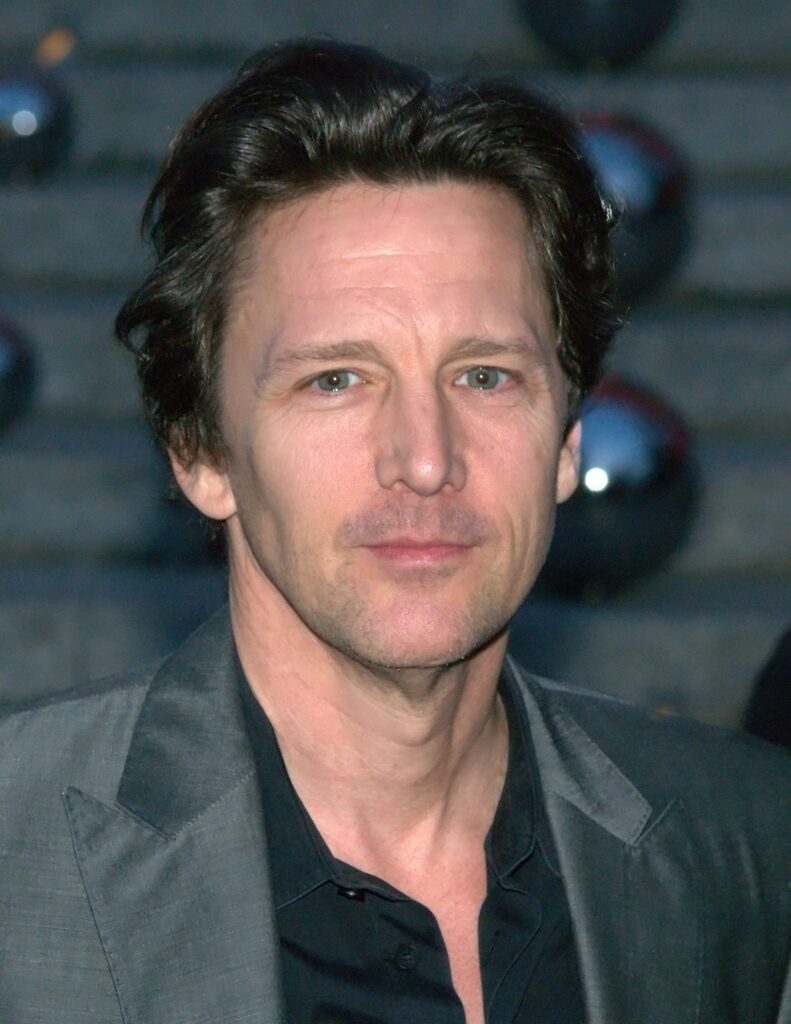
The Kid from Westfield: Totally Unprepared for the Stardom
Andrew Thomas McCarthy’s early life was the quintessential American suburban experience, miles away from the manufactured glitz of Tinseltown. Born in 1962, he grew up in Westfield, New Jersey, the third of four boys. His upbringing was solid, grounded, and hardworking: his mother worked at a local newspaper, and his father dealt in investments and stocks. It was a typical, middle-class family with typical struggles, far removed from the celebrity pedigree that often populates Hollywood.
This ordinary beginning was crucial to the disorientation Andrew felt when he was suddenly rocketed into fame. He had no mentor, no family connection to the industry, and no playbook for handling mass adoration. His passion for performing was clear during his school years, but they were far from smooth sailing.
He felt the pervasive, isolating loneliness that often afflicts sensitive, introspective teens. “I just felt sort of very lonely at school. I just didn’t feel like I belonged there,” he once reflected. It was a sense of being an outsider, a feeling that would haunt him even when he was surrounded by the most famous people in the world. He gravitated toward acting because it offered a way to feel intensely himself, even while pretending to be someone else—a paradoxical but powerful lure for an introvert.
After high school, he enrolled at New York University (NYU) to study acting, seeking formal training and community. Yet, his commitment was quickly derailed by his restless nature and nascent habits. He was expelled after only two years for poor attendance. As he later put it with characteristic honesty, “I didn’t really go [to class].” It seemed his career was over before it even began, derailed by a lack of discipline and an inability to fit into the structured world of academia.
From NYU Drop-Out to Romancing Jacqueline Bisset
Nothing could have prepared the young, aspiring actor for the explosive break that came just weeks after his unceremonious dismissal from NYU. Faced with a sudden lack of direction, he decided to answer an “open call” advertised in a local newspaper. The role was for the 1983 film Class, starring the internationally acclaimed icon, Jacqueline Bisset.
This was not a structured audition; it was a desperate plunge into the deep end. “I waited for hours with 500 other kids and they call me back,” he recalled, still sounding amazed years later. The whole experience felt completely “out of the blue.” One week, he was an expelled college kid with no prospects; the next, he was cast as Jonathan, a prep school student who famously begins a passionate affair with his roommate’s mother, played by Bisset.
The transition was instantaneous and surreal. “One week I was in school and the next week I’m in bed with Jacqueline Bisset,” he summarized. “I thought, ‘I’m doing something right here.’”
The film, and specifically his provocative relationship with the established star, made the New Jersey-born actor the immediate talk of the town. His instant success was so undeniable that NYU tried to backtrack, offering him a tempting olive branch. They suggested he return, pay his tuition, and they would retroactively credit the film as an “independent study.”
Andrew, already tasting the intoxicating power of Hollywood success, delivered a curt, defiant rejection that cemented his independence from the academic system that had cast him out. “I told them to go f*** themselves,” he stated plainly, closing that chapter for good. He realized, with a rush of adrenaline, that he had found a far more thrilling and validating education in the world of professional acting.
Cementing the Status: The Brat Pack Outsider
The success of Class was merely the launchpad. A few years later, Andrew McCarthy hit the big time with 1985’s St. Elmo’s Fire. The film, despite receiving harsh critical reviews, was a massive, generation-defining hit, capturing the zeitgeist of post-collegiate angst and romance. It starred a young powerhouse cast, including Rob Lowe, Judd Nelson, Emilio Estevez, and Demi Moore. Andrew, playing the aspiring writer Kevin Dolenz, delivered the quiet gravitas that made him stand out even among such a talented, larger-than-life group.
His success, however, came with a notorious price tag: being grouped with his co-stars and a handful of other young, successful actors under the infamous media-created moniker, the “Brat Pack.” The term, coined in a sensational magazine article, was originally meant to be derisive, lumping them together as arrogant, spoiled, and overly privileged.
For an actor who already felt like an outsider and whose success felt accidental, this label was confining and deeply irritating. As he recounted in his memoir, Brat: An 80s Story, the title felt like a stigma, forcing him into a group dynamic he never sought. He was wary of the entire celebrity machine and found himself at odds with some of the more extroverted, party-centric members of the supposed “pack.” He ran from the label for years, feeling that it prevented the industry from seeing him as a serious, individual artist.
By 1986, any attempt to retreat was impossible. Co-starring with Molly Ringwald in the John Hughes classic, Pretty in Pink, Andrew McCarthy became the ultimate teen heartthrob. Playing the sensitive, stylish Blane McDonough, he embodied the kind of handsome, quiet charm that teenage girls dreamed of. The movie, which explored themes of class and belonging with sensitivity, cemented his image as the thoughtful, good-guy romantic lead.
It was during this era—the peak of his fame, the height of his public desirability—that the greatest deception was playing out. The quiet, sensitive demeanor that audiences loved on screen was, in reality, a shield. The actor was struggling, hiding a profound and devastating dependence that was rapidly taking over his life.
The Secret Struggle Hiding Behind the Heartthrob Image
While the world saw a magnetic, charismatic movie star, Andrew McCarthy was secretly locked in a debilitating battle with alcoholism. It wasn’t a problem caused by fame, but one exacerbated by it. He had begun smoking weed in high school and drinking socially, but the sudden, unmoored success of Hollywood provided the fuel and the opportunity for the dependency to spiral.
The contrast between his on-screen persona and his internal reality was startlingly painful, a deception he maintained through sheer force of will.
He later revealed how deeply his addiction influenced his work on his most iconic films. “Like in Pretty in Pink for example, people said, ‘Oh, he’s so sensitive and lovely in that movie,’” Andrew told ABC’s 20/20 in 2004. “I was so hungover for that whole movie… I’m thinking, ‘God, I got a headache. I am just dying here. I got to go lay down.’ But on film I came across a certain way.”
The very qualities the public adored were, in part, a byproduct of his physical misery and his desperate need to appear composed. The quietness, the introspection—it was often just the crushing weight of a relentless hangover.
Alcohol, he admitted, became the perfect emotional crutch for a shy, fearful young man suddenly faced with intense, unwavering public attention. “If I was frightened, it gave me good Dutch courage,” McCarthy admitted. “I felt confident and sexy and in charge and in control and powerful — none of those things I felt in my life.”
Drinking allowed him to escape the paralyzing sense of imposter syndrome and the fear that he was not good enough. It provided a false sense of security that was desperately needed when he felt “unseen” as his true self, only seen as the manufactured movie star. He also briefly experimented with cocaine in the 1980s—a common fixture at the lavish parties he attended—but admitted it mostly served to fuel his drinking, and he rarely used it on set because he was already anxious enough.
The Breakdown: Hitting Rock Bottom on a Bathroom Floor
The party scene that came with stardom—stays at the famed Chateau Marmont, parties at celebrity homes—became his routine. At one hotel bash, he recounted noticing a “cute young woman with a pixie haircut” who had no interest in him: a young Courteney Cox. These moments of glamorous rejection and surreal celebrity encounters only amplified his sense of emotional detachment, pushing him further into the bottle.
A momentary turning point seemed to arrive in 1989. Just before shooting the comedy Weekend at Bernie’s, he decided to quit drinking cold turkey. He managed to stay sober through the shoot, pulling back completely from his social life—a task made easier by his nature as a deep introvert. “I’m very comfortable being alone and I’ve always been comfortable being alone,” he said. He found that solitude offered a strange form of safety, noting that “a lot of unhappiness is from trying not to be alone.”
However, the temptation crept back while he was filming the period piece Jours tranquilles à Clichy. A co-star casually offered him a beer, and as he lifted the can, his hands started shaking violently. The physical reaction was a clear, terrifying warning that his addiction was still an active, lurking monster, not a solved problem.
What followed were three years he later described as “lost and painful.” He spiraled back into heavy drinking, the emotional pain of his failures compounded by the physical wreckage of his addiction. The low point came one morning in 1991. Violently hungover and wracked with convulsions, he collapsed onto the bathroom floor. Lying there, sobbing and completely broken, he finally acknowledged the terrifying state his life had reached. This was his rock bottom—a moment of agonizing, undeniable clarity.
The Decision at 29: Checking into Rehab and Rebuilding
By 1991, the boyish glow that had defined Andrew McCarthy’s early screen presence had faded, replaced by a more rugged, exhausted, lived-in look. He continued to work, appearing approachable and confident on the surface, but the internal struggle was consuming him. The crisis point he reached on his bathroom floor became the game-changing catalyst he desperately needed.
At 29, he made the decision that would save his life: he checked himself into rehab and committed to a detox program and a life focused on sobriety.
That choice kicked off the real work of his life—a wholesale rebuilding of his career, his relationships, and his sense of self. He realized that quitting alcohol was merely the first step; the true journey was learning to live without fear, without the Dutch courage he had relied on since he was a teenager. He pulled away from the seductive chaos of Hollywood’s endless parties, retreating to the quiet discipline of self-awareness and recovery.
He found unexpected parallels in the practice of travel writing, which he began to pursue seriously. He realized that the impulse that drew him to acting—the deep dive into an authentic experience—was the same impulse that drove him to remote corners of the globe.
“People say, ‘How does an actor become a travel writer? That’s interesting. They are so different,’” he shared. “But they are exactly the same to me. They manifest in the same way in that they’re both storytelling, and that’s how I communicate. They’re both some expression of creativity.”
For Andrew, traveling became a form of active meditation and spiritual inventory. “I’m just a better version of myself when I’m traveling,” he explained. “You’re more vulnerable, you’re present in the world, your ‘Spidey sense’ is up.” In these vulnerable moments, far from the pressures of the entertainment machine, he found the courage he had previously sought in a bottle.
A Second Act: Director, Travel Author, and Family Man
The commitment to sobriety propelled Andrew McCarthy’s career into a dynamic and lasting second act. He wasn’t just recycling his fame; he was developing new crafts and skills. From the glittering chaos of teen movies, he transitioned to directing, overseeing nearly a hundred hours of critically acclaimed television. His directorial credits include sophisticated, popular series like Orange Is the New Black and Gossip Girl, showcasing a mature, controlled artistic vision that was leagues away from his early, anxiety-fueled performances.
Concurrently, he established a respected parallel career as a writer and travel author. Recognized as Travel Journalist of the Year in 2010, he contributed to major outlets like National Geographic Traveler and The New York Times. His books, including the memoir Brat: An 80s Story and his travel memoir, The Longest Way Home, became New York Times bestsellers, revealing a reflective, honest voice that audiences found incredibly compelling.
His personal life also found stability. In 1999, he married his college sweetheart, Carol Schneider, nearly two decades after they first dated. He only reached out after hearing she was happy with someone else—a moment of realization that he truly missed her. Though they divorced in 2005, they share a son, Sam, who has followed his father into acting.
Later, Andrew found enduring partnership with Irish writer and director Dolores Rice. They married in 2011 and built a quiet, stable life in the West Village, focused on raising their two children, Willow and Rowan. Today, he is a dedicated father of three, thriving in a home life built on commitment and stability—a far cry from the whirlwind parties of his youth.
The Quiet Icon: Looking Forward, Not Back
Now, nearly forty years after his breakout role, the actor who once had an entire generation swooning is remembered not just for his iconic movies, but for the profound life he rebuilt. His eyes no longer hold the wide-eyed wonder of a young star; instead, they crinkle with the quiet intensity and deep self-knowledge earned through decades of sobriety and self-reflection.
He holds a comfortable, almost detached relationship with the icon he once was. Nostalgia, he admits, is not his thing. While he understands the powerful effect his films had on women of a certain age, he views it objectively. “It’s nice,” he says. “It’s their experience, but it doesn’t have a lot to do with me particularly at this point. I don’t have a lot of nostalgia for my past.”
This detachment is his greatest asset. He accepts his past as part of his story, but he does not live there. He is a respected director, an accomplished writer, and a dedicated father—a man who pulled himself out of the seductive chaos of addiction and came out stronger, better, and more whole on the other side. Considering how many young stars are swallowed by the excesses of Hollywood, Andrew McCarthy’s journey stands as a powerful testament to the possibility of change.
His life is not defined by his membership in a notorious club or by the roles he played, but by the courage he found when he was weakest, and the discipline he applied to build a meaningful, enduring legacy. What an inspiring and incredible life story.
Watch the video:
We hope Andrew McCarthy’s candid story about overcoming addiction and finding purpose resonated with you. Let us know what you think about his evolution from teen idol to acclaimed director and writer on the Facebook video covering his story. If you like this story about second chances and resilience, share it with friends and family!

