Jason DeFord, better known to the world as Jelly Roll, has never hidden the profound ways the criminal justice system shaped his life.
Long before chart-topping hits, platinum records, or mainstream recognition, he was simply a young man trying to navigate a world that seemed determined to keep him down.
He was an inmate at a Nashville correctional facility, wrestling with the questions that define youth: Who am I?
What do I want my life to mean? How do I survive both physically and emotionally in a place that strips away so much of your humanity?
For many, the holidays behind bars are a time of isolation and despair.
They amplify the absence of family, the longing for connection, and the stark reminder that life is happening somewhere else—without you.
This year, during Thanksgiving, Jelly Roll returned to that very environment—not as a celebrity in a controlled, media-ready appearance, but as someone who intimately knows what it feels like to be on the inside during the holidays.
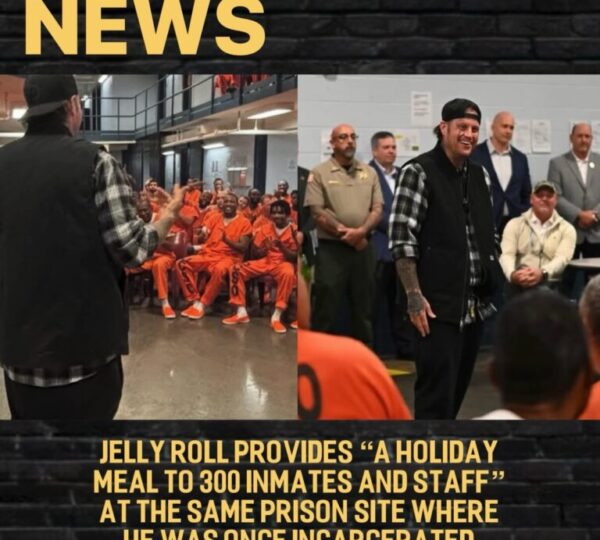
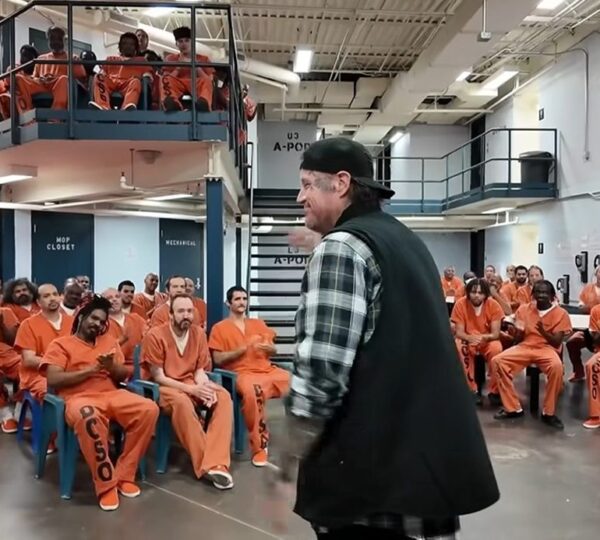
His mission was simple, yet profoundly powerful: to provide a Thanksgiving meal to roughly 300 inmates and staff, giving not just food but a gesture of recognition and humanity.
A Gesture Rooted in Experience
According to Nashville Sheriff Daron Hall, Jelly Roll personally delivered the meal, walking through the gates of the same facility that once held him.
Hall praised the visit, saying, “During this season, I’d like to give thanks for giving Jelly Roll.
Last night, he provided a holiday meal to 300 inmates and staff on the same site where he was once incarcerated.
Moments like this show the impact one person can make when they choose to lift others up. Thank you, Jelly Roll, for turning your past into purpose.”
The emotional weight of this act cannot be overstated. Jelly Roll didn’t simply donate food from afar or make a symbolic gesture.
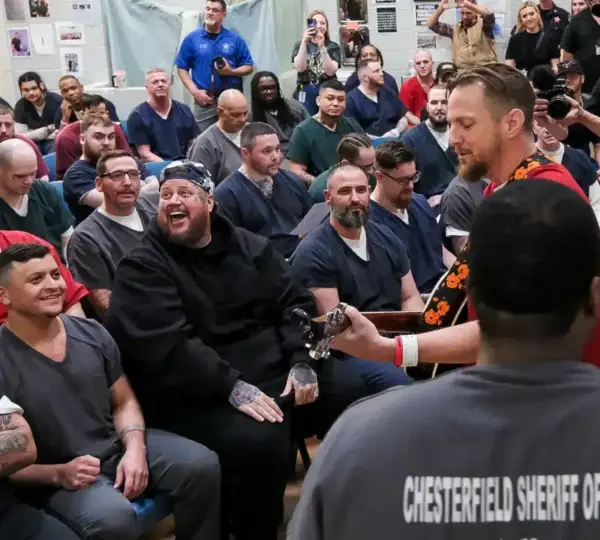
He physically returned to the space where his past self faced loneliness, uncertainty, and the harsh realities of incarceration.
Walking back through those gates was more than a symbolic act—it was a powerful acknowledgment of his past, a demonstration that he hasn’t forgotten the struggles that shaped him, and a clear message to those still inside that change, hope, and redemption are possible.
The Music that Mirrors His Journey
Much of Jelly Roll’s music tells the story of his life before fame, his struggles with addiction, the pain of incarceration, and the ongoing battle to find peace and identity.
Songs like “Save Me” and “Creature” are raw, stripped-down narratives of survival.
His voice, weathered by life’s hardships, conveys authenticity in a way that resonates deeply with fans who have faced their own struggles.
The vulnerability in his lyrics connects with millions because it isn’t glamorized trauma—it’s lived experience.
Returning to a correctional facility with a Thanksgiving meal mirrors that same honesty.
It’s not about image, social media recognition, or press coverage—it’s about presence, empathy, and tangible care.
For inmates, holidays are often a stark reminder of what they’ve lost or what they’re missing.
By showing up personally, Jelly Roll demonstrated that even in places designed to diminish hope, gestures of kindness and recognition can be transformative.
His visit provided nourishment for both the body and the spirit, offering a glimpse of care that many never receive while inside.
A Life Shaped by Adversity
Jelly Roll’s path to fame was far from linear. Born and raised in Nashville, he grew up in challenging circumstances that exposed him early to the harsh realities of addiction, violence, and poverty.
These experiences influenced both his music and his worldview.
Before finding success in the music industry, he spent years navigating legal troubles, incarceration, and the uncertainty that comes from repeated setbacks.
Every song he writes, every verse he records, is shaped by lessons learned in both hardship and redemption.
Returning to the Nashville facility for Thanksgiving demonstrates that he hasn’t forgotten his roots, nor the young man he once was.
It reflects a deeply ingrained understanding of empathy: those who have struggled most are often best positioned to offer support, hope, and guidance to others facing similar challenges.
In a world that often celebrates fame without accountability, Jelly Roll’s act is a reminder that genuine success includes lifting others along the way.
Impact Beyond the Meal
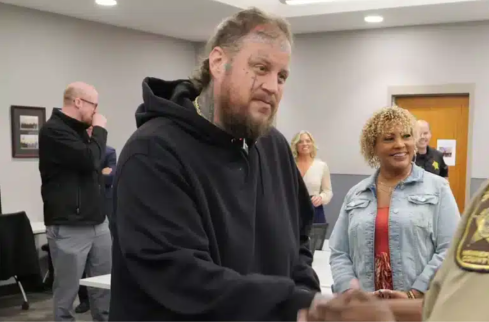
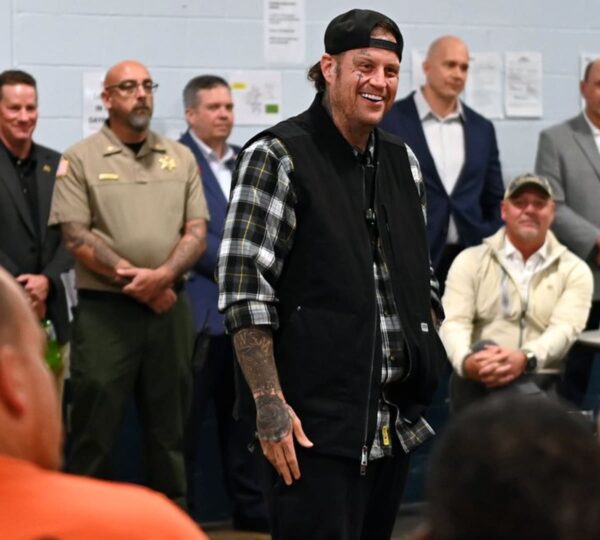
The immediate impact of Jelly Roll’s visit is visible in the faces of the inmates and staff who received the Thanksgiving meal.
For the inmates, it was not a performance or a fleeting visit—it was validation.
It was proof that someone cared enough to return, to acknowledge them, and to bring a sense of humanity to an environment often stripped of it.
For staff members, it was a moment of inspiration, reinforcing the importance of compassion and empathy in their work, and reminding them of the lasting influence that acts of kindness can have.
Beyond the facility walls, the visit carries a broader societal message.
It challenges stigma around formerly incarcerated individuals and demonstrates that people with a criminal past can transform their experiences into acts of service.
Jelly Roll’s example encourages conversations about rehabilitation, redemption, and the value of second chances, particularly during a season meant to emphasize gratitude and generosity.
A Model of Authenticity
Unlike many celebrity acts of charity, Jelly Roll’s visit was deeply personal and entirely unembellished.
He did not perform music, record video for social media, or promote products. He arrived, served the meal, interacted with inmates, and left with the knowledge that he had made a tangible difference.
This authenticity—showing up in a meaningful way without fanfare—is perhaps the most impactful aspect of his gesture.
It communicates that real change is not always loud, flashy, or designed for recognition; sometimes, it is quiet, deliberate, and deeply personal.
Redemption in Action
In returning to the facility, Jelly Roll embodies the very message that underpins much of his music: that the past does not have to define the future.
His Thanksgiving visit demonstrates that personal transformation is possible, and that one can use their experiences—not just for self-promotion, but to uplift others.
For those incarcerated that night, Jelly Roll was a living example that their current circumstances are not the end of their story. Change, hope, and redemption are attainable.
Conclusion: More Than a Meal
Jelly Roll’s Thanksgiving visit was more than just providing food—it was a demonstration of empathy, authenticity, and the power of personal connection.
It reminded the Nashville community, and the world, that acts of kindness can have profound ripple effects.
By returning to the facility that once confined him, Jelly Roll bridged the gap between his past and present, turning personal hardship into a lesson in humanity.
His story serves as a reminder that true success is measured not only in awards, streams, or chart rankings, but in the ability to positively influence the lives of others.
In the world of celebrity gestures, Jelly Roll’s act stands out for its sincerity, its emotional depth, and its enduring impact.
For those 300 inmates and staff, it was a Thanksgiving to remember—a night of warmth, recognition, and hope.
For Jelly Roll, it was a way to honor his past while using it to light a path forward for others.
In a society where the incarcerated are often forgotten, Jelly Roll’s visit proves that redemption and humanity can flourish even in the most unlikely places.
It is a powerful, timeless lesson: the measure of a life well-lived is not only the success one achieves but also the generosity, empathy, and hope one offers to others along the way.
Jason DeFord, better known to the world as Jelly Roll, has never hidden the profound ways the criminal justice system shaped his life.
Long before chart-topping hits, platinum records, or mainstream recognition, he was simply a young man trying to navigate a world that seemed determined to keep him down.
He was an inmate at a Nashville correctional facility, wrestling with the questions that define youth: Who am I?
What do I want my life to mean? How do I survive both physically and emotionally in a place that strips away so much of your humanity?
For many, the holidays behind bars are a time of isolation and despair.
They amplify the absence of family, the longing for connection, and the stark reminder that life is happening somewhere else—without you.
This year, during Thanksgiving, Jelly Roll returned to that very environment—not as a celebrity in a controlled, media-ready appearance, but as someone who intimately knows what it feels like to be on the inside during the holidays.
His mission was simple, yet profoundly powerful: to provide a Thanksgiving meal to roughly 300 inmates and staff, giving not just food but a gesture of recognition and humanity.
A Gesture Rooted in Experience
According to Nashville Sheriff Daron Hall, Jelly Roll personally delivered the meal, walking through the gates of the same facility that once held him.
Hall praised the visit, saying, “During this season, I’d like to give thanks for giving Jelly Roll.
Last night, he provided a holiday meal to 300 inmates and staff on the same site where he was once incarcerated.
Moments like this show the impact one person can make when they choose to lift others up. Thank you, Jelly Roll, for turning your past into purpose.”
The emotional weight of this act cannot be overstated. Jelly Roll didn’t simply donate food from afar or make a symbolic gesture.
He physically returned to the space where his past self faced loneliness, uncertainty, and the harsh realities of incarceration.
Walking back through those gates was more than a symbolic act—it was a powerful acknowledgment of his past, a demonstration that he hasn’t forgotten the struggles that shaped him, and a clear message to those still inside that change, hope, and redemption are possible.
The Music that Mirrors His Journey
Much of Jelly Roll’s music tells the story of his life before fame, his struggles with addiction, the pain of incarceration, and the ongoing battle to find peace and identity.
Songs like “Save Me” and “Creature” are raw, stripped-down narratives of survival.
His voice, weathered by life’s hardships, conveys authenticity in a way that resonates deeply with fans who have faced their own struggles.
The vulnerability in his lyrics connects with millions because it isn’t glamorized trauma—it’s lived experience.
Returning to a correctional facility with a Thanksgiving meal mirrors that same honesty.
It’s not about image, social media recognition, or press coverage—it’s about presence, empathy, and tangible care.
For inmates, holidays are often a stark reminder of what they’ve lost or what they’re missing.
By showing up personally, Jelly Roll demonstrated that even in places designed to diminish hope, gestures of kindness and recognition can be transformative.
His visit provided nourishment for both the body and the spirit, offering a glimpse of care that many never receive while inside.
A Life Shaped by Adversity
Jelly Roll’s path to fame was far from linear. Born and raised in Nashville, he grew up in challenging circumstances that exposed him early to the harsh realities of addiction, violence, and poverty.
These experiences influenced both his music and his worldview.
Before finding success in the music industry, he spent years navigating legal troubles, incarceration, and the uncertainty that comes from repeated setbacks.
Every song he writes, every verse he records, is shaped by lessons learned in both hardship and redemption.
Returning to the Nashville facility for Thanksgiving demonstrates that he hasn’t forgotten his roots, nor the young man he once was.
It reflects a deeply ingrained understanding of empathy: those who have struggled most are often best positioned to offer support, hope, and guidance to others facing similar challenges.
In a world that often celebrates fame without accountability, Jelly Roll’s act is a reminder that genuine success includes lifting others along the way.
Impact Beyond the Meal
The immediate impact of Jelly Roll’s visit is visible in the faces of the inmates and staff who received the Thanksgiving meal.
For the inmates, it was not a performance or a fleeting visit—it was validation.
It was proof that someone cared enough to return, to acknowledge them, and to bring a sense of humanity to an environment often stripped of it.
For staff members, it was a moment of inspiration, reinforcing the importance of compassion and empathy in their work, and reminding them of the lasting influence that acts of kindness can have.
Beyond the facility walls, the visit carries a broader societal message.
It challenges stigma around formerly incarcerated individuals and demonstrates that people with a criminal past can transform their experiences into acts of service.
Jelly Roll’s example encourages conversations about rehabilitation, redemption, and the value of second chances, particularly during a season meant to emphasize gratitude and generosity.
A Model of Authenticity
Unlike many celebrity acts of charity, Jelly Roll’s visit was deeply personal and entirely unembellished.
He did not perform music, record video for social media, or promote products. He arrived, served the meal, interacted with inmates, and left with the knowledge that he had made a tangible difference.
This authenticity—showing up in a meaningful way without fanfare—is perhaps the most impactful aspect of his gesture.
It communicates that real change is not always loud, flashy, or designed for recognition; sometimes, it is quiet, deliberate, and deeply personal.
Redemption in Action
In returning to the facility, Jelly Roll embodies the very message that underpins much of his music: that the past does not have to define the future.
His Thanksgiving visit demonstrates that personal transformation is possible, and that one can use their experiences—not just for self-promotion, but to uplift others.
For those incarcerated that night, Jelly Roll was a living example that their current circumstances are not the end of their story. Change, hope, and redemption are attainable.
Conclusion: More Than a Meal
Jelly Roll’s Thanksgiving visit was more than just providing food—it was a demonstration of empathy, authenticity, and the power of personal connection.
It reminded the Nashville community, and the world, that acts of kindness can have profound ripple effects.
By returning to the facility that once confined him, Jelly Roll bridged the gap between his past and present, turning personal hardship into a lesson in humanity.
His story serves as a reminder that true success is measured not only in awards, streams, or chart rankings, but in the ability to positively influence the lives of others.
In the world of celebrity gestures, Jelly Roll’s act stands out for its sincerity, its emotional depth, and its enduring impact.
For those 300 inmates and staff, it was a Thanksgiving to remember—a night of warmth, recognition, and hope.
For Jelly Roll, it was a way to honor his past while using it to light a path forward for others.
In a society where the incarcerated are often forgotten, Jelly Roll’s visit proves that redemption and humanity can flourish even in the most unlikely places.
It is a powerful, timeless lesson: the measure of a life well-lived is not only the success one achieves but also the generosity, empathy, and hope one offers to others along the way.
