The house was always loudest when it was quiet. That’s something they don’t tell you in the grief pamphlets. They tell you about the anger, the bargaining, the depression. They don’t tell you that at 3:00 AM, the hum of the refrigerator sounds like a scream, and the settling of the floorboards sounds like footsteps you know you’ll never hear again.
Last Thursday started like every other awful, quiet night I’ve had since my family fell apart. My husband, Lucas, had been gone for eighteen months—his heart gave out six months after we buried our son. I was alone in a four-bedroom colonial in the suburbs of Ohio, a house bought for a family that no longer existed. The nursery was shut tight; the master bedroom felt like a cavern.
By midnight, I was scrubbing a clean counter just to avoid thinking too much. I was using a lemon-scented spray, wiping the same spot on the granite for the third time, just to fill the silence with the friction of the paper towel. I was trying to scrub away the memory of the hospital smells that still lingered in my nightmares.
Then, the sound came.
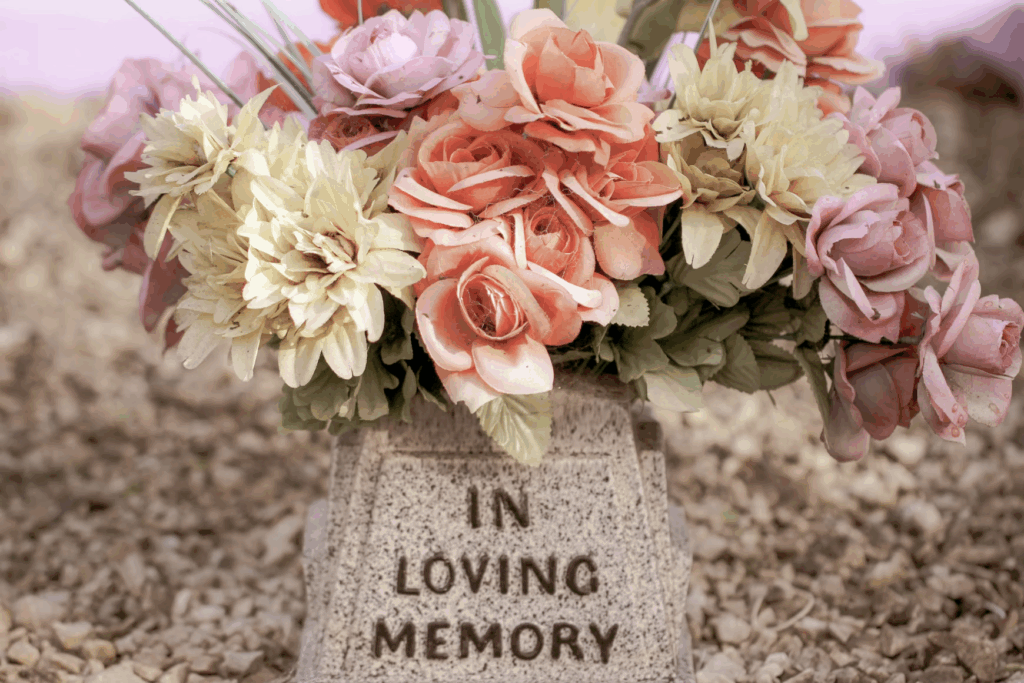
A Sound That Should Not Have Existed
It was three soft knocks.
My hand froze. The paper towel hovered over the counter. I waited, assuming it was the house settling, or maybe a branch from the old oak tree hitting the siding in the wind. The wind had been picking up all evening, rattling the storm windows.
But then it came again. Three soft knocks. Deliberate. Low down on the door. Too low for a neighbor. Too gentle for a delivery driver.
A pause.
Then a tiny, trembling voice I hadn’t heard in two years drifted through the wood.
“Mom… it’s me.”
The dish towel slipped from my hand and hit the floor with a wet slap. For a second, the words didn’t make sense. I tried to rearrange them into something logical—a neighbor’s child, a prank, a hallucination brought on by exhaustion and the half-glass of wine I’d had with dinner. My whole body went cold, a physical chill that started at the base of my spine and wrapped around my throat.
“Mom? Can you open?”
I couldn’t breathe. Because that voice belonged to one person, and there was absolutely no way I could be hearing it now. It sounded like my son. My son, Evan, who died at five years old. My son, whose tiny white casket I’d kissed before they lowered it into the wet earth at a frantic, rainy funeral. My son, who I’d begged and screamed and prayed for every night since.
He was gone. For two years. I had the death certificate in the safe. I had the grief counseling receipts in the drawer.
Another knock.
“Mom? Can you open?”
I forced my legs to move down the hallway. I had to grip the wall as I went, my fingernails digging into the drywall. Grief had tricked me before. I’d heard phantom footsteps upstairs; I’d seen the flash of blonde hair in the grocery store aisle; I’d heard a laugh at the park that wasn’t his but sounded enough like it to break my heart all over again.
But this voice wasn’t a memory turned into a ghost. It was sharp, and clear, and terrified. It was alive.
Too alive.
“Mommy?” The word slipped under the door and cracked me open.
I unlocked the deadbolt with shaking hands. The chain rattled as I pulled it free. I opened the door wide to the night.
The Boy on the Porch
My knees gave out. I caught myself on the doorframe, gasping for air that wouldn’t come.
A little boy stood on my porch. He was barefoot, his toes curled against the cold concrete. He was dirty, streaks of grime running down his arms. He was shivering under the yellow porch light.
He wore a faded blue T-shirt with a rocket ship on it. The decal was peeling. It was the same shirt my son was wearing when he went to the hospital two years ago. It was tighter now, stretched across his chest, the fabric worn thin.
He looked up at me with wide brown eyes. The same freckles scattered across the nose. The same dimple on the right cheek that only appeared when he was nervous or trying to be brave. The same cowlick on the left side of his forehead that never stayed down, no matter how much water or gel I used.
“Mommy?” he whispered, his teeth chattering. “I came home.”
“Who… who are you?” I managed to choke out.
My heart just stopped. The world tilted on its axis.
He frowned, a little crinkle between his eyebrows, like I’d told a bad joke. “It’s me,” he said, his voice small. “Mom, why are you crying?”
Hearing him call me Mom hit me like a physical punch to the gut.
“I… my son… my son is dead,” I said. My voice sounded tinny, like it belonged to a stranger standing ten feet away. “Evan passed away.”
“But I’m right here,” he whispered, taking a hesitant step forward. “Why are you saying that?”
His lip trembled. That specific quiver of the lower lip—I knew that quiver. It was the face he made right before a meltdown.
He stepped inside like he’d done it a thousand times. The movement was so natural, so possessed of muscle memory, that it made my skin crawl. Everything in my brain screamed that this was wrong, that this was a cruel trick, a nightmare I hadn’t woken up from.
But under that screaming logic, something raw and desperate whispered: Take him. Don’t ask. Just grab him.
I swallowed the bile rising in my throat.
“Where have you been, Evan?” I asked, my voice barely a whisper.
He blinked, looking around the foyer. “With the lady,” he whispered. “She said she was my mom. But she’s not you.”
My stomach twisted into a knot. I grabbed my phone from the entry table with shaking hands.
His small fingers clutched at my sleeve. “Don’t call her,” he said, panic rising in his voice, sharp and high. “Please don’t call her. She’ll be mad I left.”
“I’m not calling her,” I said, hitting the screen with trembling fingers. “I’m calling… I don’t know. I just need help.”
I hit 9-1-1.
The Impossible Phone Call
The operator answered after one ring. “9-1-1, what is your emergency?”
I realized I was sobbing. I couldn’t stop. “My son is here,” I choked out, sliding down the wall to sit on the floor. “He died two years ago. But he’s here. He’s in my house. I don’t understand.”
There was a pause on the line. I could hear the operator typing. “Ma’am, are you injured? Is the child injured?”
“No,” I wept. “He’s… he looks exactly like him. But he’s older. He’s bigger.”
They told me officers were on their way. They told me to stay on the line.
While we waited, Evan moved around the house. It was terrifying how much he knew. He didn’t ask where things were. He walked into the kitchen, the linoleum cold on his bare feet, and opened the cabinet to the right of the sink without thinking.
He pulled out a blue plastic cup with cartoon sharks on it.
“Mommy, please don’t let them take me again,” he whispered, clutching the cup to his chest.
It was his favorite cup. We had buried it in a box of his things in the attic, or so I thought. But there it was.
“Do we still have the blue juice?” he asked.
“How do you know where that is?” I whispered.

He gave me a weird look, like I was the one being strange. “You said it was my cup,” he said. “You said nobody else could use it ’cause I drool on the straw.”
I had said that. Those exact words. Three years ago, at a breakfast table that included a husband who was still alive and a son who hadn’t yet been in a car accident.
Headlights washed over the front windows, slicing through the darkness. Blue and red strobe lights began to bounce off the living room walls, illuminating dust motes dancing in the air.
“Again?” I repeated, latching onto his earlier words. “Who took you before?”
Evan flinched at the flashing lights. “Mommy, please don’t let them take me again.”
The doorbell rang. He nearly jumped out of his skin, dropping the shark cup. It clattered on the floor, spinning in a circle.
Police Procedure and Heartbreak
Two officers stood on the porch. A tall man with a gentle face, Officer Daley, and a woman with sharp, observant eyes, Officer Ruiz.
“Ma’am?” Daley asked, stepping in. “I’m Officer Daley. This is Officer Ruiz. You called about a child?”
“He says he’s my son,” I said, gesturing to the kitchen. “My son died two years ago.”
I stepped back so they could see him. Evan was peeking from behind the kitchen island, clutching his dirty t-shirt.
Daley crouched down, making himself small. “Hey, buddy,” he said gently. “What’s your name?”
“I’m Evan,” he answered.
Daley’s eyes flicked up to mine. They were full of questions I couldn’t answer.
“How old are you, Evan?” he asked.
Evan held up six fingers. “I’m six,” he said. “I’m almost seven. Daddy said we could get a big cake when I turned seven. A chocolate one with the Hulk on it.”
Ruiz looked at me, checking for confirmation.
“Ma’am?” she asked quietly.
“That’s… that’s right,” I said, feeling faint. “He’d be seven now. He was five when… when it happened.”
“And your son is… deceased?” Daley asked, his voice low.
“Yes,” I whispered. “Car accident. I saw him in the hospital. The doctors declared him. I saw the body. I watched them close the casket. I stood at his grave.”
“I’m not leaving him.”
My voice cracked, shattering the professional tension in the room. Evan ran to me and pressed his face into my side. He smelled like rain and old dust and something sweet, like cheap laundry detergent.
“I don’t like when you say that,” he whispered. “It makes my tummy hurt.”
Ruiz stood silently for a second, assessing the threat level. There was none, only confusion.
“Ma’am, we need to get him checked out,” she said. “If you’re okay with it, we’d like to take you both to the hospital. Let CPS and a detective meet you there. We need to verify who he is.”
“I’m not leaving him,” I said. The protective instinct, dormant for two years, roared back to life like a sleeping dragon.
“You’re not required to,” Daley said soothingly. “You can stay with him the whole time.”
The Longest Night at the Hospital
The ride to the hospital was a blur of streetlights and silence. Evan refused to let go of my hand, even while strapped into the back of the cruiser.
At the hospital, they put Evan in a small pediatric room with bright pictures of zoo animals on the walls. It was too cheerful for the gravity of the situation. A doctor checked him over—malnourished, dehydrated, minor bruising, but healthy. I watched the doctor’s hands, terrified he would find something that proved this boy wasn’t mine—or worse, find proof of what he had endured.
Then, a woman with a gold badge appeared in the doorway. She looked tired but kind.
“Mrs. Parker? I’m Detective Harper,” she said gently. “I know this is… unbelievable. We’re going to try to get some answers.”
A nurse came in with a sterile kit.
“We’d like to do a rapid parentage test,” Harper said. “Technology has come a long way. It’ll tell us if he’s biologically yours. Is that something you’re comfortable with?”
“Yes,” I said immediately. “Please. I need to know.”
Evan watched, anxious, his eyes darting between the swab and me. “What’s that?” he asked.
“It’s just like a Q-tip,” I said, forcing a smile I didn’t feel. “They rub it in your cheek. I’ll do it too.”
He let them swab his mouth. When they did mine, he grabbed my wrist, his grip surprisingly strong. “Don’t leave,” he whispered.
I sat in a plastic chair just outside his room while they processed the rush order. Evan watched cartoons on the wall-mounted TV, glancing over every few minutes to make sure I was still there.
“Mommy?” he’d call.
“Yeah, baby?” I’d answer.
“Just checking,” he’d say.
Detective Harper sat beside me with a notebook. The hallway smelled of antiseptic and floor wax.
“Tell me about the accident,” she said.
So I did. I dragged up the memories I had tried to bury. I told her about the rainy night. The red light the other driver ran. The crunch of metal that sounded like a bomb going off. The ambulance ride. The machines beeping. The doctors shaking their heads.
I told her about the tiny blue rocket shirt. About kissing the cold forehead in the casket. About Lucas, my husband, grabbing the dirt at the cemetery like he could pull our son back out of the ground.
I told her about finding Lucas six months later, hand on his chest, eyes open and empty. A broken heart, the doctors said. Stress cardiomyopathy.
By the end, Harper’s eyes were shiny. She stopped writing.
“I’m so sorry,” she said.
“If that boy isn’t my son,” I said, my voice shaking with a rage that frightened me, “this is the cruelest prank on earth. And whoever did this deserves to die.”
“And if he is?” she asked.
“Then somebody stole him from me,” I said. “And I want to know who.”
The Impossible Truth
The nurse came back clutching a folder two hours later. She shut the door behind her, creating a seal of privacy.
“Mrs. Parker,” she said quietly. “We have the test results.”
My heart pounded so hard my vision blurred at the edges.
“Okay,” I whispered.
She opened the folder.
“The test shows a 99.99% probability that you are this child’s biological mother,” she said. “And a matching probability that your late husband is his biological father.”
The air left the room.
“That’s not possible,” I said, staring at the paper. “My son is dead. I saw him. I buried him.”
Detective Harper moved closer, her demeanor shifting from sympathetic to intense.
“Genetically,” she said, “he is your son.”
My knees almost gave out. I had to grip the arms of the plastic chair.
Harper continued, her voice careful and measured. “When we ran his prints, something else came up,” she said. “Mrs. Parker, around the time of your son’s reported death, there was an internal investigation at the state morgue. Records show a breach. It was hushed up, but several instances of… mislabeled remains were discovered.”
I just stared at her, the horror slowly dawning on me.
“You’re telling me I buried the wrong child,” I said. “You’re telling me I spent two years grieving over an empty box or… someone else’s baby?”
She nodded slowly. “We think Evan was taken before he ever reached the morgue,” she said. “Likely during the transfer from the ER. The confusion of the crash, the multiple ambulances… it created a window.”
“Who?” I demanded.
“We suspect a nurse. A woman named Melissa,” Harper said. “She was on shift that night.”
The name meant nothing to me, but it made my stomach twist.
“He said he was with a lady,” I said. “He didn’t want me to call her.”
Harper nodded. “Melissa worked in the pediatric ER. She lost her own son, Jonah, several years before. He was the same age as Evan. She had a documented breakdown, but the hospital kept her on.”
“Where is she now?” I asked.
“We’re trying to find her,” Harper said. “But first, I need to hear from Evan, if you think he can help find her.”
The Story of the “Other Mother”
I went back into the room. Evan looked up, worried, the cartoon forgotten.
“Mommy?”
I climbed onto the narrow hospital bed next to him and took his hand. It was warm. Real.
“Baby, this is Detective Harper,” I said. “She wants to ask about the lady you stayed with. Is that okay?”
He hesitated, pulling his knees to his chest. “She said not to tell,” he whispered. “She said they’d take me away.”
“They’re not taking you away,” I said. “I promise. I’m right here. Nobody is ever taking you again.”
He nodded, eyes shiny with unshed tears.
Harper sat in the chair, lowering herself to his eye level. “Hi, Evan,” she said softly. “Can you tell me the lady’s name?”
“Melissa,” he said after a second. “She said I was her son. She called me Jonah when she was happy. When she was mad, she called me Evan.”
“How long were you with her?” Harper asked.
He frowned, trying to measure time in the way children do. “Since the beep room,” he said. “The room where the machines beeped. You were crying. Then I went to sleep. When I woke up, Melissa was there. She said you’d left. She said you didn’t want a broken boy.”
His fingers dug into my hand.
“I would never leave you,” I said fiercely, tears streaming down my face. “She lied to you. You were hurt, and she stole you.”
He sniffed. “Do you know who brought you here tonight?” Harper asked.
“A man,” Evan said. “He lived with us. Uncle Matt. He yelled a lot. Tonight, he yelled at Melissa. He said what she did was wrong. He said he couldn’t sleep anymore. He put me in the car and said, ‘We’re going to your real mom now.’”
“Do you know his name?” she asked.
“Uncle Matt,” Evan said. “But she called him ‘idiot’ more.”
“Am I in trouble?” he asked, looking between us. “For going with her?”
Harper’s mouth tightened into a grim line. “No, buddy. You are a hero. We’re going to find them. Both of them.”
Evan looked up at me, panic flickering again. “Am I in trouble?”
I pulled him into my arms, burying my face in his neck. “Absolutely not,” I said. “You didn’t do anything wrong. Grown-ups did. Bad grown-ups.”
Going Home
The bureaucratic nightmare started immediately. Child Protective Services wanted to place him in foster care “pending investigation” and “DNA verification from an independent lab.”
I lost it.
“You already lost him once,” I said, shaking with rage in the hallway. “The system lost him. You people let a woman walk out of a hospital with my son while I was planning his funeral. You are not taking him from me again.”
Detective Harper backed me up. “She’s his biological mother and a victim,” she said flatly to the social worker. “Supervised reunification is fine, but he goes home with her tonight. I’ll park a squad car in the driveway if I have to.”
They relented.
That night, I buckled Evan into the dusty old booster seat I’d never been able to throw out. It had been sitting in the garage for two years, gathering cobwebs. He sat in it, his legs longer now, his knees bumping the back of the passenger seat. He looked out the window, his expression unreadable.
He looked around the car. “Is Daddy here?” he asked quietly.
I swallowed. This was the conversation I had been dreading.
“Daddy’s with the angels,” I said. “He… he got sick after you left. His heart stopped working because he missed you so much.”
Evan stared out the window at the passing streetlights. “So he thought I was there,” he said softly. “With the angels.”
My voice shook. “Yeah. I think he did.”
At home, Evan stepped inside slowly. He touched the wall, the couch, the coffee table, like he was checking if it was all solid. Like he was testing the reality of the world.
He walked straight to the shelves and reached up, without looking, to grab his favorite battered blue T-Rex.
“You didn’t throw him away,” he said.
“Never could,” I answered.
He padded down the hall, bare feet soft on the wood, and stopped at his bedroom door.
I hadn’t changed it. Rocket ship sheets. Dinosaur posters. Glow-in-the-dark stars stuck to the ceiling in constellations that didn’t exist.
He went in slowly, almost cautiously. “Can I sleep here?” he asked.
“If you want,” I said. “Or you can sleep with me.”
He climbed onto the bed and slid under the covers, clutching his stuffed sloth. He looked smaller than ever in that bed that had been empty for so long.
“Will you stay?” he whispered. “Until I fall asleep?”
“I’ll stay as long as you want,” I said. “I’ll sleep right here on the floor if you want.”
I lay on top of the comforter, facing him.
After a minute, he spoke into the darkness.
“Mom?”
“Yeah?”
“Is this real?” he asked. “Not a dream? Sometimes I dream I’m home, and then I wake up at Melissa’s.”
I swallowed hard, fighting the urge to scream at the universe for allowing this to happen.
“Yeah, baby,” I said. “This is real.”
He studied my face like he was trying to memorize it. “I missed you,” he said.
“I missed you every second,” I replied.
He reached out and put his hand on my arm. “Don’t let anyone take me again,” he whispered.
“I won’t,” I said. “I swear to you. I will burn the world down before I let anyone take you from me again.”
He fell asleep clutching my sleeve.

The Morning After
I woke up with a crick in my neck, still curled on top of the comforter. The morning sun was streaming through the blinds, cutting lines across the floor.
For a split second, the old reality washed over me—the one where the room was empty and the silence was absolute. Panic flared in my chest. I sat up, heart hammering, scrambling to look at the pillow beside me.
He was there. But he wasn’t sleeping like my Evan used to. He wasn’t sprawled out like a starfish. He was curled into a tight ball, his back pressed against the wall, the covers pulled up to his nose. It was a defensive posture. A sleeping position learned by someone who needed to make themselves small.
I watched him breathe for ten minutes, terrified that if I blinked, he would vanish.
When he finally woke up, he didn’t stretch. He went rigid. His eyes flew open, wide and scared, before landing on me. The tension drained out of his shoulders.
“You’re still here,” he whispered.
“I’m always here,” I said.
Breakfast was the first real test. I made pancakes—his favorite. But when I set the plate down, he didn’t dig in. He looked at the food, then at me, then at the pantry.
“Can I keep some?” he asked softly.
“What do you mean, honey?”
“For later,” he said, sliding a pancake off the plate and into his napkin. “In case… in case you get mad.”
My heart broke all over again. “Evan, you don’t have to save food. There is always food here. And even if I get mad—which I won’t—you will always, always be allowed to eat.”
He hesitated, then slowly unrolled the napkin. He ate with a ferocity that told me he had known hunger, or at least the threat of it.
That afternoon, I had to explain to him why his father wasn’t coming through the door. I showed him pictures. I took him to the closet where Lucas’s coats still hung. Evan buried his face in a flannel shirt, inhaling the fading scent of cedar and Old Spice.
“He smelled like this,” Evan said, his voice muffled by the fabric. “I remember.”
It was a jagged, painful blessing. He had his father back for a moment, just in a scent, before the grief of that second loss settled over him.
The Aftermath
They arrested Melissa two days later in a town an hour away. She was packing a bag, getting ready to run.
“Uncle Matt”—her brother—turned himself in. He admitted he’d discovered the truth about “Jonah” a week prior. He’d helped take Evan from the hospital years ago, thinking he was helping his grieving sister adopt an unwanted child. When he realized the truth—that the mother was alive and grieving—he couldn’t stand the guilt anymore.
Part of me hates him. Part of me wants to see him rot. But part of me is grateful he finally did the one right thing that mattered.
Evan has nightmares. He wets the bed sometimes. He asks if I’m coming back every time I step out of his sight.
Sometimes he wakes up screaming, “Don’t let her in!”
I hold him and say, “She can’t come here. She’s in jail. She’s far away. You’re safe.”
“Are you coming back?” he calls if I go to the bathroom.
“Yes,” I call back. “Always.”
We’re both in therapy now. We talk about grief and trauma and how to live in a world where the dead knock on your door in rocket ship shirts.
Life is weird and paperwork-heavy and full of appointments. But it’s also full of things I thought I’d never get again.
Sticky hands on my cheeks. Lego pieces under my feet that hurt like hell. His voice yelling, “Mom, watch this!” from the yard.
The other night, he was coloring at the kitchen table while I made dinner.
“Mom?” he said.
“Yeah?”
“I like home better,” he said.
He looked up at me, serious. “If I wake up and this is the angels’ place,” he said, “will you be there too?”
I walked over and knelt beside him.
“If this were the angels’ place,” I said, “Daddy would be here. And I don’t see him. So I think this is just home.”
He thought about that, then nodded. “I like home better,” he said.
“Me too,” I said.
Two years ago, I watched a tiny casket disappear into the ground and thought that was the end of my story. I thought I was just waiting out the clock until I could join them.
Last Thursday, my door shook with three soft knocks, and a little voice said, “Mom… it’s me.”
And somehow, against every rule I thought the universe had, I opened the door… and my son came home.
Let us know what you think about this story on the Facebook video! If this story touched your heart, please share it with friends and family to spread the word about holding your loved ones close.
