After Zohran Mamdani launched a successful bid to become mayor of New York, both he and his family suddenly found themselves swept into a level of public attention that few can fully anticipate. In the months leading up to his November 4 victory, he became a figure of fascination, controversy, and debate. While he received his share of positive coverage praising his political skill and growing influence, he also faced criticism and scrutiny typical of high-stakes campaigns. He even managed to provoke a reaction from former President Donald Trump, whose public frustration demonstrated just how disruptive Mamdani’s political ascent had become. Yet throughout all the noise and momentum of the campaign, one person remained quietly but unmistakably vital to his journey: his wife, the accomplished artist Rama Duwaji. Her near-absence from traditional campaign optics raised eyebrows and sparked a series of curious questions about their marriage and public dynamic, leading some to wonder whether something unusual was happening behind the scenes.
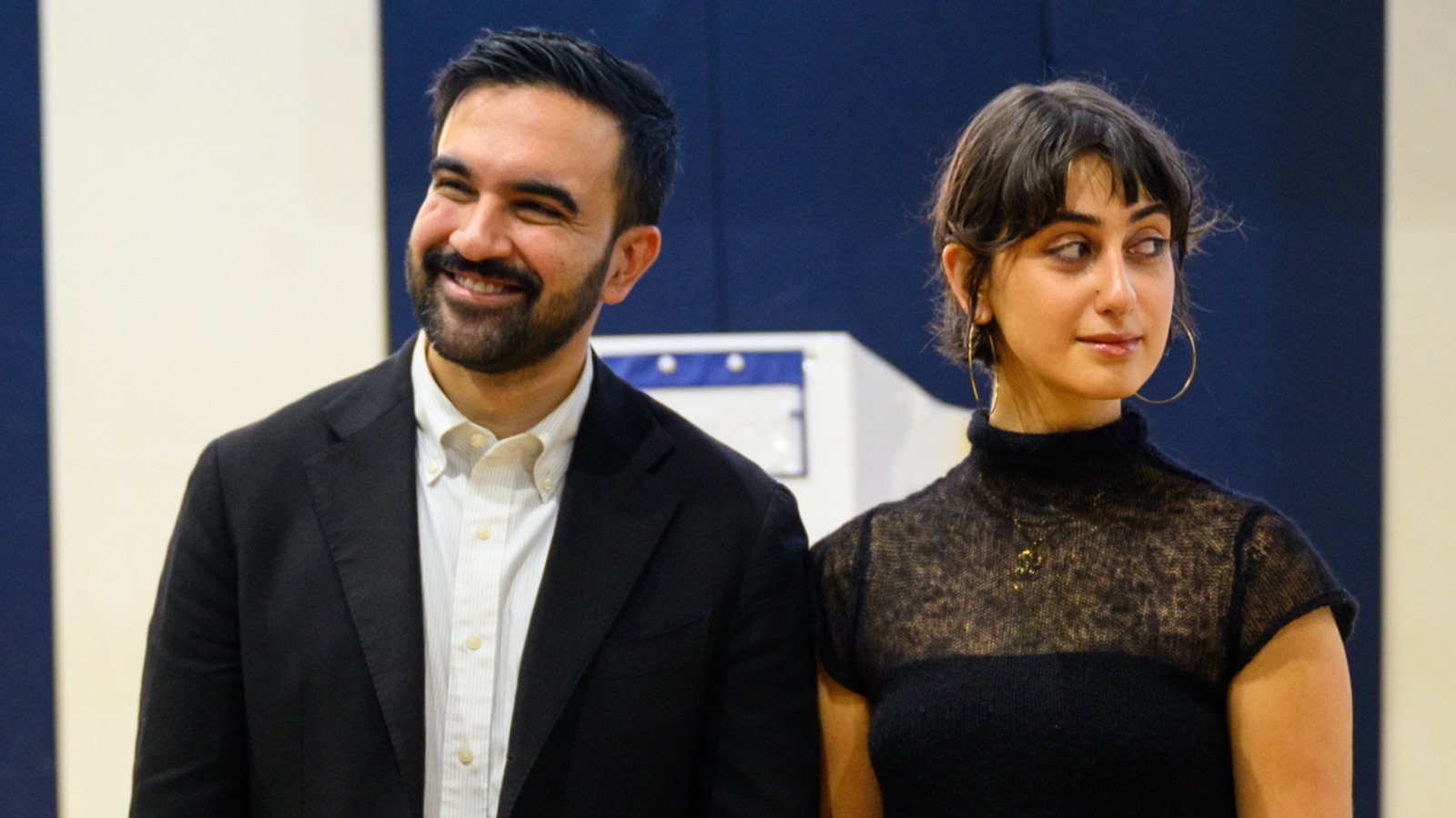
In most political campaigns, candidates prominently feature their families as part of a strategy to appear relatable and grounded. Spouses often travel with the candidate, give speeches, appear in advertisements, and engage with supporters to help establish warmth and accessibility. But Mamdani and Duwaji deliberately took a different route. Even though they were newly married, they rarely appeared together in public during the campaign. Observers who were accustomed to more traditional political optics found this surprising. The absence became a talking point online and in political circles, with some speculating that the couple was distancing themselves from typical political expectations or hiding some element of their personal life. However, the explanation behind their strategy turned out to be far more straightforward and rooted in Duwaji’s own professional identity.
Duwaji is a well-established artist whose work has appeared in both magazines and museums, earning her recognition far outside the world of politics. Rather than placing herself in the spotlight as a candidate’s spouse, she chose to contribute her talents in a way that aligned with her artistic voice and creative influence. According to CNN, she was responsible for designing the striking yellow, red, and blue branding that became the visual hallmark of Mamdani’s campaign. The bold, modern look quickly resonated with supporters and turned into a kind of unofficial cultural symbol among Mamdani’s growing fan base. The distinctive color palette and playful, eye-catching font led to a surge of bootleg merchandise online—including “Hot Girls for Zohran” apparel—that demonstrated just how quickly the aesthetic took on a life of its own. Instead of appearing in photo opportunities, Duwaji embedded herself directly into the architecture of the campaign, shaping the way the public perceived Mamdani through design rather than through conventional political roles.
While the visual identity she created became a talking point, there was another element of Mamdani and Duwaji’s relationship that attracted an entirely different kind of attention—the unusual way they met. For many people, meeting a spouse on a dating app like Tinder, Bumble, or Hinge is growing increasingly common. Yet despite the normalization of online dating, the idea still triggers skepticism or amusement among those who feel the apps are unreliable or too saturated with mismatched intentions. When it resurfaced publicly that Mamdani and Duwaji had met on Hinge, social media did not quite know how to react. For some, it became a source of humor. For others, a point of fascination. And for many, it offered unexpected encouragement.
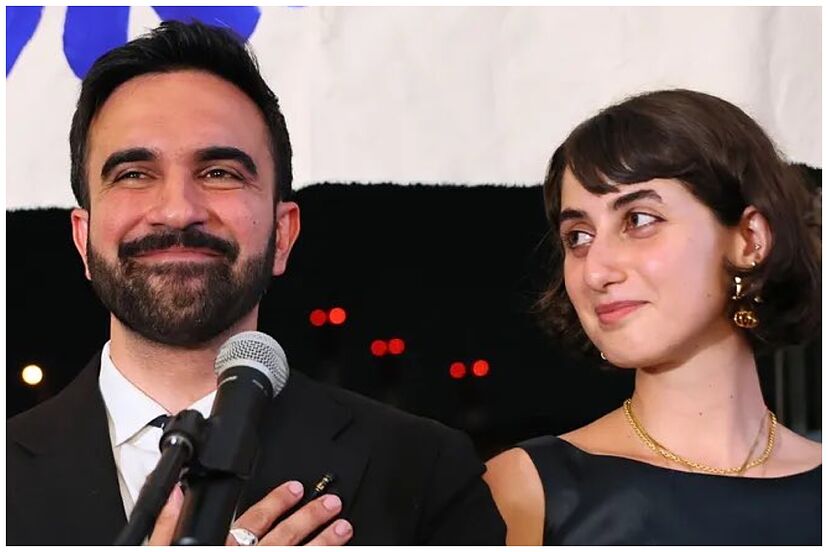
A user on X, formerly known as Twitter, tried to spin the revelation into a motivational message, writing, “They met on Hinge and now she’s First Lady of New York, keep swiping, ladies.” The comment quickly circulated, striking a blend of humor and hopefulness. Still, other users responded more cynically, joking that “The Hinge Zohran and Rama met on is not the Hinge that I deleted,” suggesting that their own experiences did not reflect anything close to political fairytales or instant soulmate connections.
Despite the jokes, there was a real sense of inspiration behind the broader reaction. Mamdani himself publicly praised the app during an interview with The Bulwark, quoted via the BBC, saying that “there is still hope in those dating apps.” His comment reinforced the idea that their meeting was not a fluke but rather a genuine reflection of how modern relationships are increasingly formed. Duwaji and Mamdani’s story offered a relatable and refreshingly contemporary version of romance, showing that even people in influential positions can find love through the same digital platforms used by millions of others.
This relatability resonated beyond political circles. Author Nura Maznavi told Fortune that learning about Mamdani and Duwaji’s Hinge origin “made me feel like less of a loser,” because she herself had met her husband on Match.com. Her reaction underscored how leaders’ personal stories can shape people’s sense of themselves. Having someone in a prominent public role reflect your own experiences—especially in something as intimate and often fraught as finding a partner—can be unexpectedly meaningful. Seeing public figures meet their spouse on an app normalized a process that many people still feel embarrassed to admit, especially when cultural or generational expectations favor more traditional paths to partnership. Maznavi’s comment captured the quiet affirmation many felt: sometimes the personal details of leaders’ lives matter precisely because they humanize them.
That sense of human connection also played into some of the confusion and speculation about why Mamdani and Duwaji were not seen together on the campaign trail. Some people wondered whether their marriage was unconventional, strained, or deliberately hidden. But the truth appeared far less dramatic and far more aligned with their individual identities. Both seemed comfortable challenging expectations of what a political partnership should look like. Instead of performing matrimonial unity for the cameras, they shaped their shared narrative through their own roles—his as a rising political figure and hers as a creative force embedded in the campaign’s visual DNA. Their marriage became something that people discussed not because of scandal or dysfunction but because the couple simply refused to conform to familiar patterns.
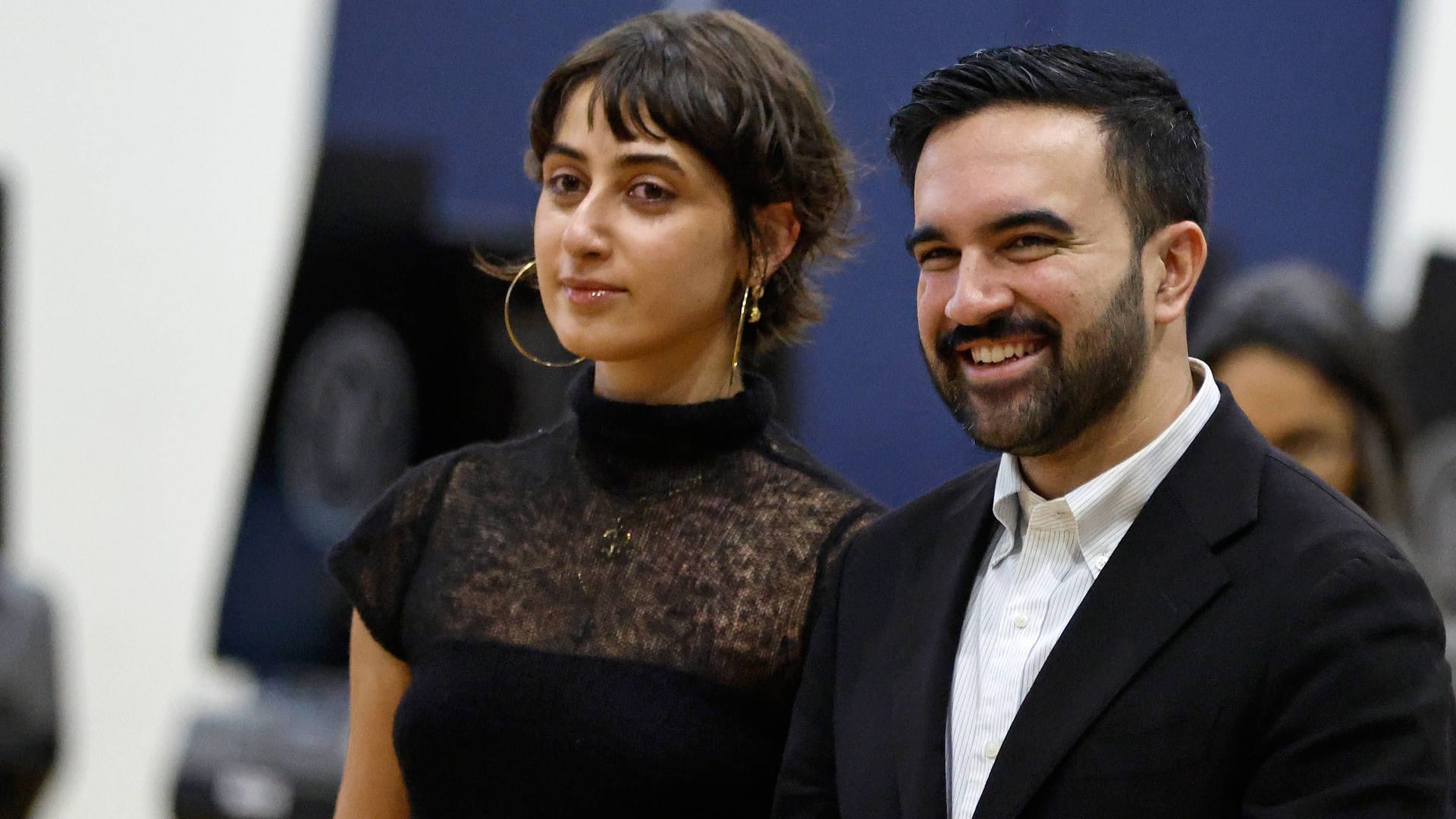
The fascination, at its core, reflected how quickly public curiosity intensifies when a couple steps into political prominence, especially in a media environment that thrives on personal details and the suggestion of mystery. Mamdani and Duwaji’s marriage drew attention not because of anything actually troubling, but because they seemed to operate differently from traditional political couples. They embraced a modern love story shaped by digital connection, creative collaboration, and individual autonomy. Their relationship did not fit the mold many people expected—and that alone was enough to spark discussion.
In the end, the “weird” things people observed about their marriage were perhaps only unusual within the rigid framework of political expectations. Meeting on Hinge would have seemed unremarkable if they were not in public life, and keeping their partnership mostly private would have attracted no attention if Mamdani were not running for mayor. What became clear over the course of the election was that the couple remains united, modern, and unapologetically untraditional. Their story reflects the changing landscape of love, partnership, and public life—messy, digital, creative, and unpredictable in ways that mirror the times they live in.
