The Mariana Trench, the deepest point in the ocean, was once believed to be an untouched abyss far from the reach of human pollution. However, discoveries have shattered this illusion, revealing the disturbing truth about the extent of plastic pollution, even in the deepest corners of our planet. A shocking find at the bottom of the Mariana Trench—a plastic bag1—serves as a poignant warning to humanity about the dire consequences of our careless plastic consumption and disposal habits. This article explores the significance of this distressing discovery and delves into the implications for our planet and its delicate marine ecosystems.
While the Mariana Trench may appear to be a desolate and lifeless chasm, it is, in fact, teeming with life. Diverse marine life forms, such as coral, jellyfish, and octopus, have been discovered in the depths of the trench. Unfortunately, the study also found that 17 percent of the images of plastic in the Deep-Sea Debris Database depicted interactions with marine life. These encounters ranged from entanglement to ingestion, highlighting the immediate threats plastic pollution poses to marine creatures.
Plastic Pollution: A Global Crisis
Plastic pollution is an ever-increasing global problem, with devastating consequences for the environment, wildlife, and human health. Single-use plastics, like the plastic bag found in the Mariana Trench, are the most common culprits. They are used momentarily and then discarded, making their way into the oceans through various routes.
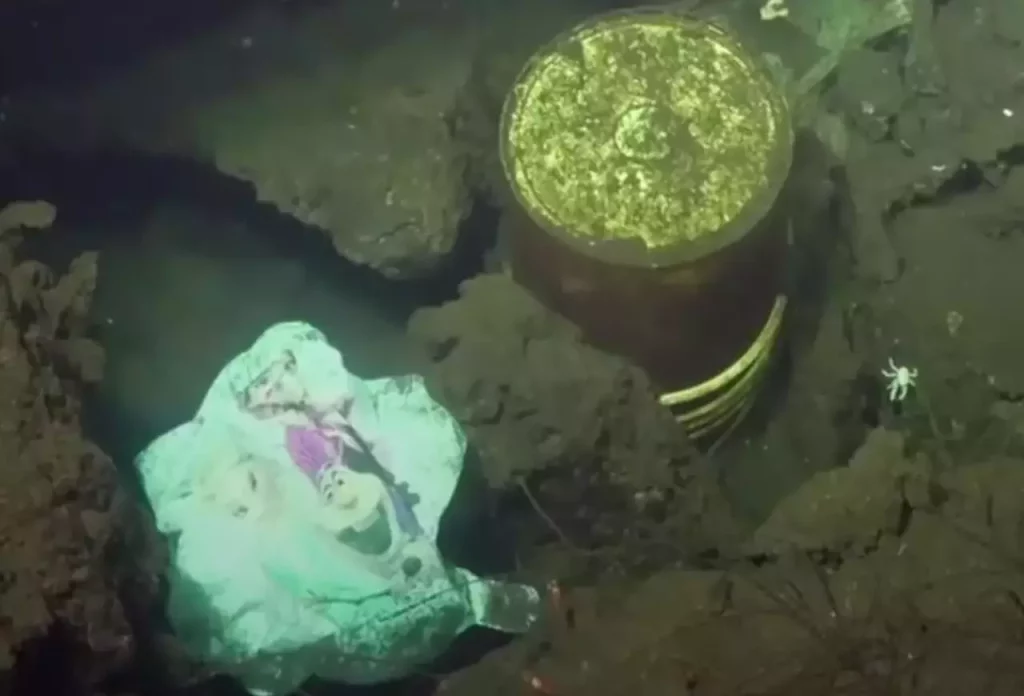
A study utilizing the Deep-Sea Debris Database revealed that plastic is the most prevalent form of debris found in the ocean. Plastic bags, in particular, constitute a significant portion of this pollution. Shockingly, a staggering 89 percent of the plastic discovered in the Mariana Trench was of the single-use variety—a clear indication of the pervasive impact of disposable plastic on our environment.
The Mariana Trench’s remote location and distance from human habitation may seem to absolve humanity of responsibility for the plastic pollution found there. However, this assumption could not be further from the truth. The origins of the plastic found at the trench’s depths point to humanity’s far-reaching environmental impact.
One of the main sources of oceanic plastic pollution is direct dumping from transport vessels, contributing to 20 percent of the problem. The remaining 80 percent originates from land-based sources. A significant portion of the plastic in the ocean flows from ten rivers that pass through densely populated regions, carrying with them discarded plastic waste from human activities.2
Furthermore, discarded fishing gear constitutes a major source of plastic pollution. Studies have shown that such waste makes up the bulk of massive garbage patches, such as the Great Pacific Garbage Patch, floating between Hawaii and California.
Plastic Breakdown and Chemical Pollutants
Plastic pollution poses a threat to marine life and releases chemical pollutants into the ocean. Plastic items undergo a slow and arduous process of degradation, breaking down into smaller and smaller pieces known as microplastics. These microplastics can then accumulate in the water column before eventually settling on the seafloor, reaching even the deepest parts of the ocean, such as the Mariana Trench.
Research suggests that the chemical pollutants found in the trench may be partially attributed to the breakdown of plastic in the water column. This phenomenon raises concerns about the potential impact of these pollutants on marine ecosystems and the creatures that call the ocean home.
The discovery of a plastic bag in the Mariana Trench is a stark warning to the world. It exemplifies the far-reaching consequences of plastic consumption and improper waste disposal practices. Urgent action is needed globally to address this pressing issue and safeguard our planet and its oceans for future generations.
Numerous initiatives have been launched to combat plastic pollution, such as promoting reusable alternatives to single-use plastics, recycling programs, and stricter regulations on plastic production and disposal. Raising awareness about the consequences of plastic pollution and inspiring individuals, corporations, and governments to adopt sustainable practices are crucial steps toward a cleaner and healthier future.3 Let the plastic bag in the Mariana Trench be a warning to the world—an urgent call to preserve and cherish our oceans before it’s too late.
