I adopted the oldest dog in the shelter, knowing she had only a few weeks to live. Her name was Daisy, and even as I filled out the adoption forms, I felt the weight of the decision settle in my chest like a stone.
My husband, Daniel, and I had long ago settled into a life that, on the surface, seemed perfectly ordinary. We owned a modest brick home in a quiet, tree-lined neighborhood.
Every house on our street bore the same sense of careful maintenance, freshly mowed lawns, and flowerbeds tended with methodical patience. Our own home, with its pale blue shutters and small porch swing, mirrored the image of a life that had followed all the rules.
From the outside, we appeared to be a couple who had done everything right: steady jobs that paid the bills on time, careful financial planning, and evenings spent in calm domesticity.
But appearances were deceiving. Inside our home, the silence between us had grown heavy over the years. It was not the comfortable silence that comes with easy companionship or the peace of shared understanding.
It was a quiet that pressed down on the chest, a lingering emptiness that neither of us knew how to fill. Daniel and I had spent nearly half our marriage trying to have children, clinging to hope that gradually, painfully, turned sharp with each disappointment.
The doctors’ visits, the tests, the quiet heartbreak of a failed cycle—all of it accumulated like unread letters on the hall table. Eventually, the conversations stopped. The easy laughter that had once filled our kitchen on Saturday mornings, the long evenings spent talking about our dreams and fears, vanished.
In its place were routines: work, errands, household chores, bills, and the occasional dinner out that neither of us fully enjoyed because the weight of unspoken grief hung between us.
We had drifted into a kind of cohabitation, two people living side by side, careful to avoid mentioning the loss we no longer knew how to name aloud.
The idea of a dog had started as a whisper in my mind on a quiet evening, the kind of evening when the house feels almost too large, and the silence becomes an oppressive presence.
I had been reading a small article about hospice programs for senior dogs, those animals nearing the end of their lives who still deserved comfort, care, and love.
Something about the idea of offering a gentle home to a dog with so little time left stirred a memory deep in me: the childhood dog I had lost when I was ten, the small warmth she brought to my days, and how utterly I had mourned her absence.
Sitting across from Daniel at our kitchen table, sipping lukewarm coffee and staring at the fading sunlight through the blinds, I tentatively suggested bringing something alive into the house—something to care for, to share our love with.
Daniel hesitated. His brow furrowed, a habitual reaction whenever I proposed changes to our quiet, ordered life. “I don’t want a small, noisy animal,” he said carefully, his voice measured. But he did not outright refuse.
After a long pause, during which I held my breath, he said, “Okay… we can look.” That single word, tentative yet open, was enough to set the wheels in motion.
That Saturday morning, we drove to the municipal animal shelter, the kind of place where hope and sadness coexist in the same air. The building smelled faintly of antiseptic and fur, a mixture both harsh and familiar. Inside, the sound of barking was relentless.
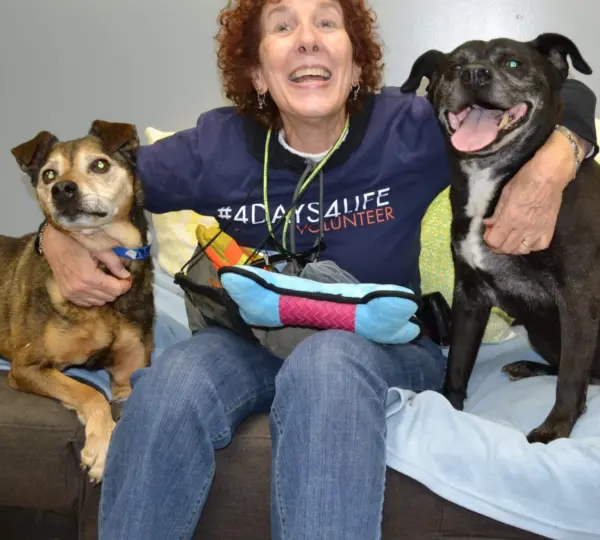
Dogs of every size and age circled in cages, their tails wagging in impatient hope, their paws scratching at barriers they could not escape. Volunteers moved quickly between kennels, carrying food, cleaning cages, offering gentle words to the nervous animals.
Amidst the chaos of youthful energy and impatient longing, my eyes were drawn to a quieter corner. There, lying on a worn blanket, was Daisy.
She was frail, far older than any other dog in the room, her fur peppered with gray, her spine slightly arched, her breathing soft and deliberate. Unlike the younger dogs, she did not bark or jump.
She did not leap at the bars or whine for attention. But when I knelt before her, her tail gave a small, deliberate tap against the floor, almost like a tiny hand reaching for mine.
Her eyes, a deep, weathered brown, held a wisdom that seemed ancient, as if she had witnessed the world in ways most humans never would.
In that quiet, still moment, something in my chest shifted. I knew then that she was the dog I was meant to bring home, even if only for a fleeting period.
Daniel’s reaction was immediate and sharp. He recoiled, confusion and disbelief flickering across his face. “We are not signing up to watch that,” he said, his tone a mixture of fear and frustration.
He could not understand why I would choose a dog so clearly nearing the end of her life. To him, it seemed like unnecessary heartbreak, an invitation to grief. But I saw something different.
Daisy did not need a miracle. She needed love, comfort, and a few weeks—maybe a month or two—of dignity in a home that could give her peace.
Her quiet presence spoke to something my heart had been missing for years, and I was willing to bear the heartbreak for the chance to make her final days gentle and meaningful.
After a hesitant but careful discussion, we agreed to bring Daisy home. Her first steps into our house were cautious, tentative, each movement measured as if she were testing whether this new environment could truly be safe.
She sniffed the corners, paused by the couch, and finally rested on a small blanket I had laid in the sunlit corner of the living room.
That evening, as Daniel and I sat together at the kitchen table, we both watched her sleep, her chest rising and falling in the slow rhythm of an older dog’s life. The presence of another living creature, so fragile and trusting, began to shift the atmosphere in our home.
Over the following days and weeks, Daisy transformed our lives in subtle but profound ways. Her routines were gentle and unassuming: she slept most of the day, occasionally nudged me for a scratch behind the ears, and greeted Daniel with a soft wag whenever he returned home.
Caring for her became a shared responsibility, a quiet ritual that neither of us had anticipated. Filling her water bowl, preparing her food, brushing her soft, silvery fur—these small acts of care began to reconnect us.
We found ourselves talking again, initially about her health, her comfort, the meals she preferred, and eventually about ourselves. Conversations that had lain dormant for years returned in small bursts, tentative but genuine.
Daisy’s presence illuminated parts of our home we had forgotten to notice: the sunlight streaming through the living room windows, the quiet rhythm of our own breathing, the comfort of a shared meal in the evening.
She reminded us of the value of small joys, the subtle but profound meaning of acts of kindness, and the beauty of moments lived fully, even in brevity. Watching her rest in the corner of the couch, Daniel would occasionally reach down to stroke her fur, a soft smile on his face.
The heaviness that had settled between us over the years began to lift, replaced by something fragile and tender: hope, connection, and an openness we had thought lost.

But the trust in her eyes, the soft nudge of her head against our hands, the way she would curl up in the sunlit spot by the window, became a source of comfort, joy, and purpose.
Caring for her reminded us that life, even at its end, can hold immense beauty, and that love, no matter how fleeting, can heal wounds that time alone cannot touch.
One quiet morning, as snow fell gently outside, Daniel and I sat together on the couch, Daisy curled between us. We spoke softly, not about the past or the pain we had endured, but about the present—the warmth of her body, the softness of her fur, the peaceful rhythm of her breathing.
In that moment, the years of silence between us felt irrelevant, replaced by a shared understanding that sometimes the smallest companions leave the largest marks on our hearts.
In her final days, we took extra care to make her comfortable. We lifted her gently into the car and drove to the park, where the winter air was crisp but not harsh.
She sniffed the ground, lifted her tired legs with surprising determination, and lay on a blanket we spread beneath a tree, watching the world with quiet curiosity.
We laughed softly at her small gestures, marveling at how such a fragile creature could teach us so much about presence, patience, and unconditional love.
When Daisy finally passed, it was gentle, in our arms, surrounded by warmth and familiar scents. The grief that followed was deep, unavoidable, and yet, it was tempered by gratitude.
She had given us something extraordinary: a reminder that love, even in its briefest form, can restore connection, bring hope, and heal even the quietest wounds.
Our home, once weighed down by unspoken pain and routine, was now infused with memories of tenderness, care, and the understanding that life, no matter how fleeting, is rich with meaning when shared with those we love.
In the end, Daisy gave us more than we could have imagined. She showed us that opening our hearts—even for the briefest companionship—creates ripples that last a lifetime.
She reminded us that life’s beauty is not measured by longevity alone but by the depth of connection we cultivate, the care we offer, and the love we dare to give, even when loss is inevitable.
And so, in a house that once echoed with silence, the memory of Daisy lingers. In the soft warmth of a sunbeam on the floor, in the quiet moments between words, in the simple acts of kindness we now extend to one another, we feel her presence.
Her time with us was short, but her impact is enduring. She taught us that love does not demand perfection or permanence—it only asks that we show up, fully, for those who need us most.
And in doing so, we discovered that even the smallest, most fragile lives can illuminate the darkest corners of our own hearts.
