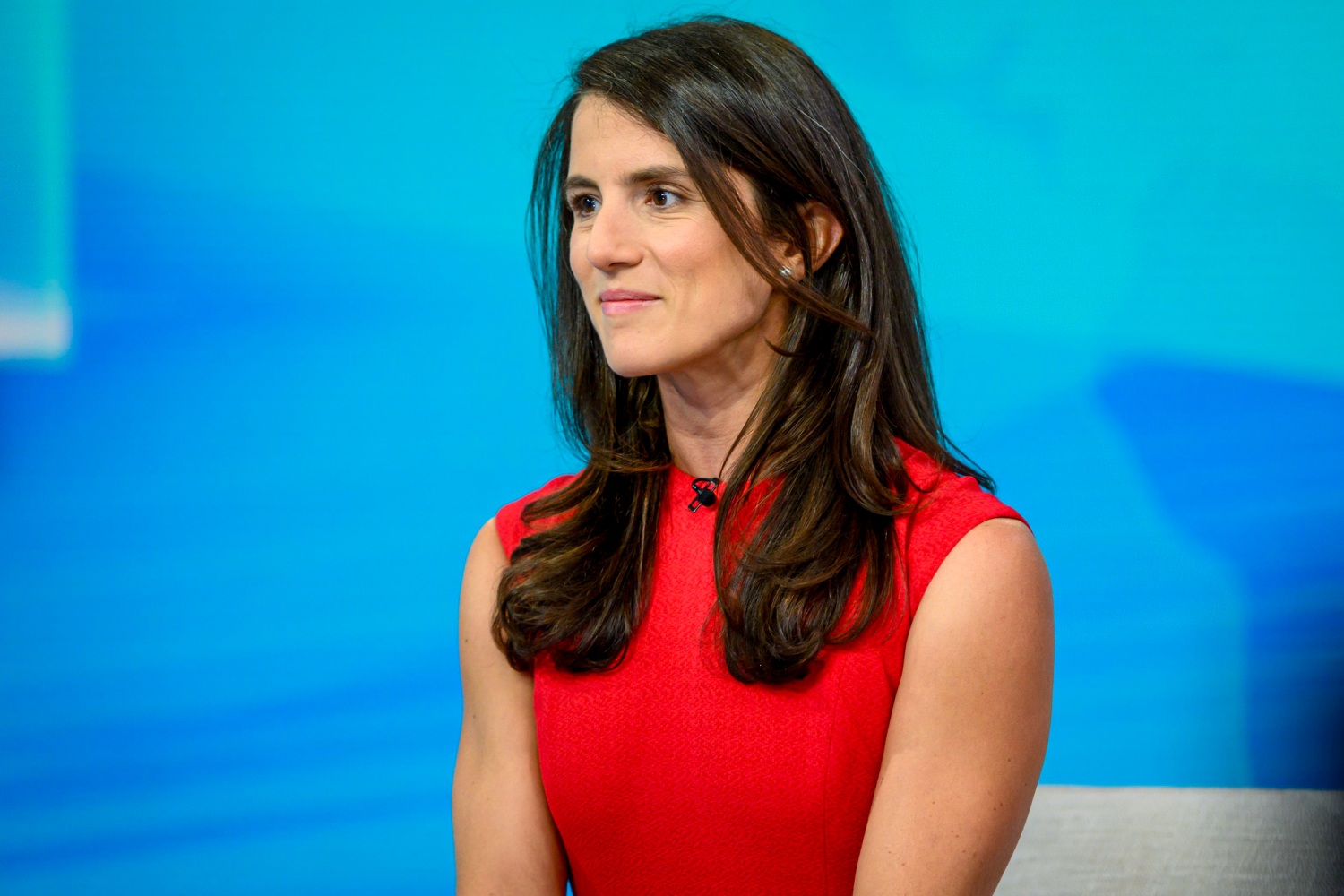
 “She endured unbearable pain, faced the prospect of leaving this world, yet she cherished every moment and fought with all her might.”
— George Moran, remembering his wife Tatiana Schlossberg
In his first public statement since the death of his wife at just 35 years old, George Moran did not speak like a public figure, a grieving widower making a formal address, or a man carefully choosing words for history. He spoke like a husband whose world had collapsed — softly, honestly, and with a love so deep it felt almost unbearable to read.
Tatiana Schlossberg’s life, he said, was never defined by illness, even as cancer demanded more from her than anyone should ever have to give. What defined her was the way she lived in the face of it: with courage, humor, and an unshakable devotion to the people she loved most.
“She knew the odds,” George shared. “She understood what was happening to her body. But she refused to let fear take the lead.” Even as pain became a daily companion and the future narrowed into uncertain days, Tatiana chose presence over despair. She chose to be there — for her children, for her family, for him.
George described long nights in the hospital that blurred into early mornings, the beeping of machines becoming the soundtrack of their lives. He spoke of sleeping in chairs, of holding her hand while she rested, of learning how to read her face when words became too tiring. “There were moments,” he admitted, “when the weight of it all felt impossible. But then she would look at me and smile — and suddenly, I could breathe again.”

That smile, he said, carried them through the darkest hours.
Despite the relentless treatments, the exhaustion, and the physical toll, Tatiana never surrendered the parts of herself that mattered most. She remained curious, thoughtful, and deeply connected to the world around her. George recalled how she still wanted to talk about ideas, about stories she’d read, about the future she hoped her children would grow into — even when she knew she might not be there to see it.
“She didn’t measure time in days,” he wrote. “She measured it in moments.”
Those moments were often small, but sacred: reading to their children from a hospital bed, whispering jokes late at night, holding hands in silence when words felt too heavy. George spoke of how Tatiana found joy in watching their children laugh, even when her own strength was fading. “She wanted them to feel safe,” he said. “She wanted them to remember love, not fear.”
As her illness progressed, the reality of goodbye loomed closer. George did not shy away from that truth. He described the pain of knowing that the life they had imagined together — the plans, the milestones, the growing old side by side — would be left unfinished. “There is no way to prepare yourself for that kind of loss,” he wrote. “You can know it’s coming and still be completely shattered when it arrives.”
Yet even in those final chapters, Tatiana remained fiercely herself. She faced the prospect of leaving this world not with bitterness, but with grace. George said she spoke openly about her love, about what mattered, about her hopes for those she would leave behind. “She wanted us to live fully,” he said. “To keep going. To carry her with us, not as a wound, but as a strength.”

For George, the aftermath has been a landscape of silence and absence — the empty space beside him, the moments when he reaches for her instinctively, only to remember she is gone. “Grief doesn’t arrive all at once,” he reflected. “It comes in waves. Sometimes it’s quiet. Sometimes it knocks you off your feet.”
But intertwined with that grief is gratitude — gratitude for the years they shared, for the love that shaped him, and for the extraordinary woman Tatiana was. “To have loved her,” he wrote, “and to have been loved by her, is the greatest privilege of my life.”
He spoke, too, of her legacy — not one defined by her last months, but by the way she lived before and during them. Tatiana’s strength, he said, was not loud or performative. It was steady. It was choosing kindness when she could have chosen anger. It was choosing hope when despair would have been easier.
In sharing his tribute, George made it clear that this was not just a farewell, but a promise. A promise to honor Tatiana’s memory by loving their children the way she did. By living with intention. By remembering that even in the face of unbearable pain, there is room for joy, connection, and meaning.
“She fought with all her might,” he said. “And she loved with everything she had.”
Tatiana Schlossberg’s story is one of loss, yes — but it is also a testament to enduring love. A reminder that even when life is heartbreakingly short, it can still be profoundly full.