Homeland Security Secretary Kristi Noem issued a firm and unequivocal ultimatum on Tuesday to Portland Mayor Keith Wilson.
Asserting that the federal government would sharply increase its security presence in Portland if local officials did not begin cooperating more closely with federal law enforcement efforts in and around the city.
Noem’s remarks came against the backdrop of escalating disagreements between federal authorities and Portland’s city leadership over how best to manage ongoing demonstrations, immigration enforcement activity, and public safety conditions near sensitive federal facilities — particularly the local U.S. Immigration and Customs Enforcement (ICE) building.
Noem travelled to Portland, Oregon on Tuesday to visit the ICE facility in the city’s South Waterfront neighborhood, a location that since mid‑2025 has served as a flashpoint for numerous protests and law enforcement operations.
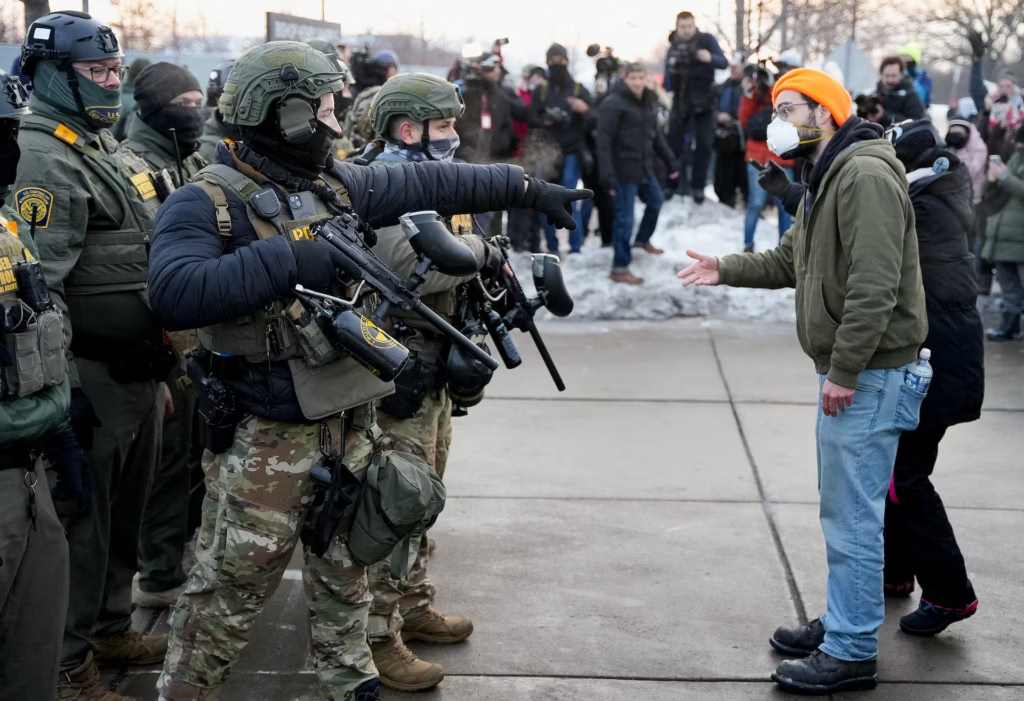
The visit occurred amid active legal and political disputes involving Oregon state leaders, Portland’s mayor, and senior federal officials regarding how federal security resources should be deployed in urban settings where local leaders have resisted cooperation.
During a live televised interview later that day on Fox News, Noem described her meeting with Mayor Wilson as “extremely disappointing,” and said she believed local leaders were not doing enough to secure federal facilities or support federal agents deployed to the city. In her account, Noem said she delivered a direct warning:
if cooperation did not improve, the Department of Homeland Security (DHS) would authorize a significant increase in the number of federal officers operating in Portland.
According to her statements, the administration stood ready to dispatch four times as many federal personnel to the city to provide what she described as necessary security support.
“We told him if he did not follow through on some of these security measures for our officers, we were going to cover him up with more federal resources — and we were going to send four times the amount of federal officers here so that the people of Portland could have some safety,” Noem said during the interview, according to a published transcript.
Earlier that day, Noem stood on a rooftop overlooking the ICE facility alongside federal agents, where she sharply criticized Mayor Wilson for what she characterized as a reluctance to take decisive action to enhance security.
Noem suggested that delays or hesitancy in implementing protective measures could place both residents and law enforcement personnel at risk.
She framed her argument in terms of public safety, contending that political considerations were preventing timely and effective action by local officials.
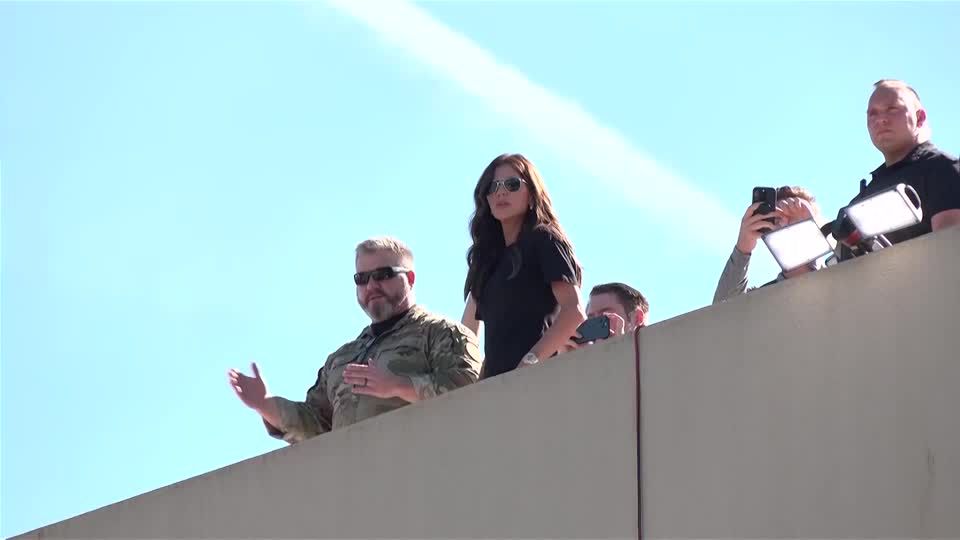
“He’s going to have blood on his hands because he sat around and thought too long,” Noem said, describing Wilson’s approach as overly cautious and insufficiently responsive to what she described as threats faced by law enforcement officers and the broader community.
“He’s too scared of the political ramifications of making a big decision to keep his city safe,” she added.
Noem also echoed a narrative that has been emphasized by some federal officials, referring to unrest near the ICE facility as being driven by “professional terrorists.”
This wording reflects language used previously by federal leaders to describe organized groups they say have targeted federal property and personnel in cities nationwide.
However, local leaders have disputed this characterization, saying that most demonstrations at the ICE facility and nearby areas have involved largely peaceful protesters, and that federal law enforcement tactics themselves have sometimes escalated tensions.
At the time of Noem’s remarks, Mayor Wilson’s office did not provide an on‑camera statement. Instead, he issued a written response to the visit and comments, describing the meeting as “cordial but deeply concerning.”
In his statement, Wilson emphasized that Portland has continued to manage public safety professionally and responsibly, challenging depictions of disorder or chaos used by some federal officials.
“What the secretary saw today matches our reports: Portland continues to manage public safety professionally and responsibly, irrespective of the claims of out‑of‑state social media influencers,” Wilson wrote, highlighting a stark contrast between the federal narrative and the city’s own assessment of the situation on the ground.
Mayor Wilson specifically took issue with suggestions that the city was “out of control,” and he disputed claims that Portland’s conditions warranted a vastly expanded federal enforcement presence.

He also criticized certain federal tactics around the ICE facility, describing them as troubling and, in some cases, potentially unconstitutional. In his public statement, Wilson expressed concern about a lack of transparency from federal agencies regarding their plans for increased enforcement operations.
“We still do not know what ‘Full Force’ against Portland means, or how the administration plans to use our city as a military training ground,” Wilson wrote, referring to language federal officials have used to describe potential levels of enforcement.
He stressed that he intended to pursue all available legal and civic options to defend community safety and constitutional rights, including the right to peaceful protest.
“We will explore all options to protect our community and our right to free expression,” the mayor said, signaling his commitment to uphold local authority and civil liberties even as tensions with federal officials mount.
Noem’s visit to Portland came on the heels of a federal judge’s decision to temporarily block efforts by the Trump administration to deploy National Guard troops to Oregon, ruling that the government had not demonstrated a sufficient legal basis for military intervention in the city.
That judicial order remains in place while the federal government pursues an appeal of the ruling.
President Donald Trump has repeatedly referenced Portland in public remarks, describing the city as “war‑ravaged” and asserting that local officials’ refusal to fully cooperate with federal authorities has allowed lawlessness to persist.
In televised appearances earlier in the week, the president argued that restoring “law and order” in cities like Portland is not about politics, but about safety and security.
Local law enforcement leaders have strongly rejected this portrayal of the city, saying that unrest has been exaggerated and that Portland police have maintained control over public safety.
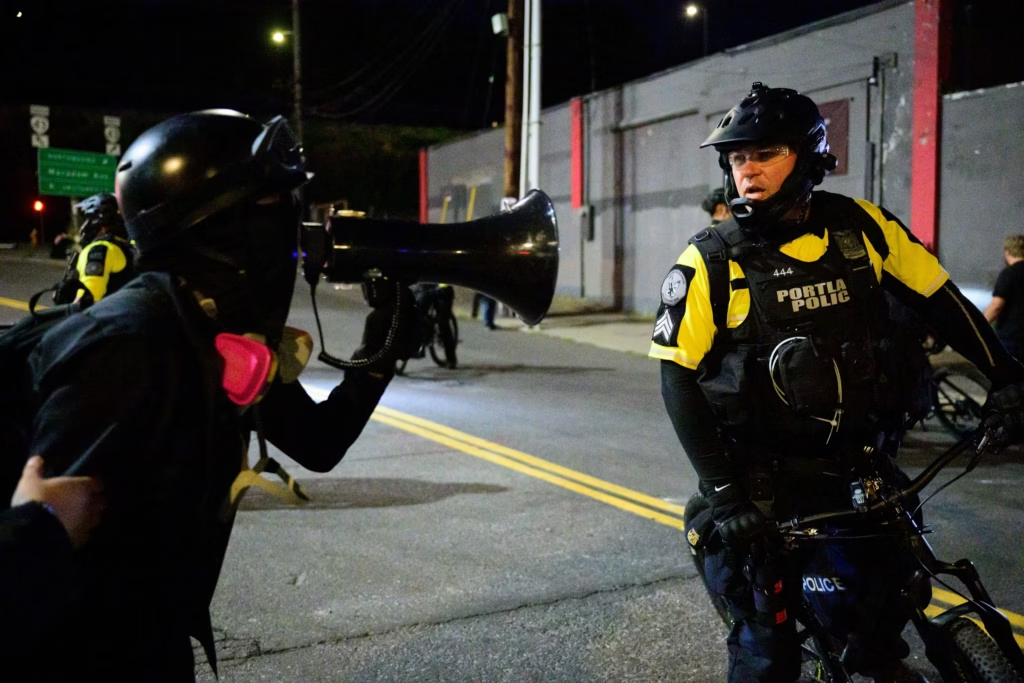
Portland Police Chief Bob Day told CNN that media narratives depicting widespread disorder do not reflect the day‑to‑day reality across the city.
“This is just one small block in a big city,” Day said, emphasizing that the overall strategy of local law enforcement remains measured, proportionate, and centered on community safety.
Despite these differing depictions of conditions on the ground, Secretary Noem’s warning — and her pledge to potentially send a significantly larger contingent of federal officers — underscores that tensions between federal and local leadership remain unresolved.
The dispute may continue to escalate unless clear agreements can be reached about coordination, jurisdiction, and the balance between federal authority and local autonomy.
The controversy reflects a broader national debate over federal power and local governance, especially in cities that have adopted sanctuary policies designed to limit cooperation with federal immigration enforcement.
Cities like Portland argue that protecting the rights and safety of their residents requires respect for constitutional protections, restraint, and community trust, while federal officials maintain that ensuring the security of federal buildings and personnel sometimes requires assertive action when local cooperation is limited.
While Secretary Noem characterizes her ultimatum as necessary to protect federal agents and local residents alike, local leaders emphasize the importance of preserving constitutional rights and maintaining local governance authority.
This clash of priorities — balancing public safety, federal jurisdiction, civil liberties, and political strategy — continues to shape debates not only in Portland, but in other cities facing similar disputes across the United States.
Deeper Context: Legal Battles, Federal Strategy, Community Responses, and Broader Implications
The escalating confrontation between Homeland Security Secretary Kristi Noem and Portland Mayor Keith Wilson is emblematic of deeper structural tensions in U.S. governance: how federal authority intersects with local autonomy, the limits of law enforcement powers in urban areas, and the balance between public safety and civil liberties.
Understanding the full scope of the dispute requires examining legal frameworks, community reactions, federal enforcement tactics, and political implications.

Ongoing Legal Battles and Judicial Oversight
Since mid‑2025, federal authorities have sought to bolster security in Portland through deployments of National Guard troops and tactical personnel from the Department of Homeland Security (DHS), ICE, and U.S. Customs and Border Protection (CBP). These efforts have faced continuous legal challenges from local leaders and advocacy groups.
Mayor Wilson and Oregon Governor Tina Kotek contend that such deployments risk exceeding federal statutory authority, potentially violating civil liberties and constitutional protections of assembly, speech, and due process.
Legal experts emphasize the relevance of the Posse Comitatus Act, which limits the use of military personnel in domestic law enforcement, and broader federal civil rights protections that safeguard lawful protest activity.
Courts have been asked to weigh federal claims of security necessity against local constitutional guarantees, producing temporary injunctions that prevent the deployment of additional National Guard forces until legal justification can be demonstrated.
The most recent injunction, issued in late 2025, emphasized that any escalation of federal presence must meet strict standards of necessity and proportionality.
Federal authorities maintain that deployments are justified by threats to federal property, personnel, and critical infrastructure.
DHS communications describe a small group of organized individuals engaging in acts of vandalism, arson, and assault near federal facilities, asserting that rapid, robust responses are necessary to protect both agents and the public.
Critics argue that some federal tactics, including the use of tear gas, rubber bullets, and other non-lethal munitions, have at times exacerbated tensions and provoked confrontations that might otherwise have been managed by dialogue and local policing strategies.
Community Reactions and Local Safety Considerations
For Portland residents, the federal-local standoff has tangible consequences. Frequent street closures, the visible presence of tactical agents, and heightened law enforcement measures affect daily commuting, local businesses, and public gatherings.
City officials have sought to balance public safety with constitutional protections, emphasizing transparency through community meetings, liaison programs, and public safety announcements.
Community organizations, including immigrant advocacy networks and civil liberties groups, have voiced concerns that federal actions at the ICE facility could inadvertently place residents and protesters at risk.
Many have documented instances of tear gas and other non-lethal crowd-control measures, highlighting potential constitutional implications. Local leaders insist that while safety must be maintained, enforcement tactics must be proportional, transparent, and consistent with civil rights protections.
Federal Strategy and Operational Framing
Secretary Noem and other federal officials justify their actions as a national security and law enforcement imperative. Federal authorities assert that a small but highly organized subset of individuals has targeted federal property and personnel.
According to DHS, this group has engaged in criminal acts including arson, assault, obstruction, and vandalism, necessitating a strong and visible federal presence.
Noem’s threat to deploy “four times the number of federal officers” underscores an approach designed to deter organized disruption while enabling rapid response to potential threats.
Critics argue that federal rhetoric, including references to “professional terrorists,” may exaggerate risks and conflate peaceful civic dissent with criminal activity.
Local leaders emphasize that federal enforcement tactics must be carefully calibrated to avoid undermining constitutional rights, community trust, and local governance. This tension between federal operational imperatives and local civil liberties continues to be a defining feature of the Portland dispute.
Political Implications and National Spotlight
Portland has become a high-profile case for understanding federal-local dynamics in sanctuary cities. President Donald Trump has repeatedly cited the city as an example of federal inaction at the local level, framing interventions as necessary to restore “law and order.”
Conversely, city leaders assert that federal narratives exaggerate disorder and undermine local governance.
The debate also carries electoral and political implications. Portland is led by progressive officials, while federal leadership represents a different national policy perspective.
Each side frames the debate politically, with federal officials emphasizing security and law enforcement imperatives, and local leaders focusing on civil liberties, community trust, and constitutional rights.
Analysts suggest that outcomes in Portland may influence policy and legal approaches in other U.S. cities with similar sanctuary policies.
Recent Escalating Incidents
The standoff has been punctuated by high-profile incidents, raising both local and national concern. In early January 2026, federal immigration officers shot and wounded two individuals outside a Portland hospital.
This prompted hundreds of protesters to gather near the ICE facility, renewing calls for accountability, transparency, and restraint.
Mayor Wilson urged careful investigations and emphasized the importance of distinguishing between criminal acts and lawful protest.
Days later, a separate fatal shooting by an ICE officer in Minneapolis, Minnesota, sparked nationwide demonstrations and intensified scrutiny of federal enforcement tactics.
Activists framed these incidents as evidence of the need for systemic oversight and clear accountability, highlighting the broader implications of federal actions in urban areas.
Future Outlook
Looking ahead, the Portland dispute is likely to remain central to national discussions on federal authority, local autonomy, and civil liberties.
Legal proceedings over federal deployments and constitutional protections are ongoing, while community groups and advocacy organizations continue to monitor federal operations closely.
Observers note that how Portland resolves these tensions may set precedents for federal-local relations in other U.S. cities, particularly those with significant protest activity or sanctuary policies.
Secretary Noem’s warning of an expanded federal presence — if local officials do not adjust cooperation — underscores the potential for further escalation.
Simultaneously, Portland’s leadership continues to emphasize community-centered policing, legal rights, and constitutional protections, highlighting a standoff with immediate operational implications and long-term political and legal significance.
